

Choosing the wrong paint finish is one of the fastest ways to ruin an otherwise perfect paint job. A flat finish in a high-traffic hallway will show scuffs within days. A high-gloss sheen in a bedroom creates glare that disrupts sleep. After 35 years of completing thousands of interior painting projects across Abbotsford, Langley, and Surrey, we’ve seen homeowners make these mistakes repeatedly, and they’re entirely preventable with the right interior painting tips.
The difference between paint finishes isn’t just aesthetic. It’s functional. Each sheen level offers distinct performance characteristics that make it ideal for specific rooms and surfaces. Understanding this paint finish guide will help you avoid costly repaints and ensure every room in your home looks exceptional for years.
Table of Contents
- Quick Takeaways
- Understanding Paint Sheen Levels
- Choosing Paint Finishes by Room
- Durability and Maintenance Considerations
- Common Mistakes When Selecting Finishes
- How Professional Painters Approach Finish Selection
- Frequently Asked Questions
- References
Quick Takeaways
|
Key Insight |
Explanation |
|---|---|
|
Match sheen to traffic level |
High-traffic areas need satin or semi-gloss finishes that withstand frequent cleaning, while low-traffic spaces can use flat or eggshell |
|
Flat hides imperfections best |
Walls with texture issues, patches, or minor defects look better with flat or matte finishes that don’t reflect light |
|
Moisture demands higher sheen |
Bathrooms and kitchens require semi-gloss or gloss finishes that resist humidity and prevent mold growth |
|
Ceiling paint is always flat |
Using anything but flat on ceilings creates unwanted reflections and highlights every surface irregularity |
|
Trim needs semi-gloss minimum |
Baseboards, door frames, and window casings take abuse and need wipeable, durable finishes |
|
Test before committing |
Paint sample boards with your chosen finish and view them in different lighting conditions for 48 hours before deciding |
|
Quality matters more than sheen |
Premium paint in the correct finish outperforms cheap paint in any sheen, especially for longevity and washability |
Understanding Paint Sheen Levels
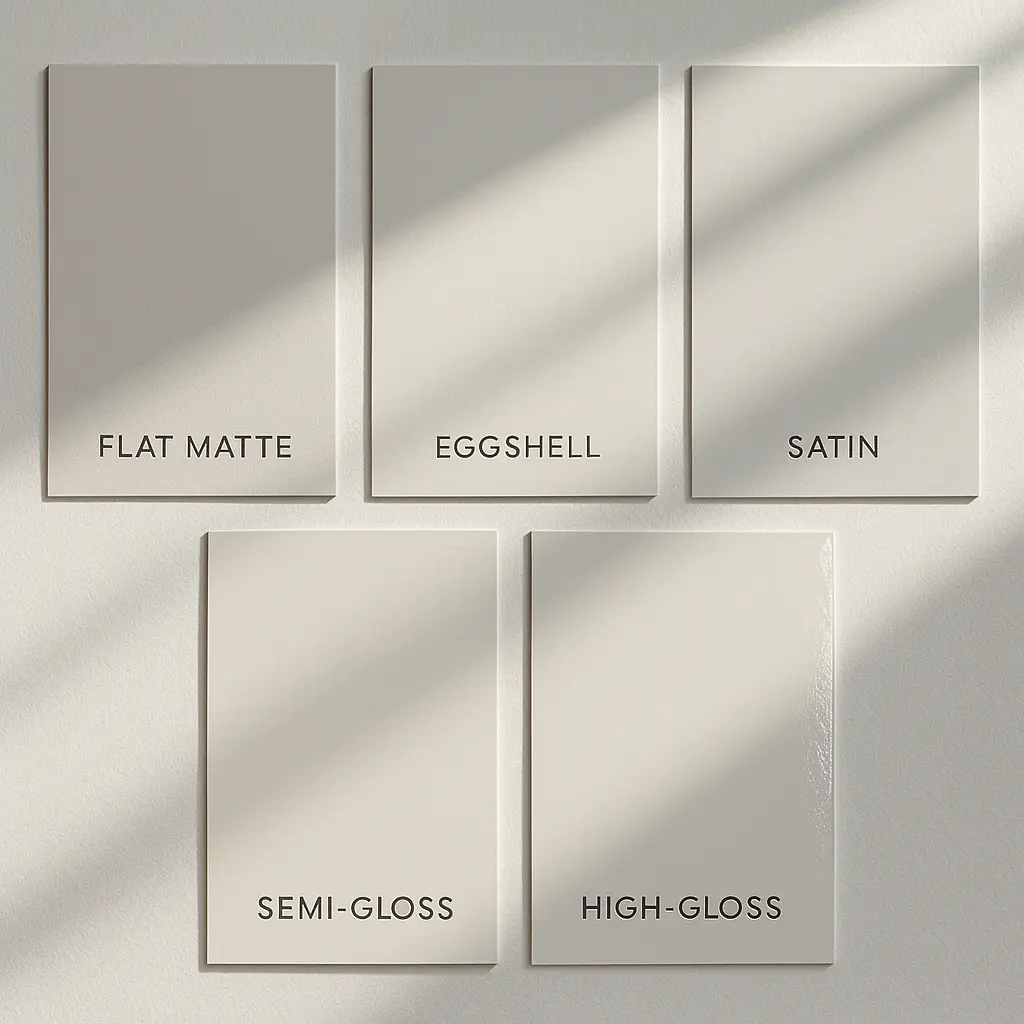
Paint manufacturers offer five primary sheen levels, each reflecting progressively more light. The terminology can vary slightly between brands, but the fundamental characteristics remain consistent across the industry.
Flat or matte finishes reflect virtually no light, creating a smooth, non-reflective surface that excels at hiding wall imperfections. The tradeoff is poor washability. Scrubbing flat paint often removes pigment along with the dirt, leaving visible marks.
Eggshell finishes sit just above flat with a subtle sheen resembling an actual eggshell. They offer slightly better cleanability than flat while still minimizing light reflection. This makes eggshell the most popular choice for living rooms and bedrooms where moderate durability meets aesthetic appeal.
Pro tip: When interior painters in Abbotsford evaluate a project, we always inspect walls under raking light (light hitting the surface at a steep angle) to identify imperfections that will show through higher sheens.
Satin finishes provide a soft, pearl-like sheen that balances durability with appearance. This middle-ground option handles regular cleaning without the obvious shine of semi-gloss, making it versatile for most residential applications.
The High-Gloss Spectrum
Semi-gloss finishes reflect considerable light and offer excellent durability and moisture resistance. The visible shine makes them ideal for trim, doors, and cabinets where you need frequent cleaning capability.
High-gloss or gloss finishes create a mirror-like surface that’s extremely durable but shows every surface defect. Professional applications are limited to specific decorative elements, furniture, or exterior doors where maximum protection is required.
|
Finish Type |
Light Reflectance |
Best Applications |
|---|---|---|
|
Flat/Matte |
0-5% |
Adult bedrooms, ceilings, low-traffic areas with imperfect walls |
|
Eggshell |
10-25% |
Living rooms, dining rooms, bedrooms with good wall condition |
|
Satin |
25-35% |
Family rooms, hallways, kids’ bedrooms, kitchens |
|
Semi-Gloss |
35-70% |
Trim, doors, bathrooms, kitchens, high-moisture areas |
|
Gloss |
70-85% |
Cabinets, furniture, accent pieces, exterior doors |
Choosing Paint Finishes by Room
Room function dictates finish selection more than personal preference. Ignoring the practical demands of each space leads to premature paint failure and constant touch-ups.
Kitchens and Bathrooms
These moisture-heavy environments require semi-gloss on walls. The higher sheen creates a barrier against humidity, prevents mold growth, and allows you to wipe down splashes and condensation without damaging the paint film. In practice, homes painted with eggshell or satin in bathrooms show mold staining within two years, particularly on exterior walls and around showers.
Kitchen backsplash areas that aren’t tiled should always receive semi-gloss or gloss treatment. The constant exposure to cooking splatter, grease, and steam demands maximum cleanability.
Living Rooms and Dining Rooms
Eggshell is the standard choice for formal living spaces with controlled traffic. The subtle sheen adds visual richness without creating distracting reflections. These rooms rarely face the abuse of hallways or kitchens, so the moderate durability of eggshell suffices.
If your living room doubles as a playroom or pet area, upgrade to satin. The increased washability pays for itself by eliminating the need for frequent repaints.
Pro tip: When choosing paint sheen for open-concept spaces that blend kitchen and living areas, use satin throughout rather than switching finishes mid-room, which creates visible inconsistency.
Bedrooms
Adult bedrooms perform well with flat or eggshell finishes. The low traffic and minimal moisture make durability less critical, and the softer appearance creates a more relaxing environment. Flat finishes particularly excel in bedrooms with textured walls or older plaster that shows imperfections.
Children’s bedrooms demand satin as a minimum. The washability becomes essential when dealing with crayon marks, fingerprints, and the general chaos that accompanies young occupants. We’ve repainted countless kids’ rooms where parents initially chose flat or eggshell and regretted it within months.
Hallways and Stairwells
These high-traffic zones need satin at minimum, with semi-gloss being preferable for homes with children or pets. Walls in hallways take constant contact from hands, bags, and shoulders brushing past. The increased durability of higher sheens extends the life of your paint job significantly.
According to paint manufacturers’ technical data, semi-gloss finishes withstand up to 10 times more scrub cycles than flat finishes before showing wear, making them essential for areas that require frequent cleaning.
Durability and Maintenance Considerations
The relationship between sheen level and cleanability is direct and measurable. Higher sheen equals harder surface, which translates to better scrubbability and longer lifespan in demanding conditions.
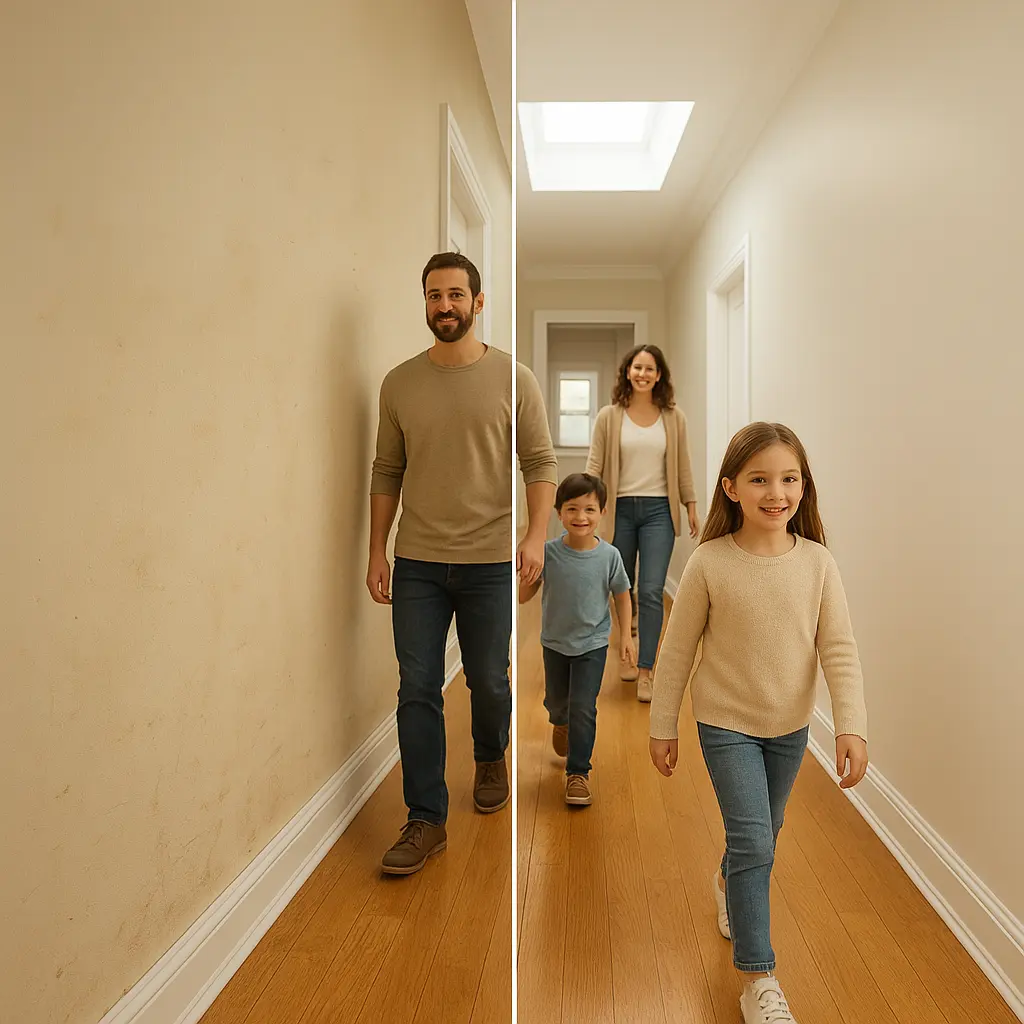
Flat and eggshell finishes use less resin in their formulation, creating a more porous surface that absorbs dirt and stains. When you attempt to clean these finishes aggressively, you’re essentially sanding away the top layer of paint. The result is burnishing, where cleaned areas appear shinier than surrounding paint.
Touch-Up Challenges
Lower sheen finishes touch up more easily than glossier options. When you need to patch a section of flat paint, the repair usually blends invisibly once dry. Semi-gloss and gloss touch-ups almost always show, even with perfect color matching, because any variation in application technique creates visible sheen differences.
This characteristic makes flat paint appealing for rental properties and commercial spaces where frequent touch-ups are expected. The ability to spot-paint without repainting entire walls saves significant time and money over the building’s life.
Long-Term Value
Premium paints cost 40-60% more than economy options but deliver disproportionate benefits in performance. A high-quality satin finish from major manufacturers like Benjamin Moore or Sherwin-Williams outperforms cheap semi-gloss in both appearance and durability.
The higher resin content in quality paints creates a tougher film that resists staining, cleans more effectively, and maintains color integrity longer. After working with every major paint brand available in the Lower Mainland, we consistently see premium products lasting 8-12 years compared to 3-5 years for economy paints in equivalent conditions.
Common Mistakes When Selecting Finishes
The most frequent error homeowners make is choosing finish based purely on appearance without considering functional requirements. A beautiful flat finish in a hallway will look terrible within months. Aesthetic preferences must align with practical demands.
Using the same finish throughout your home might seem consistent, but it’s actually poor planning. Each room faces different conditions that warrant specific sheen selections. Treating your entire house uniformly ignores the fundamental differences in how spaces are used.
Overlooking Existing Wall Condition
Selecting high-sheen finishes for walls with texture, patches, or imperfections amplifies every defect. Light reflection from satin, semi-gloss, or gloss finishes acts like a spotlight on surface irregularities. A common mistake is painting newly drywalled areas in a renovation with the same semi-gloss used on trim, which highlights every taping imperfection.
If your walls aren’t in pristine condition, stay with flat or eggshell regardless of the room function. You can always upgrade to higher sheen after proper surface preparation, but no amount of premium paint will hide defects when applied in a reflective finish.
Ignoring Lighting Conditions
Natural and artificial lighting dramatically affects how paint sheen appears. A satin finish in a north-facing room with limited natural light looks substantially different than the same paint in a south-facing room flooded with sunlight. The brighter the space, the more pronounced the sheen appears.
Test your finish selection by painting large sample boards (minimum 2 feet by 2 feet) and viewing them in the actual room at different times of day. What looks perfect at noon might create unwanted glare in the evening under artificial light.
Pro tip: When evaluating interior painting tips from various sources, prioritize advice from experienced interior painters in Abbotsford or your local area who understand regional climate factors like humidity levels that affect paint performance.
How Professional Painters Approach Finish Selection
Professional painters evaluate multiple factors simultaneously when recommending finishes. We start with room function, then assess wall condition, consider occupant lifestyle, and factor in maintenance expectations.
A systematic approach prevents the mismatches we regularly see when homeowners select finishes without professional guidance. The assessment process takes minutes but prevents years of dissatisfaction.
The Room-by-Room Checklist
For each space, we ask: What’s the traffic level? Is moisture present? What’s the wall condition? How much natural light enters? What’s the client’s cleaning frequency? Who uses this room? These questions reveal the optimal finish quickly.
A family with three children under age 10 gets different recommendations than empty nesters. Homes with pets require more durable finishes in certain areas. Someone who cleans walls weekly can manage lower sheens than someone who rarely maintains painted surfaces.
Balancing Client Preferences with Performance
When clients request finishes that won’t perform well in their intended application, experienced painters explain the consequences clearly. If a homeowner insists on flat paint in a bathroom despite warnings, we document the conversation and adjust our warranty accordingly.
The goal isn’t to dictate choices but to ensure clients understand the performance implications of their decisions. An informed client who chooses aesthetics over durability is making a conscious tradeoff, not a mistake.
We also educate clients on how primer selection affects finish appearance. The proper primer creates the foundation for optimal sheen consistency and durability. Skipping primer or using incorrect primer types causes issues that manifest as uneven sheen, poor adhesion, and premature failure.
Frequently Asked Questions
What paint finish is best for living room walls?
Eggshell is the best choice for most living rooms. It provides a subtle sheen that adds visual interest while hiding minor wall imperfections better than satin or semi-gloss. The finish is durable enough for normal living room traffic but not so shiny that it creates distracting light reflections. If your living room experiences heavy traffic or you have children and pets, upgrade to satin for better cleanability.
Can I use the same paint finish on walls and ceilings?
No, you should always use flat paint on ceilings regardless of the wall finish. Ceilings rarely need cleaning and any sheen above flat highlights every imperfection and creates unwanted light reflections that draw the eye upward. Even new construction with perfect drywall work should receive flat ceiling paint. The only exception is bathrooms with severe moisture issues where a satin ceiling helps prevent mold, though proper ventilation is the better solution.
Why does my semi-gloss paint show every imperfection?
Semi-gloss reflects 35-70% of light hitting the surface, which acts like a spotlight on any defect in the wall. Every drywall seam, nail pop, texture inconsistency, or surface irregularity becomes visible because of how light bounces off the sheen. This is a feature, not a flaw, semi-gloss performs exactly as designed. If imperfections are visible, the solution is better surface preparation or switching to a lower sheen like eggshell or satin, not changing paint brands.
What finish should I use for kitchen cabinets?
Semi-gloss or satin works best for kitchen cabinets, with semi-gloss being preferable for maximum durability. Cabinets face constant handling, food splatter, grease, and cleaning chemicals. The harder surface of semi-gloss withstands this abuse while remaining easy to clean. Some homeowners prefer satin for a more modern, less shiny appearance, which is acceptable if you use premium paint designed specifically for cabinets. Never use eggshell or flat on cabinets as they won’t survive normal kitchen use.
How do I fix paint that looks streaky after drying?
Streaky paint results from several issues: applying paint too thin, not maintaining a wet edge, using low-quality paint with poor flow properties, or applying high-sheen paint over improperly prepared surfaces. The fix depends on the cause. If you applied quality paint correctly but it looks streaky, you likely need another coat. If the issue is poor paint quality or application technique, you may need to sand the surface lightly and repaint with proper technique. For persistent problems with higher sheens, consider dropping to a lower sheen level.
Should trim always be a different finish than walls?
Yes, trim should almost always be semi-gloss while walls are typically eggshell or satin. This creates visual contrast that defines architectural elements and provides the durability trim requires. Baseboards, door frames, and window casings take more abuse than walls from vacuum cleaners, furniture, and daily contact. Semi-gloss withstands this wear and cleans easily. The sheen difference also makes the trim appear crisper and more finished, even when using the same color on both walls and trim.
Can I change paint sheen without changing color?
Yes, you can use the same color in different sheens, though be aware the color will appear slightly different. Higher sheens reflect more light, making colors appear lighter and more vibrant. Lower sheens absorb light, making the same color appear slightly deeper and richer. Test the color in your desired sheen before committing to the entire room. Some painters use one color in different sheens intentionally, such as satin on walls and semi-gloss on trim in the same color for subtle definition.
Have you recently completed a painting project where finish selection made a significant difference in the results? Share your experience in the comments to help other homeowners make better decisions for their interior painting projects.

