


Managing a strata painting project in the Lower Mainland is nothing like hiring a painter for your own home. You are coordinating between a strata council, a property manager, dozens of residents, and in many cases a building envelope consultant, all while staying compliant with BC strata legislation. Get it wrong and you are looking at delayed votes, resident complaints, bylaw disputes, and a finished product that does not hold up because the preparation was rushed. Get it right and you protect the building, maintain property values, and keep the people who live there on side. This guide is written for strata councils and property managers in Abbotsford, Langley, Surrey, and across the Fraser Valley and Lower Mainland who want to run a strata painting Vancouver project without the usual headaches.
Table of Contents
- Quick Takeaways
- Depreciation Reports and Reserve Fund Planning
- Getting Council Approval Right the First Time
- Scheduling Around Residents Without Creating Chaos
- Exterior vs. Interior Strata Painting: Different Beasts
- Choosing the Right Painting Contractor for Strata Work
- Comparison: Approaches to Multi-Unit Exterior Painting Lower Mainland
- Frequently Asked Questions
- References
Quick Takeaways
| Key Insight | Explanation |
|---|---|
| Pull your depreciation report before budgeting | BC strata corporations with five or more units are generally required to maintain a depreciation report. Painting is almost always included. Check it first, but treat cost estimates older than two years as a starting point only, not a final budget figure. |
| Council approval is not optional for large contracts | Most strata corporations require a council motion to approve contracts above a set dollar threshold, often somewhere between $5,000 and $10,000. A full common area repaint will almost always require a formal vote. |
| Itemized quotes close faster | Vague lump-sum quotes generate questions and delay council votes. An itemized, clearly scoped quote reduces back-and-forth and gives council members the detail they need to vote with confidence. |
| South-facing elevations age faster | UV exposure and weather wear surfaces unevenly across a building. A proper site assessment identifies which sections genuinely need repainting now versus which can wait, saving money and focusing resources. |
| Resident notice is not courtesy, it is expectation management | Written notice to residents at least 48 hours before work begins on their floor or section reduces complaints significantly. Surprise is the main driver of resident friction during strata painting projects. |
| Strata bylaws govern trades access hours | Many strata corporations have bylaws restricting when contractors can work. Confirm these before scheduling, especially for early-morning or weekend exterior painting work. |
| Scope definition before work starts prevents costly scope creep | Not every surface needs painting at the same time. Defining exactly what is in scope, by surface, area, and floor, prevents disputes mid-project and protects the council from unexpected cost overruns. |
Depreciation Reports and Reserve Fund Planning
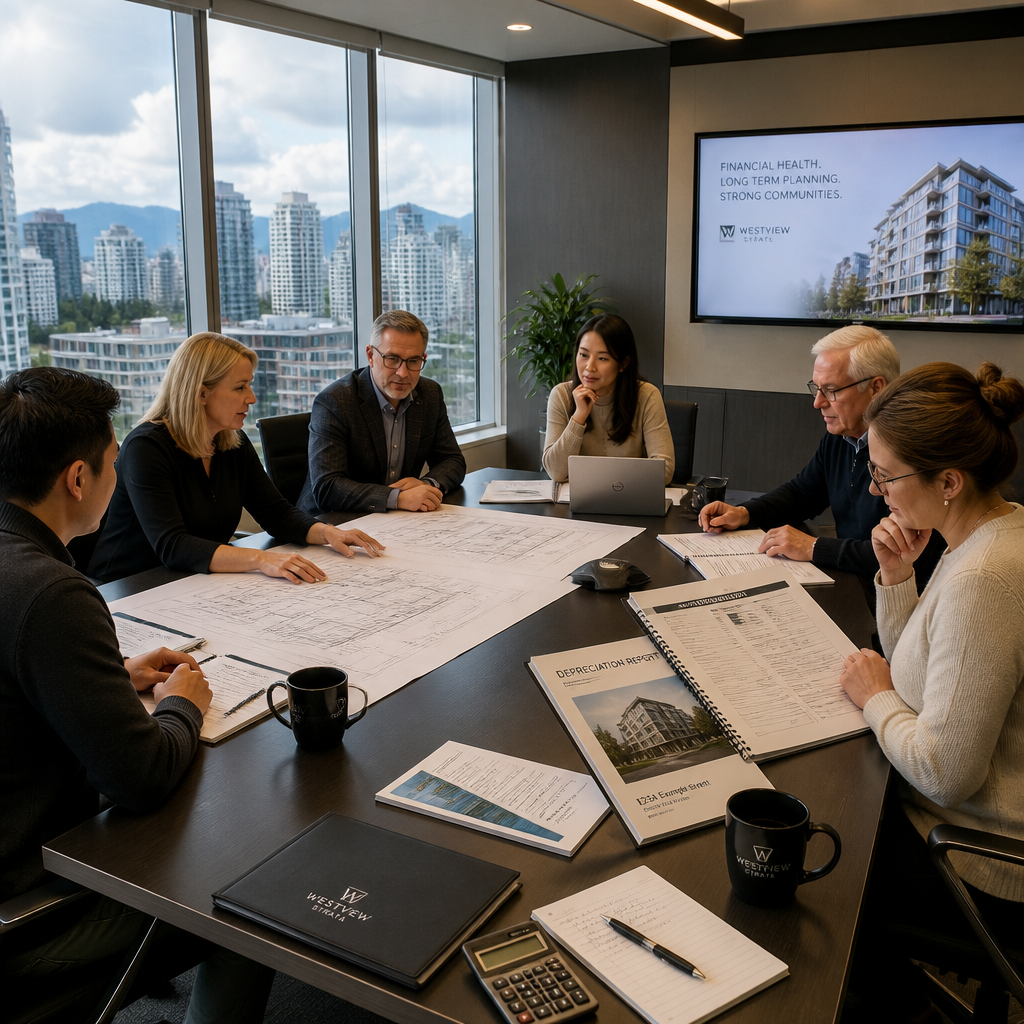
Before a strata council in BC can authorize a major painting project, the conversation almost always has to start with the depreciation report. Most strata corporations with five or more strata lots are required under BC legislation to have a depreciation report, sometimes called a reserve fund study. This document forecasts capital expenditure needs over a 30-year horizon, and painting, both interior common areas and exterior building envelope painting, is consistently one of the items included.
The depreciation report gives the council a documented baseline: when painting was last done, when it is forecasted to be needed again, and what cost estimate was used to calculate reserve fund contributions. That last point is where strata councils most often get tripped up.
Why Depreciation Report Cost Estimates Go Stale
Depreciation reports are often updated every three to five years, and painting cost estimates in those reports can be significantly out of date by the time a project gets initiated. Material and labour costs for multi-unit exterior painting in the Lower Mainland have moved meaningfully over recent years. Treating a three-year-old estimate as your current budget is a reliable way to end up underfunded mid-project.
The practical move is to pull the relevant section of your depreciation report, use it to understand the scope and timeline that was originally anticipated, and then get fresh contractor quotes to establish a realistic current budget. If your report is more than two years old, do not rely on its cost figures for anything beyond rough planning.
Pro tip: When presenting a strata painting project to council, bring both the depreciation report section and the fresh contractor quotes side by side. It shows due diligence, and it makes the motion easier to pass because council members can see the project was anticipated and the reserve fund was meant to cover it.
Getting Council Approval Right the First Time
A common mistake strata councils make is presenting a painting project to a vote before the groundwork is done. You show up with a single vague quote, no scope detail, and a rough number. Council members ask questions nobody can answer, the vote gets tabled, and the project loses weeks. In the Lower Mainland, where contractor availability in peak painting season fills up fast, those delays cost you.
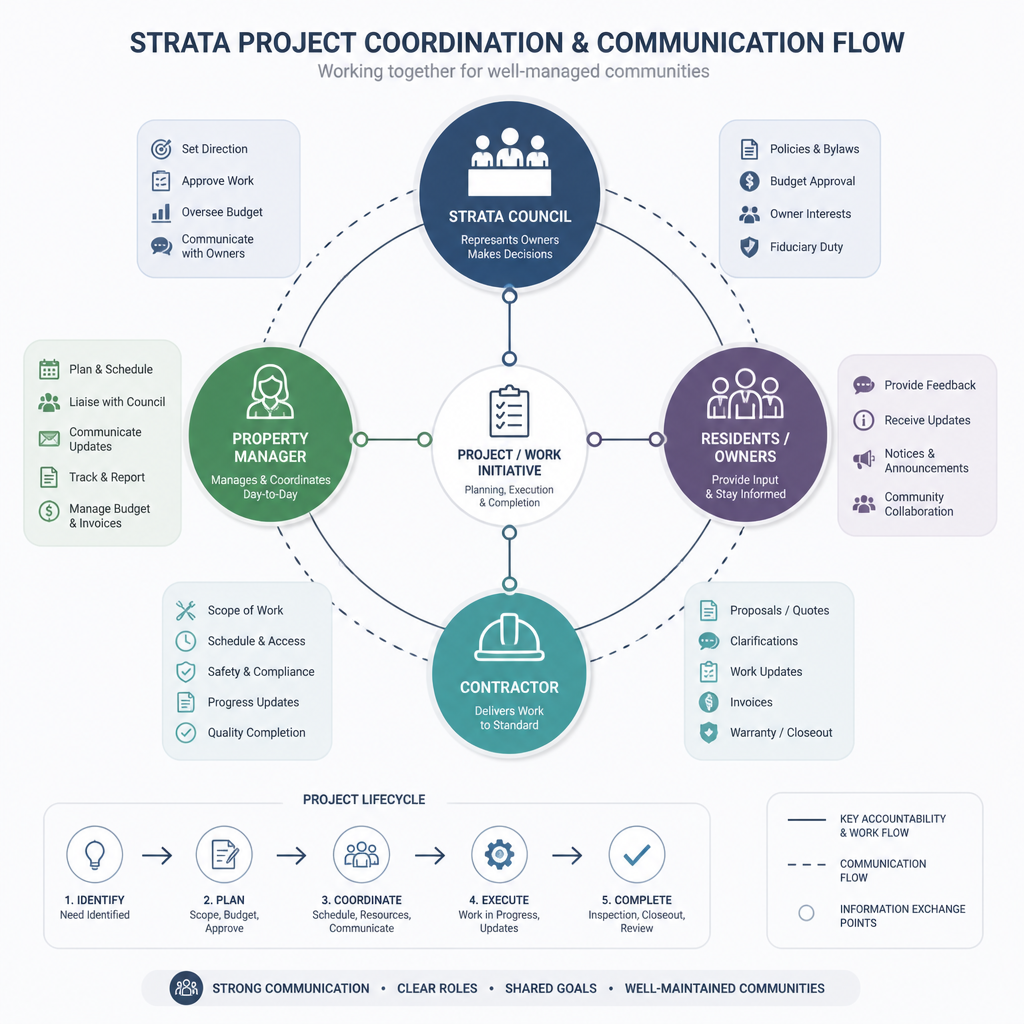
The BC Strata Property Act calls for comparative quotes on significant expenditures. In practice, that means two to three quotes is the standard expectation before presenting a project for a vote. The approval sequence that works looks like this: a council member or property manager initiates the project, comparative quotes are gathered, those quotes are presented with a clear recommendation, council votes at a scheduled meeting or by written resolution, and then the contract is executed.
What Makes a Quote Council-Ready
Itemized quotes close faster. When the quote clearly lists which surfaces are being painted, what preparation work is included, which products are being used, and what the per-area or per-surface cost breakdown looks like, council members have what they need to make a decision. A lump-sum quote that says “exterior painting of building, $X” creates the exact questions that delay votes.
At Dreamscape Painting, we prepare quotes for strata projects that are scoped in a way that makes the council approval process straightforward. We have been doing this work across the Fraser Valley and Lower Mainland for over 35 years. We know what council members need to see, and we know how to present a project scope clearly so the vote happens at the first presentation, not the third.
A well-prepared painting quote is not just a price. It is the document that allows a strata council to vote with confidence. Vague quotes create uncertainty, and uncertain councils table motions.
Scheduling Around Residents Without Creating Chaos
This is where strata painting projects earn or lose their reputation. Common areas, including hallways, lobbies, parkades, and amenity rooms, are in constant use. Residents cannot be locked out of their suites or prevented from using elevators. Any contractor who treats a strata building like an empty commercial job site is going to generate complaints by day two.
The sequencing approach that actually works for interior common area painting is to work section by section through hallways, maintaining access to all suites throughout the project. Lobby and entrance work should be scheduled during lower-traffic periods, typically mid-morning on weekdays. Elevator use needs to be booked formally through the property manager before the project starts, not assumed on the day.
Resident Communication Is Part of the Job
Written notice to residents at least 48 hours before work begins on their floor is the minimum standard that keeps a project running smoothly. Surprise is the main source of resident complaints during strata painting. When residents know what is happening, when it is happening, and what they need to do (such as clearing balconies before exterior work), the friction drops considerably.
For strata painting Vancouver projects specifically, residents often have high expectations around professionalism and cleanliness. This is one area where Dreamscape Painting’s operational approach is a genuine differentiator. Our teams treat cleanliness and resident communication as non-negotiable parts of the work, not afterthoughts.
Pro tip: Coordinate with building concierge or on-site managers about parking and materials storage before the project begins. Not after. A contractor who shows up without a plan for where the van parks and where the paint cans go is signalling to residents that the project is not well-run.
Exterior vs. Interior Strata Painting: Different Beasts
Interior common area painting and exterior strata painting share almost nothing operationally except the fact that both require paint and painters. Strata councils that plan them the same way end up surprised by one or the other.
Interior Common Areas: Workflow and Product Choices
Interior strata painting, covering hallways, stairwells, lobbies, and amenity spaces, is primarily a scheduling and product durability challenge. High-traffic surfaces in strata buildings take significant abuse. The paint products selected need to be scrubbable, durable, and appropriate for the substrate. Low-VOC formulations matter more in enclosed common areas where residents are walking through immediately after application.
Surface preparation in interior common areas also tends to be more involved than a standard residential interior job. Scuffs, dings, and patched areas from years of move-ins and move-outs accumulate on strata hallway walls. Skipping proper prep on these surfaces means the finished product looks poor within months.
Exterior Painting: Building Envelope, Access, and Weather
Exterior strata painting is a different scope of work entirely. Different elevations of the same building age at different rates. South-facing surfaces typically take more UV exposure and show wear faster than shaded sides. A credible contractor will assess each elevation separately and not assume the entire building exterior needs identical treatment at the same time.
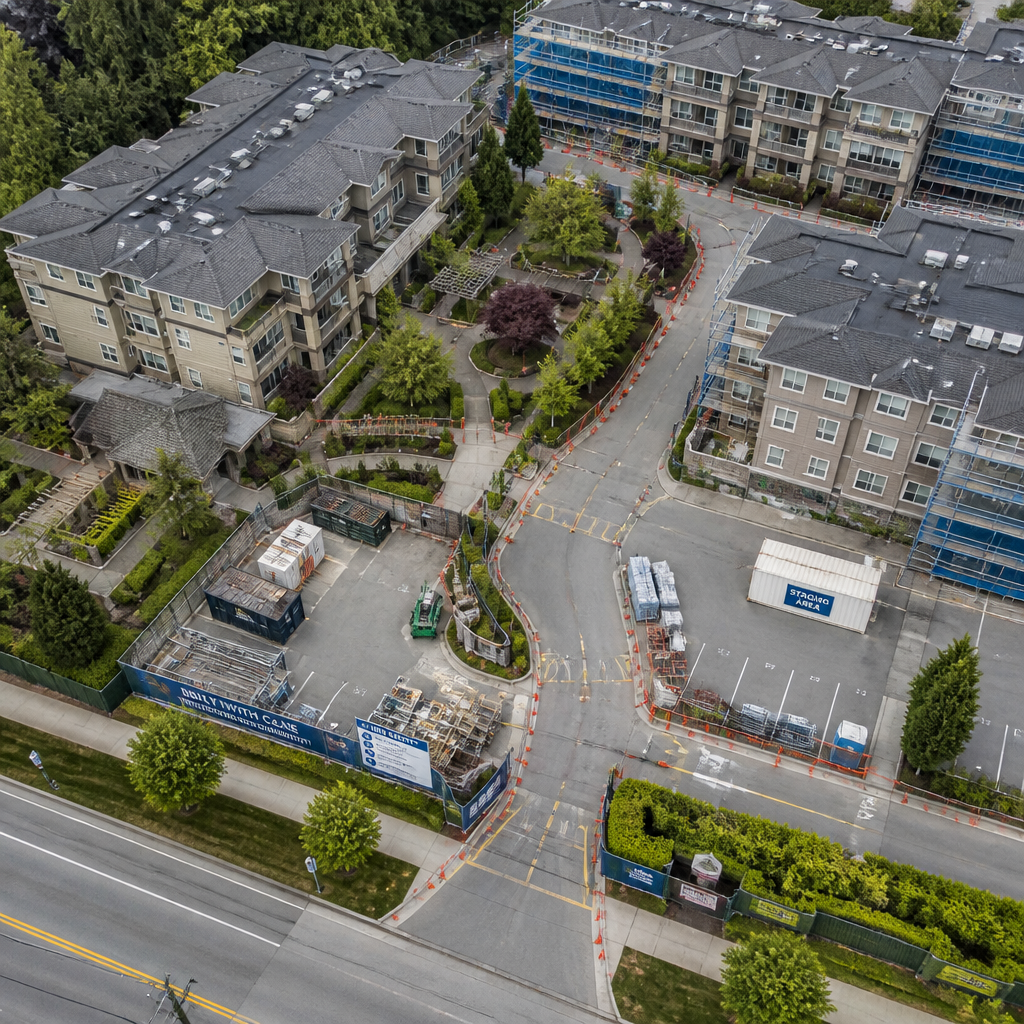
For balcony and patio areas, residents generally need to clear these spaces before exterior work begins. This requires advance notice and a realistic timeline for residents to comply. Access to building envelope areas sometimes requires scaffolding, swing stages, or aerial lifts, all of which affect scheduling, cost, and resident impact during the project.
Weather is the variable that strata councils frequently underestimate in the Fraser Valley and Lower Mainland. The region’s wet seasons are long, and exterior painting cannot proceed in wet or near-freezing conditions without compromising adhesion and finish quality. Any contractor who does not build weather contingency into the project schedule for a Lower Mainland exterior strata job is setting the project up for delays.
Choosing the Right Painting Contractor for Strata Work
Strata painting in the Lower Mainland is not a job for every painting contractor. The coordination requirements, the liability exposure, the need for professional communication with residents and property managers, and the scale of most strata projects all require a contractor with specific experience in this type of work. A company that does excellent single-family residential work is not automatically qualified to run a strata project efficiently.
What to Look for Beyond Price
Price matters, but it is a poor primary filter for strata painting contractors. The questions that actually differentiate capable contractors from problematic ones are these: Can they provide a detailed, itemized quote that council can vote on confidently? Do they have documented experience with multi-unit properties? Do they carry appropriate liability insurance and WorkSafeBC coverage? Do they have a clear communication process for residents? Can they provide references from strata corporations, not just homeowners?
Dreamscape Painting has been serving strata and multi-unit clients across Abbotsford, Langley, Surrey, and the broader Lower Mainland for over 35 years. Our estimators understand the strata approval process, and our crews are trained to work in occupied multi-unit buildings with the communication and cleanliness standards that strata projects require. That experience is not something a newer company can replicate with a lower price.
Insurance and WorkSafeBC: Non-Negotiable Requirements
Before awarding any strata painting contract, the council or property manager should request current proof of liability insurance and WorkSafeBC coverage. Working in an occupied strata building without proper coverage creates liability for the strata corporation, not just the contractor. This is a hard requirement, not a formality.
Comparison: Approaches to Multi-Unit Exterior Painting Lower Mainland
Strata councils in the Fraser Valley and Lower Mainland typically encounter three different approaches when scoping a commercial painting Fraser Valley or multi-unit exterior project. Each has real tradeoffs that affect both the result and the resident experience.
| Approach | How It Works | Best Suited For |
|---|---|---|
| Full-Building Repaint (All Elevations at Once) | Every exterior surface is assessed, prepared, and painted within a single project window. Scaffolding or access equipment covers the full building perimeter. Residents experience concentrated disruption for a shorter total period. | Buildings where all elevations show significant wear, or where the strata’s depreciation report and reserve fund align with doing the full scope at once. Works well when the contractor has the crew capacity to move efficiently. |
| Phased Elevation-by-Elevation Repaint | Elevations are prioritized by condition. The worst-affected surfaces (often south-facing) are painted first, with other elevations addressed in subsequent seasons or budget cycles. Disruption is spread out over time. | Stratas managing tighter reserve fund balances, or buildings where condition varies significantly by elevation. Allows spending to be distributed across multiple fiscal years while still addressing the most urgent surfaces. |
| Common Area Interior Refresh Only | Exterior envelope work is deferred and the project focuses entirely on interior common areas: hallways, lobbies, stairwells, amenity rooms. Lower total cost and simpler logistics, no scaffolding, no weather dependency. | Stratas where the exterior is in acceptable condition but the interior common areas are showing wear that affects resident satisfaction and building presentation. Often a good interim option between major exterior cycles. |
Frequently Asked Questions
How often does a strata building typically need exterior repainting in the Lower Mainland?
There is no single universal interval, but most strata buildings in the Fraser Valley and Lower Mainland require exterior repainting somewhere in the range of every seven to fifteen years, depending on the original paint quality, the products used, the building’s exposure to weather, and how well surface preparation was done on the previous repaint. South-facing elevations often reach that threshold sooner than others. Your depreciation report will include a forecasted interval, but a site assessment from a qualified contractor is the most reliable way to determine what the building actually needs now.
Does the strata need a special vote to approve a large painting contract?
In most cases, a council vote is sufficient to approve a painting contract, rather than a three-quarters vote of all owners, provided the expenditure falls within the strata’s approved operating budget or reserve fund. However, the specific requirements depend on the strata’s bylaws and the size of the expenditure. If a project exceeds the strata’s authority to spend from the reserve fund without owner approval, a special general meeting may be required. Always review your bylaws and consult your property manager before presenting the project for a vote.
What should strata councils ask for when comparing quotes from painting contractors?
Ask for itemized quotes that break down the scope by surface area, preparation work, number of coats, product specifications, and any exclusions. Ask for proof of liability insurance and WorkSafeBC coverage. Ask specifically about their experience with occupied multi-unit strata buildings, their resident communication process, and their scheduling approach for maintaining resident access during the project. References from other strata corporations in the Lower Mainland are a strong indicator of relevant experience.
Can exterior strata painting proceed during the winter months in the Fraser Valley?
Generally, no. Exterior painting requires surface temperatures and ambient conditions within specific ranges for paint to cure and adhere correctly. In the Fraser Valley and Lower Mainland, the wet season and cooler temperatures from late fall through early spring make exterior painting impractical without significant risk of adhesion failure. Projects initiated in that window end up either delayed by weather or producing finishes that will not hold up. Planning your exterior strata repaint to begin in late spring or summer gives the project the best chance of completing on schedule with a quality result.
What is the typical timeline for a multi-unit strata exterior painting project?
Timeline depends heavily on the size of the building, the extent of surface preparation required, and weather. A smaller strata complex with a few buildings might be completed in two to four weeks. A larger building or complex with significant preparation needs, multiple elevations, or scaffolding requirements can run considerably longer. The best approach is to ask your contractor for a detailed project schedule before work begins, including specific milestones and weather contingency provisions, so the council and residents have clear expectations from the start.
How do we minimize disruption for residents during a strata hallway repaint?
The most effective approach is section-by-section sequencing that maintains suite access at all times, combined with written advance notice to residents on each floor before work begins. Scheduling the most disruptive prep work, such as patching and sanding, during weekday daytime hours rather than evenings reduces the impact on residents who are home during off-hours. Low-VOC paint products reduce odour in enclosed hallways significantly. A contractor who treats resident communication as part of the job, not an afterthought, makes the single biggest difference in how the project is received.
If your strata council is planning a painting project across the Fraser Valley or Lower Mainland and you want to share what has worked or what has gone sideways in your experience, we would genuinely like to hear it.

