
Your home’s exterior paint does more than make your property look good. In the Fraser Valley’s unique climate, with its wet winters and dry summers, exterior paint serves as the first line of defense against moisture damage, UV degradation, and wood rot. Most homeowners wait until the damage is obvious, but by then, you’re looking at costly repairs beyond just a paint job. After 35 years of painting homes across Abbotsford, Langley, Surrey, and the surrounding areas, we’ve seen the same warning signs appear repeatedly. Recognizing when to paint house exterior surfaces before major damage occurs saves thousands in repair costs.
Table of Contents
- Quick Takeaways
- Cracking and Peeling Paint
- Fading and Discoloration
- Caulking Failure Around Windows and Doors
- Wood Damage and Exposed Substrate
- Timing Your Paint Job Right
- Frequently Asked Questions
- References
Quick Takeaways
| Key Insight | Explanation |
|---|---|
| Cracking paint indicates substrate damage | Alligator-pattern cracking means moisture has penetrated behind the paint, requiring immediate attention before wood rot sets in |
| Fading happens faster on south and west walls | Fraser Valley homes lose 30-40% of color vibrancy within 5-7 years due to UV exposure, particularly on sun-facing elevations |
| Failed caulking creates expensive problems | Gaps around windows and trim allow water infiltration that damages sheathing, insulation, and framing within one wet season |
| Exposed wood deteriorates rapidly here | In our climate, bare wood can develop rot within 6-12 months of exposure, turning a paint job into a siding replacement project |
| Paint age matters more than appearance | Even good-looking paint loses protective qualities after 8-10 years, leaving your home vulnerable regardless of visual condition |
| Chalking indicates paint breakdown | When paint leaves a powdery residue on your hand, the binders have degraded and protection is compromised |
| Spring preparation beats summer urgency | Booking exterior painting for April or May ensures optimal weather conditions and avoids the summer rush when quality painters are booked solid |
Cracking and Peeling Paint
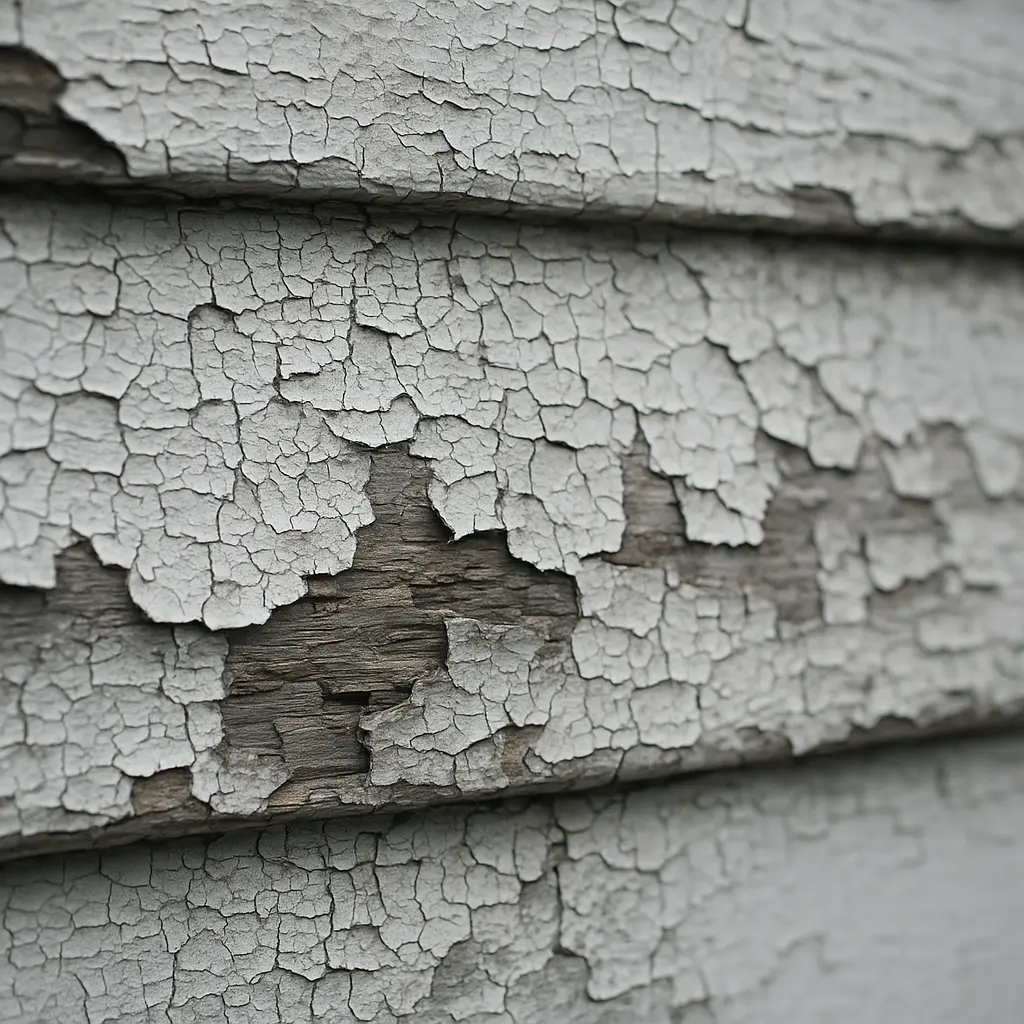
When paint starts cracking in an alligator-skin pattern or peeling away from the surface in sheets, you’re seeing a failure cascade. The paint film has lost adhesion to the substrate, typically because moisture trapped behind the coating is pushing it off during freeze-thaw cycles or daily temperature swings.
In practice, we see this most often on older homes where the original paint was applied over dirty or wet surfaces, or where previous painters skipped proper prep work. The Fraser Valley’s rain patterns make this particularly problematic. Water enters through one crack, spreads horizontally behind the paint film, and creates expanding damage areas that grow exponentially each winter.
Pro tip: If you can peel paint off in strips larger than a credit card, you’re past the repainting stage and into full surface preparation territory, which adds 40-60% to project costs compared to repainting sound surfaces.
Different Types of Paint Failure
Not all cracking signals the same problem. Fine hairline cracks in a single direction usually indicate normal aging and can be addressed with spot prep and recoating. Cross-hatched cracking that goes down to bare wood means the wood itself is expanding and contracting, which requires investigation of moisture sources before any paint work begins.
Peeling that occurs in multiple layers, like an onion, tells us previous painters applied new coats over failing old ones without proper preparation. This is one of the most common exterior painting signs we encounter when evaluating homes that have been painted multiple times by different contractors.
Fading and Discoloration
Faded paint isn’t just an aesthetic issue. When pigments break down under UV exposure, the protective resin matrix that binds the paint together degrades simultaneously. Your paint may still look passably decent from the street, but it’s no longer protecting your siding from moisture absorption.
The data consistently shows that south and west-facing walls in the Fraser Valley fade 2-3 times faster than north-facing surfaces. We regularly see homes where one elevation needs complete repainting while the opposite side appears nearly new. Dark colors fade faster and more noticeably than light neutrals, which is why we often recommend mid-tone colors for house painting Fraser Valley projects.
Chalking and Surface Degradation
Run your hand across your siding. If it comes away with a powdery residue that looks like chalk dust, the paint binders have broken down. This chalking process is actually designed into some paints as a self-cleaning mechanism, but excessive chalking means the coating has reached the end of its protective life.
According to industry standards published by the Paint Quality Institute, once chalking becomes moderate to heavy, the paint has lost approximately 60-70% of its weather resistance. At this stage, repainting isn’t just about appearance, it’s about preventing the accelerated wood degradation that occurs once protective coatings fail.
Paint manufacturers design most exterior coatings to provide 7-10 years of full protection in typical climates, but the Fraser Valley’s combination of UV intensity in summer and sustained moisture in winter reduces this to 6-8 years for most products.
Caulking Failure Around Windows and Doors
Look closely at the caulk joints around your windows, doors, and trim boards. If you see gaps, cracks, or sections where the caulk has pulled away from the surface, you have active pathways for water infiltration. This is one of the most overlooked warning signs that it’s time to repaint.
The problem compounds quickly. Water enters through failed caulk joints, saturates the wood trim and sheathing behind it, then freezes and expands during cold snaps. This cycle repeats throughout winter, creating hidden damage that doesn’t become visible until rot has progressed significantly.
A common mistake is thinking you can just recaulk without repainting. Fresh caulk won’t bond properly to old, weathered paint and will fail again within a year. Proper exterior painting includes removing old caulk, preparing surfaces, applying primer where needed, then using high-quality paintable caulk before finish coats.
Signs of Hidden Water Damage
Pay attention to paint bubbling or blistering near windows and doors. These bubbles form when water vapor trapped in the wood pushes through the paint film. If you pop a blister and find water or wet wood underneath, you have active moisture problems that need immediate attention.
In our experience serving Abbotsford and Langley homeowners, window trim is the most common location for expensive hidden damage. The horizontal sills collect water, failed caulk lets it penetrate, and within 2-3 years you’re replacing trim boards instead of just painting them.
Pro tip: Before hiring any painting contractor, specifically ask how they handle caulk removal and replacement, what products they use, and whether their estimate includes all necessary caulking work. This separates quality contractors from those who just roll paint over problems.
Wood Damage and Exposed Substrate
Any section of bare wood exposed to weather represents an emergency timeline. In the Fraser Valley climate, unprotected wood absorbs moisture during our wet season, then dries and cracks during summer. This cycle degrades wood fiber rapidly, with visible rot often appearing within a single year of exposure.
Check the bottom edges of siding boards, especially near the foundation or where horizontal surfaces meet vertical ones. These areas collect water and are first to show damage. If you can push a screwdriver into the wood easily, or if the wood feels soft and spongy, you’re already dealing with rot that requires replacement before painting.
| Damage Type | Timeline to Rot | Repair Required |
|---|---|---|
| Bare wood exposed on vertical siding | 12-18 months | Spot prime and paint within 30 days |
| Bare wood on horizontal trim or sills | 6-12 months | Immediate sealing required, possible replacement |
| Wood showing dark staining or discoloration | Decay already started | Remove affected sections, treat surrounding areas, prime, and paint |
| Soft or spongy wood texture | Advanced rot present | Full board replacement plus investigation of moisture source |
The Rot Progression Timeline
Wood rot doesn’t happen uniformly. It starts at the point of water entry, then spreads through the wood fiber as fungal organisms colonize the material. By the time you see surface evidence like dark staining or soft spots, the rot typically extends 2-4 inches beyond the visible damage.
We’ve seen countless situations where homeowners delayed painting for one extra year, turning a straightforward repaint into a project requiring extensive carpentry repairs. The cost difference is substantial. A typical exterior repaint on a 2,500 square foot home might run $8,000-12,000, while the same house with significant rot damage requiring wood replacement can easily exceed $15,000-20,000.
Timing Your Paint Job Right
Most Fraser Valley homeowners wait until damage is obvious before calling for estimates. This reactive approach costs more and delivers less value. The optimal time to repaint is when the existing coating still provides baseline protection but shows early warning signs like minor fading, the beginning of chalking, or isolated areas of wear.
For homes painted with quality products and proper preparation, this sweet spot typically occurs at the 7-9 year mark. Repainting at this stage requires minimal surface prep, allows paint to bond properly to the existing coating, and costs 30-40% less than waiting until you have widespread failure requiring extensive scraping, sanding, priming, and wood repairs.
Seasonal Considerations for Fraser Valley
The best time for exterior painting here runs from late April through September. We need consistent temperatures above 10°C and low humidity for proper paint curing. Early spring (April-May) offers ideal conditions with moderate temperatures and lower demand, meaning better scheduling flexibility and often better pricing than peak summer months.
Avoid painting in July and August if possible. These are the busiest months, quality contractors are often booked solid, and extreme heat can cause paint to dry too quickly, leading to poor adhesion and premature failure. September provides excellent conditions but requires early booking as contractors fill schedules through the remaining good weather.
Paint Life Expectancy Reality
Paint manufacturers advertise 15-20 year lifespans, but those numbers assume ideal application conditions, perfect surface preparation, and moderate climate exposure. In practice, expect 8-12 years from a high-quality paint job in our region, with variations based on color choice, surface exposure, and preparation quality.
Dark colors on south and west elevations may need attention at 6-7 years, while north-facing light colors might last 10-12 years. This is why experienced house painting Fraser Valley contractors often recommend different maintenance schedules for different elevations of the same house.
The most expensive paint job is the cheap one that fails in 3-4 years. Proper surface preparation accounts for 70-80% of paint longevity, while paint quality accounts for only 20-30%. This is why the lowest quote is rarely the best value.
Cost Implications of Delayed Maintenance
Every year you delay needed exterior painting adds to eventual project costs. Minor surface prep turns into extensive scraping. Spot priming becomes full-surface priming. Intact wood becomes rotted boards requiring replacement. We regularly see homeowners save $2,000-3,000 in the short term by delaying painting, only to spend an additional $5,000-8,000 when they finally proceed because of compounded damage.
Insurance companies understand this progression. Most standard homeowner policies exclude damage resulting from deferred maintenance, meaning rot and structural issues arising from failed paint protection often aren’t covered. You’re not just risking higher painting costs, you’re risking expensive repairs that come entirely out of pocket.
Frequently Asked Questions
How often should I paint my house exterior in the Fraser Valley?
Plan on repainting every 8-10 years for most homes with quality paint and proper preparation. Homes with significant south or west exposure, dark colors, or cedar siding may need attention every 6-8 years. Rather than following a strict schedule, inspect your home annually for the five warning signs covered in this article. When you spot two or more of these indicators, start planning your paint project for the next appropriate season.
Can I just paint over peeling paint?
No. Paint applied over loose or peeling coating will fail within 1-2 years, wasting your entire investment. All loose paint must be scraped off, edges feathered smooth, bare wood primed, and surfaces cleaned before new paint application. This preparation work takes 60-70% of total project time but determines whether your paint job lasts 2 years or 10 years. Any contractor who suggests painting over peeling surfaces without proper prep should be eliminated from consideration immediately.
What causes paint to fail faster on some parts of my house?
Sun exposure is the primary factor. South and west-facing walls receive 3-4 times more UV radiation than north-facing surfaces, breaking down paint pigments and binders faster. Horizontal surfaces like window sills and porch railings collect water and fail faster than vertical siding. Areas near sprinklers or under roof driplines experience constant moisture exposure that accelerates paint breakdown. Dark colors absorb more heat, causing greater expansion and contraction that stresses the paint film.
Is there a best time of year to paint house exteriors in this region?
Late April through June and September offer optimal conditions, with moderate temperatures, lower humidity, and less extreme heat than July and August. Paint needs temperatures above 10°C and below 30°C for proper curing, with minimal overnight moisture. Early spring provides the best contractor availability and often better pricing since demand is lower than peak summer. Avoid painting during our rainy season from October through March, as moisture prevents proper adhesion and curing regardless of temperature.
How do I know if I need a full repaint or just touch-ups?
If damage or fading affects more than 30-40% of any single elevation, full repainting of that side is more cost-effective than spot work. Touch-ups rarely match existing faded paint and create a patchy appearance that looks worse than the original problem. When multiple warning signs appear simultaneously, cracking on one wall, fading on another, failed caulking throughout, you need comprehensive repainting. Small isolated damage from a specific incident like hail or a ladder strike can be touched up if the surrounding paint is in good condition.
What should I look for when hiring an exterior painting contractor?
Verify business licensing and insurance, specifically asking for proof of WorkSafeBC coverage and $2 million liability insurance. Request references from projects completed 5+ years ago to confirm paint durability. Ask detailed questions about surface preparation methods, not just paint products. A quality contractor spends more time discussing prep work than paint colors. Get itemized written estimates that specify paint brands, number of coats, prep work included, and warranty terms. The lowest quote typically indicates shortcuts in preparation that guarantee early failure.
Have you noticed any of these warning signs on your own home, or do you have questions about specific damage you’re seeing? Share your experience in the comments below.

