

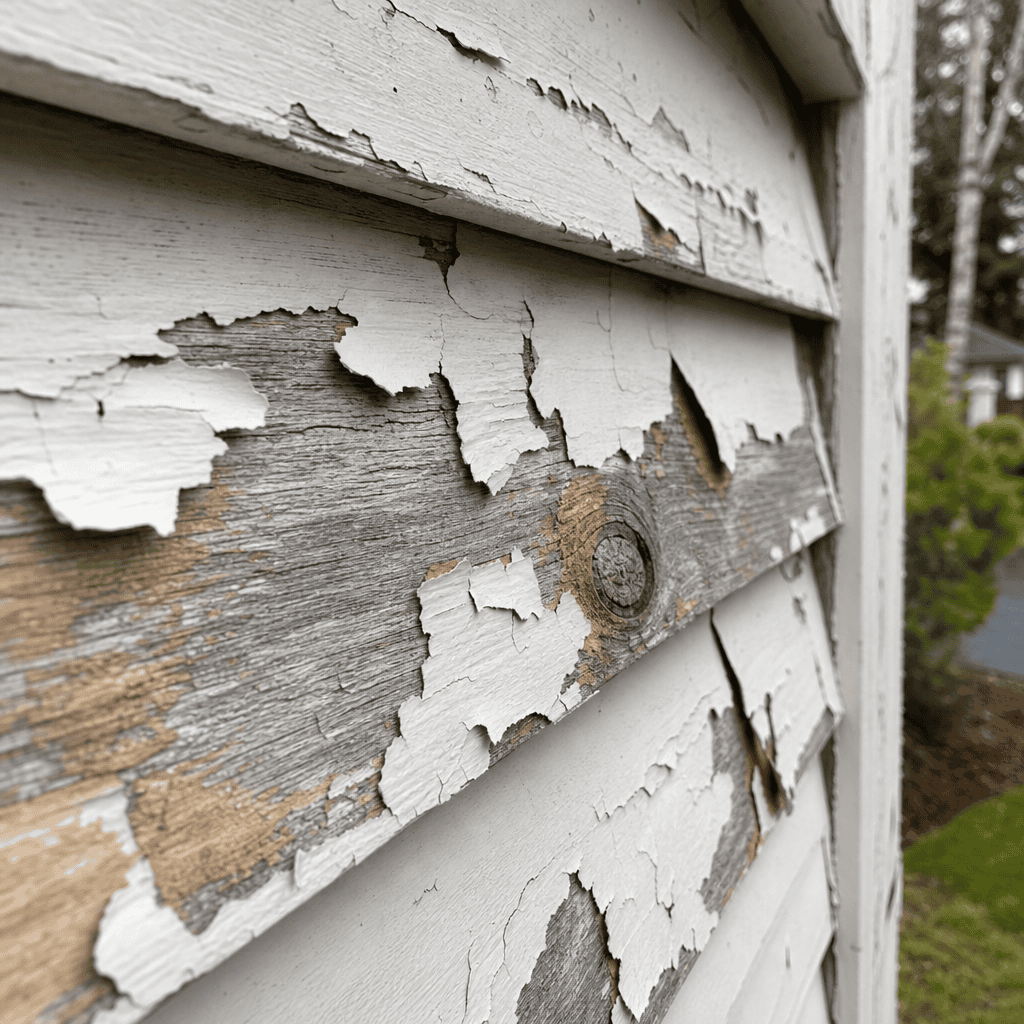
Most homeowners in the Fraser Valley and Lower Mainland wait too long. They notice a bit of peeling, think it will hold another season, and end up paying significantly more for repairs that compound year over year. Exterior painting in Vancouver and the surrounding region is not purely cosmetic work. It is your home’s first line of defence against one of the wettest climates in Canada. If your paint fails, moisture follows. If moisture follows, wood rot, mold, and structural damage are not far behind. This article gives you seven concrete, visual signs that your exterior paint has reached the end of its service life and needs professional attention this summer.
Table of Contents
- Quick Takeaways
- Sign 1: Peeling and Flaking Paint Panels
- Sign 2: Chalky Residue on the Surface
- Sign 3: Significant Fading and Discoloration
- Sign 4: Cracking, Bubbling, or Blistering Paint
- Sign 5: Visible Wood Rot or Moisture Staining
- Sign 6: Mold or Mildew Growth on Exterior Surfaces
- Sign 7: You Cannot Remember the Last Time It Was Painted
- Comparing Paint Failure Levels: What They Mean for Your Budget
- Frequently Asked Questions
- References
Quick Takeaways
| Key Insight | Explanation |
|---|---|
| Peeling is never cosmetic | Once paint loses adhesion, moisture penetrates the substrate immediately. This is structural risk, not just an eyesore. |
| Chalking signals UV breakdown | A chalky, powdery film on siding means the paint binder has degraded. New paint will not bond properly over it without prep work. |
| Fraser Valley weather accelerates paint failure | High annual rainfall, freeze-thaw cycles, and UV exposure in the Lower Mainland shorten exterior paint life compared to drier climates. |
| Mold on paint means moisture is already inside | Mold growth on exterior siding is a warning sign that moisture has compromised the paint film and possibly the wood underneath. |
| The 7-to-10-year rule applies locally | Most quality exterior paint systems last 7 to 10 years in the Lower Mainland. Beyond that, preventive repainting is always cheaper than remediation. |
| Preparation accounts for 80% of the result | A fresh coat applied over failing paint will fail again within two years. Proper surface prep, priming, and repair are non-negotiable steps. |
| Colour fade reduces property value perception | Severely faded exteriors reduce curb appeal scores in appraisals and slow real estate transactions, according to property value research. |
Sign 1: Peeling and Flaking Paint Panels
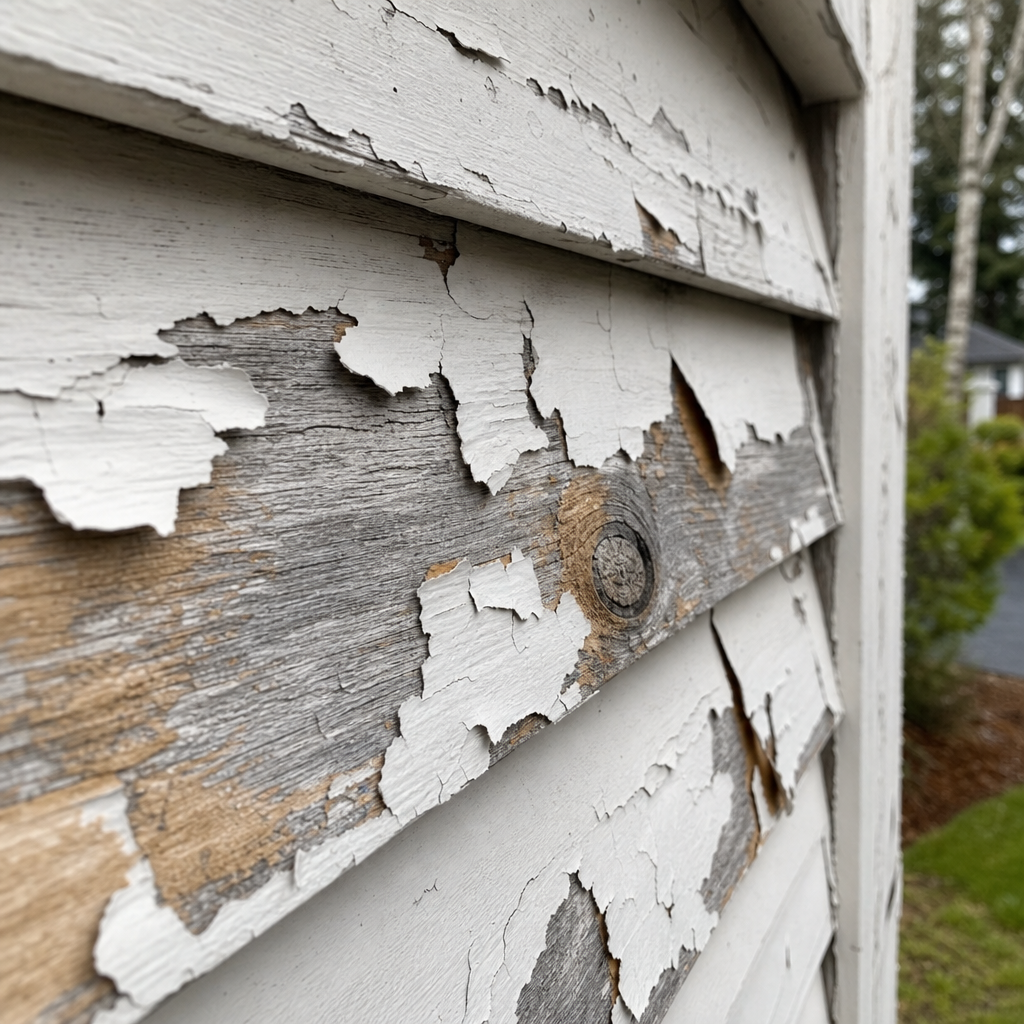
Peeling paint is the most obvious and the most urgent sign on this list. When paint separates from the substrate in sheets or curls away from the edges of boards, the protective barrier is gone. Rain, dew, and condensation now reach bare wood or previous paint layers directly.
In practice, peeling almost always starts at trim pieces, window frames, fascia boards, and anywhere two surfaces meet at an angle. These are the spots that trap moisture the longest. Peeling at substrate level, meaning the paint is pulling away from bare wood rather than just from an older paint layer, is the most serious form and requires spot repairs or full board replacement before repainting can begin.
A common mistake is to scrape the loose material, apply a quick coat, and call it done. That approach fails within one to two seasons. The fix requires stripping to a sound layer, sanding edges smooth, priming exposed wood, and applying two topcoats rated for exterior use in a wet climate. Dreamscape Painting’s crews serving Abbotsford, Langley, Surrey, and the wider Fraser Valley see this shortcut result in repeat calls constantly.
Pro tip: Run your hand lightly along the siding. If paint flakes off without any pressure, you are past the point of touch-ups. A professional assessment is the correct next step, not a hardware store patch kit.
Sign 2: Chalky Residue on the Surface
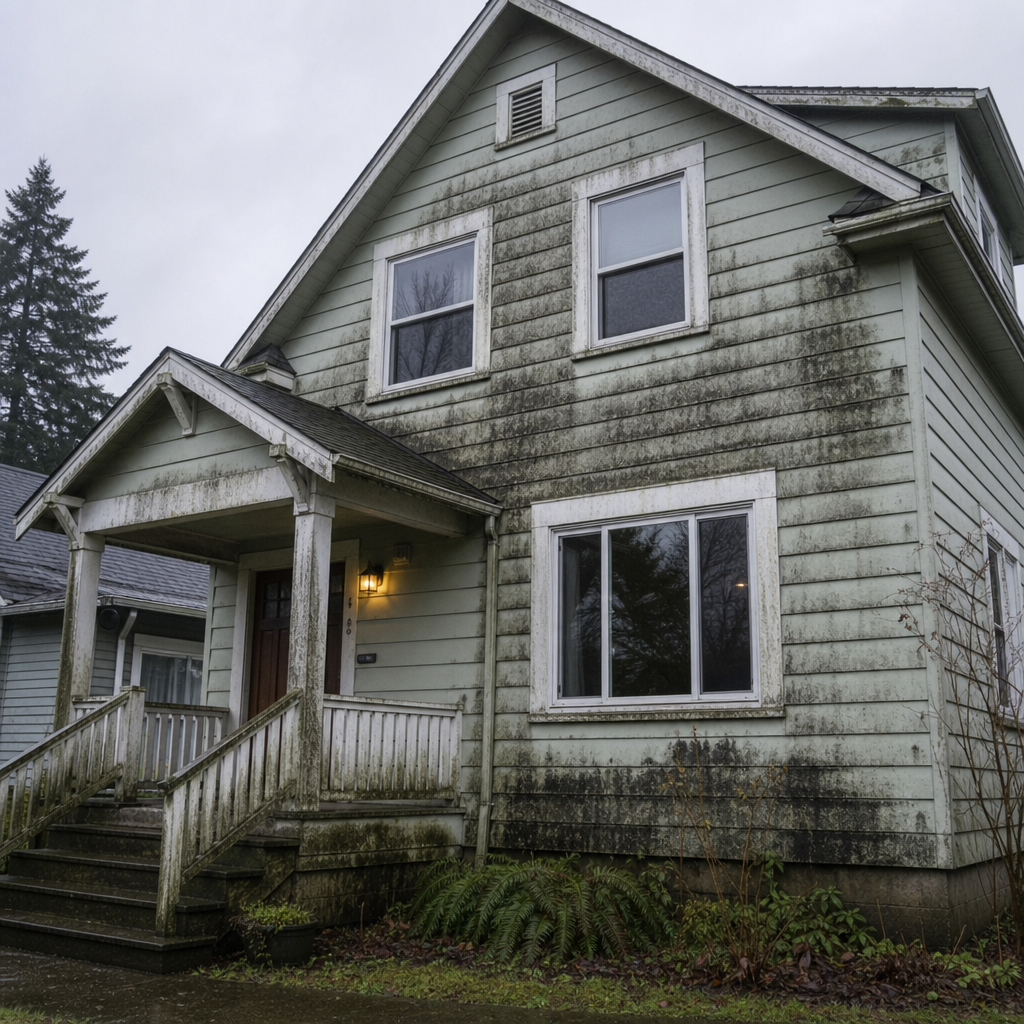
Drag a clean, dark cloth across your siding. If it comes away coated with a white or grey powder, your paint is chalking. This is a normal end-of-life process for exterior paint: UV radiation breaks down the binder in the paint film, and the pigment particles release to the surface as powder.
Chalking is not dangerous on its own, but it signals that the paint has exhausted its UV-protective capacity. Painting directly over a chalked surface without washing and priming will produce adhesion failure within a year. The new paint has nothing solid to bond to.
The correct preparation sequence for a chalked surface involves pressure washing to remove loose chalk, hand-sanding to knock down the surface profile, and applying a penetrating bonding primer before any topcoat. Skipping the primer step is where many DIY repaints go wrong in this region.
Sign 3: Significant Fading and Discoloration
Sun exposure on south and west-facing elevations is the primary driver of colour fade. In the Lower Mainland, UV intensity between May and September is stronger than most people expect given the overcast reputation of the region. Paint on southwest-facing walls can look a full two shades lighter than the same colour on a north-facing wall of the same house.
Fading alone does not mean the paint film has failed mechanically. But uneven discoloration, where some areas have shifted colour dramatically while others have not, often indicates that the original coat was applied unevenly or that the substrate has irregular moisture content beneath the paint.
If your home’s exterior looks noticeably different in photographs compared to how it looked five or six years ago, that is a reliable visual trigger. Paint designed for exterior use in coastal and wet climates should hold its colour for at least seven years under normal conditions. Fading before that point suggests the original product or application did not meet the standard.
Pro tip: Take a photograph of your exterior today and compare it against any photograph from four or more years ago. Colour delta is far more obvious in a side-by-side comparison than it is when you look at the house every day.
Sign 4: Cracking, Bubbling, or Blistering Paint
Cracking and bubbling are distinct problems with different root causes, but both signal that the paint film has lost integrity. Hairline cracking, sometimes called alligatoring when it forms a scaly pattern across a wide area, happens when the top layer of paint ages faster than the layers beneath it. The surface becomes rigid while the substrate shifts slightly with temperature and humidity, and the paint cracks to relieve that tension.
Bubbling or blistering, on the other hand, is almost always a moisture problem. Blisters form when moisture trapped beneath the paint vaporizes and pushes the film away from the surface. In the Fraser Valley, this is particularly common on north-facing walls that stay damp and on areas near downspouts and gutters that channel water toward the siding.
Pop a blister. If the blister contains liquid, the moisture source is external, meaning rain or condensation is getting behind the paint. If the blister is dry inside, the moisture migrated from the interior of the house through the wall assembly. The second scenario requires investigation of insulation, vapour barriers, and ventilation before repainting, or the problem will return.
Sign 5: Visible Wood Rot or Moisture Staining
Wood rot is what happens after exterior paint protection breaks down and moisture has had months or years to work on the substrate. You will find it most often at the base of siding boards, around window sills, at the bottom of door frames, and anywhere horizontal surfaces collect water.
Press a screwdriver or a key into suspicious-looking wood. If it sinks in with little resistance, or if the wood feels spongy and comes apart in fibrous chunks, rot is present. Rotted wood cannot be painted over. It must be cut out and replaced with new primed lumber, or treated with an epoxy consolidant and filler designed for exterior wood repair, before any painting begins.
Moisture staining, the rust-coloured or grey streaking you sometimes see running down siding from metal fasteners or window flashing, indicates water is tracking where it should not be. Painting over staining without sealing the source will cause the stain to bleed through new paint within one season, regardless of how many coats are applied.
Dreamscape Painting’s estimators have assessed hundreds of homes across Abbotsford, Langley, and Surrey where rot was found during a pre-paint inspection that the homeowner had not noticed. Catching rot at the inspection stage is far less costly than finding it after a buyer’s home inspection during a sale.
Sign 6: Mold or Mildew Growth on Exterior Surfaces
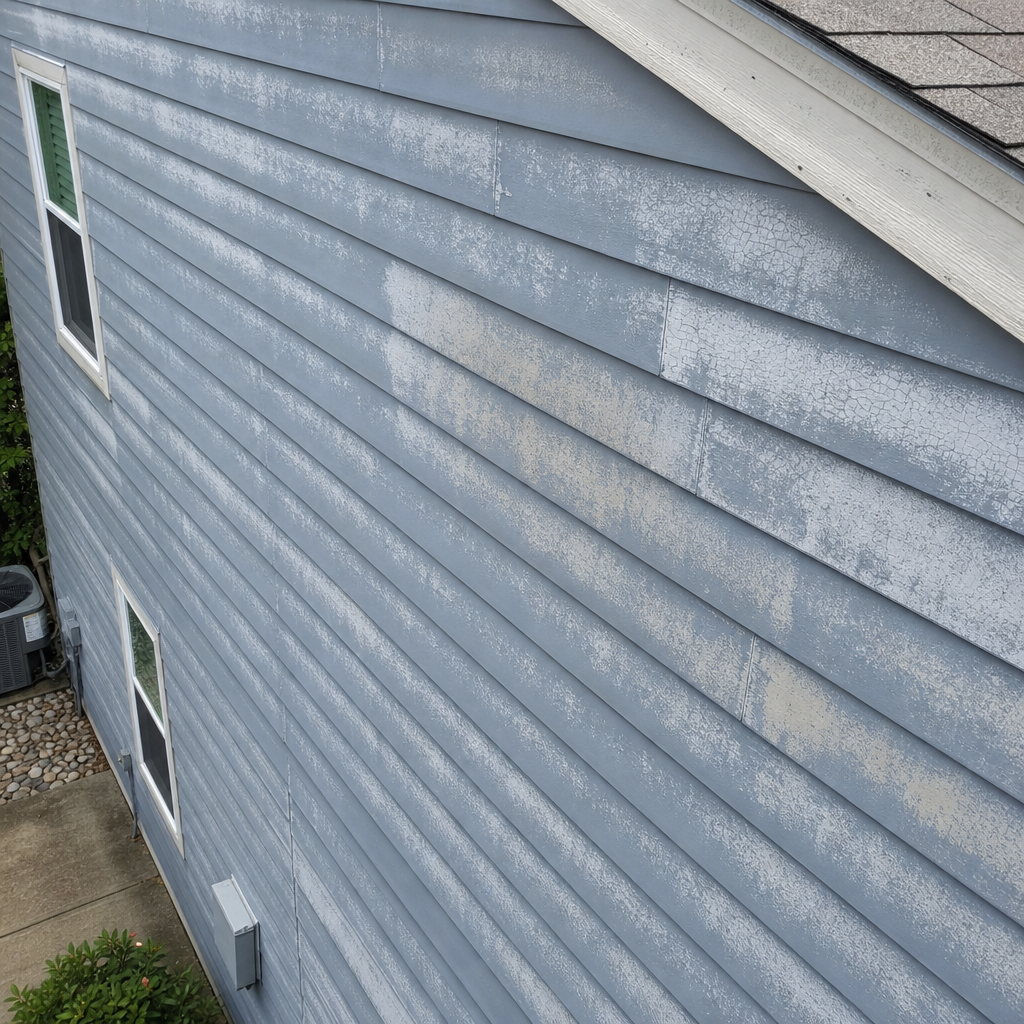
Black, green, or grey patches on exterior siding are often dismissed as dirt. In the Lower Mainland, they are almost always biological growth, specifically mold or mildew colonizing the paint film itself. The region’s combination of high annual rainfall and moderate temperatures creates near-ideal conditions for mold growth on any surface that stays damp for extended periods.
Mold on paint does not mean the wood beneath is necessarily rotted, but it does mean the paint film is no longer functioning as a clean, sealed barrier. Mold produces organic acids that degrade paint binders over time and can accelerate the peeling and flaking process described in Sign 1.
“Biological growth on exterior surfaces is one of the most underestimated maintenance issues in the Pacific Northwest. Homeowners often treat it as a cosmetic problem, but mold on siding is a signal that the moisture management of the exterior envelope deserves a professional review.” – Building Science Corporation, residential moisture management guidance
Treating mold before repainting is not optional. Power washing alone is insufficient because it does not kill the root structure of the organism. The correct sequence is a biocide wash, a dwell period, a rinse, and then surface preparation before primer and paint. Any painting contractor in the Fraser Valley worth hiring will include this step as part of a proper exterior paint specification.
Sign 7: You Cannot Remember the Last Time It Was Painted
This one sounds obvious, but it is genuinely one of the most reliable indicators. Most quality exterior paint systems applied properly to prepared wood siding in the Lower Mainland will last between seven and ten years. If you have owned your home for eight or more years and cannot confirm a repaint happened in that time, the paint is statistically near or past its service life regardless of how it looks on a sunny day.
Weather in the Fraser Valley and Lower Mainland is not gentle on exterior coatings. Annual rainfall in Abbotsford averages approximately 1,500 millimetres per year. Langley and Surrey see similar numbers. That moisture, combined with freeze-thaw cycles in winter and UV load in summer, degrades paint film at a measurable rate.
The 10-year mark is a hard ceiling for most exterior paint systems in this climate, even when the paint looks superficially intact. Paint that looks fine at year nine may be one wet winter away from failing across large sections simultaneously, which is the most expensive scenario for remediation.
If you are preparing to sell, refinance, or simply want to protect the investment you have made in your home, a preventive repaint at the seven-to-eight-year mark is always cheaper than reactive repainting combined with substrate repairs at year twelve or thirteen.
Comparing Paint Failure Levels: What They Mean for Your Budget
Not all paint failure is equal in urgency or cost. Understanding where your home falls on the scale helps you plan a realistic budget and timeline for exterior house painting work with a qualified painting contractor in the Fraser Valley.
| Failure Level | Visual Signs Present | Typical Scope of Work Required |
|---|---|---|
| Early Stage (Years 5-7) | Minor fading, light chalking on one elevation, no peeling or cracking | Surface wash, light sanding, spot prime, two topcoats. Minimal substrate repair. Most cost-effective time to repaint. |
| Mid Stage (Years 7-10) | Noticeable fading, chalking on multiple elevations, isolated peeling at trim, possible light staining | Pressure wash, biocide treatment if mold present, scrape and sand all loose material, prime bare areas, two topcoats. Some trim board replacement possible. |
| Late Stage (Years 10+) | Widespread peeling or alligatoring, blistering, visible rot, mold colonization, staining throughout | Full strip or aggressive preparation, rotted board replacement, flashing and caulking repairs, bonding primer throughout, two quality topcoats. Highest total cost. Substrate repairs add significant labour and material expense. |
The pattern is consistent: catching exterior paint failure at the early or mid stage reduces the total project cost substantially because the preparation time is shorter and substrate repairs are minimal or absent. Homeowners who wait for the late stage often pay two to three times more than those who acted at the first warning signs.
Frequently Asked Questions
How long does exterior paint last in the Lower Mainland climate?
Quality exterior paint applied over properly prepared surfaces in the Fraser Valley and Lower Mainland typically lasts seven to ten years. Homes with significant north-facing exposure, overhanging trees, or poor drainage near the foundation often see paint fail closer to the seven-year end of that range due to sustained moisture exposure. Homes with good sun exposure and excellent drainage can sometimes reach ten to twelve years on protected elevations.
Can I paint over peeling exterior paint without stripping it?
No. Painting over peeling paint is one of the most common and costly mistakes in exterior maintenance. New paint applied over a substrate with adhesion failure will itself fail within one to two seasons because it has no sound layer to bond to. The correct approach is to scrape all loose material, sand edges smooth to remove the feathered transition, prime exposed wood or substrate, and then apply topcoats. The preparation work is what makes the paint job last.
What are the signs of moisture damage behind exterior paint?
The clearest signs are blistering or bubbling paint where the blister contains liquid when popped, soft or spongy wood when pressure is applied with a screwdriver, rust-coloured staining running vertically from metal fasteners or window flashing, and mold or mildew patches that return quickly after cleaning. Any of these signs warrants a professional inspection before repainting, because painting over active moisture intrusion will produce a failed paint job regardless of the quality of the product used.
How do I know if I need a painting contractor or if I can do the exterior myself?
If the work involves only repainting a sound, clean surface with no peeling, rot, or mold, and the home is single-storey with accessible walls, an experienced DIY painter can achieve a reasonable result with quality materials and proper prep. However, if there is any peeling, blistering, rot, mold, cracking at the substrate level, or if the home is two storeys or more, hiring an experienced painting contractor serving the Fraser Valley is the smarter choice. Ladder safety, substrate repairs, proper sequencing, and product selection at that scale require professional experience to execute correctly.
What is the best time of year to paint the exterior of a home in the Fraser Valley?
Late spring through early fall is the optimal window, specifically May through September. Exterior latex paint requires surface temperatures above 10 degrees Celsius and no rain in the forecast for at least 24 to 48 hours after application. The Lower Mainland’s wet winters and cool early springs make November through March largely unsuitable for exterior painting. Summer provides the longest reliable dry windows, which is why booking a professional painting contractor early in the season is advisable before their schedules fill.
Does faded exterior paint mean the surface is unprotected?
Fading alone does not mean the paint film has lost its protective function entirely. A faded but intact paint film without peeling, cracking, or chalking may still be providing reasonable moisture protection. However, significant UV-driven fading typically correlates with binder degradation, which means the film is thinner and less flexible than it was. At that point, the next season’s freeze-thaw cycles are likely to produce cracking or peeling. Fading is a reliable signal that a repaint should be planned within the next one to two years.
If you have spotted one or more of these signs on your home this summer, share what you found in the comments or reach out to the Dreamscape Painting team for a professional assessment. We want to hear what condition your exterior is in and whether the signs matched your expectations.
We would love your feedback and any insights you would share with others. What perspective would you add?
References
- Statista: home improvement industry data and residential painting market statistics
- Forbes: home value and curb appeal research for residential property owners
- U.S. Department of Energy: building envelope moisture management and exterior cladding performance guidance
- National Research Council Canada: exterior building materials performance standards in Canadian climates
- HGTV: practical exterior painting preparation and maintenance guidance for homeowners

