

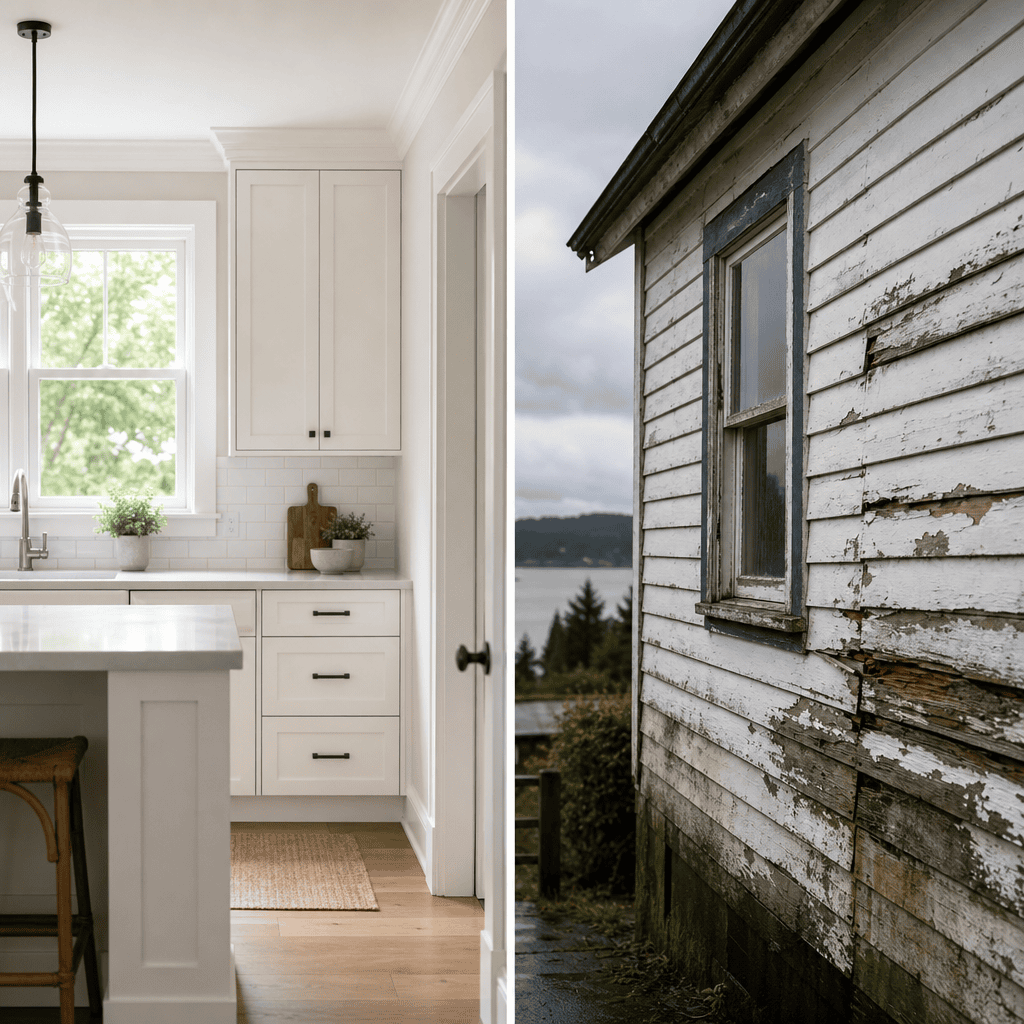
Most homeowners in Abbotsford, Surrey, and Langley treat interior and exterior painting as variations of the same job. They are not. The materials, timing, preparation standards, and failure modes are fundamentally different. Getting this wrong costs real money. A misapplied exterior paint on an interior surface can off-gas volatile organic compounds for months. An interior-grade paint used outside will crack, peel, and blister within a single Lower Mainland winter. This guide breaks down what separates the two disciplines, why the Fraser Valley’s climate makes exterior work especially unforgiving, and how to make smart decisions when planning any interior painting Lower Mainland or exterior project.
Table of Contents
- Quick Takeaways
- Why Interior and Exterior Paints Are Not Interchangeable
- The Lower Mainland Climate Factor
- Surface Preparation Differences
- Timing and Scheduling Your Project
- Cost Comparison: Interior vs. Exterior
- Choosing the Right Professional Painter
- Frequently Asked Questions
- References
Quick Takeaways
| Key Insight | Explanation |
|---|---|
| Paint formulations are not interchangeable | Exterior paints contain UV inhibitors and mildewcides that release fumes unsafe for enclosed indoor spaces. Interior paints lack the flexibility additives needed to survive freeze-thaw cycles. |
| Lower Mainland rain ruins poorly timed exterior jobs | Paint applied to damp substrates in the Fraser Valley fails adhesion testing within months. Humidity above 85% prevents proper film formation. |
| Interior prep focuses on cleanliness and adhesion | Walls must be patched, sanded, and primed before topcoats. Skipping primer on previously painted glossy surfaces is the most common cause of peeling interior walls. |
| Exterior prep is more physically intensive | Proper exterior preparation includes pressure washing, scraping, caulking all penetrations, and applying a bonding primer to bare wood. This alone can take one to two full days on an average Fraser Valley home. |
| Summer is not automatically the best time for exterior work | Direct sun above 30 degrees Celsius causes latex paint to dry too fast, leaving lap marks. Morning application on shaded elevations produces the most consistent finish. |
| VOC content matters more indoors than outdoors | BC’s climate means homes are sealed tight for much of the year. Low-VOC and zero-VOC interior paints protect indoor air quality, especially in homes with children or respiratory sensitivities. |
| Professional painters carry project-specific expertise | A company with 35 years of experience in the Lower Mainland has seen what fails in this specific climate. Generic painting advice from national sources does not account for Fraser Valley rain patterns or coastal humidity. |
Why Interior and Exterior Paints Are Not Interchangeable
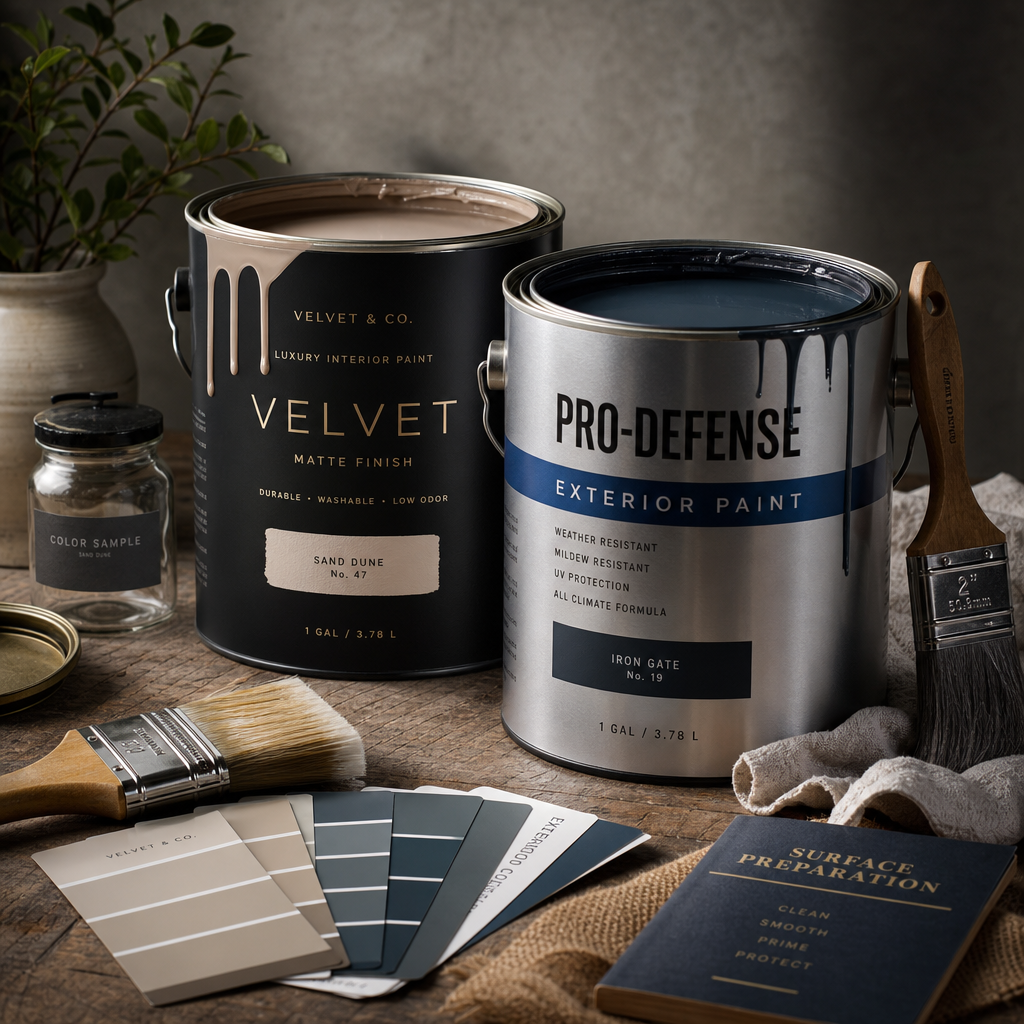
The chemistry behind paint is what separates a product built for indoor walls from one engineered to survive a Langley winter. Exterior paints use flexible resin binders, typically 100% acrylic, that expand and contract with temperature swings. Interior paints are formulated for scrub resistance, low odour, and colour retention under artificial lighting, not for thermal movement or UV degradation.
A common mistake is assuming that a premium interior paint will hold up on a covered porch or a garage door. It will not. The film will crack along grain lines in wood siding within one to two seasons. Conversely, exterior-grade paints release higher levels of volatile organic compounds during and after application. Using them inside a sealed home in Surrey or Abbotsford, where windows are often closed for eight months of the year, creates an indoor air quality problem that lingers.
In practice, the resin content, plasticizer type, and additive package are fundamentally different between product categories. Sherwin-Williams, Benjamin Moore, and other major manufacturers publish separate interior and exterior product lines for exactly this reason. Treating the distinction as a marketing preference rather than a technical requirement is a mistake that leads to premature paint failure and wasted project budgets.
“The single most common source of exterior paint failure we see in the Lower Mainland is the wrong product applied to the wrong surface. Second is inadequate surface preparation. Everything else is a distant third.” – Dreamscape Painting Ltd., based on 35 years of project experience in the Fraser Valley
Pro tip: Always check the product label for the temperature range and humidity tolerance before scheduling your exterior project. Most exterior latex paints require surface temperatures between 10 and 32 degrees Celsius and relative humidity below 85%. In the Lower Mainland, these conditions narrow your reliable painting window considerably.
The Lower Mainland Climate Factor
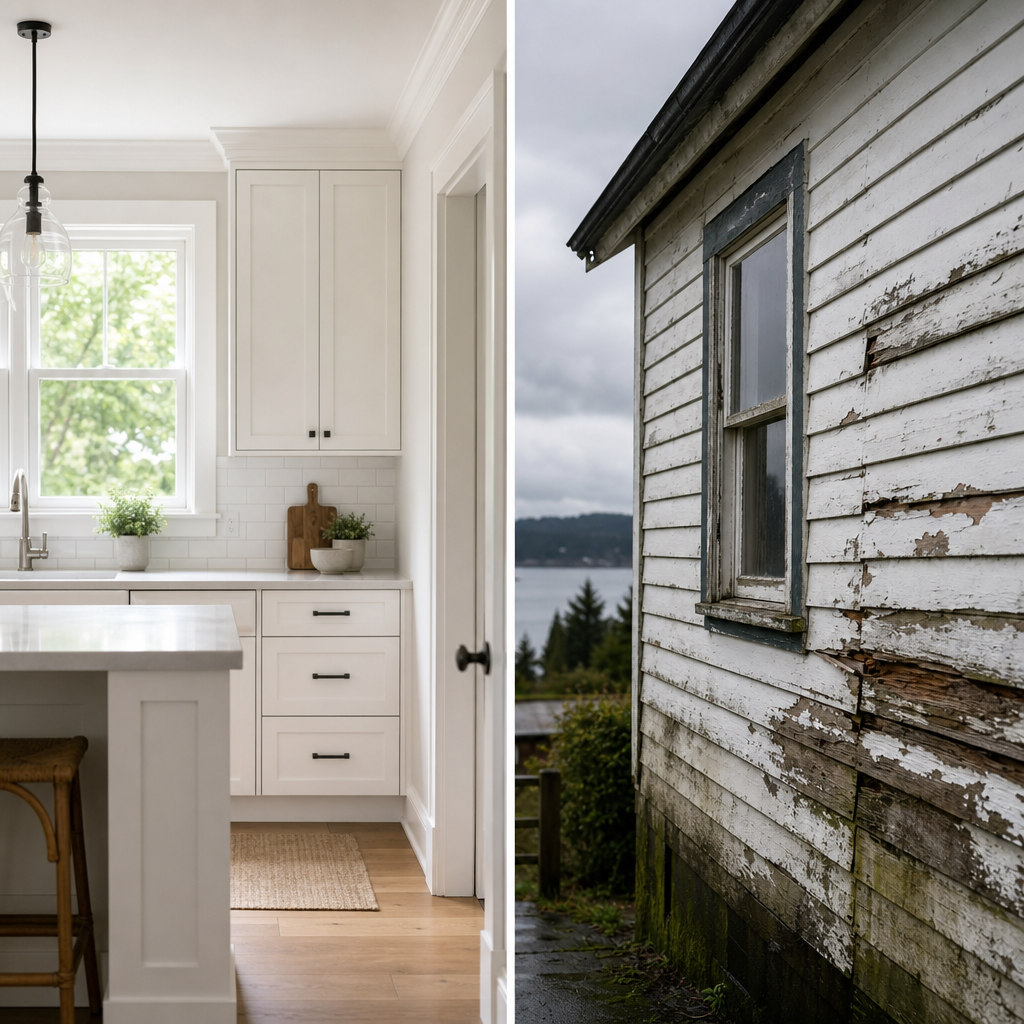
The Fraser Valley receives an average of 1,153 millimetres of rainfall annually, with the bulk falling between October and April. This is not a minor scheduling inconvenience. It is the defining variable in any exterior painting Lower Mainland project. Wet substrates, whether wood, stucco, or fibre cement, will reject paint adhesion no matter how good the product is.
Moisture and Substrate Readiness
Wood siding must test below 15% moisture content before paint application. In practice, after a typical Lower Mainland rain event, wood siding can take 48 to 72 hours to dry sufficiently, even in partial sun. Painters who skip moisture testing are gambling with your investment. Experienced local contractors use handheld moisture meters as a standard pre-application check, not an optional one.
Stucco is even more demanding. This common exterior finish throughout Surrey, Langley, and Abbotsford can hold moisture deep in the substrate long after the surface appears dry. Painting over damp stucco traps moisture behind the film and causes efflorescence, blistering, and mildew growth within a single rainy season.
Mildew and Algae Resistance
The Lower Mainland’s combination of rainfall and mild temperatures creates near-ideal conditions for mildew and algae growth on exterior surfaces. North-facing walls and areas shaded by trees are especially vulnerable. Quality exterior paints for this region should include mildewcide additives as a baseline, not an upgrade. This is one reason why premium exterior product lines consistently outperform budget options in the Lower Mainland over a five to seven year repaint cycle.
Interior projects are less affected by climate but not immune. Bathrooms, kitchens, and laundry areas in Lower Mainland homes deal with persistent humidity. Choosing a moisture-resistant interior paint with a semi-gloss or satin sheen in these areas is a straightforward decision that significantly extends the life of the finish.
Pro tip: If you are planning an exterior repaint in Abbotsford or the Fraser Valley, aim for a project window between late May and early September. This is not absolute, but it gives you the best statistical chance of consistent dry conditions. Book early because professional painters fill these dates quickly in the Lower Mainland market.
Surface Preparation Differences
Preparation is where professional painters separate themselves from weekend DIY results. This is true for both interior and exterior work, but the scope and complexity differ significantly between the two.
Interior Preparation Standards
Interior prep focuses on achieving a smooth, clean, adhesion-ready surface. This means filling nail holes and cracks with the appropriate compound, sanding glossy existing surfaces to break the sheen, applying primer where bare drywall or plaster is exposed, and protecting floors and trim with quality masking. Skipping the primer step on bare drywall is the most common mistake in DIY interior projects. Unprimed drywall absorbs paint unevenly, producing flat spots and colour variation that require multiple additional coats to hide.
For house painting Vancouver and Fraser Valley homeowners doing interior repaints, wiping down walls with a mild degreaser before painting is often overlooked. Kitchen walls accumulate grease vapour. Bathroom walls accumulate soap residue. Paint applied over these contaminants adhesion-fails within months.
Exterior Preparation Standards
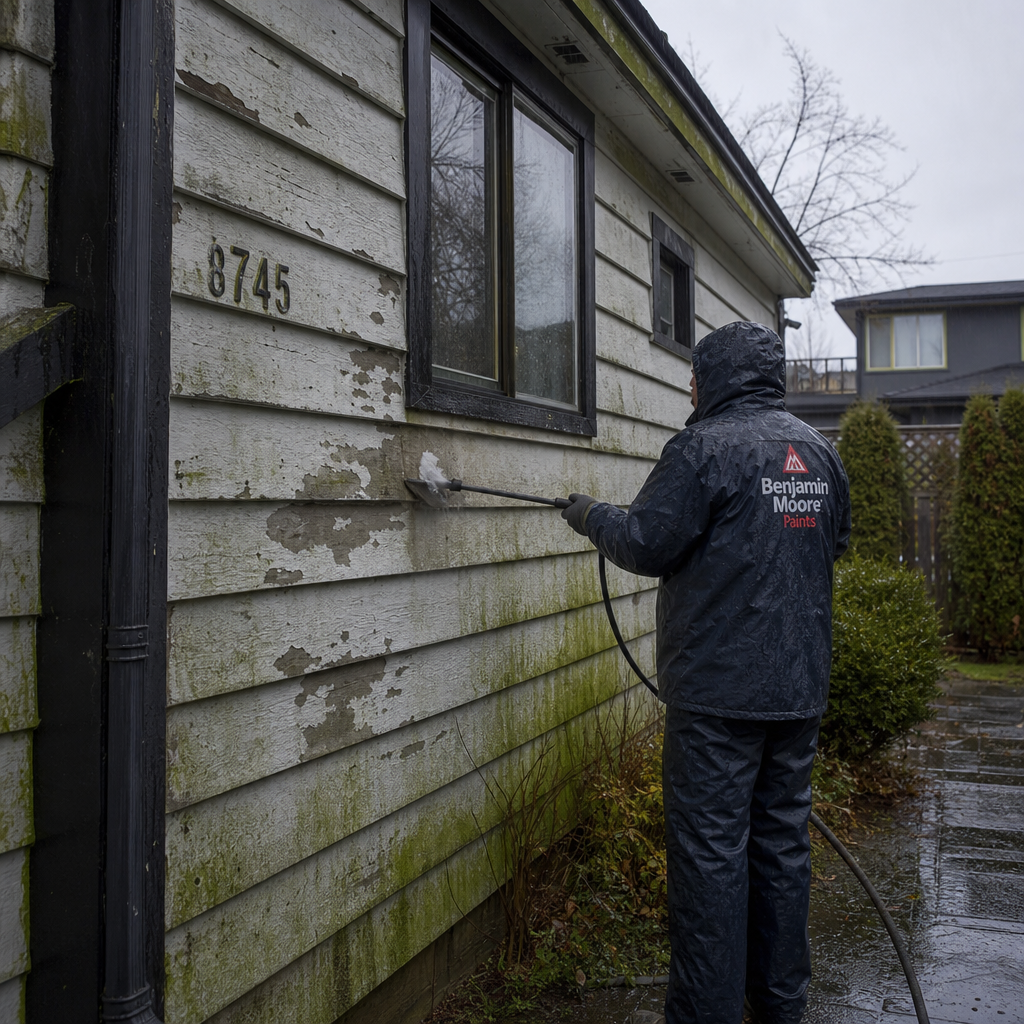
Exterior preparation is more physically demanding and time-consuming. A properly prepared exterior on a typical two-storey home in Langley or Surrey involves pressure washing all surfaces, hand-scraping loose and peeling paint, sanding rough edges feather-smooth, replacing damaged caulking at all window frames, door frames, and penetrations, spot-priming bare wood or metal, and allowing adequate dry time before topcoats begin.
This process typically takes one to two full days before a single topcoat is applied. Companies that skip preparation steps to underbid competitors produce results that fail in the first year. The Lower Mainland’s moisture exposure makes thorough exterior preparation non-negotiable, not a premium add-on.
Timing and Scheduling Your Project
Interior projects can be scheduled year-round in the Lower Mainland. The work is temperature-controlled, unaffected by rain, and can be staged room by room to minimise disruption to your household. Fall and winter are often excellent times to book interior work because painter availability is higher and scheduling is more flexible.
Exterior projects are constrained by weather. The practical painting season in the Fraser Valley runs from May through September, with some favourable weeks in April and October depending on the year. This creates real demand pressure. Professional painting companies in Surrey, Abbotsford, and Langley fill their exterior schedules well in advance. Homeowners who call in June expecting a July start date are frequently disappointed.
Planning Around Daylight and Temperature
Experienced painters in the Lower Mainland work with the sun, not against it. Direct afternoon sun on west-facing elevations in summer can drive surface temperatures above 38 degrees Celsius. At these temperatures, latex paint dries before the brush or roller has moved past the wet edge, creating visible lap lines in the finished surface.
The professional approach is to follow the shade around the house through the day. East elevations in the morning, north elevations in the afternoon, west elevations in the late afternoon after the sun moves past. This requires experience and planning, not just showing up and starting.
Interior Project Timing Considerations
For interior projects, the main timing consideration is ventilation. Lower-VOC paints have reduced the odour problem significantly, but proper ventilation during and after painting still matters. Plan for at least 24 to 48 hours of air movement before reoccupying freshly painted rooms, and longer for bedrooms belonging to young children or family members with respiratory conditions.
Cost Comparison: Interior vs. Exterior
Painting costs in the Lower Mainland vary based on surface area, condition of existing paint, number of colours, and access complexity. The table below provides a honest framework for comparing the two project types based on typical residential projects in the Fraser Valley.
| Factor | Interior Painting | Exterior Painting |
|---|---|---|
| Typical project duration | 2 to 5 days for a full home repaint | 3 to 7 days depending on surface area and prep condition |
| Preparation intensity | Moderate: patch, sand, prime, mask | High: pressure wash, scrape, caulk, prime, full masking |
| Weather dependency | None: year-round scheduling | High: limited to dry weather windows, typically May to September |
| Paint product cost | Lower: premium interior latex runs $60 to $90 per gallon | Higher: premium exterior 100% acrylic runs $75 to $110 per gallon |
| Expected repaint cycle | 7 to 12 years with proper prep | 5 to 8 years in Lower Mainland climate conditions |
| Access equipment needed | Typically ladders and extension poles | Scaffolding or lift equipment often required for two-storey homes |
The data consistently shows that exterior repaints require larger material and labour budgets than comparable square footage interior work. The added cost is not arbitrary. It reflects the genuine increase in preparation complexity, product specification, and equipment requirements for exterior work in a high-moisture climate like the Lower Mainland.
Choosing the Right Professional Painter
Selecting a painting contractor in the Lower Mainland is not simply a matter of finding the lowest quote. The gap between professional results and a failed paint job comes down to preparation standards, product knowledge, and experience with local climate conditions. All three of these accumulate over years of work in a specific region.
Dreamscape Painting Ltd. has been serving homeowners across Abbotsford, Langley, Surrey, and the broader Fraser Valley since 1990. That depth of local experience means understanding which substrates in the region are problematic, which product lines perform well in coastal humidity, and how to schedule projects reliably around Lower Mainland weather patterns. This is knowledge that a national franchise or a newly established contractor simply cannot replicate.
Questions to Ask Before Hiring
Before committing to any painting contractor for your interior or exterior project, ask directly whether they use a dedicated primer on bare surfaces or whether they rely on paint-and-primer-in-one products as a substitute. The answer reveals their approach to preparation quality. Ask how they handle unexpected rot or substrate damage discovered during exterior prep. Ask for references from projects completed in similar neighbourhoods, specifically projects on homes with comparable siding types.
A professional company will answer these questions without hesitation. A company that deflects, minimises, or cannot provide local references should not be trusted with a project that will need to survive five or more Fraser Valley winters.
What Cleanliness and Respect for Your Home Looks Like
Professional interior painting requires a commitment to protecting your space. Drop cloths on every floor surface, careful masking of trim and hardware, and thorough cleanup at the end of each day are not extras. They are the baseline standard. Homeowners in Surrey and Langley regularly report that the cleanliness and care shown by Dreamscape’s crews is what separates their experience from previous contractors.
For exterior projects, professional crews protect landscaping, outdoor furniture, and windows before any pressure washing or paint application begins. Overspray and paint splatter on your deck or shrubs is a sign of a crew that prioritises speed over quality.
Pro tip: Request a written, itemised estimate that separates labour, materials, and preparation costs. Any contractor who provides only a single lump sum without breakdown is making it impossible for you to compare proposals fairly or understand what you are paying for. Transparent estimates are a mark of a professional operation.
Frequently Asked Questions
Can I use exterior paint inside my home to save money?
No. Exterior paints contain mildewcides, UV stabilisers, and plasticizers that release elevated levels of VOCs in enclosed spaces. In a sealed Lower Mainland home during fall and winter, these compounds accumulate in indoor air and create health risks, particularly for children, the elderly, and anyone with respiratory conditions. The cost savings are not worth it, and the product is not engineered for the scrub resistance and washability that interior walls require.
How do I know if my exterior needs painting or just cleaning?
Look for chalking, which appears as a powdery residue on your fingertip when you rub the surface. Also check for peeling, cracking, or fading that does not improve after washing. If paint is adhering well and colour is reasonable, a professional cleaning and caulking inspection may extend the life of your existing finish by two to three years. If you see bare wood, active peeling, or widespread cracking, it is time to repaint. A professional estimator can assess this accurately without charge.
What is the best time of year to paint the exterior of a home in Abbotsford or Langley?
June through August offers the most consistently reliable conditions for exterior painting in the Fraser Valley. Surface temperatures are within the optimal range for most exterior latex products, humidity is manageable, and rain events are infrequent enough to plan around. May and September can also work, but they require more flexibility and weather monitoring. October through April is generally not recommended for exterior work in the Lower Mainland unless you have extended, confirmed dry periods.
How many coats of paint does an interior project typically require?
Most professional interior repaints require two topcoats over a properly primed surface. Going from a dark colour to a significantly lighter one can require three coats to achieve full hide. One-coat coverage claims on paint cans are marketing, not field reality. A professional painter applied two coats over quality primer will always outperform a single thick coat of self-priming paint. The difference is visible immediately and becomes more pronounced over time.
Does cabinet refinishing require the same paint as interior walls?
No. Cabinet refinishing is a distinct discipline that requires a dedicated product category, typically a waterborne alkyd or catalysed lacquer formulated for hard, smooth surfaces that receive daily contact. Standard interior wall paints applied to cabinets will chip, scratch, and show wear within months. Dreamscape Painting offers cabinet refinishing as a specialty service precisely because it demands different products, surface preparation standards, and application techniques than a standard interior repaint.
How long should I wait to move furniture back after an interior paint job?
Water-based latex paint is typically dry to the touch within one to two hours and can handle light contact after four hours. However, full cure, meaning the paint film has hardened to its maximum durability, takes 14 to 30 days. During this period, avoid pushing heavy furniture directly against freshly painted walls and be gentle when cleaning surfaces. Placing furniture too soon against uncured paint can cause permanent transfer marks.
If you have thoughts on what surprised you most about your own painting project in the Lower Mainland, or questions about what we covered here, share them below and we will respond directly.
We would love your feedback and any insights you would share with others. What perspective would you add?
References
- Health Canada guidance on volatile organic compounds and indoor air quality for Canadian homeowners
- Statista data on residential renovation and painting industry spending trends in Canada
- Forbes coverage of home improvement return on investment and professional contractor selection advice
- U.S. Environmental Protection Agency resources on VOC content in architectural coatings and indoor air quality
- National Research Council Canada building science resources on moisture management and exterior cladding performance

