

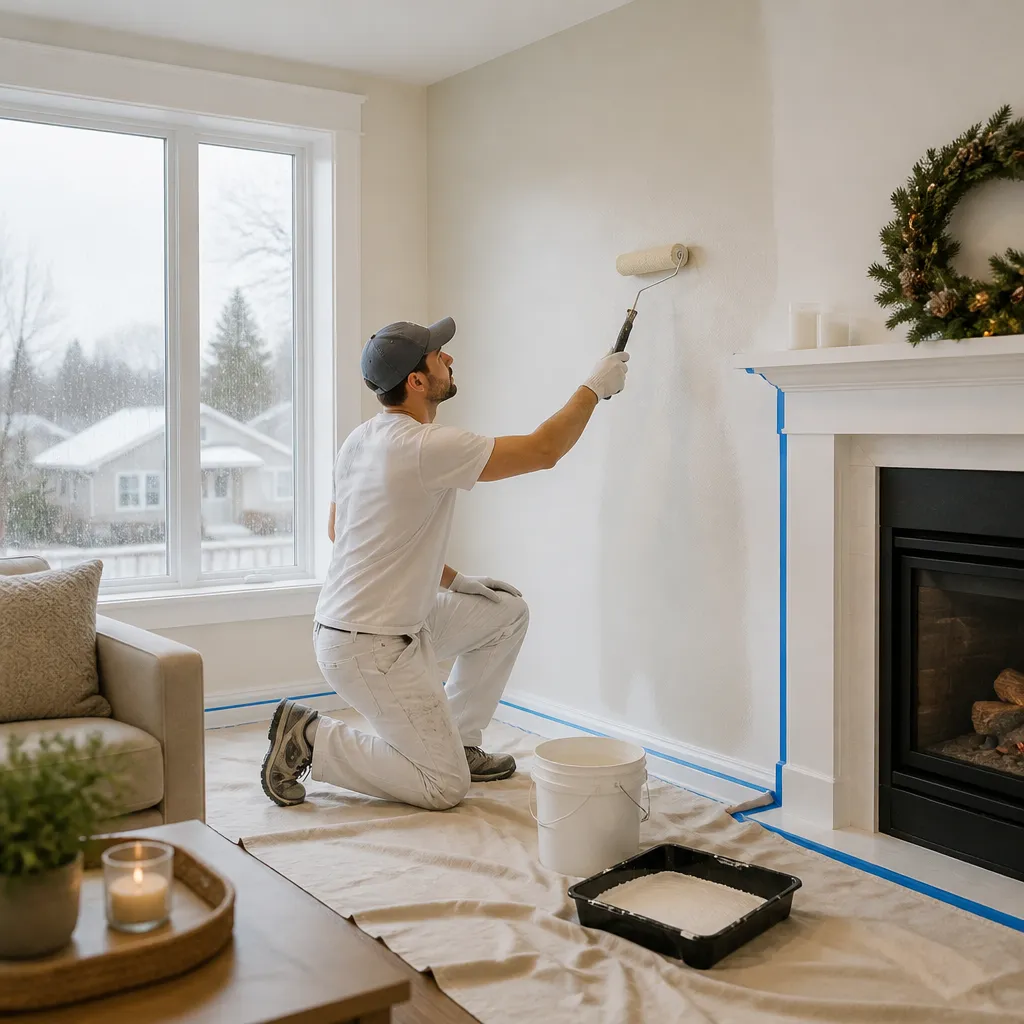
Winter is often the least crowded season for interior painting, yet many homeowners in Abbotsford, Langley and Surrey postpone projects until spring. Calendars fill quickly as the holiday season approaches, and a room that is not finished before family or guests arrive can disrupt plans for weeks. Booking interior painting in winter BC requires a clear view of when the work can start, how long each phase takes, and which parts of the home must stay usable during the holidays. This article outlines how to set a booking window, scope the project around your calendar, prepare an occupied home, and coordinate with a painter through the holiday period.
Table of Contents
- Quick Takeaways
- Why Winter Suits Interior Painting in the Lower Mainland
- Setting a Booking Window Before the Holidays
- Scoping the Project Around Your Calendar
- Preparing an Occupied Home Before Guests Arrive
- Comparing Booking Approaches
- Coordinating With Your Painter Through the Holidays
- Commercial Properties and Holiday Closures
- Frequently Asked Questions
- References
Quick Takeaways
| Key Insight | Explanation |
|---|---|
| Request dates in late September or early October | An early request leaves time for an on-site estimate, colour selection, material orders, and a change of dates if needed before December. |
| Set the completion date ten days before the first guest arrives | The buffer absorbs touch-up work, final cure time, and the return of furniture and decor to each room. |
| Match the project size to the available gap | A single room or accent wall fits a short window. Whole-home projects require sequenced phases and should be booked as a block. |
| Plan heating and ventilation before the first coat | Lower Mainland winter air is often damp. Steady indoor temperature and airflow determine how quickly coats dry. |
| Confirm holiday access and closure dates in writing | Agreeing on key holding, pet arrangements, and days without work before the project starts prevents scheduling conflicts. |
| Finalize colours under both daylight and artificial light | Winter daylight is shorter and cooler. Sample boards viewed in the evening show how a colour will appear during the holiday season. |
Why Winter Suits Interior Painting in the Lower Mainland
Interior work is less dependent on weather than exterior painting. Walls, ceilings, and trim can be painted on a schedule set by the homeowner rather than by rain or daylight hours, which makes winter a practical choice for interior projects across the Fraser Valley.
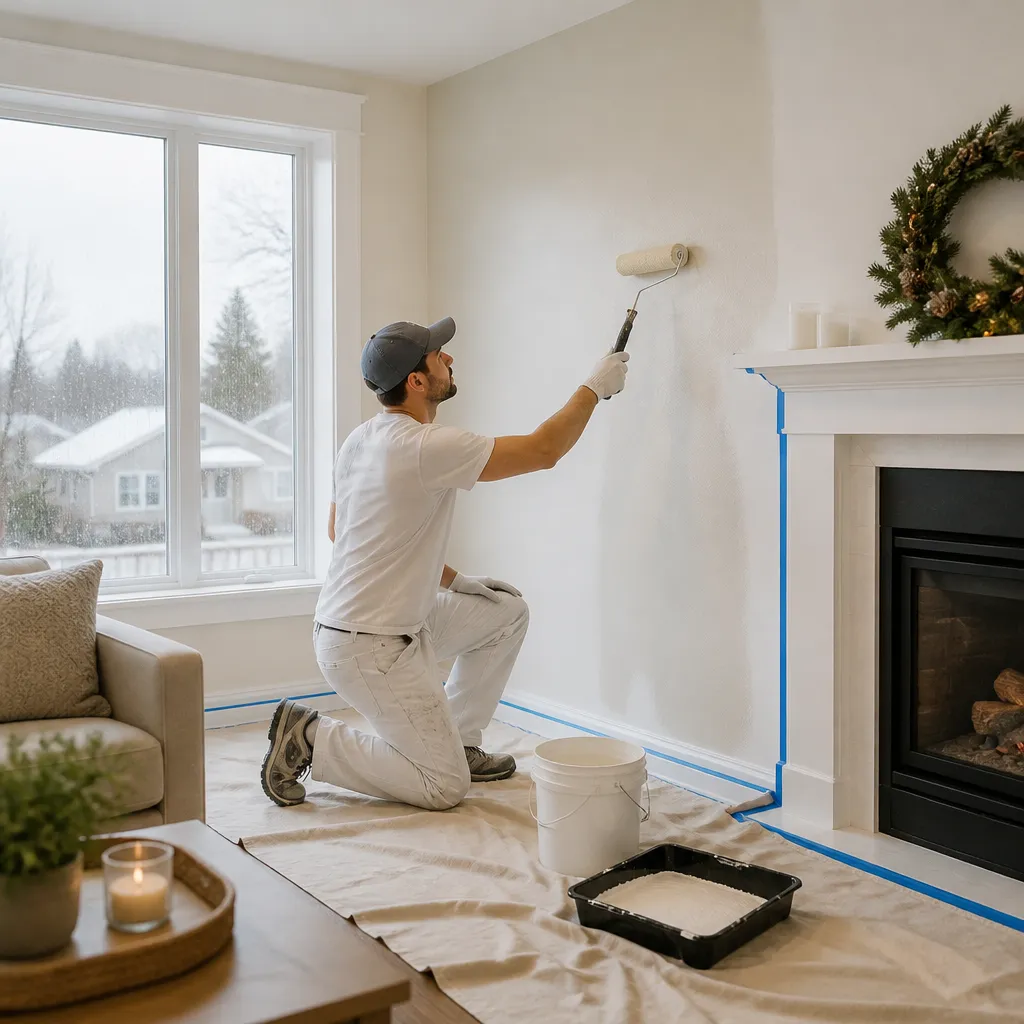
A manufacturer’s guidance on winter painting notes that lower humidity can help paint dry more efficiently in colder weather. Coastal winter air in the Lower Mainland is often damp, so that advantage does not apply automatically. In practice, drying depends on indoor temperature, air movement, and how long a house stays closed up during the job.
Indoor Temperature and Humidity Control
Rooms should be kept at a steady temperature during application and drying, using the same heating level the household uses for daily occupancy. Dehumidifiers are useful in basements, laundry rooms, and bathrooms, where moisture from showers and laundry can slow curing. Coats applied in a cold room may not cure as expected, so the product data sheet should be checked for minimum application temperatures before a date is confirmed.
A painting schedule is a drying schedule. Each date on the calendar should account for the time every coat needs before the room returns to normal use.
Lower Competition With Exterior Schedules
Exterior work in the Lower Mainland is concentrated in the drier months, so crews are more likely to be available for interior projects during the winter. Homeowners who request interior work in the cooler season often find more flexibility in start dates than they would in the summer months. This flexibility matters most when a project must finish before a fixed holiday date.
Pro tip: Ask the painter to confirm the heating, ventilation, and dehumidification plan in the estimate. A written plan makes it easier to compare bids and avoids surprises once the first wall is covered.
Setting a Booking Window Before the Holidays
Booking lead time is one of the most consequential decisions in holiday planning. A Missouri painting contractor’s published guidance advises booking in late summer for work to be completed before Thanksgiving or Christmas, reflecting a pattern in which experienced crews fill their fall calendars months in advance. Experienced crews in the Lower Mainland also plan their fall and early winter schedules ahead, so the same logic applies locally.
Late September to Mid-October Requests
A request submitted in late September or early October gives both parties time to work through the project properly. The estimate, colour decisions, and material orders can all be completed before the busiest weeks of the season. A date set this early also leaves room to adjust if a family event or work commitment changes the timeline.
Early bookings also reduce the risk of a compressed schedule. When a crew has time to prepare the surfaces correctly, the finish is more consistent across walls and trim. This matters most in rooms with high ceilings, multiple colours, or detailed millwork.
Early December Requests
Requests in early December can still succeed, but the available dates are narrower and the margin for error is smaller. A crew that is close to capacity has little room to absorb a delayed material shipment, a sick day, or a change in the scope of work. Homeowners who choose this window should confirm the start date and completion date in writing, with a clear buffer before the first guests arrive.
Requests After Mid-November
Requests submitted after mid-November usually face limited options. The painter available may not be the one best suited to the project, and a crew working through a long peak season may be less consistent in the details. Trim, doors, and cabinet finishes are the areas where fatigue and time pressure are most visible in the final result.
Scoping the Project Around Your Calendar
Project scope determines lead time more than any other factor. Complex jobs require sequenced phases, and those phases cannot be compressed without affecting adhesion, coverage, or the quality of the finish. Understanding how long each phase takes allows a homeowner to work backward from a realistic completion date rather than from an optimistic estimate.
Single Rooms and Accent Walls
One contractor’s booking guidance indicates that a single bedroom, office, or accent wall can sometimes fit into a gap two to four weeks out, provided the start date is flexible. Smaller jobs require less preparation and fewer drying cycles, which is why they remain viable later in the season. Even a small room still needs proper primer curing time and multiple coats, so the gap should be measured in working days rather than calendar days.
Whole-Home Interior Projects
Whole-home projects should be planned room by room in a fixed order. Ceilings are usually completed first, followed by walls, trim, and doors, so that drips and dust do not damage finished surfaces. Each room needs time to cure before furniture and décor are returned, and that return should be scheduled as part of the project rather than treated as an afterthought.
A practical approach is to write the full sequence on paper, assign a realistic number of working days to each room, and add buffer days at the end. The buffer is the most important part of the plan because it absorbs the interruptions that are most likely during the holiday period.
Preparing an Occupied Home Before Guests Arrive
In an occupied home, preparation determines how smoothly the work moves from one room to the next. Households that continue to use the kitchen, bedrooms, and living areas during the project need clear boundaries, protected floors, and a reliable plan for moving furniture. Preparation also reduces the risk of damage that could delay completion.

Protecting Floors, Furniture, and Hardware
Surface protection guidance from a manufacturer recommends drop cloths for furniture and floors, with a slip resistant drop for hardwood and a heavy duty canvas drop for carpet. Surface protection board is suited to hard surfaces such as countertops and floors. Masking film and masking paper protect baseboards, windows, doors, and cabinets, while blue painter’s tape covers trim, electrical sockets, and other small parts.
Surfaces should be cleaned of dust and debris before protection is installed. Removing particles with a rag or tack cloth helps the paint adhere evenly and keeps floor coverings in place during the job.
Clearing Rooms for Holiday Use
Each room should be cleared before the crew arrives, with furniture moved to the centre of the space and covered. Seasonal décor, decorative items, and personal belongings should be stored in a separate area that will not be disturbed. Clear sight lines allow the crew to complete edges and corners accurately, which reduces the amount of touch-up required later.
Ventilation and Final Cure Time
Ventilation should be planned before the first coat is applied. Windows can be opened briefly during the day to exchange air, provided the room is kept at a steady temperature and the air exchange does not cause the surface to cool below the minimum application temperature. Final coats should not be completed on the day before guests arrive, because freshly painted surfaces need time to cure fully before cleaning, furniture placement, or heavy use.
Pro tip: Complete the final coat in each room at least one full day before the room is needed. This allows the finish to set before furniture, bedding, and décor are returned.
Comparing Booking Approaches
Three booking approaches are common for interior projects that intersect with the holiday season. Each has distinct advantages and trade-offs, and the right choice depends on the project size, the household’s tolerance for disruption, and the date by which the work must be finished.
| Booking Approach | Advantages | Trade-offs |
|---|---|---|
| Late September to mid-October request | Time for a detailed estimate, colour selection, and material ordering. Greater flexibility if dates need to change. | Work may begin weeks before the holidays, so dust control and occupancy planning must cover a longer period. |
| Early December start | Fits a defined gap before holiday guests. Shorter project with a clear end date. | Fewer available crews and limited buffer for delays, material shortages, or illness. |
| January start after the holidays | Calmer schedule, broader crew availability, and no holiday deadline. | Does not meet a holiday deadline. Damp winter weather may slow drying, so ventilation planning remains essential. |
For most whole-home projects, the late September to mid-October window offers the best balance between preparation time and disruption. For single rooms, an early December start can work well when the scope is small and the completion date has a clear buffer. A January start is suitable when no holiday deadline applies.
Coordinating With Your Painter Through the Holidays
Once a date is agreed, coordination becomes the main factor in keeping the project on schedule. Clear communication about access, availability, and decisions reduces the number of changes that disrupt the crew during the work itself.
Confirming Crew Availability in Writing
A confirmed start date should be documented with the names of the crew lead and the expected working days. Written confirmation makes it easier to identify when a change occurs and how it affects the completion date. If a crew member is unavailable, the painter should explain how the schedule will be maintained.
Agreeing on Holiday Access and Closure Dates
Christmas Day, Boxing Day, and New Year’s Day are typical closure dates for many households and businesses, and crews often work around them. Family Day, observed on the third Monday of February in British Columbia, is also a statutory holiday that can affect a February start. Access arrangements for keys, alarm codes, and pets should be confirmed before the first day of work, with a written record of the closure dates.
Making Colour Decisions Early
Colour decisions made late in the process are one of the most common causes of schedule changes. Manufacturers such as Benjamin Moore publish winter-inspired palettes that range from off-whites to charcoals and forest greens, which can help narrow choices before the booking date. Samples should be tested on several walls and reviewed in both daylight and evening light, since holiday lighting and shorter winter days change how colours appear.
Commercial Properties and Holiday Closures
Commercial properties follow a different calendar. Offices, retail spaces, and multi-unit buildings often have a defined closure period at the end of the year, and that period is the most practical window for interior painting that would otherwise disrupt staff and customers.
Closure Windows and After-Hours Work
Closure periods provide uninterrupted access to the space, which allows the crew to work in full sections without moving staff or stock repeatedly. After-hours and weekend work can also extend the available window for corridors, lobbies, and customer-facing areas. The closure dates should be confirmed with building management, tenants, and any security provider before the work is scheduled.
Protecting Operations During Painting
Commercial projects require dust control, clear signage, and a defined area for materials and equipment. Work areas should be separated from occupied spaces where possible, and ventilation should be planned for buildings that remain closed up over the holiday period. Clear sign-off procedures also help property managers confirm that the work meets the agreed standard before the space reopens.
Frequently Asked Questions
Can interior painting be completed successfully in winter in British Columbia?
Interior painting can be completed successfully in winter when indoor temperature, ventilation, and humidity are controlled. Winter also offers more flexibility in scheduling than the busiest spring and summer months.
How far ahead should a homeowner book a painter for a December project?
Requests submitted in late September or early October are the most practical for projects that must finish before the holidays. Early December requests remain possible for smaller projects, but the available dates are narrower.
Does cold weather slow the drying of interior paint?
Cold rooms can slow drying and curing, and some products have minimum application temperatures. The product data sheet should be checked, and rooms should be kept at a steady temperature during and after application.
Can a household remain in a home while the whole house is painted over the holidays?
A household can remain in the home when the work is sequenced room by room and the protective measures are applied consistently. The rooms in use should be clearly separated from the work area, and the completion schedule should allow each room to cure before it is used again.
What should a homeowner do if a holiday booking is delayed?
The painter should provide a revised schedule in writing that explains the cause of the delay and the new completion date. The buffer built into the original plan should absorb minor delays, and the homeowner should confirm whether the revised date still meets the household’s deadline.
Is it better to paint before or after the holidays?
Painting before the holidays suits households that need a finished home for guests, while painting after the holidays suits households with no fixed deadline and a preference for a calmer schedule. Both options should be compared against the household’s deadline, the size of the project, and the expected weather.
We welcome feedback from homeowners and property managers in Abbotsford, Langley, Surrey, and the wider Fraser Valley on how they have scheduled interior painting around the holidays and which planning steps made the greatest difference.
We would love your feedback and any insights you would share with others. What perspective would you add?

