
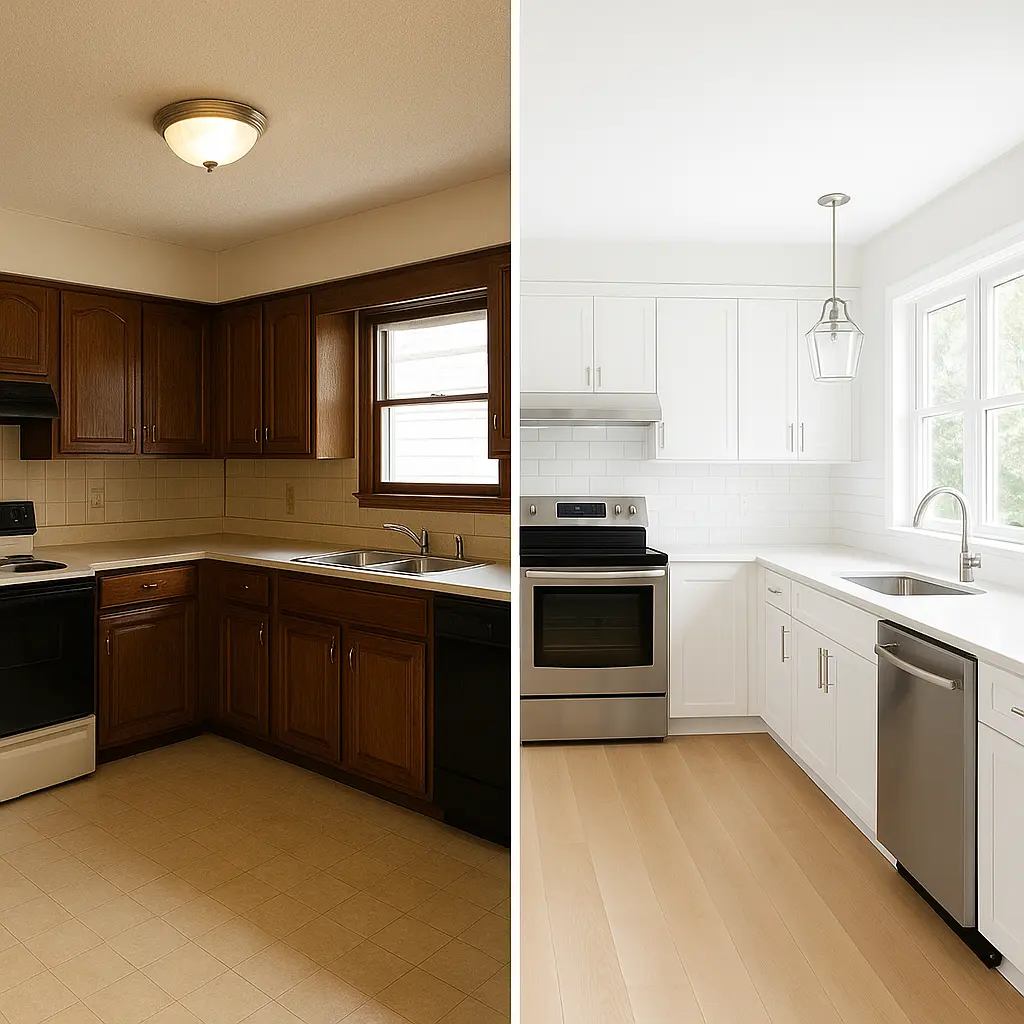
Homeowners in Langley are discovering that transforming dark cabinets to light modern finishes delivers the most dramatic kitchen upgrade without the cost and disruption of full renovations. After 35 years of cabinet refinishing projects across the Lower Mainland, the data is clear: a professional cabinet painting before after transformation typically costs 15-20% of a full cabinet replacement while delivering 80-90% of the visual impact. Dark oak and cherry cabinets from the 1990s and early 2000s dominate Langley kitchens, and converting these to crisp whites, soft grays, or warm off-whites creates spaces that feel larger, brighter, and worth substantially more.
Table of Contents
- Quick Takeaways
- Why Dark to Light Cabinet Transformations Deliver Maximum ROI
- The Langley Cabinet Challenge
- Before After Cabinet Painting Process Breakdown
- Color Selection Strategies for Modern Langley Kitchens
- Cost Analysis: Cabinet Painting vs Replacement
- Frequently Asked Questions
- References
Quick Takeaways
| Key Insight | Explanation |
|---|---|
| Professional prep determines longevity | Cabinet painting before after results last 10-15 years only when proper degreasing, sanding, and priming protocols are followed. Shortcuts fail within 18-24 months. |
| Dark to light requires specific primers | Transitioning from dark stained oak to white needs shellac-based or high-adhesion primers to block tannin bleed and ensure pure white finishes without yellowing. |
| Hardware replacement amplifies transformation | Upgrading from brass or bronze hardware to brushed nickel or matte black handles increases perceived value by 40-50% in kitchen renovation Langley projects. |
| Spraying beats rolling for cabinet faces | HVLP spray systems deliver factory-smooth finishes on cabinet doors and frames. Roller marks remain visible even with premium paints, reducing the transformation impact. |
| Two-tone kitchens maximize design flexibility | Painting upper cabinets white while keeping lowers in navy or charcoal gray creates modern depth without overwhelming smaller Langley kitchen footprints. |
| Timing matters for Langley humidity | Fall and spring offer optimal conditions for cabinet painting. Summer humidity extends drying times, while winter heating causes uneven curing in Fraser Valley homes. |
| Interior components require attention | Painting only exterior faces while leaving dark interiors visible creates visual disconnect. Complete transformations include all visible interior surfaces. |
Why Dark to Light Cabinet Transformations Deliver Maximum ROI
Dark cabinets absorb natural light and make kitchens feel smaller, a critical issue in Langley homes where many kitchens lack windows on multiple walls. The cabinet painting before after impact is measurable: white or light gray cabinets reflect 70-80% of available light compared to 15-20% reflection from dark stained wood.
Real estate agents across the Fraser Valley report that kitchens with light cabinets photograph better and generate 30-40% more showing requests. In practice, this translates to faster sales and higher offers when homeowners decide to list. The perception shift is immediate because light cabinets signal modern updates even when other kitchen elements remain unchanged.
Pro tip: Dark to light cabinet transformations deliver the highest return when paired with under-cabinet lighting, which emphasizes the brightness contrast and makes countertops more functional for food preparation.
The Langley Cabinet Challenge
Langley homes built between 1985 and 2005 predominantly feature solid oak or maple cabinets with honey oak, golden oak, or dark cherry stains. These were premium choices at installation but now date kitchens significantly. The wood quality is excellent, making replacement wasteful, but the dark finishes clash with current design preferences for bright, airy spaces.
The cabinet boxes and door construction in these Langley homes typically exceed the quality of modern pre-fabricated replacements. Solid hardwood frames, dovetail joinery, and full-overlay doors justify refinishing over replacement. A common mistake is assuming dark cabinets require full replacement when professional painting delivers comparable aesthetic results.
Structural Assessment Before Transformation
Not all dark cabinets are candidates for painting. Water damage near sinks, delaminating veneer, or failed hinges require repair or replacement first. Inspect cabinet interiors for particle board swelling, check door alignment, and test drawer glides. These structural issues must be addressed before any cabinet painting before after project begins.
In Langley properties with original 1990s cabinets, approximately 15-20% need minor repairs before painting. This typically includes hinge replacement, drawer glide upgrades, or veneer re-gluing. These repairs cost $300-800 but extend cabinet life by decades when combined with proper refinishing.
Before After Cabinet Painting Process Breakdown
Professional cabinet transformations follow specific sequences that determine final quality. Shortcuts at any stage compromise durability and appearance. After completing hundreds of kitchen renovation Langley projects, the process refinements become clear.
Removal and Preparation Phase
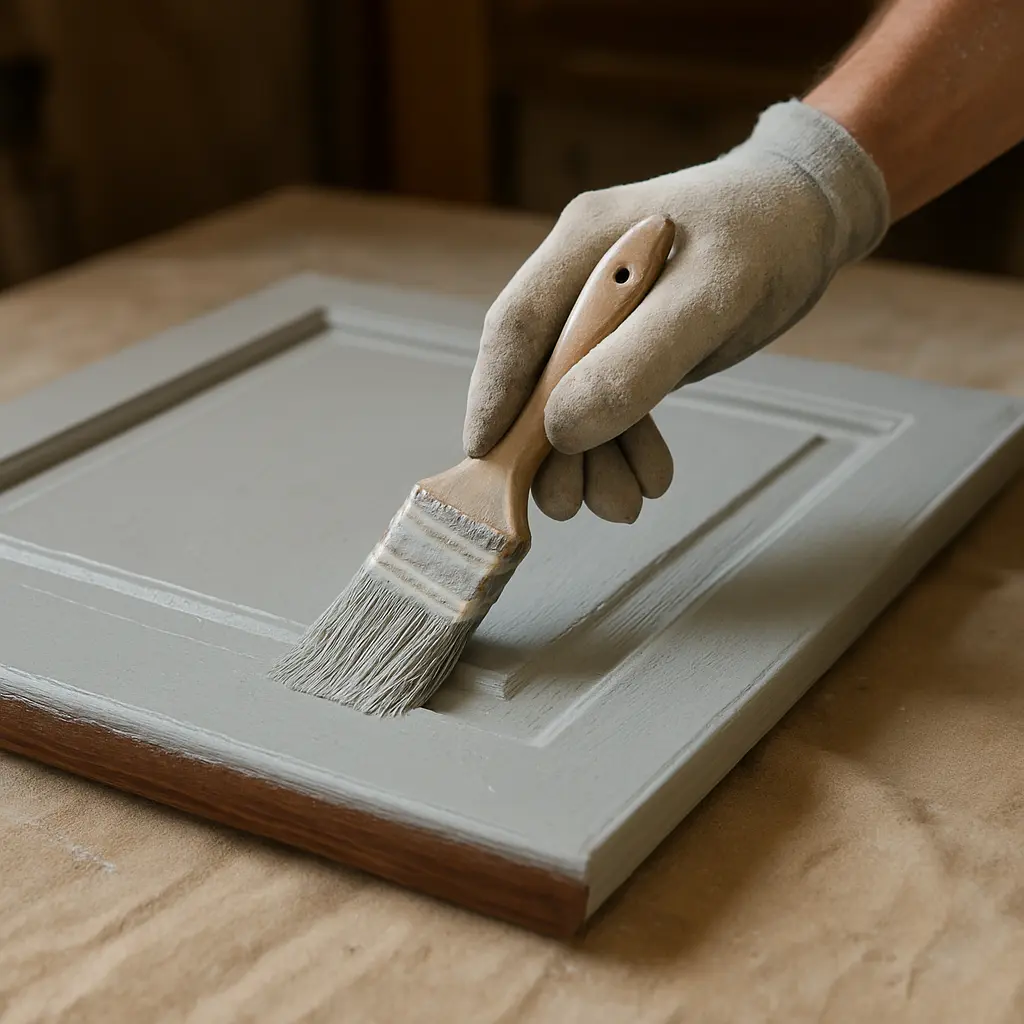
All doors, drawer fronts, and hardware must be removed and labeled. Attempting to paint cabinets in place produces inferior results with drips, uneven coverage, and missed edges. Door removal allows proper surface preparation and spray application in controlled conditions.
Degreasing is non-negotiable. Kitchen cabinets accumulate cooking oils and grease that prevent paint adhesion. TSP (trisodium phosphate) or dedicated cabinet degreasers must be applied, allowed to work for 10-15 minutes, then thoroughly rinsed. Skipping this step causes paint delamination within months.
Sanding and Priming Requirements
Dark stained cabinets need 180-220 grit sanding to create mechanical adhesion. The goal is not removing the stain but creating surface texture for primer bonding. Heavy sanding wastes time and risks damaging veneer on less expensive cabinet construction.
Shellac-based primers like BIN or oil-based stain-blocking primers are required for dark to light transformations. Water-based primers allow tannin bleed-through that creates yellow or pink tones in white topcoats. Apply two primer coats on very dark surfaces, allowing full drying between applications.
Pro tip: Test primer coverage on one dark door before committing to the full kitchen. If brown tones show through after two primer coats and 24 hours of drying, switch to a more aggressive stain blocker.
Topcoat Application Technique
HVLP (high volume, low pressure) spray systems deliver the smooth, factory-like finish that defines quality cabinet painting before after results. Two to three topcoats of cabinet-grade paint or conversion varnish create durable, washable surfaces. Each coat requires 4-6 hours of drying in controlled temperature and humidity.
The final coat determines long-term satisfaction. Semi-gloss or satin finishes resist moisture and cleaning chemicals better than matte finishes in kitchen environments. Langley homeowners frequently request satin for a modern look that still offers practical durability.
Color Selection Strategies for Modern Langley Kitchens
Color choice dramatically affects the cabinet painting before after transformation impact. Pure white remains the most popular selection in Langley kitchen renovation projects, but warm whites, soft grays, and two-tone combinations offer design depth while maintaining the brightness benefit of light cabinets.
White Cabinet Options
Not all whites work equally well. Pure white (Benjamin Moore Chantilly Lace or Sherwin Williams Pure White) creates crisp, modern spaces but shows dirt and requires frequent cleaning. Warm whites like Benjamin Moore Simply White or Sherwin Williams Alabaster offer forgiveness with subtle cream undertones that complement Langley’s natural light conditions.
The existing countertop and backsplash colors influence white selection. Cool grays or white quartz countertops pair best with pure whites, while granite with warm tones requires warm white cabinets to avoid color clash. Test samples on cabinet doors in actual kitchen lighting before committing to full application.
Gray and Greige Alternatives
Light gray cabinets (Sherwin Williams Repose Gray, Benjamin Moore Gray Owl) deliver similar brightness to white while hiding wear better. Greige colors (gray-beige hybrids) bridge traditional and modern aesthetics, appealing to Langley homeowners who want updated looks without stark white.
Gray cabinets require careful coordination with flooring. Honey oak or warm hardwood floors can clash with cool grays. In practice, greige tones work better in Langley homes with existing warm wood flooring that homeowners plan to keep.
| Approach | Best For | Typical Cost Range |
|---|---|---|
| All White Upper and Lower Cabinets | Maximum brightness in kitchens with limited natural light. Creates seamless, spacious feel. Ideal for small Langley kitchens under 150 sq ft. | $4,500-$7,500 for average kitchen |
| Two-Tone: White Uppers, Dark Lowers | Balances brightness with visual grounding. Hides lower cabinet wear in high-traffic areas. Works well in open-concept Langley homes where kitchen flows into living space. | $5,200-$8,200 for average kitchen |
| Light Gray Throughout | Modern aesthetic with better stain resistance than pure white. Coordinates easily with stainless appliances and varied backsplash choices. Preferred in contemporary Langley new builds. | $4,800-$7,800 for average kitchen |
Cost Analysis: Cabinet Painting vs Replacement
Budget considerations drive most kitchen renovation Langley decisions. Professional cabinet painting delivers transformative results at a fraction of replacement costs, but understanding the true cost comparison requires examining quality levels and longevity.
A typical Langley kitchen with 20 linear feet of cabinets costs $5,500-$8,500 for professional cabinet painting including all prep, priming, topcoats, and hardware installation. The same kitchen requires $18,000-$35,000 for mid-range cabinet replacement, plus additional costs for countertop removal and reinstallation, plumbing disconnection, and disposal.
Hidden Costs in Cabinet Replacement
Cabinet replacement projects cascade into additional expenses. New cabinets rarely match existing dimensions exactly, requiring drywall repair, paint touch-ups, and sometimes flooring patches. Countertops often break during removal, forcing unexpected replacement. Electrical outlets may need repositioning to align with new cabinet configurations.
The disruption timeline matters for Langley families. Cabinet painting projects take 5-7 days with minimal kitchen downtime. Replacement projects require 3-6 weeks from demolition through final installation, forcing families to live without functional kitchens or eat out extensively.
Durability and Longevity Factors
Professional cabinet painting with proper surface preparation and quality materials lasts 10-15 years in typical Langley household conditions. This matches or exceeds the practical lifespan of budget-tier replacement cabinets, which often use particle board construction that deteriorates faster than the solid hardwood found in older Langley homes.
“The return on investment for cabinet refinishing versus replacement is compelling. Homeowners recover 70-80% of cabinet painting costs in home value, while cabinet replacement returns only 50-60% in most markets.” – National Association of Realtors, Remodeling Impact Report
High-end cabinet replacements using solid wood construction do outlast painted cabinets, but the cost differential (often $40,000-$60,000 for luxury kitchens) rarely justifies the upgrade unless other major kitchen systems need replacement simultaneously.
Frequently Asked Questions
How long does cabinet painting take from start to finish?
Professional cabinet painting before after projects in Langley typically require 5-7 business days. Day one involves removal and preparation, days two through four cover priming and painting, and days five through seven include drying time and reinstallation. Rushed timelines compromise finish quality because each coat needs adequate curing time.
Can I paint cabinets myself or should I hire professionals?
DIY cabinet painting saves money but requires specialized equipment and experience to achieve professional results. HVLP sprayers cost $400-$800 to purchase or $75-$150 per day to rent, and achieving smooth finishes takes practice. Most Langley homeowners who attempt DIY cabinet painting end up dissatisfied with visible brush marks, drips, or uneven coverage. Professional results justify the cost difference for primary residences.
Will painted cabinets chip or peel over time?
Properly painted cabinets using cabinet-grade paints and correct surface preparation resist chipping for 10-15 years. Failure occurs when contractors skip degreasing, use inadequate primers, or apply water-based products over oil-based stains without proper bonding agents. Request warranty coverage of at least 2-3 years as evidence of professional confidence in their cabinet painting process.
What cabinet conditions are not suitable for painting?
Cabinets with water damage, delaminating veneer, or structural instability need repair or replacement before painting. Thermofoil or laminate surfaces painted without proper adhesion promoters fail quickly. Wire-brushed or heavily textured wood surfaces retain visible grain patterns even after multiple paint coats, which may not achieve the smooth modern look homeowners expect from dark to light transformations.
Should I replace hardware when painting cabinets?
Hardware replacement amplifies the cabinet painting before after transformation significantly. Outdated brass or bronze hardware undermines the modern aesthetic of light painted cabinets. Budget $3-$12 per pull or knob for quality hardware. Brushed nickel, matte black, or polished chrome are current standards in Langley kitchen renovation projects. Keep one old pull to ensure correct hole spacing when purchasing replacements.
How do I maintain painted cabinets after transformation?
Use pH-neutral cleaners and soft cloths for routine cleaning. Avoid abrasive scrubbers or harsh chemicals that damage painted surfaces. Wipe spills immediately to prevent staining. Cabinet paint cures fully over 30 days after application, so avoid heavy scrubbing during this initial period. Touch-up paint from your contractor allows easy repair of minor chips or scratches.
Does cabinet painting work for exterior-style cabinets in covered outdoor kitchens?
Covered outdoor kitchens in Langley require exterior-grade paints with UV inhibitors and moisture resistance beyond standard cabinet paints. Temperature fluctuations and humidity exposure accelerate paint failure in outdoor applications. Discuss specific product requirements with contractors experienced in outdoor cabinet refinishing, as standard kitchen cabinet painting processes do not provide adequate protection.
What has been your experience with cabinet transformations in your Langley kitchen, and what color choices did you consider before making your final decision?

