

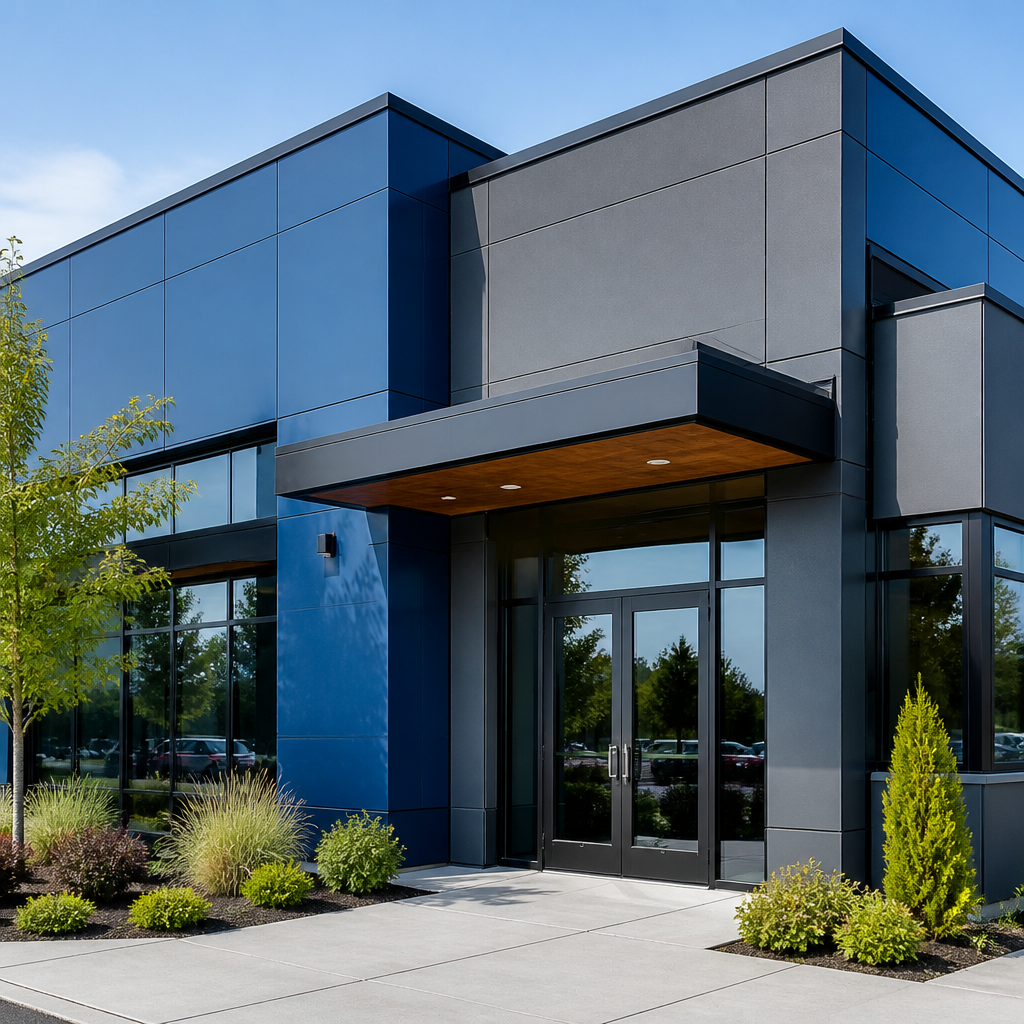
Your building’s exterior is the first sales pitch your business makes, and it happens before a single customer walks through the door. In the Fraser Valley, where cities like Abbotsford, Langley, and Surrey are seeing real commercial growth and increasing competition for foot traffic and tenants, a faded, chipped, or outdated paint job is not a neutral detail. It is an active liability. Commercial painting in the Fraser Valley is not a cosmetic luxury. It is a direct investment in customer perception, employee morale, brand consistency, and property value. This guide breaks down exactly how and why.
Table of Contents
- Quick Takeaways
- First Impressions and Customer Perception
- Colour Psychology in Commercial Spaces
- Exterior Painting, Curb Appeal, and Property Value
- Interior Painting and Employee Productivity
- When to Repaint: Warning Signs Fraser Valley Businesses Should Not Ignore
- Comparing Commercial Painting Approaches
- What to Expect from a Professional Commercial Painter
- Frequently Asked Questions
- References
Quick Takeaways
| Key Insight | Explanation |
|---|---|
| First impressions are formed in seconds | Customers judge a business’s professionalism by its physical appearance before interacting with staff. A worn exterior signals neglect, not quality. |
| Colour choice is a branding decision, not just a design preference | The colours on your commercial space communicate your brand’s personality, influence how long customers stay, and affect how employees feel at work. |
| Exterior painting delivers a measurable return on investment | Research consistently ranks exterior painting among the highest-return improvements for commercial properties, often ahead of kitchen remodels and landscaping. |
| Fraser Valley weather accelerates exterior paint deterioration | The region’s wet winters, UV-heavy summers, and freeze-thaw cycles mean commercial exteriors need more frequent inspection and maintenance than drier climates. |
| Interior paint directly affects employee focus and energy | Blues and greens support concentration in offices; warmer tones and energetic palettes drive engagement in retail. The wrong colour actively works against your goals. |
| Scheduling matters for commercial projects | Professional painters plan around your business hours to minimize disruption. Exterior work in the Fraser Valley is best scheduled during the drier months, typically late spring through early fall. |
| Quality paint and proper surface prep are non-negotiable | Cutting corners on primer, surface preparation, or paint grade means repainting in two to three years instead of seven to ten. The savings are not real savings. |
First Impressions and Customer Perception
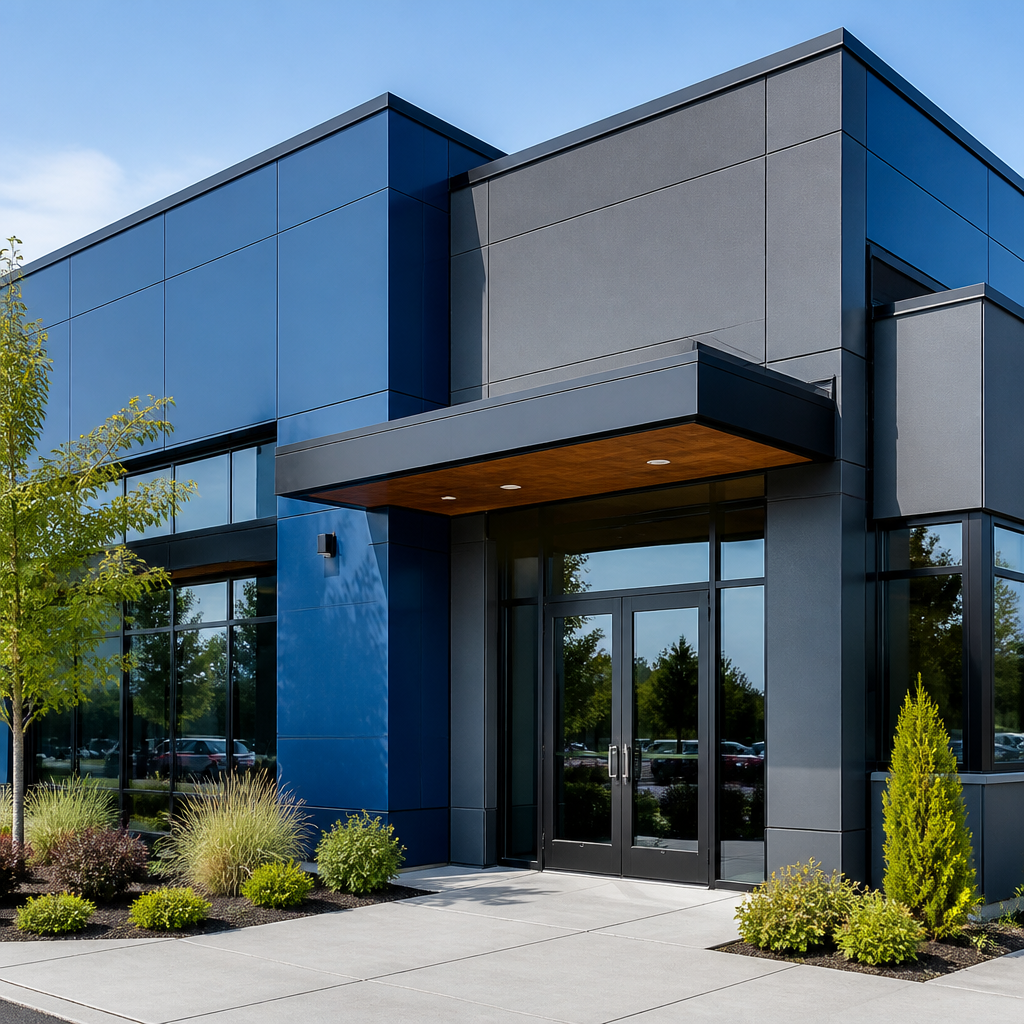
The psychology here is not complicated. A commercial space’s appearance sends a signal about everything else the business does. A clean, well-maintained paint job suggests quality, care, and attention to detail. A peeling storefront in downtown Abbotsford or along a Langley commercial strip tells customers the opposite, regardless of how good the product or service actually is.
This is not abstract. When customers feel that a business’s visual identity is cohesive and maintained, they are more likely to trust it and return. The exterior and interior paint are the most visible indicators of whether a business owner takes pride in their operation. Commercial painting in the Fraser Valley delivers that signal clearly and affordably compared to most other improvements.
A common mistake is treating paint as the last item in a renovation budget, something to touch up after everything else is done. In practice, it should be treated as a first-line branding investment, because it covers more surface area and gets more visual attention than almost any other element in the space.

What Customers Actually Notice
Customers are not consciously reading your paint colour and drawing conclusions. The effect is far more instinctive. A space that feels fresh, clean, and intentionally designed puts people at ease and extends their time in it. A space that feels dingy or dated triggers an unconscious negative impression that is very hard to reverse with good service alone.
For businesses in competitive areas like Surrey’s commercial corridors or Langley’s growing retail strips, every visual advantage matters. Business painting in Abbotsford and across the Fraser Valley is one of the most direct tools for standing out without a complete renovation.
A commercial space’s appearance can be just as influential as its products or services. In the eyes of customers, a clean, well-maintained space with a professional paint job suggests quality, care, and investment in the customer experience.
Colour Psychology in Commercial Spaces
Colour is not decoration. It is a functional element that shapes behaviour and mood in commercial environments. Research into colour psychology consistently shows that different colours affect how people feel, how long they stay, and what actions they take. Getting this wrong has a real cost.
Colours for Office and Professional Environments
For office spaces in the Fraser Valley, blues and greens are consistently associated with focus, calm, and sustained concentration. These are useful for accounting firms, law offices, insurance brokers, and any business where clients or employees need to think clearly and feel at ease. Accenting with clean whites adds a sense of professionalism without making the space feel cold or clinical.
Red is a high-energy colour that stimulates urgency. Used sparingly, it works in environments that benefit from energy and action. Overused in a workspace, it can increase stress and reduce sustained productivity. The right colour for your commercial space depends on what you need people to do and feel while they are in it.
Colours for Retail and Hospitality
Retail spaces benefit from more energetic palettes that encourage movement and engagement. Warmer tones create a sense of welcome and comfort in hospitality settings. Restaurants, cafes, and service businesses in cities like Abbotsford and Langley often use warm mid-tones to keep customers comfortable without making them feel rushed.
Brand colour alignment is equally important. If your signage, logo, and marketing materials are built around specific colours, the interior and exterior paint of your space should reinforce rather than contradict those colours. Inconsistency between visual brand elements creates a subtle but real sense of disconnection for customers.
Pro tip: Before committing to a commercial paint colour, view large format samples, at minimum 12 by 12 inches, on the actual surface of your building at different times of day. Colour changes dramatically between morning and afternoon light, and what looks ideal on a chip can look completely different on a 40-foot wall in afternoon sun.
Exterior Painting, Curb Appeal, and Property Value
The Fraser Valley’s climate is not kind to commercial building exteriors. The region experiences wet winters with persistent moisture, UV exposure in the summer months, and freeze-thaw cycles that expand and contract building materials repeatedly. Over time, this combination degrades paint film, causes cracking and peeling, allows moisture penetration, and creates the conditions for rot and structural damage if left unaddressed.
A professional exterior repaint is both a protective measure and a value investment. Research consistently places exterior painting at the top of the return-on-investment list for commercial property improvements, with returns frequently cited in the 51 to 55 percent range, ahead of kitchen remodels, flooring upgrades, and landscaping in national remodeling studies. For business owners who also own their commercial property, this matters at resale and lease renewal time.
How Exterior Paint Protects the Building Itself
Beyond appearances, a quality exterior paint system is the building envelope’s first line of defence against moisture intrusion. In the Fraser Valley’s climate, that is not a minor concern. Proper surface preparation, including cleaning, filling cracks, and priming, ensures the topcoat adheres correctly and performs as designed. Skipping preparation to save money is the single most common cause of premature paint failure on commercial buildings.
A well-executed exterior paint job, done with the right products applied to a properly prepared surface, extends the lifecycle of cladding, trim, and other exterior materials significantly. It delays costly structural repairs by years. The numbers work in favour of regular maintenance repaints over deferred replacement.
Pro tip: In the Fraser Valley, schedule exterior commercial painting projects between late spring and early fall. Cooler temperatures and high humidity in the wetter months can compromise adhesion and drying time, shortening the paint job’s effective life before it even has a chance to cure properly.

Interior Painting and Employee Productivity
Interior painting in a commercial space is usually discussed in terms of customer experience, but employee experience is equally important and often more directly tied to business performance. Workers spend more cumulative hours in your commercial space than any customer does. The visual environment has a measurable effect on their focus, energy, and overall well-being.
Calming, well-maintained colours in office environments support concentration. Bright, energetic palettes in creative or customer-facing settings support engagement and enthusiasm. A space that looks tired and neglected sends a quiet signal to employees that they and their work are not worth the investment. That signal has real effects on morale and retention.
Maintenance Painting as a Management Practice
Many commercial operators in the Fraser Valley do not think about interior painting as a recurring maintenance item. They paint when the space looks visibly bad, which is typically years after it started affecting impressions. Treating interior commercial painting as a scheduled maintenance task, rather than an emergency response to obvious deterioration, keeps the space consistently professional and prevents the kind of cumulative decline that requires a full repaint instead of a targeted refresh.
High-traffic areas, particularly reception zones, break rooms, and corridors, show wear far faster than private offices. These areas benefit from semi-gloss or satin finishes that clean up more easily and resist scuffing, and from more frequent touch-up cycles. A professional commercial painter can advise on the right finish for each area based on how the space is actually used.
When to Repaint: Warning Signs Fraser Valley Businesses Should Not Ignore
Knowing when to call in commercial painters in the Lower Mainland is a practical business skill. Waiting until the deterioration is obvious to every customer means the business has already absorbed the reputational and structural cost of delay. These are the signals that a commercial repaint is overdue.
- Fading and chalking: Exterior paint exposed to UV light fades and develops a chalky residue. This indicates the paint’s protective properties are depleted, not just that it looks old.
- Cracking, flaking, or peeling: This signals adhesion failure, often caused by moisture intrusion or a previous poor application. It requires proper surface preparation before any new coat goes on.
- Visible mould or mildew: Particularly relevant in the Fraser Valley’s damp climate. Mould on exterior or interior surfaces must be treated before repainting, not painted over.
- Staining that cleaning cannot resolve: Interior walls in high-traffic commercial areas collect stains from scuffs, spills, and everyday use. When cleaning no longer restores them, repainting is more cost-effective than continuing to try.
- Brand or ownership change: A new colour scheme is one of the most effective ways to signal a new identity or repositioning to existing and potential customers.
As a general rule, commercial exteriors in the Fraser Valley typically need repainting every five to seven years, depending on the quality of the previous application, the paint products used, and the building’s exposure to weather. Interior commercial spaces in high-traffic use may need touching up or full repainting every three to five years.
Comparing Commercial Painting Approaches
Not all commercial painting projects are the same, and neither are the approaches available to business owners and property managers in the Fraser Valley. Here is how the main options compare.
| Approach | Best For | Key Considerations |
|---|---|---|
| Full professional commercial repaint (interior and exterior) | Buildings with five-plus years since last paint, rebrands, new ownership, or visible deterioration | Highest upfront cost, longest-lasting result, includes surface prep, priming, and finish coats. Minimizes disruption when properly scheduled around business hours. |
| Targeted interior refresh (high-traffic zones only) | Businesses with generally good interior paint but specific areas showing heavy wear | Lower cost, faster turnaround, effective for reception areas, corridors, and break rooms. Works best with matching paint records from the original application. |
| Exterior maintenance coat | Buildings with sound substrate and paint film that is fading or chalking but not yet cracking or peeling | Extends the life of the existing paint system at lower cost than a full repaint. Requires proper cleaning and light surface prep. Not suitable if adhesion has already failed. |
The right approach depends on the current condition of your building’s surfaces, your budget, and your timeline. A professional estimator who has seen the property in person is the only reliable source for that assessment. An estimate based on square footage alone, without accounting for surface condition, paint type, and substrate, will not reflect the actual scope of work required.
What to Expect from a Professional Commercial Painter
Hiring professional commercial painters in the Lower Mainland for a Fraser Valley business project is different from a residential repaint in both scope and execution. Commercial projects typically involve larger surfaces, more complex scheduling requirements, the need to work around business operations, and specific product requirements for different commercial environments.
The Estimating Process
A professional commercial painting company will send an experienced estimator to walk the property before providing a quote. That estimator should assess the condition of every surface to be painted, identify areas requiring additional preparation, note any mould, moisture, or adhesion issues, and discuss colour and product options relative to the space’s function. An estimate produced without a site visit is not reliable.
Scheduling Around Your Business
Professional commercial painters understand that a business cannot simply shut down for a week while the work is done. Reputable painting companies plan project phases around your operational hours, start and complete work in sections to minimize disruption, and maintain the cleanliness of your space throughout the project. Covering surfaces, sealing off work areas, and leaving the space clean at the end of each working day are baseline professional standards, not extras.
Product Selection for Commercial Environments
Commercial environments demand higher-performance coatings than standard residential applications. High-traffic areas need scrubbable, durable finishes. Kitchens and washrooms need moisture and mould-resistant products. Exterior surfaces in the Fraser Valley need coatings formulated to withstand the region’s specific climate conditions. A professional painter will recommend the right product for each application rather than using a one-size-fits-all product line throughout the project.
Dreamscape Painting has served the Lower Mainland and Fraser Valley since 1990, which means decades of experience with exactly these climate conditions, these types of commercial properties, and these specific quality standards. That history is the practical difference between a painting company and a professional commercial painting partner.
Frequently Asked Questions
How long does a commercial exterior paint job last in the Fraser Valley?
In the Fraser Valley’s climate, a properly prepared and professionally applied commercial exterior paint job typically lasts between five and seven years. Buildings with higher UV exposure or more direct weather impact may be closer to the five-year end of that range. Using premium exterior coatings and ensuring thorough surface preparation before application can extend that lifespan meaningfully.
Can commercial painting be done without closing my business?
Yes, in most cases. A professional commercial painting company will schedule work around your operating hours, complete work in phases to avoid disrupting customers or staff, and maintain safety and cleanliness standards throughout. Exterior painting typically has the least impact on business operations. Interior projects require more coordination but can usually be managed without closure when properly planned.
How do I choose the right paint colours for my commercial space in Abbotsford or Langley?
Start with your existing brand colours and the function of each space. Office environments benefit from cooler, calming tones that support focus. Retail and hospitality spaces often benefit from warmer, more energetic palettes. Your paint contractor can provide colour consultation and arrange for large-format samples to be viewed on your actual walls before any commitment is made. Do not make a final decision based on paint chips alone.
What is the difference between commercial and residential painting?
Commercial painting projects involve larger surface areas, more durable and specialized products, tighter scheduling requirements, and greater complexity in coordinating work around business operations. Commercial painters are also experienced in working with property managers, strata councils, and landlords, not just individual homeowners. The stakes for surface preparation and product selection are higher because commercial paint systems are expected to perform under heavier use and more demanding conditions.
How much does commercial painting in the Fraser Valley typically cost?
Commercial painting costs vary significantly based on surface area, the current condition of surfaces requiring preparation, the products specified, and the complexity of access for high or difficult-to-reach areas. The only reliable way to get an accurate figure for your specific property is to have an experienced estimator assess the site in person. Be cautious of quotes that are produced without a site visit, since they often do not account for the actual scope of work required.
Is cabinet refinishing a viable option for commercial kitchens and office spaces?
Cabinet refinishing is a cost-effective alternative to full cabinet replacement in both commercial kitchens and office environments. A professional refinishing job can restore the appearance of commercial cabinetry to near-new condition at a fraction of the cost of replacement, with far less operational disruption. This makes it a practical option for restaurants, medical offices, and any commercial space where the cabinets are structurally sound but visually dated.
If you have experience working with a commercial painter on a Fraser Valley business project, or if you have questions about what your own property might need, we would love to hear from you in the comments below.
We would love your feedback and any insights you would share with others. What perspective would you add?
References
- How professional commercial painting affects customer perception and brand trust
- How commercial painting boosts business appeal and customer impressions
- How colour psychology shapes customer perception in commercial spaces
- Return on investment data for commercial exterior painting projects
- How interior paint colours influence customer experience and employee productivity

