
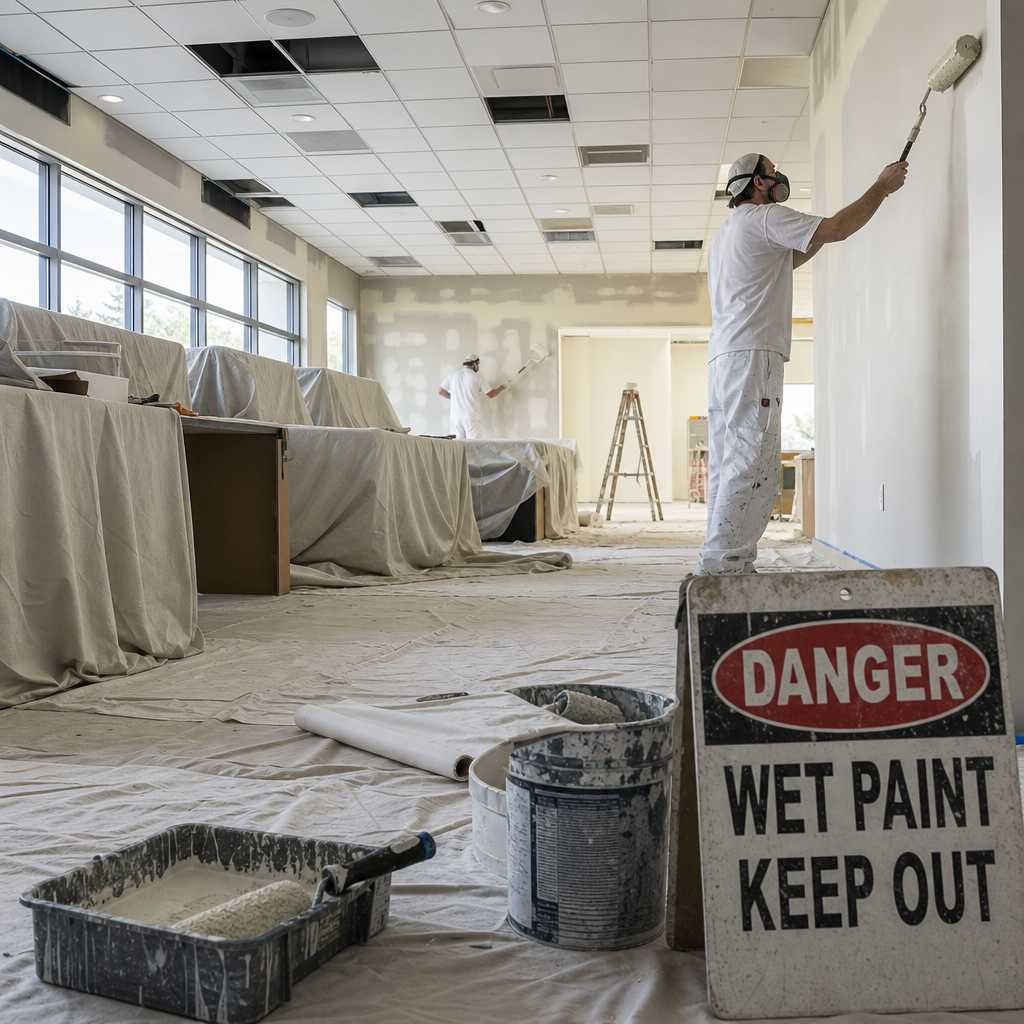
Most Surrey business owners underestimate how long a commercial painting project actually takes, and that miscalculation costs them customers, staff productivity, and revenue. The average commercial painting timeline for a mid-size Surrey retail or office space runs anywhere from three days to three weeks, depending on scope, surface conditions, and scheduling strategy. The disruption is real, but with the right contractor and a clear plan, it is manageable. At Dreamscape Painting Ltd., we have been navigating these exact conversations with Lower Mainland businesses for over 35 years, and the variables that separate a smooth project from a chaotic one are almost always predictable in advance.
Table of Contents
- Quick Takeaways
- What Drives the Commercial Painting Timeline
- Typical Timeline by Project Type
- Minimizing Business Disruption in Surrey
- Scheduling Strategy for Surrey Commercial Properties
- Comparison of Painting Approaches for Surrey Businesses
- What to Ask Your Commercial Painter Before Signing
- Frequently Asked Questions
- References
Quick Takeaways
| Key Insight | Explanation |
|---|---|
| Surface preparation takes 30-40% of total project time | Skipping or rushing prep work leads to paint failure within 12-24 months, costing more than the original job. |
| After-hours and weekend scheduling is available and advisable | Most experienced commercial painters in Surrey can schedule work around your operating hours to reduce customer-facing disruption. |
| A small office (under 2,000 sq ft) typically takes 2-4 days | Larger retail or warehouse spaces of 5,000 sq ft or more can take 1-3 weeks depending on ceiling height and surface complexity. |
| Exterior commercial repaints are highly weather-dependent in the Lower Mainland | Surrey’s rainy season (October to March) adds unpredictable delays. Scheduling exterior work from April to September is strongly recommended. |
| The number of coats required significantly affects timelines | A colour change from dark to light, or priming raw surfaces, often requires 3-4 coats rather than 2, adding one to two days to the schedule. |
| Drying versus curing time is often misunderstood by business owners | Paint may feel dry to the touch in 2-4 hours but requires 24-72 hours to fully cure before the space can handle normal foot traffic and furniture contact. |
| Phased painting plans protect revenue during the project | Dividing a large commercial space into zones allows portions of your business to stay operational while other sections are being painted. |
What Drives the Commercial Painting Timeline

The single most distorted expectation we encounter from Surrey business owners is the belief that painting is simply rolling colour on a wall. In practice, the actual painting phase is often the shortest part of the job. What takes time is everything that comes before and after the brush hits the surface.
Surface preparation is the foundation of every commercial paint job. This includes washing walls, patching cracks, sanding rough areas, taping edges, and priming bare or previously problematic surfaces. In older commercial buildings, particularly those built in the 1980s and 1990s that are common across Surrey’s established commercial corridors, you frequently encounter unpainted drywall repairs, water stains, or layers of incompatible previous coatings. Each of these conditions requires additional prep time.
The second major driver is the physical scale of the space. Ceiling height matters as much as square footage. A 3,000 sq ft warehouse with 18-foot ceilings requires scaffold setup and breakdown, which alone can add a full day to the project. A 3,000 sq ft open-concept office with 9-foot ceilings is a very different timeline equation.
How Paint Product Selection Affects Duration
Not all paints dry or cure at the same rate. Oil-based paints require longer dry times between coats, sometimes 24 hours per coat, while high-quality waterborne alkyds and low-VOC latex products designed for commercial use can allow recoating in 2-4 hours. At Dreamscape Painting, we typically recommend waterborne commercial products for interior business spaces in Surrey because they reduce downtime without sacrificing durability.
Low-VOC formulations also matter for occupied or partially occupied spaces. Conventional paints can leave strong odours for 48-72 hours, which is unacceptable in a restaurant, medical office, or retail store that needs to stay open. Premium low-VOC products off-gas significantly faster, often making a space usable within 4-8 hours of the final coat.
Pro tip: Always confirm with your commercial painter which specific paint products will be used and request the technical data sheet. The dry time, recoat window, and VOC content are all listed, and these numbers directly determine how many days your business will experience disruption.
Typical Timeline by Project Type
Business owners in Surrey and across the Lower Mainland ask us one question more than any other before signing: how many days will this actually take? The honest answer is that it depends on specifics, but we can give you real ranges based on project type, and we will.
Small Commercial Office or Retail Space (Under 2,000 Sq Ft)
A standard small office or boutique retail space in this size range, with normal ceiling heights and walls in reasonable condition, typically runs 2-4 working days from prep through final coat. Day one is usually dedicated to protection, taping, and surface prep. Days two and three cover primer where needed and two finish coats. Day four is a detail pass and touch-ups if required.
If the space requires only a fresh coat of the same colour on walls in good condition, some smaller spaces can realistically be completed in a single full day of work, followed by an overnight cure before reopening. However, this is the exception, not the rule.
Mid-Size Commercial Space (2,000 to 6,000 Sq Ft)
This is the most common project scope for Surrey businesses, covering restaurants, professional offices, dental clinics, and mid-size retail stores. Expect a realistic range of 5-10 working days for a full repaint, including ceilings, walls, and trim. If the project is walls only with no ceiling work, trim in good condition, and a colour match to the existing paint, this compresses to 3-6 days.
A common mistake at this scale is underestimating the number of painters needed. A single painter in a 4,000 sq ft space will take twice as long as a two-person crew. Always confirm the crew size with your contractor before scheduling, as this is a legitimate variable in your disruption timeline.
Large Commercial or Industrial Spaces (Over 6,000 Sq Ft)
Large-scale commercial painting, covering warehouses, multi-tenant office floors, or big box retail renovations, generally runs 2-4 weeks. These projects almost always benefit from phased scheduling, where the space is divided into sections that are completed sequentially, allowing parts of the business to remain operational throughout the project.

Minimizing Business Disruption in Surrey
The goal is not to find a painter who finishes the fastest. The goal is to find a painting company that can match your operational requirements with a realistic, professionally planned schedule. These are different things, and the distinction matters.
After-Hours and Weekend Scheduling
Dreamscape Painting regularly works after business hours and on weekends for commercial clients across Surrey and the Fraser Valley. This is standard practice for experienced commercial painters, not a premium add-on. If a contractor presents after-hours scheduling as exceptional or charges a heavy surcharge, that is worth questioning.
For businesses that operate Monday through Saturday, Sunday-only painting shifts are often the cleanest solution for sections of the building that cannot be partially closed. We have completed full small office repaints over two consecutive Sundays with zero interruption to the client’s weekday operations.
Phased Zone Painting for Larger Businesses
A phased approach divides your commercial space into logical sections, typically aligned with how your business actually uses the space. The painters complete one zone fully before moving to the next. This requires slightly more total project time but dramatically reduces the percentage of your business that is non-operational at any given point.
In practice, a Surrey restaurant doing a full dining room and kitchen repaint might run painters through the kitchen on Monday and Tuesday (when kitchen prep can shift to temporary facilities), then move to the dining room Wednesday through Friday, with the kitchen returning to normal operations while the dining room dries.
“The businesses that experience the least disruption from commercial painting projects are not the ones with the smallest spaces. They are the ones that invested 20 minutes in a pre-project planning conversation with their contractor.” – Dreamscape Painting, based on 35 years of commercial project experience across the Lower Mainland.
Scheduling Strategy for Surrey Commercial Properties
Surrey’s position in the Lower Mainland creates specific scheduling considerations that contractors unfamiliar with the area often overlook. The city spans a wide range of commercial zones, from the city centre near King George Boulevard to industrial areas near 96th Avenue and suburban retail corridors in South Surrey and White Rock. Traffic patterns and access logistics genuinely affect project scheduling.
For exterior commercial painting in Surrey, the weather window between May and September is not just preferable, it is where you will see the best adhesion, the fewest delay days, and the longest-lasting results. Painting exterior surfaces when temperatures are consistently below 10 degrees Celsius or when rain is frequent compromises paint adhesion and extends dry times significantly.
Interior commercial projects are less weather-dependent, but humidity still matters. High interior humidity during Surrey’s wet months can extend dry times for waterborne products. Experienced commercial painters account for this by using dehumidifiers and ensuring adequate ventilation, which Dreamscape includes as standard practice on commercial jobs.
Pro tip: Book your commercial painting project at least 4-6 weeks in advance of your target start date, especially if you need after-hours or weekend scheduling. Commercial painters with strong reputations in Surrey and the Lower Mainland fill those preferred time slots quickly, and a rushed booking often means accepting a less convenient daytime schedule.
Comparison of Painting Approaches for Surrey Businesses
There are three common approaches Surrey businesses take when deciding how to handle a commercial repaint. Each has genuine trade-offs for timeline, disruption, and final quality. The table below summarizes what the data consistently shows across projects of this type.
| Approach | Typical Timeline | Disruption Level and Trade-offs |
|---|---|---|
| Daytime Standard Scheduling (business closed or partially closed) | Shortest total calendar duration. Small spaces in 1-3 days, mid-size in 4-8 days. | Highest disruption. Business is fully or partially closed during peak hours. Best suited for businesses with natural closure periods such as seasonal businesses or those undergoing renovations. |
| After-Hours and Weekend Scheduling (business stays fully open) | Slightly longer calendar duration due to fewer working hours per shift. Add 20-30% to daytime estimates. | Lowest disruption. Business operates normally during the day. Requires a contractor with genuine commercial after-hours experience. Dreamscape Painting’s standard approach for occupied Surrey commercial spaces. |
| Phased Zone Painting (larger spaces painted in sections) | Longest total calendar duration. A 10-day daytime job may extend to 15-18 days in phases. | Moderate disruption. Only a portion of the business is affected at any time. Best for restaurants, large offices, and retail stores where full closure is not operationally viable. |
What to Ask Your Commercial Painter Before Signing
The quality of your pre-project conversation with a commercial painter is the single best predictor of how smoothly the project will run. Based on our experience working throughout Surrey, Langley, Abbotsford, and the broader Lower Mainland, here are the questions that actually matter for timeline management.
First, ask specifically how many painters will be on site each day. This number directly determines pace, and any reputable contractor should give you a specific answer, not a vague “our team.” Second, ask whether the quoted timeline assumes daytime, after-hours, or phased work, because contractors sometimes provide a fast-looking timeline that assumes full daytime access to your closed space, which may not reflect your actual operational reality.
Third, ask what happens if surface conditions are worse than expected once prep begins. Hidden water damage, plaster repairs, or mould remediation needs are discovered after work starts, and you need to know upfront whether the contractor will communicate timeline changes immediately or simply work around them silently.
Fourth, confirm what VOC levels are in the proposed paint products and whether the space will be ventilated adequately. This is especially important for businesses in food service, healthcare, and education. Dreamscape Painting provides this information on every commercial estimate as a standard detail, not as an afterthought.
Finally, ask for references from commercial projects in Surrey or the Lower Mainland specifically. Local commercial experience is not the same as residential painting experience, and the logistics of working around a functioning business require a different level of professionalism and planning. Dreamscape Painting’s commercial painting services page outlines our approach if you want a starting point for comparison.
Frequently Asked Questions
How long does a typical commercial painting project take for a Surrey office or retail space?
A small commercial space under 2,000 sq ft typically takes 2-4 working days from start to finish. Mid-size spaces between 2,000 and 6,000 sq ft generally run 5-10 working days depending on ceiling work, surface condition, and number of coats required. Larger commercial spaces over 6,000 sq ft should be planned for 2-4 weeks, particularly when phased scheduling is used to keep the business partially operational.
Can my Surrey business stay open during a commercial painting project?
Yes, in most cases. After-hours and weekend scheduling is the most practical approach for businesses that cannot close. For larger spaces, a phased zone approach allows sections of the business to remain open while others are being painted. The key is discussing your operational constraints with your contractor before signing so the schedule is built around your hours, not the other way around.
Does the time of year affect a commercial painting timeline in Surrey?
Significantly for exterior work. Surrey’s wet season from October through March introduces frequent weather delays that can stretch an exterior commercial repaint by days or even weeks compared to the same project in summer. Interior work is less weather-dependent, but high humidity during wet months can slow drying times, particularly for waterborne coatings, unless the contractor uses proper ventilation and dehumidification on site.
What is the difference between paint drying time and paint curing time, and why does it matter for my business?
Drying time refers to how long before the paint is dry to the touch, usually 2-4 hours for waterborne commercial products. Curing time refers to when the paint has reached its full hardness and durability, which takes 24-72 hours depending on the product and conditions. Your space can typically be re-entered after the final coat dries, but furniture should not be pushed against walls and high-traffic flooring should not receive heavy loads until the paint has fully cured. Ignoring curing time is one of the most common causes of early paint damage after a commercial repaint.
How many coats of paint does a commercial space typically need?
Most commercial spaces in good condition that are receiving a similar colour require a primer coat on any repaired areas plus two finish coats. If you are making a significant colour change, for example moving from dark grey to white, three to four coats are common, which adds one to two days to the schedule. New drywall always requires a full primer before any finish coats, and surfaces with staining or previous water damage typically require a shellac-based primer to prevent bleed-through, which has its own dry time requirements.
How does Dreamscape Painting approach commercial painting projects differently from residential jobs?
Commercial projects require planning around operational hours, multiple crew members working simultaneously, more complex surface preparation in high-traffic areas, and materials suited for durability in public-facing environments. Dreamscape Painting has been completing commercial projects across Surrey, Langley, and Abbotsford for over 35 years. Our estimators conduct an on-site assessment before quoting, so the timeline you receive is based on the actual conditions of your space, not a rough calculation made from photos or phone descriptions.
If you are planning a commercial repaint in Surrey or anywhere in the Fraser Valley, we would genuinely like to hear about your experience with commercial painting timelines and whether the disruption matched what you expected going in.
References
- Statista: Business renovation and commercial facility spending data and trends
- Forbes: How businesses can minimize operational disruption during facility upgrades
- National Research Council Canada: Building science guidelines for coatings, surface preparation, and interior air quality
- WorkSafeBC: Health and safety regulations for painting contractors working in commercial and industrial environments in British Columbia
- United States Environmental Protection Agency: VOC emissions guidelines and indoor air quality standards relevant to commercial painting products

