

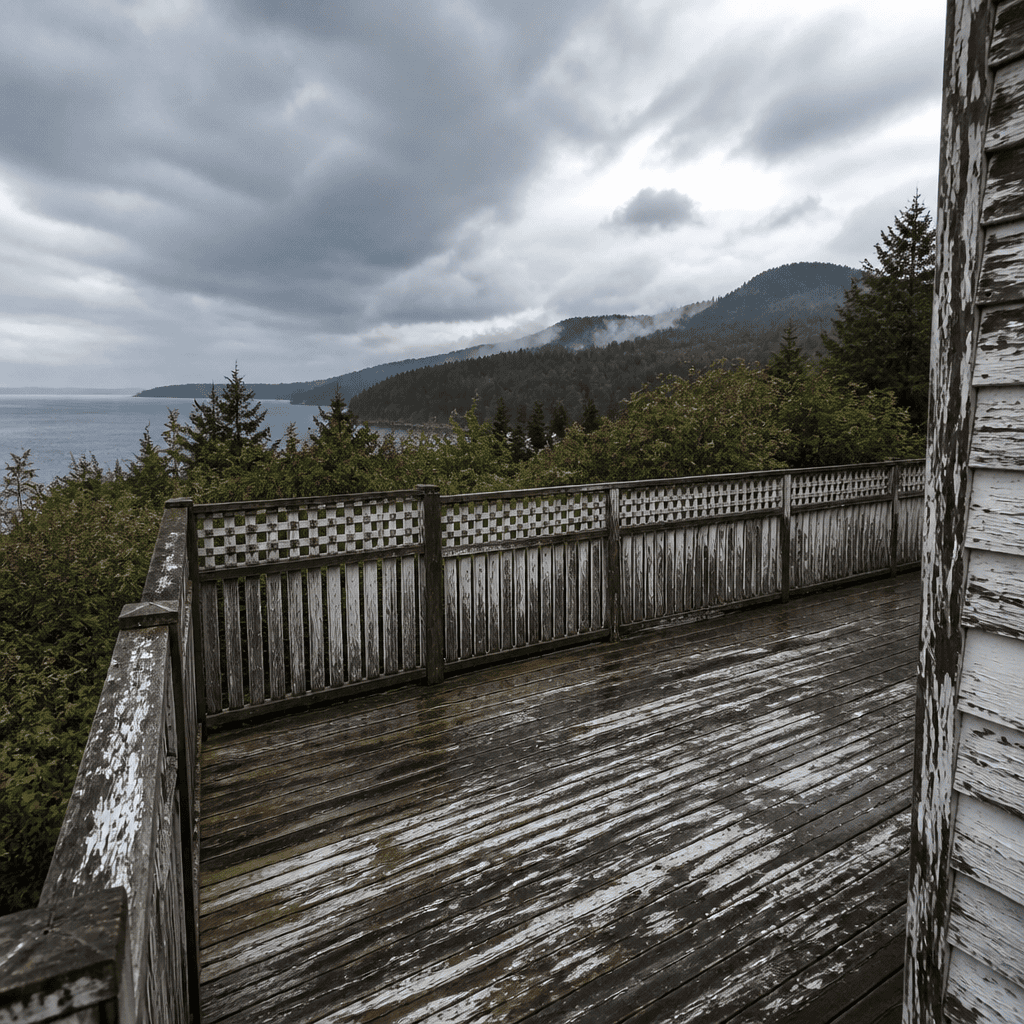
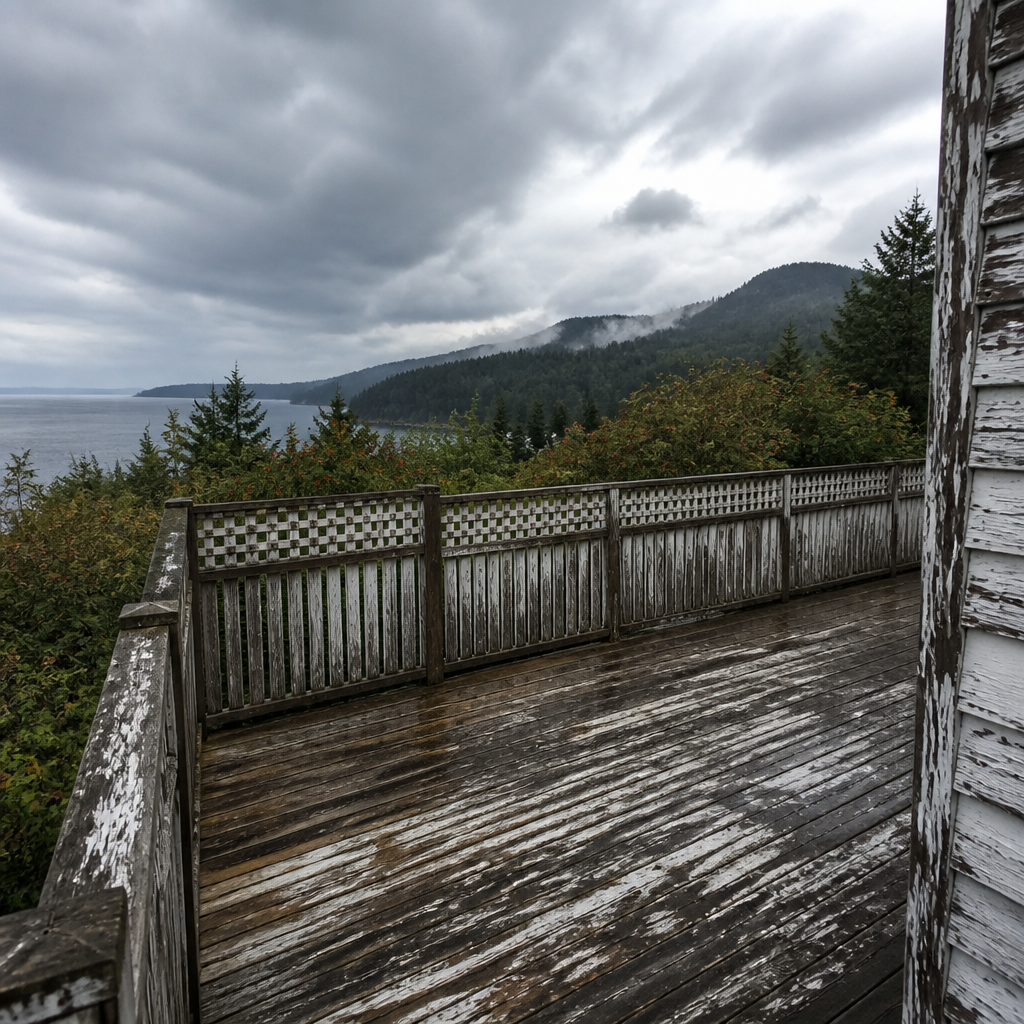
If your deck or fence survived another Fraser Valley winter looking grey, peeling, and waterlogged, you are not alone. The Lower Mainland’s combination of heavy seasonal rain, UV-heavy summers, and dramatic temperature swings between Abbotsford and the coast creates one of the harshest environments for exterior wood coatings in British Columbia. Most homeowners repaint or restain too late, choose the wrong product, or skip critical prep steps. The result is a finish that fails in 18 months instead of lasting five or more years. This guide covers everything you need to know about deck painting in the Fraser Valley, from choosing the right product type to getting genuine longevity out of your investment.
Table of Contents
- Quick Takeaways
- Why Fraser Valley Conditions Demand More from Deck and Fence Coatings
- Choosing the Right Product: Paint, Resurfacer, or Solid Stain
- The Deck and Fence Painting Process, Step by Step
- Fence Painting in Abbotsford and the Fraser Valley: What’s Different
- Longevity Tips to Get More Years from Every Coat
- When to Hire Professional Exterior Painting Services
- Frequently Asked Questions
- References
Quick Takeaways
| Key Insight | Explanation |
|---|---|
| Product type matters more than brand | Choosing between a conventional deck paint, a resurfacer, and a solid stain determines your results far more than which brand you buy. Match the product to your wood’s current condition. |
| Fraser Valley rain makes prep non-negotiable | Applying any coating to wood with residual moisture causes premature peeling. In the Lower Mainland, you need at least 48 dry hours before application and a moisture meter reading below 15 percent. |
| Cracked or weathered decks need a resurfacer, not paint | Conventional deck paint applied over cracked boards fails fast. A quality resurfacer fills cracks up to approximately one quarter inch wide and bonds to damaged surfaces that paint cannot. |
| Fence painting in Abbotsford requires UV-rated products | The Fraser Valley gets more sun exposure than coastal areas. South and west-facing fences degrade faster from UV without a coating that includes UV-stabilizing additives. |
| Two thin coats always beat one thick coat | A single heavy coat traps solvents, causes bubbling, and peels faster than two thinner coats applied with proper drying time between them. |
| Annual inspection saves money long-term | Catching early cracking or bare spots and spot-treating them costs a fraction of a full recoat. A ten-minute walkthrough each spring in Langley or Surrey pays for itself. |
| Professional exterior painters deliver measurable longevity gains | Experienced crews who work in the Lower Mainland regularly understand local weather windows, correct surface preparation, and which products perform in this climate specifically. |
Why Fraser Valley Conditions Demand More from Deck and Fence Coatings
The Fraser Valley is not a forgiving environment for exterior wood. From late October through March, weeks of steady rain keep wood saturated. Then from June onward, UV radiation and heat cycles cause wood to expand and contract, working existing coatings loose from the inside. This cycle repeats every year, and it accelerates failure in any coating that was not applied correctly or is not rated for these conditions.
Cedar and pressure-treated lumber, the two most common deck and fence materials across Abbotsford, Langley, and Surrey, respond differently to this climate. Cedar is naturally rot-resistant but absorbs and releases moisture quickly, making it prone to surface checking and cracking if the coating is not flexible enough. Pressure-treated pine holds moisture longer, which means extended dry time is required before any coating goes on.
The practical takeaway is simple: product selection and application timing matter far more in this region than they would in a drier climate like the Okanagan. Getting both right is the single biggest factor that separates a three-year finish from a seven-year one.
Choosing the Right Product: Paint, Resurfacer, or Solid Stain
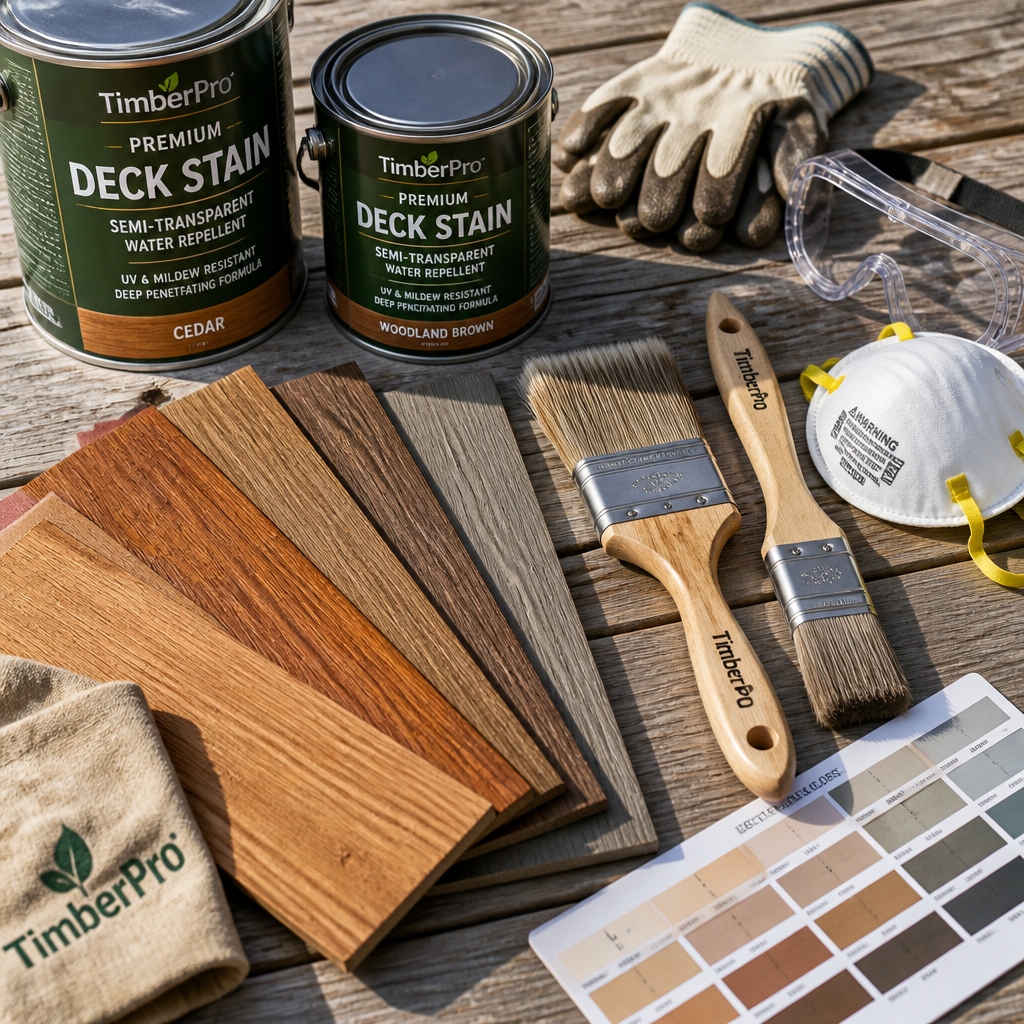
This is where most homeowners go wrong, and it is the decision that determines everything downstream. There are three fundamentally different product types in the deck coating category, and they are not interchangeable.
Conventional Deck and Porch Paint
Standard deck paints are acrylic latex formulations engineered specifically for floor surfaces. They include extra abrasion resistance and traction additives not found in wall paints. They apply at a normal film thickness and produce a smooth, painted appearance. These work well on decks that are structurally sound, with boards that are flat and free of significant cracking. If your deck was painted before and is in decent shape, conventional deck paint is the right tool.
Conventional deck paints typically offer a service life of roughly two to three years under heavy foot traffic and wet climate conditions, though proper prep and quality products can push that closer to four years in sheltered locations.
Deck Resurfacers
Products in this category, such as BEHR DeckOver and Rust-Oleum Restore 10X, apply at roughly ten times the film thickness of conventional paint. They are specifically designed to fill cracks up to approximately one quarter inch wide, bridge minor gaps between boards, and create a textured slip-resistant surface. If your deck boards are weathered, cracked, or you have had a previous coating fail, a resurfacer is the right starting point, not a paint. Attempting to use conventional paint over that condition will produce the same failure in half the time.
Solid-Color Stains
Solid-color stains sit between paint and transparent stains. Brands like Benjamin Moore Arborcoat Solid or BEHR Solid Color Stain fully conceal wood grain the way paint does, but they penetrate the surface rather than sitting purely on top of it. This gives them better adhesion characteristics on bare or lightly weathered wood. They are the best choice when transitioning from a semitransparent stain to a fully opaque finish without going to a full paint system.
The most expensive repair in deck and fence finishing is correcting a product that was right for the wrong surface. Matching the coating type to the actual condition of the wood prevents more failures than any premium brand can.
Marine and Specialty Enamels for High-Traffic Situations
For decks that see genuinely heavy traffic, such as commercial entries, restaurant patios, or multi-family common areas, marine topside enamels borrowed from boat coating chemistry deliver superior abrasion resistance and UV stability. They cost more upfront, but they reduce repainting frequency significantly over a five to ten year period.
The Deck and Fence Painting Process, Step by Step
Getting the process right matters as much as getting the product right. A quality product applied over a contaminated or wet surface will fail just as fast as a cheap product applied correctly. This is not a shortcut-friendly job.
Surface Inspection and Repair
Before any coating goes on, walk every board. Look for soft spots, rot, raised nails or screws, and wide cracks. Replace any structurally compromised boards. Drive in any raised fasteners and countersink them. Fill cracks appropriately based on your product choice. Skipping this step and painting over soft wood guarantees that your new finish peels within months.
Cleaning and Stripping
All old peeling or flaking coatings must come off. Power washing alone is not adequate for old paint removal. A deck stripper or cleaner applied first, followed by thorough rinsing, removes not just old coating but the grey oxidized wood fibers that prevent adhesion. If there is mold or mildew present, a dedicated wood cleaner with mildewcide must be used. This is extremely common on north-facing decks and fences across the Fraser Valley.
Pro tip: After washing, use a moisture meter before you even think about opening a paint can. Wood should read below 15 percent moisture content. In Abbotsford’s wet months, that drying window can take three to five days after a thorough wash, not the 24 hours many product labels suggest for dry climates.
Priming
Whether you prime depends on what product system you are using. Resurfacers often function as their own primer. Conventional deck paint over bare wood almost always benefits from a dedicated exterior wood primer, especially over pressure-treated lumber where tannin bleed can discolour a topcoat. Read the product system requirements and follow them exactly.
Application
Apply in dry conditions with temperatures between roughly 10 and 30 degrees Celsius. Avoid direct harsh sun on south-facing surfaces during mid-afternoon application, as the coating can skin over before it properly penetrates. Two thinner coats consistently outperform one thick coat for adhesion, leveling, and long-term flexibility. Allow full drying time between coats as stated on the product data sheet, not as estimated by feel.
Fence Painting in Abbotsford and the Fraser Valley: What’s Different
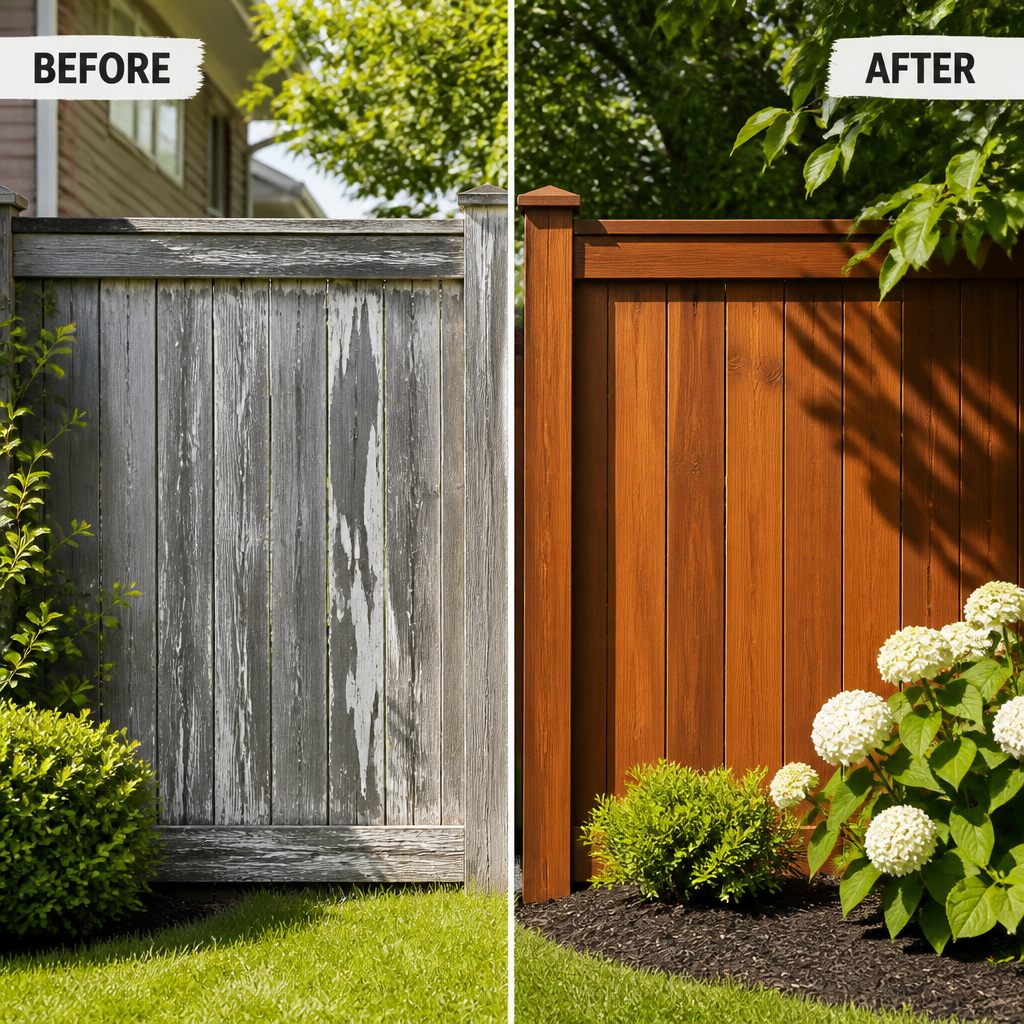
Fence painting gets less attention than deck work, but it is actually harder to do well. Fences have more surface area per linear foot than most people estimate, they include end grain that absorbs far more coating than face grain, and they sit in positions that expose them to full sun and driving rain simultaneously.
End Grain Sealing is Non-Negotiable
The top of every fence post and picket is exposed end grain. End grain absorbs moisture many times faster than face grain and is the primary entry point for rot in cedar and pine fencing. Any professional fence painting in Abbotsford should include thorough end-grain treatment with a penetrating sealer or oil before topcoating. This one step alone adds years to the life of any fence.
South and West Exposures Need UV-Rated Products
The Fraser Valley receives meaningful summer sun, particularly in Abbotsford and Langley where the valley opens up and weather protection from coastal fog decreases. South and west-facing fence panels bleach, chalk, and degrade noticeably faster than north-facing ones. Use a coating with explicit UV resistance for these exposures, not a general-purpose exterior paint.
Spraying Versus Brushing for Fences
For most residential fences, airless spraying is the most efficient application method, but it is not automatically the best result. Spray coverage can be thinner on rough-sawn cedar without a back-roll, and overspray management is critical near neighboring properties, vehicles, and planted areas. A skilled crew uses spray application with back-brushing on rough surfaces to ensure the coating reaches into grain rather than just sitting on top of it.
Pro tip: If you are painting a cedar privacy fence in the Fraser Valley, apply one coat in the early morning and a second coat the following morning rather than both coats in one day. The extended cure time between coats produces a measurably harder finish on rough cedar than back-to-back same-day coats.
Longevity Tips to Get More Years from Every Coat
Most homeowners paint a deck or fence, forget about it, and then wonder why it looks bad in two years. Longevity is not a passive result of a good product. It requires a small amount of active maintenance.
The Annual Spring Inspection
Walk your deck and fence every spring after the rainy season. Look for bare spots where coating has worn through, especially at the top of fence posts, on the leading edges of deck boards, and on stair treads where foot traffic is heaviest. Spot-treating bare areas before moisture penetrates costs almost nothing compared to a full strip and recoat.
Keep Vegetation Clear
Plants and soil touching fence boards are the single fastest way to introduce rot and moisture damage. Across Langley and Abbotsford acreages in particular, shrubs or garden beds against fence lines are extremely common. Maintain at least a small air gap between any vegetation and fence boards to allow drying after rain.
Cleaning Between Coats
Applying a fresh topcoat over years of grime without cleaning first is a common mistake that causes early adhesion failure. Before any recoat, clean the surface with a wood-appropriate cleaner, rinse thoroughly, and let it dry completely. The new coat bonds to the existing coating, not to dirt.
| Coating Type | Best Application Scenario | Expected Service Life in Fraser Valley Climate |
|---|---|---|
| Conventional Deck Paint | Structurally sound boards, previously painted surfaces in good condition | 2 to 4 years depending on traffic and exposure |
| Deck Resurfacer | Cracked, weathered, or previously failed coated surfaces | 3 to 5 years with annual spot maintenance |
| Solid-Color Stain | Transitioning from semitransparent stain, sound bare wood | 4 to 6 years on vertical fence surfaces, 3 to 4 on horizontal decks |
When to Hire Professional Exterior Painting Services
There is a real category of deck and fence work that experienced homeowners can handle themselves. There is also a category where attempting DIY produces a failed result that costs more to fix than hiring a professional from the start. Knowing which category your project falls into saves both money and frustration.
DIY is reasonable when your surface is structurally sound, the existing coating is adhering well with only minor wear, the project is small in scale, and you have the time to do prep properly over multiple days. A small fence panel or a compact deck that just needs a fresh topcoat is within reach for a careful homeowner.
Professional exterior painting services across Vancouver and the broader Lower Mainland make the most sense when your deck is large or complex, when previous coatings are failing or peeling extensively, when the structure includes multiple heights, railings, or stairs, or when timing is critical around a property sale, renovation, or event. Professionals have industrial prep equipment, moisture meters, the right applicators for different surfaces, and experience reading local weather windows in the Fraser Valley specifically.
Dreamscape Painting has been working in the Lower Mainland and Fraser Valley for over 35 years. That history means the estimators and painters know what fails on a north-facing cedar fence in Abbotsford versus a pressure-treated deck in Langley, and they recommend accordingly. That local experience is worth something that no general-purpose painting guide can replicate.
If your deck or fence project involves significant prep work, large surface area, or a coating system decision that you are uncertain about, getting a professional assessment from Dreamscape Painting before buying materials is a practical first step. A proper estimate costs nothing and often surfaces issues that change the project plan entirely.
Frequently Asked Questions
How long should I wait after power washing before painting my deck in the Fraser Valley?
In the Fraser Valley’s wet climate, waiting at least 48 hours after power washing is the minimum, and three to five days is more realistic during the rainy season from October through April. The reliable test is a moisture meter reading below 15 percent on your boards. Applying any coating over wetter wood is one of the top causes of early peeling in this region.
What is the difference between deck stain and deck paint, and which should I use?
Deck stain penetrates the wood surface and allows the grain to show to varying degrees. Deck paint sits on top of the surface and fully hides the wood. If your deck wood is weathered, cracked, or already painted, deck paint or a resurfacer is generally the better choice because stain will not hide surface damage effectively. If you have new or sound wood and prefer the look of visible grain, a semitransparent or solid stain is worth considering. Solid stains behave similarly to paint in terms of appearance but bond more like a stain.
How often does fence painting need to be done in Abbotsford specifically?
Most fence coatings in the Abbotsford area need a fresh topcoat or maintenance coat every three to five years, depending on the product used, the fence’s sun exposure, and how well the original application was prepared. South and west-facing fence panels typically need attention sooner than north-facing ones. Annual spot-treating of bare areas can extend the life of any full coating job by one to two years.
Can I paint over a previously stained deck, or does it need to be stripped first?
The answer depends on what type of stain is currently on the deck and how well it is adhering. Solid-color stains that are in good condition and well-bonded can often be painted over with a compatible deck paint after cleaning. Penetrating oil-based stains or semitransparent stains need to be stripped before painting, because paint will not bond reliably over them. Testing adhesion with a piece of tape on a small area after cleaning gives you a quick read on whether stripping is necessary.
What exterior paint products actually hold up in the Lower Mainland climate?
For horizontal deck surfaces, look for products specifically formulated for floor or deck use with added abrasion resistance. Products from established manufacturers in the acrylic latex category generally perform well when properly applied. For fences and vertical surfaces, exterior acrylic latex paints with built-in mildewcide and UV resistance are appropriate for the Fraser Valley’s mix of wet winters and sunny summers. The most important factor is proper surface preparation and moisture control, not which brand name is on the can.
Is it worth hiring a professional painter for a deck or fence, or is this a good DIY project?
Small, straightforward fence panels or a compact deck in good condition are realistic DIY projects if you are willing to spend real time on prep. Large decks, heavily weathered surfaces, structures with complex railings or stairs, and projects where you are uncertain about the coating system are better handed to a professional crew. The most expensive DIY outcome is a failed coating that requires complete stripping and rework, which costs more in time and materials than a professional job would have cost initially.
Have you had a deck or fence coating fail prematurely in the Fraser Valley? Share what you think went wrong or what finally worked for you, your experience helps other homeowners in the Lower Mainland make better decisions.

