

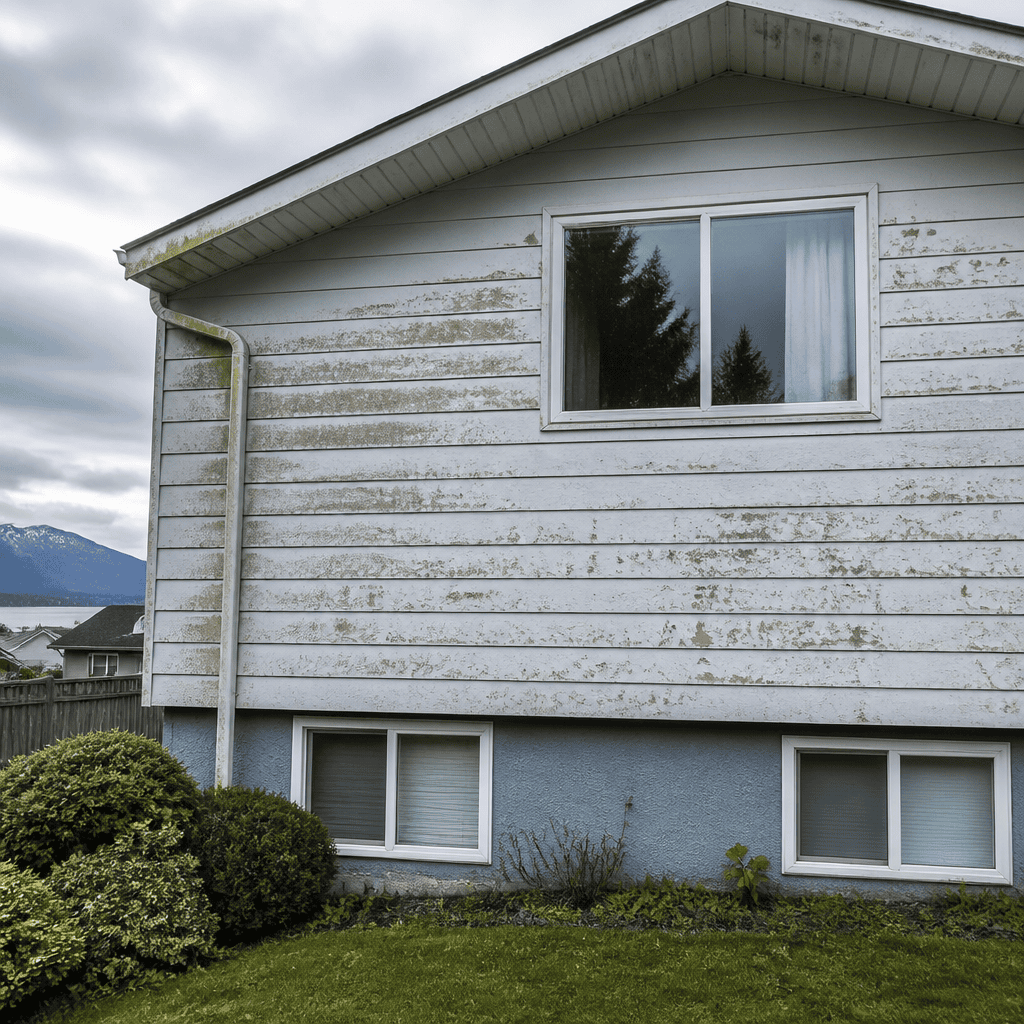
Most homeowners in the Fraser Valley and Lower Mainland assume their exterior paint will last about as long as the label promises. It usually does not. The combination of coastal humidity, heavy seasonal rainfall, UV intensity from May through August, and biological growth from persistent moisture makes British Columbia one of the most demanding environments for exterior coatings in the entire country. Understanding realistic exterior paint lifespan in BC is not just helpful for budgeting. It can prevent the kind of moisture damage behind the paint film that turns a straightforward repaint job into an expensive siding repair.
Table of Contents
- Quick Takeaways
- Why the Lower Mainland Is Hard on Exterior Paint
- How Long Does Exterior Paint Last by Surface Type
- The Factors That Shorten or Extend Lifespan
- Comparing Paint Quality Tiers and What They Actually Deliver
- Warning Signs Your Exterior Paint Is Failing
- Professional vs. DIY Exterior Painting: A Realistic Comparison
- Frequently Asked Questions
- References
Quick Takeaways
| Key Insight | Explanation |
|---|---|
| Quality exterior paint in BC lasts 7 to 10 years on average | Premium 100% acrylic latex on properly prepared surfaces in the Lower Mainland typically reaches this range. Budget paint or poor prep cuts that figure significantly. |
| Surface material is the single biggest variable | Wood siding lasts 5 to 8 years. Fiber cement reaches 10 to 15 years. Stucco falls in the 6 to 10 year range depending on crack monitoring and moisture exposure. |
| Wall orientation matters more than most homeowners realize | South and west-facing walls degrade faster from UV exposure. North-facing walls fail earlier due to persistent moisture and biological growth. Both ends of the house need inspection before the middle. |
| Surface preparation determines more of the outcome than the paint brand | Skipping power washing, sanding, and a penetrating primer can reduce a premium paint job’s lifespan by 30 to 50 percent, regardless of what goes on top. |
| DIY exterior jobs in BC typically last 3 to 5 years | Without professional-grade surface preparation, high-quality primer, and correct application technique, most amateur repaints fail well before the seven-year mark. |
| Chalking on south and west walls is an early warning, not cosmetic | Chalking means UV is breaking down the paint binder. Act while the film is tired rather than waiting for peeling, which signals substrate exposure and potential water intrusion. |
| Cedar siding requires oil-based primer specifically | Cedar tannins will bleed through water-based primer and stain the topcoat. An oil-based primer blocks this and extends the finish life considerably on cedar-clad homes throughout the Fraser Valley. |
Why the Lower Mainland Is Hard on Exterior Paint
British Columbia’s Lower Mainland and Fraser Valley sit in a climatic zone that punishes exterior paint from multiple directions simultaneously. The region receives significant annual rainfall concentrated in the fall and winter months, often with extended stretches where exterior surfaces stay damp for days at a time. That persistent moisture is a primary driver of early paint failure through peeling, bubbling, and biological growth like mildew and algae. At the same time, summer UV intensity between May and September is stronger than many homeowners expect given the area’s overcast reputation for the rest of the year.
The combination is particularly damaging because moisture and UV attack the paint film through different mechanisms at different times of year. Moisture creates hydrostatic pressure beneath the film, especially on wood substrates that absorb and release water seasonally. UV degrades the paint binder directly, causing chalking and fading that weakens the film’s ability to repel moisture in the first place. The result is a compounding degradation cycle that coastal climates produce faster than inland or drier regions of Canada.
Homes in areas with significant tree coverage face an additional challenge. Persistent shade on north and east-facing walls reduces the UV-driven die-off of biological growth, meaning algae and mildew establish more aggressively and eat into the paint film chemically. Properties along creek corridors or with dense landscaping near the foundation are particularly susceptible.
How Long Does Exterior Paint Last by Surface Type
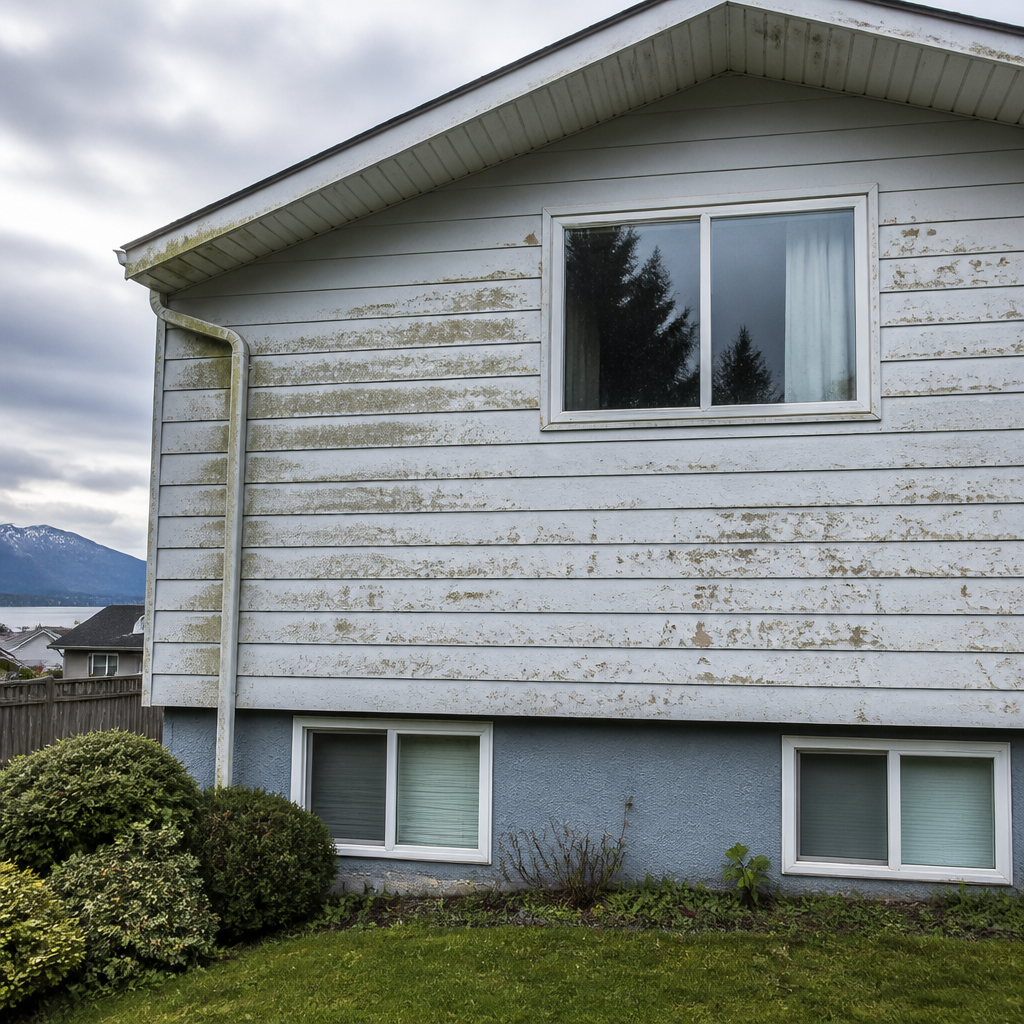
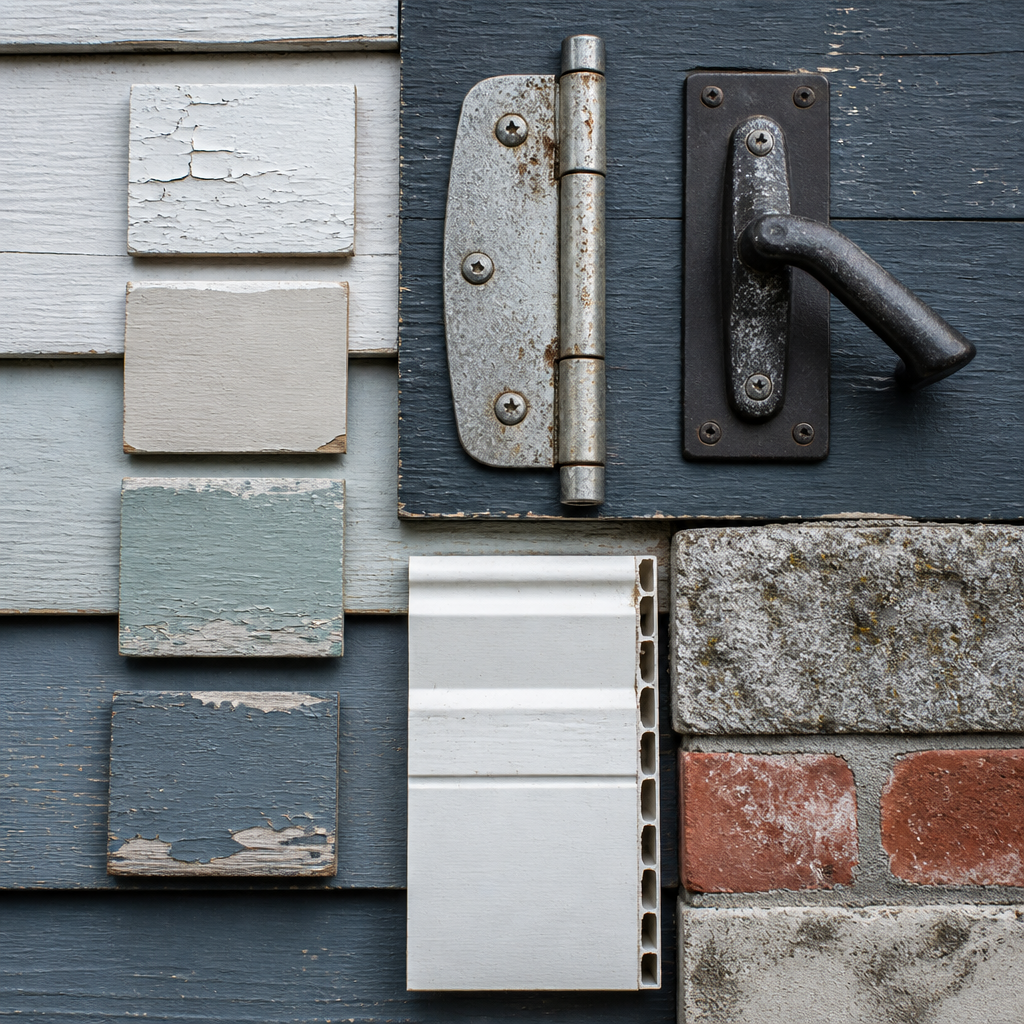
The single most reliable predictor of how long exterior paint will last in the Lower Mainland is not the paint brand. It is the substrate underneath it. Different materials absorb and release moisture at different rates, expand and contract with temperature changes differently, and require different preparation methods. Here is what homeowners in Abbotsford, Langley, Surrey, and across the Fraser Valley should realistically expect from each common siding material.
Wood Siding: 5 to 8 Years
Wood is the most common siding material on older homes throughout the region, and it is the most demanding substrate to paint. Quality latex paint on properly prepared wood siding in BC typically lasts 5 to 8 years. Cedar is particularly demanding because its natural tannins will bleed through any water-based primer, staining the topcoat from behind. Only an oil-based primer applied directly to bare or stripped cedar will block tannin migration effectively. Homes on the shorter end of this range are usually those with significant north or west-wall exposure, inadequate primer, or paint applied directly over an old failing coat rather than properly stripped and prepared wood.
Fiber Cement Siding: 10 to 15 Years
Fiber cement is the most forgiving substrate for exterior paint in BC’s climate. It does not absorb moisture the way wood does, it does not expand and contract as dramatically with temperature swings, and a properly primed and painted fiber cement surface can realistically hold a quality exterior finish for 10 to 15 years when a high-build acrylic formula is used. The caveat is that fiber cement must be primed and painted correctly from the outset. Factory-primed panels still need a topcoat on site, and any cut edges must be sealed before installation or moisture will wick in from those entry points regardless of how good the face paint is.
Stucco: 6 to 10 Years
Stucco falls in the middle range, typically lasting 6 to 10 years with quality paint and preparation. Stucco does not absorb moisture the same way wood does, which gives it an advantage over older wood-clad homes. The critical issue with stucco is cracking. Hairline cracks in stucco are paint’s enemy because they allow water to travel behind the paint film through capillary action. Monitoring stucco for cracks independently of paint condition is essential in this region, because a stucco home can look fine on the surface while water is migrating behind the coating.
Vinyl Siding: 7 to 10 Years (When Painted)
Vinyl siding does not typically require repainting on the same schedule as wood because it does not absorb moisture. When vinyl siding is painted, expect 7 to 10 years from a proper application, though UV exposure on south and west-facing elevations may shorten that on older vinyl that has already begun to degrade. One important note: painting vinyl a significantly darker colour than its original shade can cause heat warping, because darker paint absorbs more solar energy than the vinyl was engineered to handle.
The Factors That Shorten or Extend Lifespan
Knowing the general range for your siding type is a starting point. Knowing what moves that number up or down is where practical planning begins. Several controllable and environmental factors push paint life significantly in either direction on Lower Mainland homes.
Surface Preparation Quality
This is not a variable that can be compensated for with a premium paint product. A poor preparation job beneath an expensive paint produces a worse outcome than a solid preparation job beneath a mid-grade product. The correct sequence for exterior painting in this region involves pressure washing to remove dirt, salt residue, and loose material, hand sanding or machine sanding rough surfaces, treating any biological growth with an appropriate solution, allowing the surface to fully dry before priming, and applying a penetrating bonding primer before the topcoat. Skipping the primer step is the single most common error on DIY repaints in the Fraser Valley, and it alone can cut years off the finished job.
Wall Orientation and Exposure
South and west-facing walls receive the most UV in BC between May and September. Paint on these elevations chalks and fades faster than paint on east-facing or north-facing walls. North-facing walls, by contrast, stay damper longer after rain and receive less UV to control biological growth, meaning mildew and algae establish earlier. In practice, a single home often needs repainting on different walls at different intervals, and a professional inspection should evaluate each elevation separately rather than assuming the whole house ages uniformly.
Overhanging Trees and Drainage Near the Foundation
Tree canopy over a roof or wall reduces UV exposure that would otherwise slow biological growth. Gutters that discharge near the foundation create splash zones where paint is repeatedly wetted. Both conditions accelerate degradation measurably. Trimming back encroaching branches and ensuring downspouts discharge at least a metre away from the foundation are the two lowest-cost interventions a homeowner can make to extend paint life between professional repaints.
The standard advice to repaint every five to ten years is a useful starting point but not a reliable schedule for homes in the Lower Mainland. The real answer depends on what the home is clad in, which direction its walls face, what trees or structures shade it, and what quality of paint and preparation was used in the last paint job.
Pro tip: Before scheduling a repaint, walk the perimeter of your home after a significant rainfall and look for areas where water is pooling near the foundation, running along siding, or dripping from failing caulk joints. Those areas are where the next paint failure will start, and fixing the water source before repainting will double the lifespan of the new coat.
Comparing Paint Quality Tiers and What They Actually Deliver
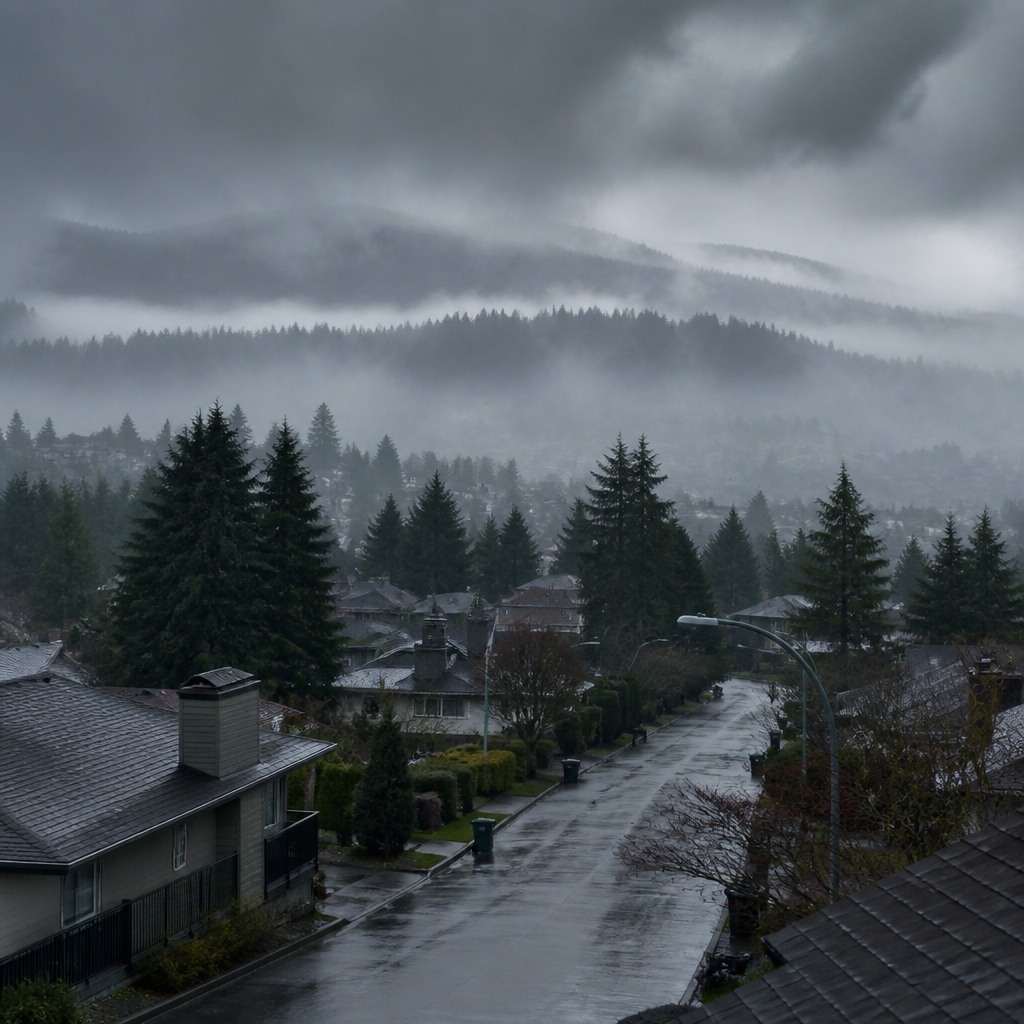
Not all exterior paints perform equally in BC’s coastal climate. The difference between a budget-grade product and a professional-grade 100% acrylic formulation is not just marketing. It comes down to the quality of the resin, the density of the pigment, and the inclusion of additives like built-in mildewcide, which matter significantly in the Lower Mainland’s wet environment.
| Paint Tier | Realistic Lifespan in BC | Key Strengths and Limitations |
|---|---|---|
| Budget-grade latex (big-box store house brands) | 3 to 5 years | Lower resin quality means poor adhesion over time. Pigment density is lower, so UV fading is visible within two to three seasons. No built-in mildewcide, which is a serious gap for Lower Mainland conditions. Often chalks and peels before the five-year mark on wood substrates. |
| Mid-grade 100% acrylic latex (e.g., Sherwin-Williams SuperPaint, Benjamin Moore Regal Select Exterior) | 7 to 10 years | Solid performance in this climate. Good UV resistance, adequate flexibility for seasonal wood movement, and mildewcide included in most formulations. This tier is appropriate for most residential repaints where the substrate is in good condition and prep is done correctly. |
| Premium 100% acrylic latex (e.g., Sherwin-Williams Duration, Benjamin Moore Aura Exterior, PPG Timeless) | 10 to 15 years on fiber cement; 8 to 12 years on wood | Higher resin load for better adhesion and film integrity. Superior UV stabilizers for colour retention. Stronger mildewcide protection. Worth the added cost on large exteriors or when the last repaint cycle was costly. Not a substitute for poor preparation, but a genuine performance upgrade when prep is done right. |
The practical takeaway is that upgrading from budget-grade to premium paint on a typical Lower Mainland home costs less in material than adding one extra repaint cycle over the life of the house. On a two-storey home with significant wood siding, the difference in paint material cost between budget and premium product is often recovered within the first additional year of service life.
Pro tip: In BC’s rainy climate, look for exterior paint formulations that include a built-in mildewcide as a listed ingredient, not just as a “mold-resistant” marketing claim. Mildewcide inhibits biological growth that actively degrades the paint film from the outside in, which is especially important for north and east-facing walls that stay damp longest after rain events.
Warning Signs Your Exterior Paint Is Failing
Catching exterior paint failure early is the difference between a standard repaint and an expensive repair. By the time paint is visibly peeling in large sheets, water has often already penetrated the substrate. In the Lower Mainland, the window between “paint is getting tired” and “paint has failed and substrate is damaged” is shorter than in drier climates because moisture is almost always available to exploit a compromised film.
Chalking on South and West Walls
Run your hand across a south or west-facing exterior wall. If a white or coloured powder transfers to your palm, the paint is chalking. Chalking is UV degradation of the paint binder, and it signals that the film is losing its protective properties. It is not immediately catastrophic, but it means the surface needs attention before the next rainy season. Repainting over a chalked surface without removing the chalk first is a common mistake: the new paint adheres to the chalk layer, not the substrate, and peels within a year or two.
Bubbling and Blistering
Bubbles beneath the paint film almost always indicate moisture trapped between the film and the substrate. On wood siding in the Fraser Valley, this typically happens when paint was applied over damp wood, when the back face of the siding was not properly sealed, or when a vapour barrier inside the wall is pushing moisture outward. Blistering that appears only in direct sun and then recedes is often a solvent-blister from paint applied in high heat, but blistering that persists indicates a moisture problem that needs to be traced to its source before repainting.
Peeling and Flaking
Peeling is the most visible sign of adhesion failure and the point at which the substrate is exposed to the elements. In BC’s wet climate, bare wood exposed through a failing paint film can take on moisture within a single rainfall cycle. If peeling has progressed to the point where bare wood or bare substrate is visible, the priority is protecting that substrate quickly, not simply scheduling a cosmetic repaint.
Caulk Joint Failure
Failed caulking at window frames, door frames, trim transitions, and corner joints is a leading entry point for water in the Lower Mainland’s wet climate. Inspect caulk joints annually. Caulk that has cracked, pulled away from one surface, or turned rigid should be removed and replaced before repainting, because paint applied over failed caulk will not bridge the gap or seal the opening beneath it.
Professional vs. DIY Exterior Painting: A Realistic Comparison
DIY exterior painting appeals to homeowners as a cost-saving measure, but in BC’s climate the gap between professional and amateur results is larger than in more forgiving environments. The reason is preparation. Professional painting crews power wash, repair, sand, prime, and apply paint using equipment designed to deliver a consistent film thickness. Most DIY projects skip or abbreviate several of those steps, and in the Lower Mainland’s climate, each skipped step shortens the outcome measurably.
Without professional surface preparation, high-grade primers, and correct application technique, most DIY exterior jobs last only three to five years. By contrast, a professional crew’s work on the same home, using the same paint product, typically delivers seven to ten years of service life. Over a twenty-year period, a homeowner who consistently DIYs their exterior will often end up painting four or five times to a professional’s two or three repaints, frequently at higher total cost when substrate repairs from early failures are factored in.
That said, there are specific tasks a capable homeowner can handle well between full professional repaints: touching up minor paint chips, replacing failed caulk, and monitoring for early signs of biological growth. These small-scale maintenance tasks extend the life of a professional paint job and reduce the scope of work needed at the next full repaint. The exterior painting services offered by Dreamscape Painting throughout the Fraser Valley include preparation, priming, and painting as a complete system, not separate steps, which is why the resulting finish performs at the longer end of the expected lifespan range for each substrate type.
If your home was last painted more than six years ago and you have not had a professional inspect the exterior, that inspection is worth doing before the next fall and winter rain season arrives. Contact Dreamscape Painting to arrange a no-obligation estimate for your home in Abbotsford, Langley, Surrey, or anywhere in the Lower Mainland. Identifying what is actually on your walls today, how much life is left in the current paint film, and what preparation will be needed for the next coat is information that protects both the home and the repaint budget.
Frequently Asked Questions
How long does exterior paint last on a typical home in the Lower Mainland?
A quality exterior paint job using 100% acrylic latex on properly prepared surfaces in the Lower Mainland and Fraser Valley typically lasts seven to ten years. Homes with significant north-facing exposure, dense tree coverage, or poor drainage near the foundation often fall on the shorter end of that range. Premium paint products on fiber cement siding can push toward twelve to fifteen years under the right conditions.
Why does exterior paint fail sooner in BC than in drier provinces?
BC’s coastal climate subjects exterior paint to a combination of stresses that inland and drier provinces do not face simultaneously: persistent wet seasons that keep surfaces damp for extended periods, significant UV exposure during summer months that degrades paint binders, and biological growth from mildew and algae that eats into the paint film chemically. Each of these forces shortens paint life individually, and their combined effect in the Lower Mainland is more aggressive than any single factor would produce alone.
What is the most common reason exterior paint fails early in the Fraser Valley?
Inadequate surface preparation is the leading cause of early paint failure across the region, and it is almost always within the painter’s control. Painting over a surface that was not fully pressure washed, not properly dried, not sanded where adhesion was compromised, or not primed with the correct primer for the substrate can cut years off the finished paint job regardless of how good the topcoat is. Cedar siding painted without an oil-based primer is a particularly common failure pattern in older homes throughout Abbotsford and Langley.
Can I paint my home’s exterior myself and still get a long-lasting result?
In BC’s climate, achieving a professional-grade result on a DIY exterior repaint is very difficult without the right equipment and preparation knowledge. Most DIY exterior jobs in the Lower Mainland last three to five years compared to seven to ten years for professional work. The gap is almost entirely in surface preparation: professional crews have pressure washers, proper scaffolding for consistent access, commercial-grade sanders, and the experience to identify substrate problems before they paint over them. Touching up and maintaining a professional paint job between full repaints is well within most homeowners’ capabilities, but full repaints benefit from professional execution.
What type of paint should I use for exterior work in the Lower Mainland?
100% acrylic latex is the standard for exterior painting in BC’s coastal climate. Acrylic binders remain flexible at low temperatures, which prevents cracking during seasonal temperature changes. They also resist UV degradation better than alkyd-based coatings and are moisture-vapour permeable, meaning any moisture that migrates into wood substrates can escape without building pressure beneath the film. Look for formulations that include a built-in mildewcide, which is particularly important for north and east-facing walls that stay damp longest through the fall and winter months.
How do I know if my exterior paint is still protecting my home or just cosmetically intact?
Run your hand across south and west-facing walls and check for chalking. Inspect north-facing walls for mildew or algae growth. Look at caulk joints around windows and doors for cracking or separation. Check the paint edges at trim transitions for lifting or separation from the substrate. If any of these signs are present, the paint film is beginning to fail functionally even if it still looks intact from a distance. Catching failure at this stage means a standard repaint. Waiting until paint is visibly peeling often means substrate repairs in addition to painting.
Have you noticed any of these warning signs on your own home, or do you have questions about what your specific siding material should realistically be delivering in terms of paint lifespan? Share your experience in the comments below.
References
- How long exterior paint lasts in BC: surface-by-surface lifespan guide for coastal climates
- Exterior paint durability FAQs: what affects how long a paint job lasts
- Best exterior paint for Vancouver weather: product and sheen recommendations for BC homes
- How long exterior paint lasts: professional vs. DIY results and warning signs of failure
- Exterior paint lifespan in BC by siding material: stucco, fibre cement, vinyl, and wood

