

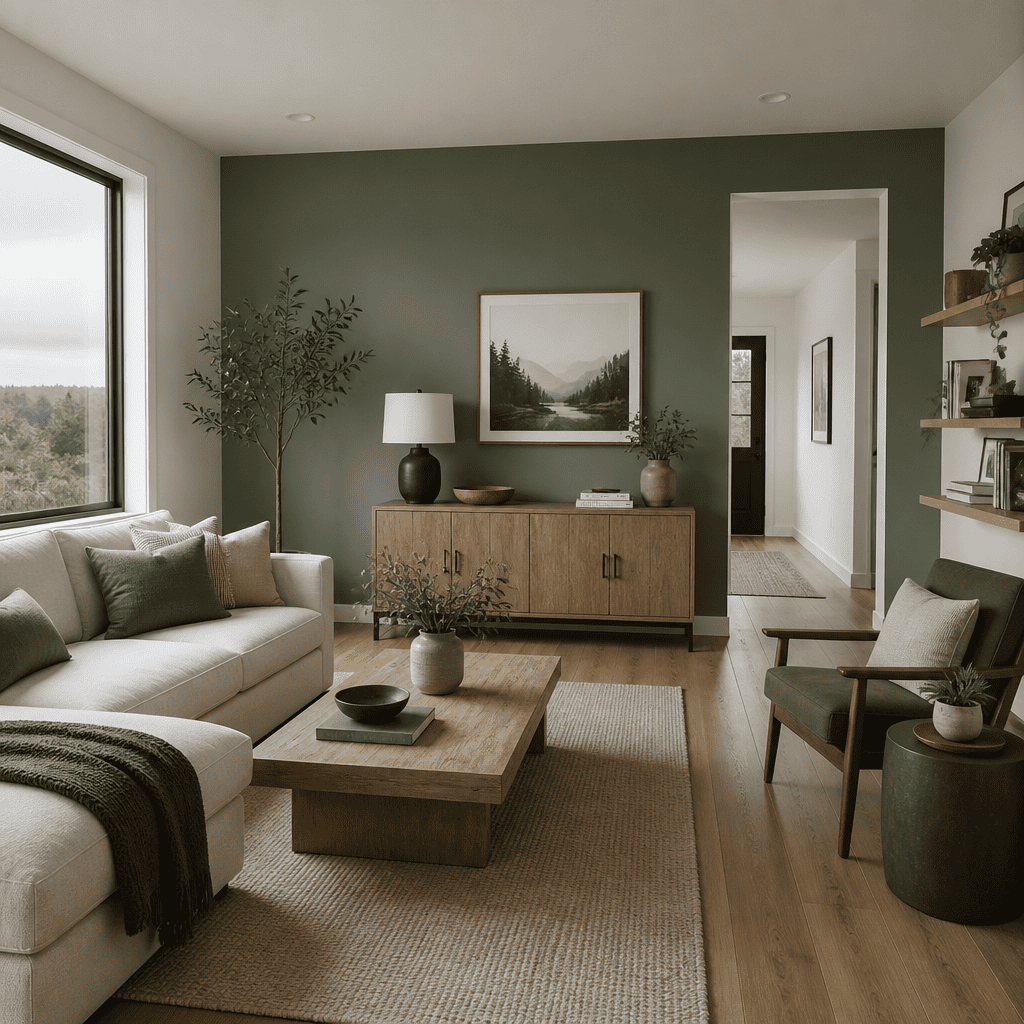
Most accent walls fail before the brush ever touches the wall. The colour is chosen in a paint store under fluorescent lighting, applied to a wall nobody actually looks at, and the result is a bold statement that somehow feels completely wrong. In Langley and Surrey homes, where overcast Pacific Northwest light spends months softening and cooling every colour you put up, getting accent wall ideas for interior painting right requires more than picking your favourite shade from the chip rack. This guide gives you the practical framework that Dreamscape Painting’s team has developed over 35 years of transforming Lower Mainland interiors.
Table of Contents
- Why Accent Walls Work Differently in the Lower Mainland
- Quick Takeaways
- Choosing the Right Wall: Placement Comes First
- Colour Selection for Langley and Surrey Light Conditions
- Room-by-Room Accent Wall Ideas
- Accent Wall Approaches Compared
- Finish and Sheen: The Detail Most Homeowners Overlook
- When to Call a Professional Painter
- Frequently Asked Questions
- References
Why Accent Walls Work Differently in the Lower Mainland
The Fraser Valley and Lower Mainland have a lighting environment that punishes bad colour choices more than most of Canada. The region sits in the Pacific Northwest, known for mild temperatures and frequent cloud cover. That diffuse, soft light changes how every colour reads on a wall, and it changes depending on the season, the time of day, and which direction the room faces.
In winter, shorter days and low-angle light make cool tones even cooler. A shade that looked like a confident slate blue in July can read as flat grey in January. In summer, extended daylight makes colours appear warmer and brighter than the chip suggested. Choosing a colour that works in both conditions is one of the most important decisions in interior painting in Surrey and Langley, and it applies with particular force to accent walls, where the colour is doing all the heavy lifting.
The most common mistake homeowners make with accent walls is testing the colour swatch against a well-lit sample but never checking how it reads on a cloudy afternoon in the actual room. In the Lower Mainland, that cloudy afternoon is the default condition for most of the year.
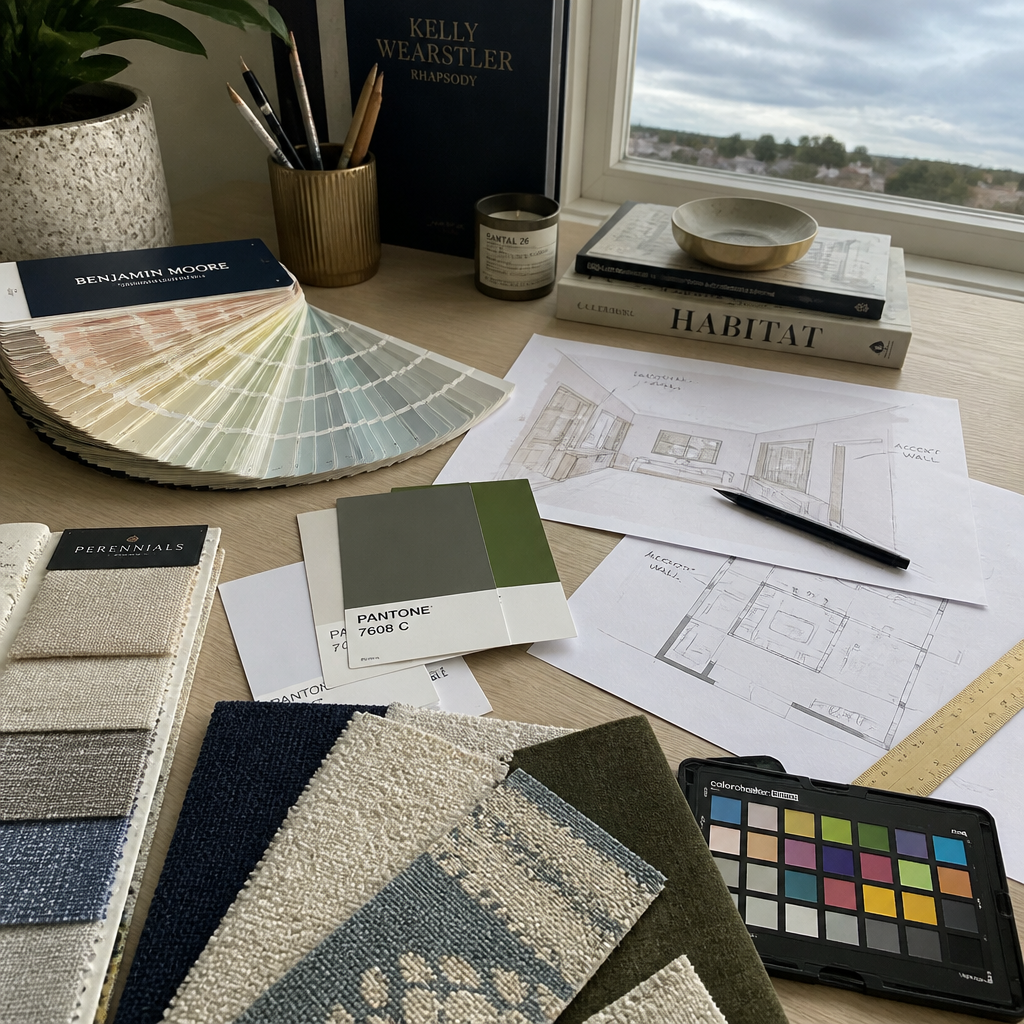
The practical lesson: always test paint samples on the actual wall, at actual size, and observe them across multiple days and lighting conditions before committing. A small sample card cannot tell you what a full wall will look like under BC winter light.
Quick Takeaways
| Key Insight | Explanation |
|---|---|
| Placement matters more than colour | The wall your eye lands on first when entering a room is the right accent wall. Painting a wall hidden behind furniture or covered in art achieves nothing. |
| Lower Mainland light favours warm tones | Warm tones, such as forest greens, deep sages, warm taupes, and rich earthy neutrals, hold their character under BC’s diffuse, cloud-filtered light. Cool blues and greys need strong direct light to look their best. |
| Forest green is the current standout for accent walls | Forest green, hunter green, and deep sage have replaced navy blue as the go-to bold choice for accent walls in BC homes, complementing the natural cedar and Douglas fir elements common in older Lower Mainland housing stock. |
| One accent wall per room is the rule | Two bold accent walls in the same room compete with each other and create visual noise. One deliberate feature wall is almost always the stronger choice. |
| Sheen level changes the visual weight | A satin or eggshell finish on an accent wall subtly reflects light and increases the perceived depth of colour. Flat paint on a dark accent wall can look matte and dull rather than dramatic. |
| Test before you commit | Apply at least a 60cm x 60cm sample directly on the wall and check it at different times of day. What looks right under noon light in Langley in July will look different on a December afternoon. |
| The ceiling is an underused accent surface | A tinted ceiling, painted in a lighter version of the wall colour or a contrasting accent tone, adds dimension without competing with the room’s architecture. It works especially well in rooms with higher ceilings and clean crown moulding. |
Choosing the Right Wall: Placement Comes First
Before any colour discussion, the correct wall has to be identified. In living rooms, the traditional placement for an accent wall is whichever wall is opposite the main entry point. The logic is straightforward: that is the wall your eye immediately travels to when you walk in, and it is the wall that will carry the visual impact of the colour choice. Painting any other wall first requires a specific reason.
Architectural Features Are Your Best Guide
Rooms with nooks, built-in bookcases, exposed brick, or wall panelling benefit from having the accent wall placed where the architecture already draws attention. A wall with a fireplace surround, a reading nook, or a featured window is already doing design work. Painting it in a contrasting colour simply amplifies what is already there.
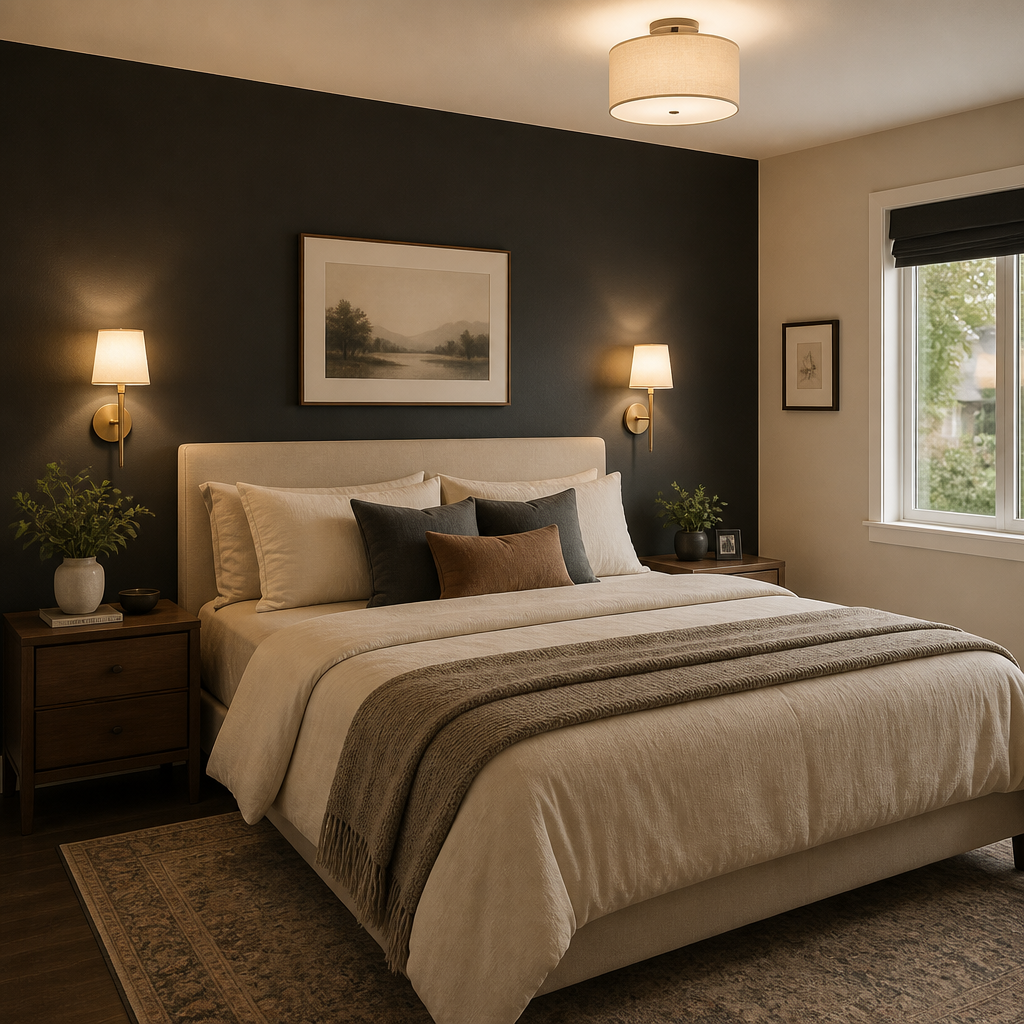
In bedrooms, the most common and effective choice is the wall behind the bed, sometimes called the headboard wall. It frames the bed as the room’s centrepiece. If that wall is already broken up by windows, the wall opposite the bed can work instead, since it becomes the first thing you see when you wake up.
What to Avoid
Do not paint a wall that is largely covered by tall furniture, window treatments, art collections, or floor lamps. If the wall surface will not actually be visible, the colour contributes nothing. Consider also whether a potential accent wall is already visually busy. A wall with multiple doors, outlets, and switches is harder to paint cleanly and will look cluttered regardless of the colour.
Pro tip: If you cannot find a wall that feels right for a traditional accent treatment, consider the ceiling as the fifth wall. A white ceiling heightens a room, while a deeper tinted ceiling makes a large space feel cozier and more deliberate. This is a technique Dreamscape Painting has been executing for years in Langley and Surrey homes where standard accent walls simply do not suit the floor plan.
Colour Selection for Langley and Surrey Light Conditions
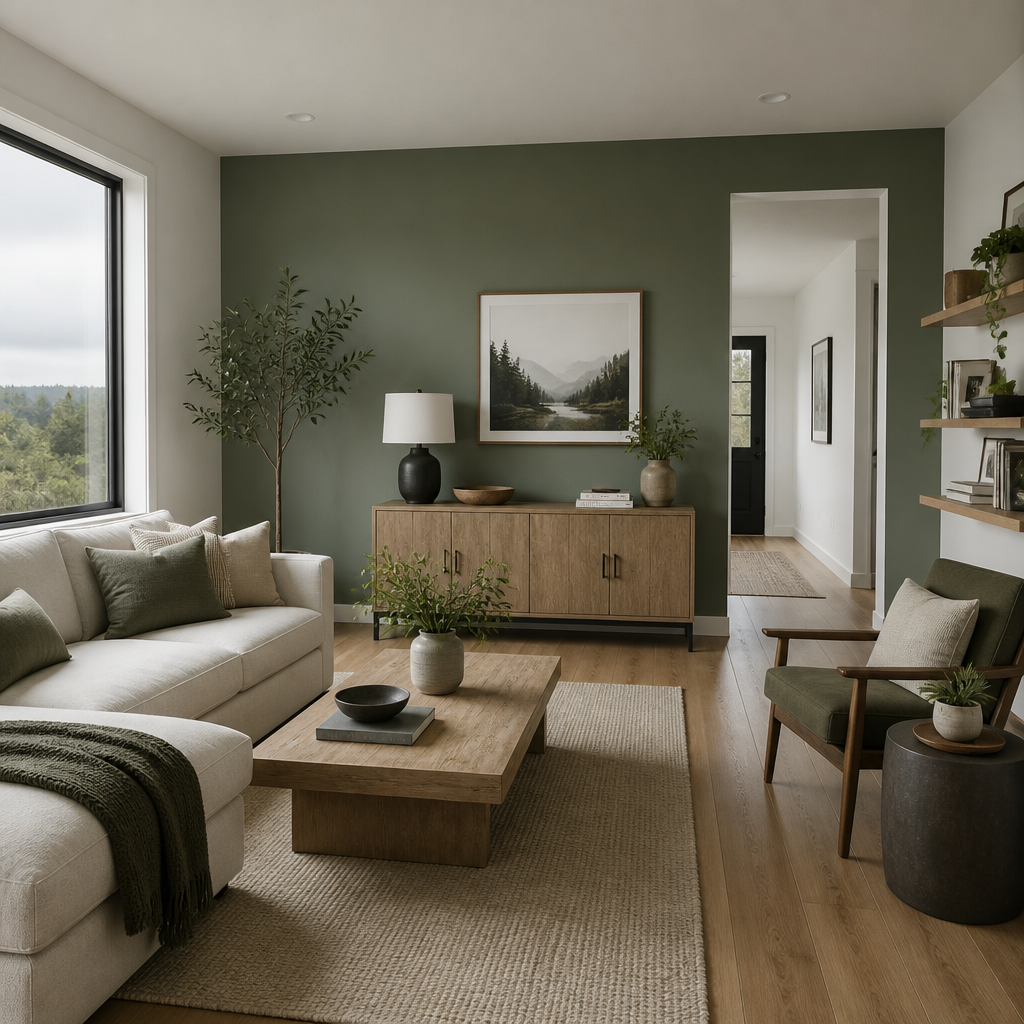
The right colour for an accent wall in a Lower Mainland home depends heavily on two things: window direction and how much natural light the room receives through the year. Warm tones, including forest greens, golden beiges, warm taupes, and earthy neutrals, hold their character even when the sun disappears behind cloud. They are the reliable choice for north- and east-facing rooms, and for any space that loses light early in the afternoon during winter.
Warm Tones That Work
Forest green and hunter green have become the standout bold choice for accent walls in BC homes, replacing navy blue as the dominant statement colour. These tones complement the natural cedar and Douglas fir elements found in a large portion of the older housing stock across Langley and Surrey. Benjamin Moore Hale Navy (HC-154) remains a classic for a single accent wall without tipping into darkness, while deeper greens like a rich forest tone read powerfully even under diffuse winter light.
Warm taupes, biscuit tones, and dusty pinks are also performing well as accent choices in rooms that need warmth without drama. These are not the beige of the 1990s. They are sophisticated warm neutrals that read as nearly white in bright light and reveal depth in shadow, giving a wall dimension through the day as light shifts.
Cool Tones Used Correctly
Cool tones can work beautifully on accent walls in Langley and Surrey homes, but they require more light to look their best. A pale blue-green like Sherwin-Williams Sea Salt (SW 6204) or a vibrant teal like Reflecting Pool (SW 6486) will deliver a clear statement in rooms that receive generous natural light and have light-coloured furnishings to bounce that light around. In darker rooms with limited windows, the same cool colours will look washed out and flat on an overcast day.
The rule of thumb: if the room in question is dim for more than half the year, choose a warm tone for the accent wall. If it receives consistent natural light, a cool or neutral tone can carry the wall effectively.
Pro tip: Before committing to any accent wall colour, apply a sample patch of at least 60 cm x 60 cm directly on the wall and observe it across several days, including at least one full overcast day typical of a BC winter. A paint chip under store lighting has almost no predictive value for how the colour will actually perform in the room.
Room-by-Room Accent Wall Ideas
The best approach for any room depends on its purpose, its light, and the existing furnishings. Generic colour advice fails because it ignores these specifics. Here is what works in practice for the most common rooms in Langley and Surrey homes.
Living Rooms
The focal wall opposite the main entrance is the standard choice. In open-plan living areas, which are extremely common in newer Surrey townhomes and Langley family homes, the accent wall helps define the living zone from the dining or kitchen zone. A deep, warm tone does this more effectively than a light or cool one, because it visually anchors that end of the space.
Sage green, forest green, and rich warm neutrals like deep taupe or terracotta all perform well in living rooms under Lower Mainland light. Avoid overly saturated or warm-toned oranges and reds unless the room has very strong natural light, as these colours can feel overwhelming under the diffuse interior conditions typical of most BC homes.
Bedrooms
The headboard wall is the default choice and it is the default choice for good reason. It frames the bed, adds visual weight to the room’s centrepiece, and creates a sense of depth and calm. Soothing hues work well here. Dusty blues, muted greens, warm taupes, and deep charcoals all perform effectively as bedroom accent walls when chosen to complement the bedding and the room’s natural light.
For rooms that want something less conventional, painting the wall opposite the bed creates the colour as something you see upon waking, which can be a compelling choice if the colour is restful and warm rather than activating.
Home Offices and Dens
These spaces have become a priority in many Langley and Surrey homes since remote work became standard practice. A deep, saturated accent wall behind a desk creates a strong visual backdrop for video calls and gives the room a purposeful, professional character. Navy, forest green, and charcoal all work in this context. These tones also reduce eye strain in rooms where screen time is high, because they absorb rather than reflect light.
Dining Rooms
Dining rooms in the Lower Mainland are often used in the evening under artificial light, which changes the calculus significantly. Warm, rich tones, such as deep terracotta, warm navy, burgundy, or a rich forest green, look particularly dramatic under artificial evening light and create the kind of atmosphere that makes a dining room feel intentional rather than incidental. Test any dining room accent colour at night as well as during the day before committing.
Accent Wall Approaches Compared
Not all accent walls are created equal. There are several approaches available to Langley and Surrey homeowners, each with different visual impact, cost, and maintenance profile. The table below covers the three most practical options for residential interior painting.
| Approach | Best For | Key Considerations |
|---|---|---|
| Solid Colour Accent Wall | Living rooms, bedrooms, dining rooms where clean drama is the goal | Simple to execute cleanly when done by a professional. Relies entirely on colour choice and wall prep quality. Crisp cut lines at ceiling and adjacent walls are essential. A sloppy edge line destroys the effect. |
| Contrasting Sheen on the Same Colour | Subtle feature walls in open-plan spaces where a dramatic colour shift would feel abrupt | Paint all walls in the same colour but apply a satin or semi-gloss finish on the feature wall while keeping other walls in flat or eggshell. Creates dimension through texture rather than colour contrast. Requires even, expert application to read correctly. |
| Tinted Ceiling Accent | Rooms with higher ceilings, clean crown moulding, and interesting architectural detail | A lighter version of the wall colour applied to the ceiling adds dimension without competing with the room’s floor plan. Tinted ceilings show roller marks and imperfections far more visibly than white ceilings, making professional application almost mandatory for a good result. |
Finish and Sheen: The Detail Most Homeowners Overlook
Colour selection gets all the attention, but sheen level is equally important for how an accent wall performs in practice. The finish changes the visual weight of the colour, the way the wall handles light, and how easy it is to clean and maintain over time.
For most accent walls in living rooms and bedrooms, a satin or eggshell finish is the right choice. These finishes subtly reflect light, which increases the perceived depth of the colour and makes the wall read as richer than the same colour in flat. They are also more washable than flat finishes, which matters in family homes across Langley and Surrey where walls take regular contact.
When to Use Higher Sheens
Semi-gloss is appropriate for accent walls in dining rooms and on feature walls with significant architectural detail, such as wainscoting, panelling, or moulding. The higher sheen emphasises texture and detail and responds well to evening artificial lighting, which is the primary lighting condition in most dining rooms. However, semi-gloss is unforgiving of surface imperfections, so wall preparation quality directly determines the result.
Flat Finish Accent Walls
Flat finish on an accent wall is almost always a mistake in BC homes. Under the diffuse, soft light of the Lower Mainland, a dark colour in flat finish can read as dull and heavy rather than dramatic and rich. It also shows marks and scuffs more readily. Reserve flat finishes for ceilings or feature walls where the texture of the surface itself is the visual interest, rather than the colour depth.
When to Call a Professional Painter
Some interior painting projects are genuinely achievable for a capable DIY homeowner. A single-colour bedroom repaint is one of them. Accent wall interior painting in Langley and Surrey homes is a different matter, particularly when the result needs to look sharp rather than obviously amateur.
The quality of an accent wall is largely determined by three things: surface preparation, cut-line precision, and consistency of application. A visible lap line, an uneven cut at the ceiling, or a bleed line where the accent colour meets the adjacent wall colour will undermine even the best colour choice. These are the areas where the difference between a professional and a careful DIY painter is most visible.
Dreamscape Painting has delivered interior painting services across Langley, Surrey, Abbotsford, and the entire Fraser Valley for over 35 years. The team brings experienced estimators who can advise on colour placement and light conditions specific to your home, and skilled painters who prioritise clean edges, thorough surface preparation, and a finish that holds up over time. That combination of expertise and cleanliness-focused approach is what separates a feature wall that looks right from one that looks like a paint experiment that did not quite work.
For homeowners considering an accent wall alongside other interior painting work, such as updating trim, refinishing cabinets, or repainting multiple rooms, bundling the work into a single professional project is almost always more cost-effective and produces a more cohesive result than tackling each item separately.
Frequently Asked Questions
What colour works best for an accent wall in a Langley or Surrey home?
Forest green, hunter green, and deep sage are currently the strongest performers for accent walls in Lower Mainland homes. They hold their character under the region’s diffuse, cloud-filtered light, they complement the natural wood elements common in older housing stock in these areas, and they work across a wide range of furnishing styles. Warm navy and deep charcoal are close alternatives if green does not suit the room’s palette.
How do I choose which wall to paint as an accent wall?
Paint the wall your eye travels to first when you enter the room. In most living rooms, that is the wall opposite the main entry point. In bedrooms, it is usually the wall behind the bed. Avoid walls that are heavily broken up by doors, windows, or that will be largely hidden behind tall furniture. If no wall feels right, the ceiling is a valid alternative, particularly in rooms with higher ceilings and clean architectural detail.
Should I use flat, eggshell, or satin finish on my accent wall?
Eggshell or satin is the right choice for most accent walls in Langley and Surrey homes. These finishes increase the perceived depth of the colour by adding a subtle light reflection, and they are more washable than flat finishes. Flat finish on a dark accent wall will often look dull rather than dramatic under BC’s typical indoor lighting conditions. Semi-gloss is worth considering for dining room accent walls where evening lighting is the primary condition.
Can I do an accent wall myself, or should I hire a professional painter?
The honest answer is that the quality of an accent wall is almost entirely determined by cut-line precision and surface preparation, both of which are harder than they look. A visible bleed line where your accent colour meets the adjacent wall, an uneven edge at the ceiling, or lap marks from inconsistent application will be obvious and will undermine the effect of even a great colour. If you want a result that looks genuinely professional rather than approximate, hiring an experienced interior painter like Dreamscape Painting is the more reliable path.
Is one accent wall per room still the right approach, or are multiple feature walls better?
One accent wall per room is still the correct approach in the vast majority of residential interiors. Two bold accent walls in the same room compete with each other visually and reduce the impact of both. The whole point of a feature wall is to give one surface the attention. Multiple bold walls in the same room create visual noise rather than intentional design. If you want more colour in the room, carry the accent colour into cushions, rugs, and accessories instead of adding a second painted wall.
How long does an interior accent wall paint job take with a professional painter?
A single accent wall in a standard residential room, including surface preparation, priming where needed, and two finish coats, can typically be completed in a day. The more important factor is drying time between coats and the quality of the cut lines, which requires patience and skill rather than speed. When an accent wall is part of a larger interior painting project across multiple rooms, a professional team can schedule the work to minimise disruption to the household while the different areas cure and dry.
Have you recently painted an accent wall in your Langley or Surrey home? Share what colour you chose and how it looks under our Lower Mainland light, we would love to hear what worked for you.
References
- How to choose accent wall colours in Vancouver’s natural light, with guidance on Pacific Northwest lighting conditions
- Best interior paint colours for Pacific Northwest homes, including warm and cool tone recommendations by room orientation
- Guide to choosing which wall to make an accent wall, with room-specific placement advice
- Seven practical tips on choosing and positioning accent walls in residential interiors
- Interior paint colours that increase home value in the Pacific Northwest, with recommendations suited to Lower Mainland conditions

