

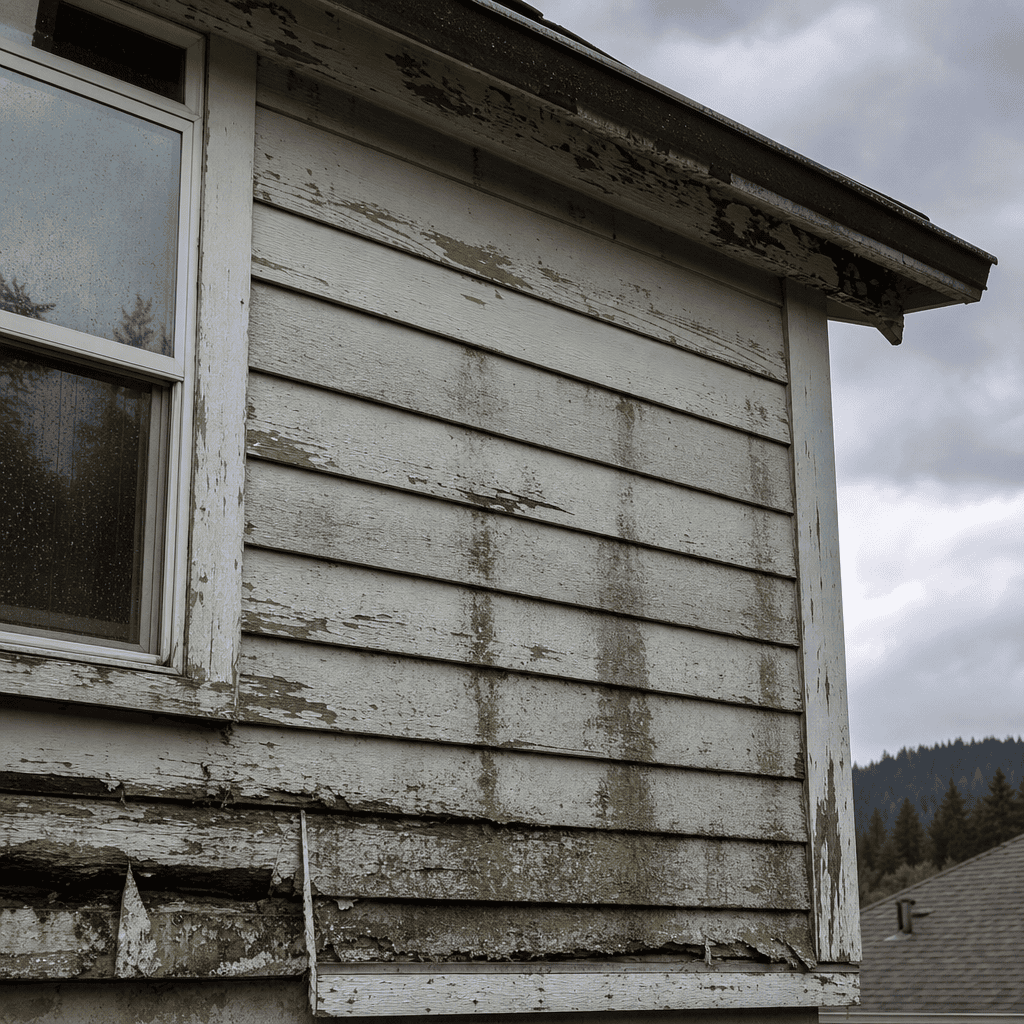
Abbotsford receives more than 1,500 millimetres of rain annually, and most of it falls during the exact months when exterior paint is most vulnerable. If your home’s exterior paint is peeling, bubbling, or showing mildew stains, the climate is not just an inconvenience – it is actively destroying your siding, wood trim, and caulking. Exterior painting in Abbotsford is not the same project it would be in Calgary or even Vancouver’s West Side. The Fraser Valley’s combination of high humidity, freeze-thaw cycles, and extended wet seasons demands a different standard of preparation, product selection, and application timing. This guide explains exactly what that standard looks like.
Table of Contents
- Quick Takeaways
- Why Abbotsford’s Climate Is Hard on Exterior Paint
- Choosing Weather-Resistant Exterior Paint for BC
- Surface Preparation: The Step Most Painters Skip
- Paint Application Windows in the Fraser Valley
- Comparing Exterior Paint Systems for Abbotsford Homes
- What a Professional Exterior Paint Job Includes
- Signs Your Abbotsford Home Needs Exterior Painting Now
- Frequently Asked Questions
- References
Quick Takeaways
| Key Insight | Explanation |
|---|---|
| Moisture testing before painting is non-negotiable | Wood siding in Abbotsford must read below 15% moisture content before primer is applied. Painting over wet wood is the single most common cause of early paint failure in the Fraser Valley. |
| 100% acrylic latex outperforms oil-based paint in BC’s climate | Acrylic latex expands and contracts with temperature changes, resists mildew, and allows moisture vapour to escape. Oil-based paints trap moisture and crack during freeze-thaw cycles common in Abbotsford winters. |
| The ideal application window is May through September | Exterior paint requires surface temperatures between 10°C and 32°C and at least 48 hours of dry weather after application. Abbotsford’s spring and summer months offer the most reliable windows. |
| Mildewcide additives are essential, not optional | Abbotsford’s humidity creates ideal conditions for mildew growth on north-facing walls and under roof overhangs. Quality exterior paints with built-in mildewcide protection significantly extend coating life. |
| Two coats over a quality primer is the minimum standard | A single-coat exterior paint job will not last more than two or three seasons in the Lower Mainland. Two full coats over a bonding primer is the baseline for any job backed by a meaningful warranty. |
| Caulking and flashing inspection must happen before painting | Failed caulking around windows, doors, and trim allows water ingress that destroys paint from behind. No paint system compensates for missing or cracked caulking. |
| Experienced local painters understand Fraser Valley microclimates | The east-facing slopes near Sumas Mountain and properties near the Vedder River experience different humidity levels than central Abbotsford neighbourhoods. Local experience matters when scheduling and selecting products. |
Why Abbotsford’s Climate Is Hard on Exterior Paint
Abbotsford sits in a geographic pocket that funnels moisture-laden air off the Pacific and traps it against the coastal mountains. Environment Canada records show the city averages 166 days of precipitation per year. That is not a minor inconvenience for exterior coatings – it is a sustained mechanical and biological assault on every painted surface facing outward.
The specific threats are worth naming clearly. Freeze-thaw cycling occurs when temperatures drop below zero at night and rise above freezing during the day, which happens repeatedly from November through March. Any moisture that has penetrated a paint film expands as it freezes, cracking the coating from beneath. Peeling that appears in late winter is almost always the result of this process, not poor paint quality alone.
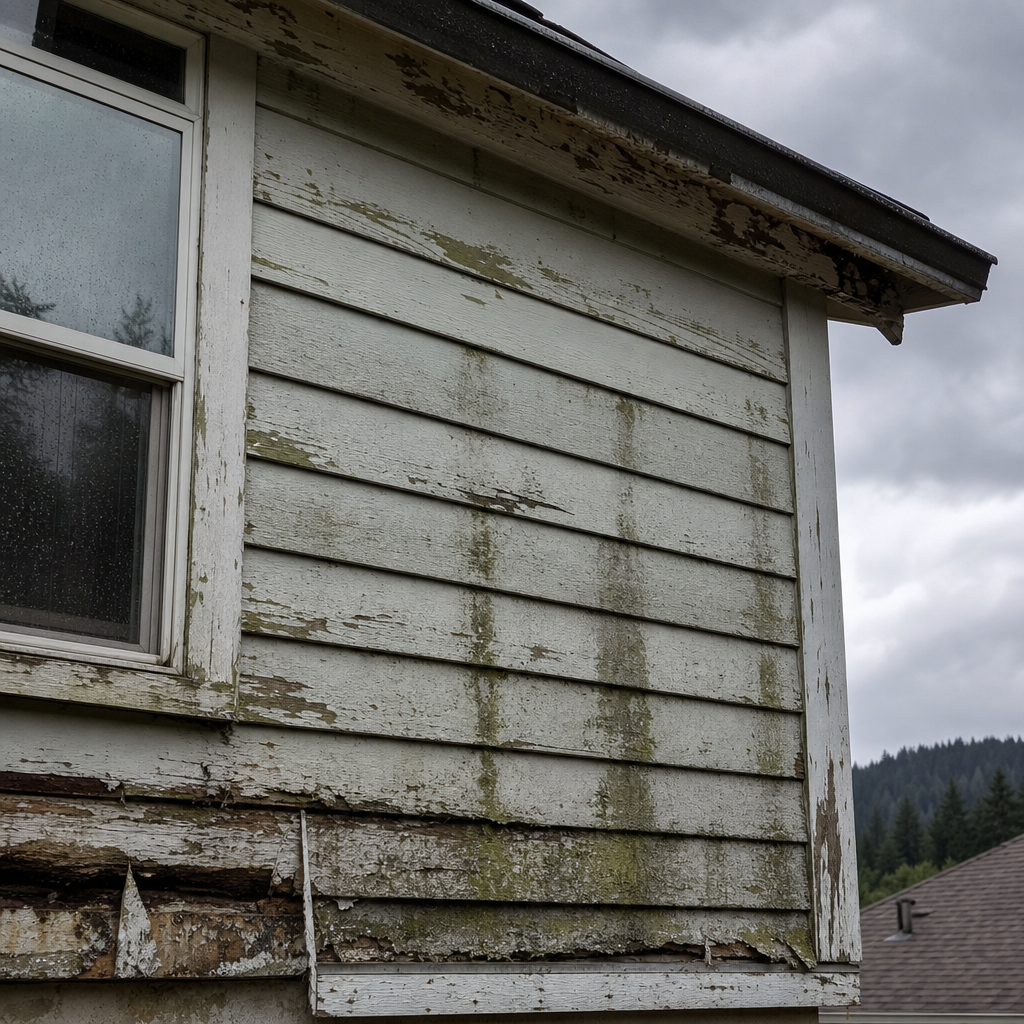
Biological growth is the second major threat. Mildew, algae, and moss establish themselves rapidly on north and west-facing walls where sunlight does not dry surfaces between rain events. A common mistake is treating visible mildew as a cosmetic problem and painting over it. In practice, painting over active mildew growth simply traps the organism beneath the surface, where it continues to break down the coating and the substrate underneath.
The third threat is wood movement. Cedar and fir siding, which are common in older Abbotsford homes built between the 1960s and 1990s, absorb and release significant amounts of moisture across the seasons. Paint films that do not have sufficient flexibility crack at the grain lines, allowing water entry that accelerates rot and further coating failure.
“Coatings failure in high-humidity climates is almost always a preparation and timing problem, not a product problem. The right paint applied to the wrong surface at the wrong time will fail within two seasons.” – Building Science Corporation, residential coatings research
Choosing Weather-Resistant Exterior Paint for BC
The phrase “weather resistant exterior paint BC” is used loosely in marketing materials, but specific product characteristics separate genuinely durable coatings from average ones. Knowing what to look for prevents expensive decisions based on labelling alone.
Acrylic Latex Is the Right Base Chemistry for This Region
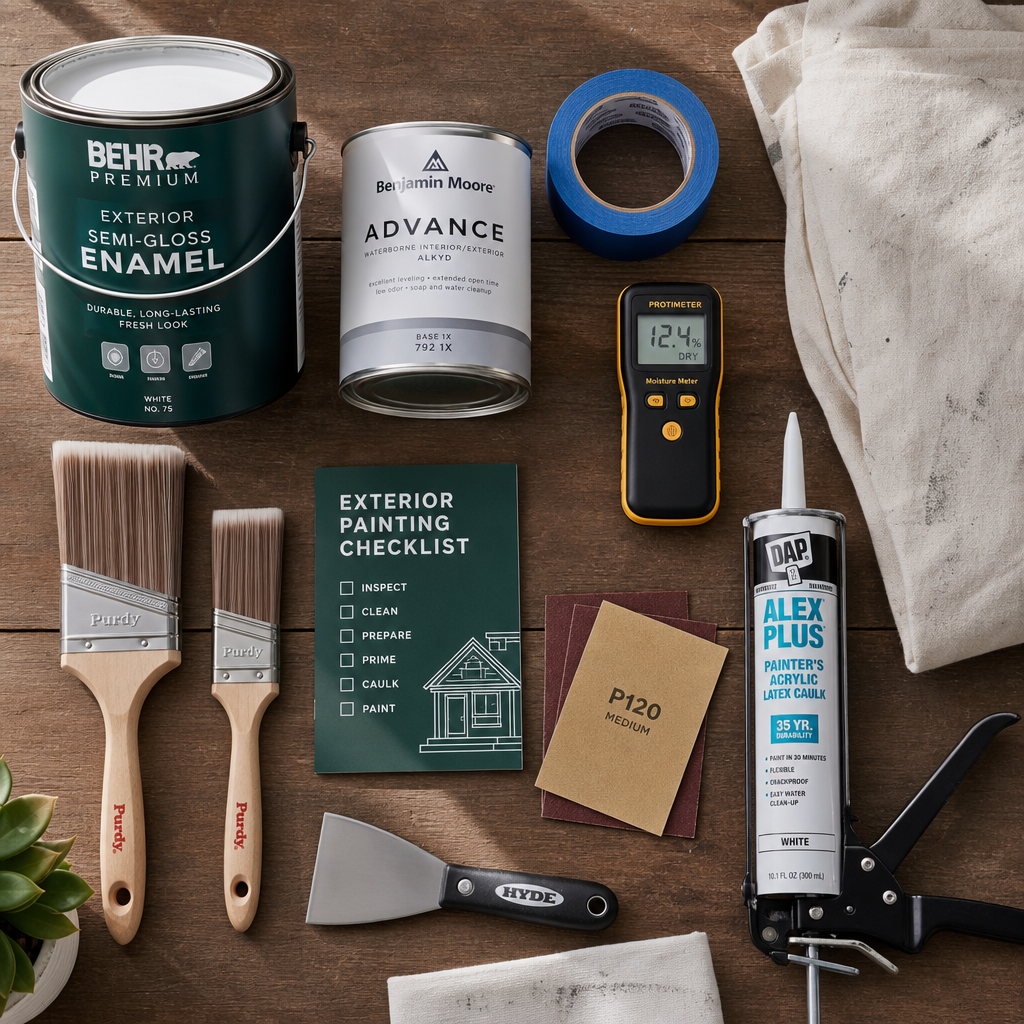
100% acrylic latex formulations are the standard for exterior work in the Lower Mainland because the chemistry matches what the climate demands. Acrylic binders remain flexible at low temperatures, resist UV degradation better than alkyd-based coatings, and are moisture-vapour permeable, meaning trapped moisture can escape rather than build pressure under the film.
Brands like Sherwin-Williams Duration, Benjamin Moore Aura Exterior, and PPG Timeless all offer 100% acrylic formulations with built-in mildewcide. These are professional-grade products. The difference between a $60 per gallon and a $90 per gallon exterior paint is not cosmetic – it is the concentration of acrylic solids, which directly determines how thick a dry film the coating produces and how long that film remains intact.
Self-Priming Paint Does Not Replace a Dedicated Primer
Self-priming exterior paints have a role in maintenance recoating on sound, clean surfaces. They do not perform adequately over bare wood, patched areas, or previously failing paint. A dedicated exterior primer, applied first, seals the substrate, raises and flattens grain, and provides the mechanical bond that topcoats depend on for adhesion.
On cedar siding specifically, a stain-blocking primer is essential. Cedar contains tannins that bleed through standard primers and cause brown staining visible through the topcoat within months of application. This is a known technical issue that experienced painters in Abbotsford BC account for on every cedar substrate job.
Pro tip: Ask any painter quoting your Abbotsford home exterior to specify the exact primer and topcoat product names in writing. If they cannot or will not, that tells you something important about how they approach product selection.
Surface Preparation: The Step Most Painters Skip
The single biggest differentiator between a five-year exterior paint job and a twelve-year one is not the paint brand. It is the preparation. In the Fraser Valley, where surfaces have often endured multiple seasons of heavy moisture before a repaint, preparation work is frequently more time-consuming than the painting itself.
Power Washing and Mildew Treatment
All exterior surfaces must be power washed before painting to remove dirt, oxidized paint residue, and biological growth. But power washing alone does not kill mildew – it removes visible colonies while leaving spores in the substrate. A diluted bleach solution (typically one part bleach to three parts water) applied and allowed to dwell before rinsing is the standard treatment for mildew-affected surfaces.
Skipping this step is a shortcut that always fails. Mildew regrowth through a new paint film typically becomes visible within 18 months on affected surfaces that were not properly treated before repainting.
Wood Repair and Rot Assessment
Older homes in Abbotsford’s established neighbourhoods, particularly in areas like McKee, Clearbrook, and West Abbotsford, often have wood siding or trim that has accumulated moisture damage over decades. Probing trim boards, window sills, and fascia for soft spots before painting is not optional – it is the difference between painting a sound substrate and painting over structural failure.
Epoxy wood consolidant and filler can address minor rot. Significantly deteriorated boards must be replaced before any painting begins. No paint system stops active rot progression.
Caulking, Scraping, and Sanding
All failed or cracked caulking must be removed and replaced with a paintable, flexible exterior-grade silicone-latex caulk before primer is applied. Loose or peeling paint must be hand-scraped or sanded to a firm edge. Feathering the edges of scraped areas prevents visible ridges showing through the finished coats.
Pro tip: On Abbotsford homes with wood window frames, check the glazing compound where glass meets the frame. Failed glazing allows water to track into the wall cavity behind the siding. Replacing it during an exterior painting project adds minimal cost and prevents significant moisture damage.
Paint Application Windows in the Fraser Valley
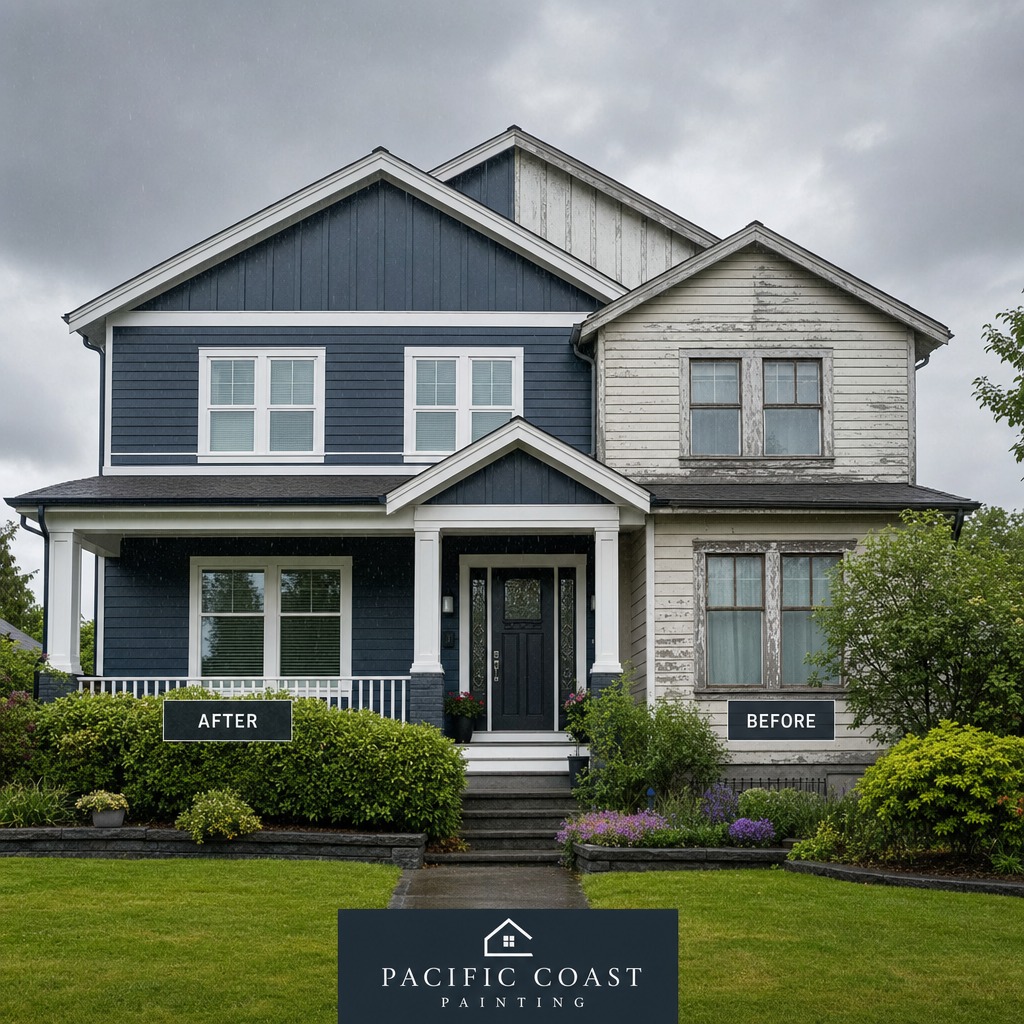
Timing an exterior paint project in Abbotsford is not simply about picking a sunny week. It requires understanding both the immediate weather forecast and the drying conditions that determine whether a coating bonds properly or fails prematurely.
The rule used by experienced painters is straightforward: surface temperature must be at least 10°C and rising at application time, and must remain above 5°C for a minimum of 24 hours after the final coat. Relative humidity should be below 85% during application. In the Fraser Valley, these conditions are most reliably met from mid-May through mid-September.
The worst time to paint exterior surfaces is during Abbotsford’s wet season, which runs roughly from October through April. Paint applied in cold or damp conditions does not cure properly – it merely skins over on the surface while remaining soft and poorly adhered underneath. The result is a coating that looks acceptable initially but begins peeling within a single winter cycle.
Fall projects are possible in September and early October if the extended forecast supports them, but experienced exterior painting Fraser Valley contractors build contingency days into every fall schedule. A job that cannot be completed before the first sustained rain event of autumn should be deferred to spring rather than rushed through in marginal conditions.
Comparing Exterior Paint Systems for Abbotsford Homes
Homeowners are frequently offered different paint system options at different price points. The table below compares the three most common approaches used for residential exterior painting in the Abbotsford area, based on real-world performance in BC’s climate.
| Paint System | Best Application | Expected Lifespan in Abbotsford’s Climate |
|---|---|---|
| Dedicated primer plus two coats of 100% acrylic latex (e.g., Sherwin-Williams Duration or Benjamin Moore Aura Exterior) | Full repaints on wood, fibre cement, and previously failing surfaces. Any substrate that has been scraped, patched, or shows bare areas. | 10 to 15 years with basic annual inspection. This is the professional standard used by Dreamscape Painting on Lower Mainland homes. |
| Self-priming 100% acrylic topcoat in two coats (e.g., PPG Timeless or similar) | Maintenance recoating on sound, well-adhered existing paint with minimal bare spots. Suitable for homes repainting on a regular 7 to 8 year cycle. | 7 to 10 years on properly prepared surfaces. Performance drops significantly if applied over any compromised substrate areas. |
| Alkyd (oil-based) enamel system | Trim and doors only, where a hard, high-gloss film is desired. Not recommended for field painting (large siding areas) in BC’s climate. | 5 to 8 years on trim. Shorter lifespan on field surfaces due to brittleness in freeze-thaw conditions and poor moisture-vapour permeability. |
What a Professional Exterior Paint Job Includes
When Dreamscape Painting has been completing exterior projects across the Lower Mainland for over 35 years, patterns emerge about what separates a durable result from a disappointing one. A professional exterior paint job is a system, not a series of individual steps.
The process begins with a thorough walkthrough and written estimate that identifies substrate conditions, not just surface area. An estimator who does not probe wood trim, inspect caulking lines, and note north-facing mildew zones before quoting is not giving you an accurate assessment of the work required.
Proper job preparation, including washing, scraping, sanding, wood repair, and caulking, typically accounts for 40% to 60% of total project time on older Abbotsford homes. That proportion surprises many homeowners who expect the brushes and rollers to carry most of the schedule. The data consistently shows that jobs where preparation is compressed to save time or cost are the jobs that generate warranty callbacks.
Professional crews protect all landscaping, windows, doors, and hard surfaces from overspray and drips before a single coat is applied. Cleanliness during and after the project is not a courtesy – it is an indicator of the care applied to every other part of the work. At Dreamscape Painting, the same attention to detail that goes into surface preparation goes into leaving a property in better condition than it was found.
A written warranty covering both materials and workmanship should be standard. Any contractor who cannot provide a written warranty on an exterior painting project in the Lower Mainland should be viewed with serious skepticism. The climate here is demanding enough that a professional who stands behind their work will say so in writing.
Signs Your Abbotsford Home Needs Exterior Painting Now
Most homeowners wait too long to repaint their home’s exterior. By the time paint failure is obvious, moisture has usually already penetrated the substrate. Catching deterioration early saves significantly on prep costs and prevents wood damage that requires replacement rather than painting.
Watch for these specific indicators on your Abbotsford home. Peeling or bubbling paint on south-facing walls is usually a moisture-vapour problem. On north and west-facing walls, it typically indicates water infiltration. The location of failure matters because it points toward the underlying cause.
Chalking, the powdery residue that comes off on your hand when you run it across the siding, indicates that the existing coating’s binders have broken down from UV exposure. The surface is no longer protecting the substrate and is beyond the point where a maintenance wash and spot touch-up will provide meaningful protection.
Visible mildew or algae growth, particularly in dark streaks running from roof lines or growing in patches on wall surfaces, is a clear signal that moisture is dwelling on the surface long enough for biological colonization to occur. This is not a cleaning problem alone – it is a sign that the existing coating’s mildewcide has been exhausted and the surface needs stripping, treatment, and repainting.
If your home’s exterior paint is more than eight years old and you are in a high-moisture exposure zone (north-facing, near mature trees, or in a low-lying area near Abbotsford’s river corridors), schedule an inspection before you see visible failure. The cost of a preventive repaint is a fraction of the cost of replacing rotted siding or window framing that deteriorated while waiting for paint failure to become undeniable.
Pro tip: Abbotsford’s established neighbourhoods near Mill Lake, along Old Yale Road, and in the Matsqui Village area contain a high proportion of homes built in the 1970s and 1980s with original cedar siding. These properties almost universally require more intensive preparation work than newer homes with fibre cement or engineered wood siding. Budget accordingly and get a specific substrate assessment, not a per-square-foot estimate, from any contractor you consider.
Frequently Asked Questions
How often should I repaint my home’s exterior in Abbotsford?
For most Abbotsford homes, a professionally applied full exterior paint system using 100% acrylic products with proper preparation should last 10 to 15 years. Homes with significant north or west exposure, near mature tree cover, or with older wood siding may need attention at 7 to 10 years. Annual visual inspections in spring let you catch early deterioration before it becomes expensive.
What is the best time of year to paint a house exterior in the Fraser Valley?
May through September is the most reliable window for exterior painting in the Fraser Valley. June through August offers the most predictable conditions. Early May and late September are workable but require monitoring extended forecasts carefully. Never apply exterior coatings when overnight temperatures are expected to drop below 5°C within 24 hours of application.
Can exterior painting be done in the rain or after a rainstorm?
No. Surfaces must be completely dry before any primer or paint is applied. After rain, wood siding typically requires 24 to 48 hours of dry weather and wind to reach acceptable moisture content, depending on the intensity of rainfall and ambient temperature. Painting over a damp surface prevents proper adhesion and is one of the primary causes of early paint failure in BC.
How do I get rid of mildew on my siding before painting?
Apply a solution of one part household bleach to three parts water to the affected surface. Allow it to dwell for 10 to 15 minutes without drying, then rinse thoroughly with a pressure washer. This kills active mildew spores at the surface. Allow the surface to dry completely before applying primer. Do not paint over mildew that has only been rinsed without a biocidal treatment – visible removal and biological kill are two different things.
What should I look for when hiring exterior painters in Abbotsford BC?
Look for a written, itemized estimate that specifies preparation steps, primer product, topcoat product, and number of coats. Ask for proof of WCB coverage and liability insurance. Request references from similar projects in the Abbotsford or Fraser Valley area completed in the last three years. A contractor who cannot provide specific product names in their quote or who skips the substrate assessment during the estimate visit is a contractor to avoid regardless of price.
Is it worth paying more for premium exterior paint in BC?
Yes, and the math is straightforward. Premium 100% acrylic exterior paints cost roughly $30 to $40 more per gallon than budget alternatives. On an average Abbotsford home requiring 10 to 15 gallons of topcoat, that is $300 to $600 in additional product cost. The labour to repaint a home’s exterior is typically $3,000 to $8,000 or more depending on size. A premium product that extends coating life by even three years is a significant return on a modest upfront investment.
Does Dreamscape Painting serve all of Abbotsford and the Fraser Valley?
Yes. Dreamscape Painting Ltd. has served the entire Lower Mainland and Fraser Valley for over 35 years, including Abbotsford, Langley, Surrey, and surrounding communities. Their estimators and painters are familiar with the specific substrate conditions, weather patterns, and neighbourhood-level variations across the region, which matters for scheduling and product selection on every exterior project.
Have you had an exterior paint project go wrong due to preparation shortcuts or poor timing? Share what happened – your experience helps other Abbotsford homeowners ask the right questions before they hire.
References
- Environment and Climate Change Canada – climate data and precipitation records for the Fraser Valley region
- Building Science Corporation – research on moisture management and coatings performance in high-humidity climates
- National Research Council Canada – guidelines on exterior coatings and wood substrate moisture requirements for Canadian climates
- Forbes – cost analysis and return on investment for professional exterior home painting projects
- Statista – residential painting industry data and consumer spending trends in Canada

