Most homeowners dread the mess that comes with a painting project almost as much as they dread choosing the right colour. Drop cloths left in the wrong place, paint tracked across hardwood floors, furniture pushed carelessly into the middle of a room. These are not minor inconveniences. They are the reason so many people in the Lower Mainland put off repainting their homes for years. Dreamscape Painting has spent over 35 years proving that a clean painting company in Vancouver and the Fraser Valley is not a contradiction in terms. It is a standard that every crew they send to your home is trained to meet.
Table of Contents
- Quick Takeaways
- Why Cleanliness Defines Professional Painting
- The Dreamscape Pre-Project Protection Process
- How the Crew Manages Your Living Space During the Job
- Comparing Approaches to Site Cleanliness on Painting Projects
- End-of-Day and End-of-Project Cleanup Standards
- Stress-Free Communication: What You Should Expect
- Frequently Asked Questions
- References
Quick Takeaways
| Key Insight | Explanation |
|---|---|
| Full furniture protection before work starts | Dreamscape crews move and cover all furniture with heavy-duty drop cloths before opening a single can of paint, not after. |
| Floor protection on every project | Ram Board or canvas drop cloths are laid on all hard floors and carpets to prevent paint drips, foot traffic marks, and scuffs. |
| Daily end-of-shift tidying is non-negotiable | Painters tidy the work area and consolidate materials every day before leaving, so you are not living in a construction zone overnight. |
| Tape and masking are applied with precision | Trim, hardware, outlets, and window frames are masked carefully to eliminate touch-up work and protect finished surfaces. |
| Communication reduces homeowner stress more than speed does | A confirmed schedule, daily updates from the lead painter, and a walkthrough at project end eliminate the most common homeowner frustrations. |
| Professional disposal of all materials | Used tape, plastic sheeting, empty cans, and packaging are removed from your property, not left in your recycling bin. |
| Post-project touch-up is included, not extra | Dreamscape painters do a final walkthrough with the homeowner and address any touch-ups before the job is considered complete. |
Why Cleanliness Defines Professional Painting
There is a false assumption in the home improvement industry that a messy job site means a busy, hardworking crew. The opposite is true. In practice, a disorganized work site produces worse paint results because dust, debris, and poor material management contaminate fresh coats and slow down the painters themselves.
A 2023 Houzz survey on renovation stress found that unexpected mess and disruption to daily routines ranked among the top three complaints homeowners had about contractors, ahead of cost overruns. For families in Abbotsford, Surrey, Langley, and throughout the Fraser Valley, a painting project that turns your home upside down for days at a time is not a minor inconvenience. It affects how you cook, sleep, work from home, and manage your children.
Dreamscape Painting built its reputation in the Lower Mainland by treating cleanliness as a core deliverable, not an afterthought. When someone in Langley searches for a clean painting company in Vancouver or the Fraser Valley, they should find a company whose process is designed around protecting their home, not just finishing the walls.


The Dreamscape Pre-Project Protection Process
The work that happens before a single brush stroke is what separates a professional painting crew from a weekend handyman. Dreamscape’s pre-project setup process is systematic, and it is what makes the rest of the job stress-free for the homeowner.
Furniture Moving and Covering
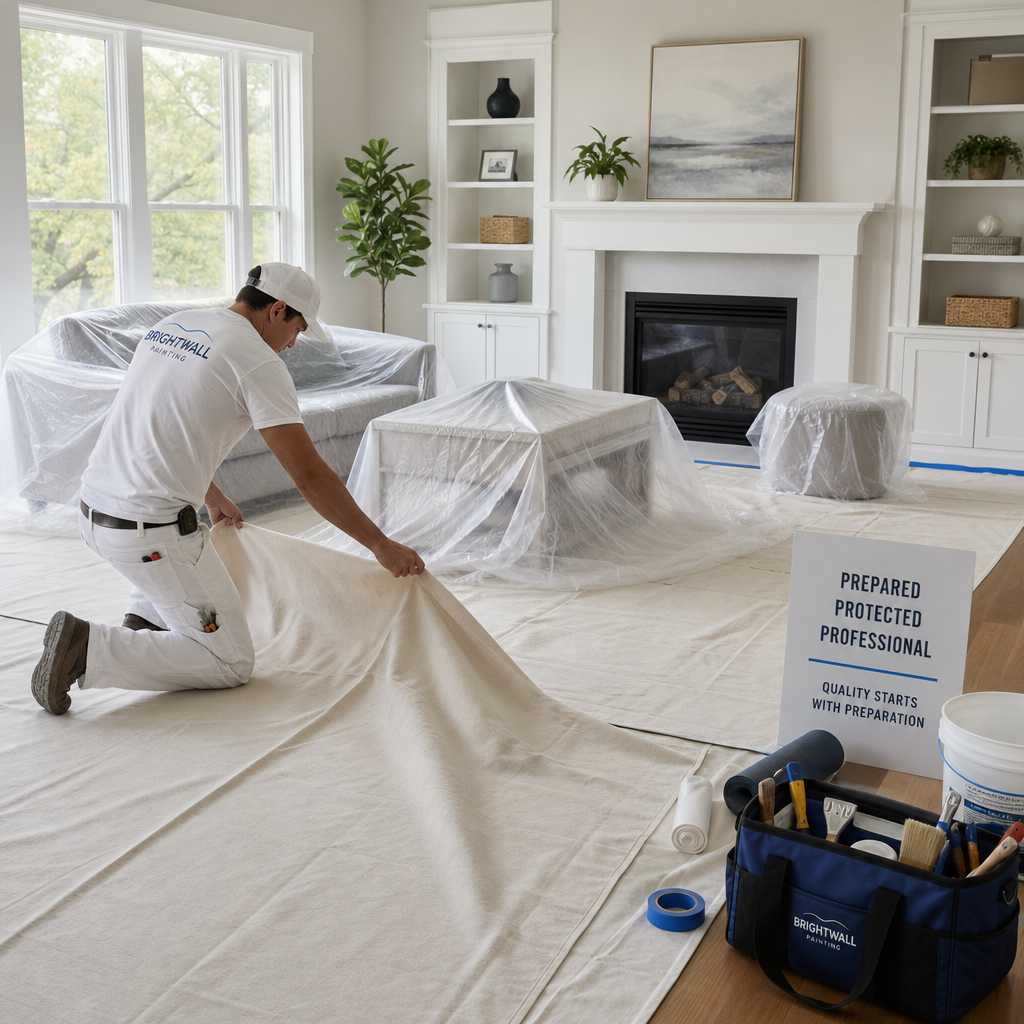
Dreamscape crews do not ask homeowners to empty entire rooms before they arrive. They move furniture to the center of the room or to an adjacent space and cover it entirely with heavy-duty drop cloths. Smaller items like lamps, artwork, and decor are removed and stored safely. This is included in the scope of every interior painting project.
A common mistake among less experienced painters is to cover only the tops of furniture, leaving legs and sides exposed. Dreamscape crews wrap pieces fully because overspray and brush flick are unpredictable, especially near trim and ceiling lines.
Floor and Surface Protection
For hardwood and tile floors, Ram Board or reinforced canvas drop cloths are used. These are not the thin plastic sheets that bunch up underfoot and become a slip hazard. They are commercial-grade materials that stay flat, absorb drips, and protect against foot traffic throughout the day.
Carpet protection film is applied in high-traffic corridors where painters move in and out of the work area. This stops paint-laden boot soles from leaving marks across rooms that are not being painted.
Masking and Tape Work
Precise masking is where craftsmanship starts. Every outlet cover, switch plate, window frame, door hinge, and piece of existing trim is masked with professional painter’s tape before work begins. This is not decorative. It is what eliminates the bleed lines and touch-up failures that make a finished paint job look amateur.
Pro tip: Ask any painting company you are considering to describe their floor protection materials specifically. If they say “drop cloths” without specifying the material weight or type, that is a signal they are using whatever is cheapest, not whatever works best.
How the Crew Manages Your Living Space During the Job
Multi-day interior painting projects are the norm for full-home repaints in Surrey, Abbotsford, and Langley. That means a professional crew is in your home for anywhere from two to five days depending on the scope. How they manage your space during working hours matters enormously to how stressful that experience feels.
Room-by-Room Sequencing
Dreamscape project managers plan the painting sequence to minimize disruption. Bedrooms are typically completed before common areas so families can sleep in their own beds while the project continues. Kitchen and living room work is sequenced to keep access to essential spaces open as long as possible.
This kind of planning is standard practice for a stress-free painting project in the Lower Mainland, but it requires an experienced estimator who has done this work on real homes, not just quoted jobs on paper.
Paint Fume Management
The shift to low-VOC and zero-VOC interior paints over the past decade has significantly reduced fume-related discomfort. Dreamscape uses premium low-VOC products as the default for interior work. Combined with proper ventilation setup during and after painting, this means most families can remain in the home during the project with minimal odour impact.
For households with young children, elderly family members, or anyone with respiratory sensitivities, Dreamscape’s estimators can advise on room sequencing and ventilation strategies that further reduce exposure during and immediately after application.
Respecting Boundaries Inside Your Home
Professional painters are guests in your home. Dreamscape crews are briefed on this. They do not use your kitchen, eat in your living spaces, or play audio through personal speakers. Break areas are designated and kept tidy. This sounds like it should go without saying, but homeowners who have had poor experiences with other contractors know it does not.
“The biggest compliment we get from homeowners is not about the colour choice or the finish. It is that we left their home cleaner than we found it. That tells us the process is working.” — Dreamscape Painting project manager, speaking on post-project homeowner feedback in the Fraser Valley
Comparing Approaches to Site Cleanliness on Painting Projects
Not every painting company in the Lower Mainland approaches cleanliness the same way. The differences between approaches are practical and directly affect both the quality of the finished job and your experience as a homeowner during the project.
| Approach | What It Looks Like in Practice | Impact on Homeowner Experience |
|---|---|---|
| Systematic Protection (Dreamscape Standard) | Full furniture covering, commercial-grade floor protection, daily tidy-up, professional disposal of all materials, and a final walkthrough with the homeowner | Minimal disruption, no post-project cleaning burden, finished job looks clean because the workspace was clean throughout |
| Basic Drop Cloth Only | Thin plastic sheeting placed loosely on floors, furniture left partially exposed, tape applied quickly without detail work on trim or hardware | Higher risk of drips on floors and furniture, more touch-up work required, homeowner often needs to clean after the crew leaves |
| One-Day Speed Model | Minimal prep to maximize speed, limited masking, crew rotates through rooms rapidly with little time for protection setup or cleanup | Project finishes fast but quality of edge work and surface protection suffers, not suitable for detail-oriented finishes or homes with high-value flooring |
The one-day speed model works for specific situations, but it is not the right choice when you have hardwood floors, detailed trim work, or custom cabinetry. For most homeowners in the Fraser Valley looking for professional painters who prioritize cleanliness, the systematic protection approach is the only one worth considering.

End-of-Day and End-of-Project Cleanup Standards
What a painting crew does at the end of each day tells you almost everything you need to know about how professional they are. Dreamscape has a defined end-of-shift routine that every crew follows on every job, whether it is a single-room refresh in Langley or a full exterior repaint in Abbotsford.
Daily Cleanup Before Leaving
Paint cans are sealed and stored. Brushes and rollers are either wrapped in plastic or cleaned depending on the next day’s schedule. Drop cloths are repositioned to protect surfaces overnight. Any areas of wet paint are marked clearly so no one in the household accidentally makes contact.
Walkways are kept clear. If a hallway or staircase was used as a temporary staging area, it is cleared at end of shift. You should be able to move through your own home comfortably in the evening.
Final Project Cleanup and Material Removal
At project completion, Dreamscape crews remove all drop cloths, masking tape, plastic sheeting, and packaging from the property. Empty paint cans are disposed of according to local municipal guidelines. Leftover paint that the homeowner wants kept for touch-ups is labelled and left in a designated location.
The final walkthrough is the most important step. The lead painter walks through every painted surface with the homeowner, addresses any touch-ups on the spot, and confirms that all protection materials have been removed. This walkthrough is not optional. It is part of the job.
Pro tip: Before the crew leaves on the final day, walk every room with the lead painter in good natural light. Artificial lighting at night makes it easy to miss thin spots or edge work that needs attention. Do not sign off on a job you have not seen in daylight.
Stress-Free Communication: What You Should Expect
Cleanliness is physical. Stress-free is psychological. The two work together, and communication is what bridges them. Most homeowner frustration during a painting project does not come from the paint itself. It comes from not knowing what is happening, when the crew will arrive, or how long a particular phase will take.
What Dreamscape Communicates Before the Project Starts
The estimating process at Dreamscape is detailed and in-person. Experienced estimators walk the property, identify surfaces that need special preparation, and give homeowners a clear written scope of work. There are no surprise add-ons that appear after the crew starts. You know what is being painted, what products are being used, and what the schedule looks like before anyone shows up with a brush.
During-Project Communication
The lead painter on each Dreamscape crew is the homeowner’s primary point of contact during the project. If something unexpected comes up during prep, such as moisture damage under old paint or surface irregularities that need additional primer, the homeowner is told before any additional work is done. This is standard practice for a professional painting company serving the Lower Mainland, and it should not be treated as exceptional.
After the Project Is Complete
Dreamscape follows up after project completion to confirm the homeowner is satisfied. For a family-owned company that has been serving the Fraser Valley since 1990, repeat business and referrals are the backbone of the operation. That does not happen when homeowners feel ignored after the final cheque is written.
The data consistently shows that customer retention is worth more than new customer acquisition over the lifetime of a service business. According to research published by Harvard Business Review, increasing customer retention rates by just 5 percent increases profits by 25 to 95 percent. For Dreamscape, that means every homeowner in Surrey or Abbotsford who has a smooth, clean, stress-free experience is worth far more than the single job they hired the company for.
Frequently Asked Questions
Do I need to move my furniture before Dreamscape Painting arrives?
No. Dreamscape crews handle furniture moving as part of the project setup. You should remove small personal items, fragile decor, and valuables from the rooms being painted, but the crew will move and cover larger furniture pieces before work begins.
What kind of floor protection does Dreamscape use on hardwood floors?
Dreamscape uses commercial-grade Ram Board or heavy canvas drop cloths on hardwood and tile floors. These materials stay flat, absorb paint drips, and do not create a slip hazard the way thin plastic sheeting does. Carpet protection film is applied in high-traffic corridors connected to the work area.
Can my family stay in the house while the painting is happening?
Yes, in most cases. Dreamscape uses low-VOC interior paints as the standard for all interior projects, which significantly reduces fume-related odour and indoor air quality concerns. Crews work room by room in a sequence designed to keep living spaces functional throughout the project. For households with specific sensitivities, the estimator can advise on ventilation and scheduling strategies.
What happens if there is a mess or damage at the end of the project?
Every Dreamscape project ends with a walkthrough between the lead painter and the homeowner. Any touch-ups or concerns are addressed before the crew leaves. Dreamscape has operated in the Lower Mainland for over 35 years and stands behind its work. If something is missed, you contact the company directly and it is resolved. That is what accountability looks like in a family-owned business that depends on its local reputation.
How long does a typical interior painting project take, and what is the daily routine like?
A full interior repaint for an average-sized home in the Fraser Valley typically takes two to four days depending on the number of rooms, ceiling height, and surface preparation required. Crew members arrive at an agreed time each morning, set up and begin work, tidy the workspace at end of shift, and leave the home in a livable condition each evening. You are never left with an unusable room overnight without prior communication.
Does Dreamscape clean up and remove materials when the job is done?
Yes. All drop cloths, masking tape, plastic sheeting, and packaging are removed from the property at project completion. Empty paint cans are disposed of according to local municipal guidelines. Leftover paint for touch-ups is labelled and left in a location of your choosing. You should not have to clean anything after a professional painting crew leaves your home.
If you have had an experience with a painting company in the Lower Mainland, good or bad, around cleanliness and site management, share what made the biggest difference to your day-to-day comfort during the project.
References
- United States Environmental Protection Agency resources on indoor air quality and VOC exposure during home renovation projects
- Harvard Business Review research on customer retention rates and their relationship to long-term business profitability
- Statista data on home improvement industry spending trends and homeowner renovation priorities in North America
- Houzz annual renovation trends reports covering homeowner satisfaction, contractor behaviour, and project stress factors
- National Research Council Canada guidelines on residential indoor air quality and paint product emissions in occupied homes