

Most homeowners spend days agonizing over paint colors and about five minutes thinking about finish. That is backwards. The wrong sheen can make a freshly painted room look chalky, highlight every surface flaw, or turn a bathroom wall into a peeling, moisture-damaged mess within two years. If you are searching for interior painting tips that actually hold up in daily life, the finish conversation has to come first. This guide covers every major finish type, which rooms they belong in, and the practical trade-offs most paint chip displays never bother to explain.
Table of Contents
- What Paint Finish Actually Means
- The Five Finish Types Explained
- Matching the Right Finish to Each Room
- Paint Finish Comparison: At a Glance
- The Fraser Valley Humidity Factor
- Trim, Doors, and Ceilings: The Rules Are Different
- Common Finish Mistakes That Are Easy to Avoid
- Frequently Asked Questions
- References
What Paint Finish Actually Means
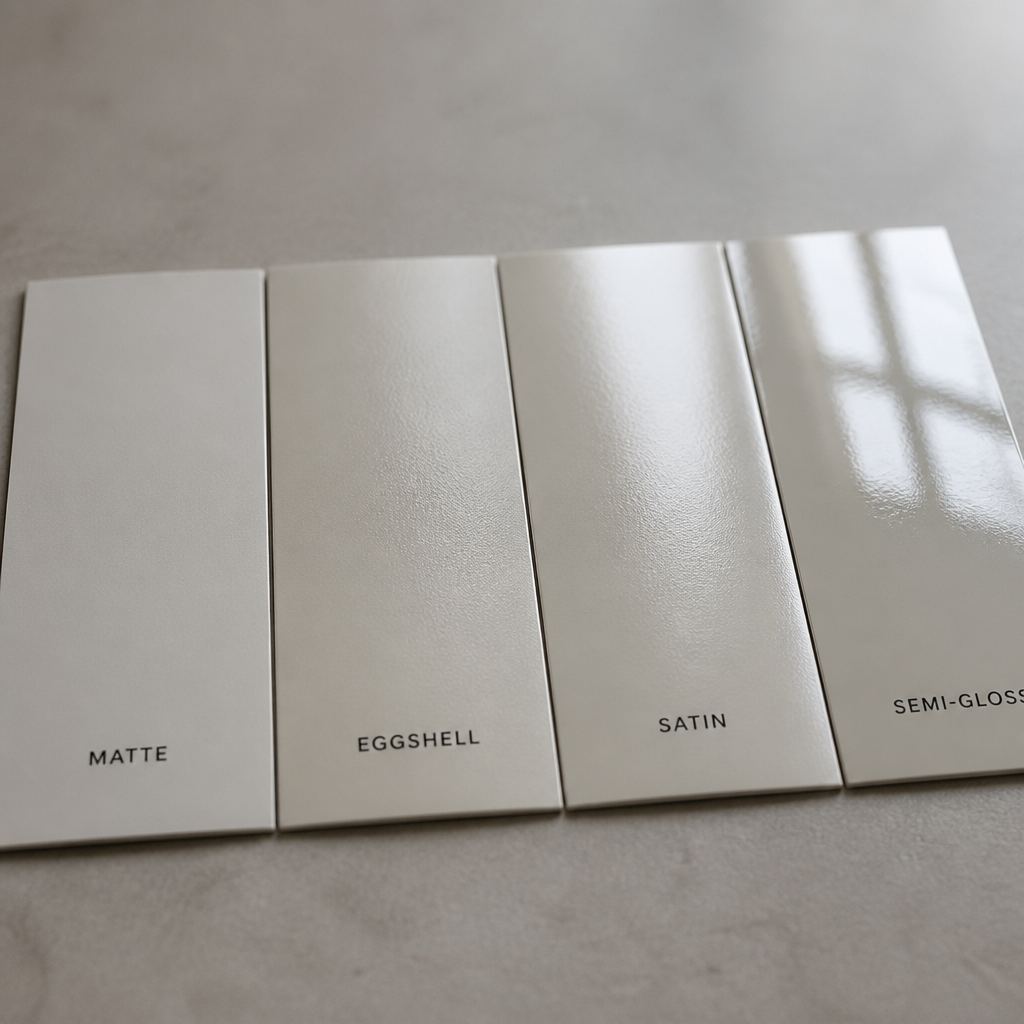
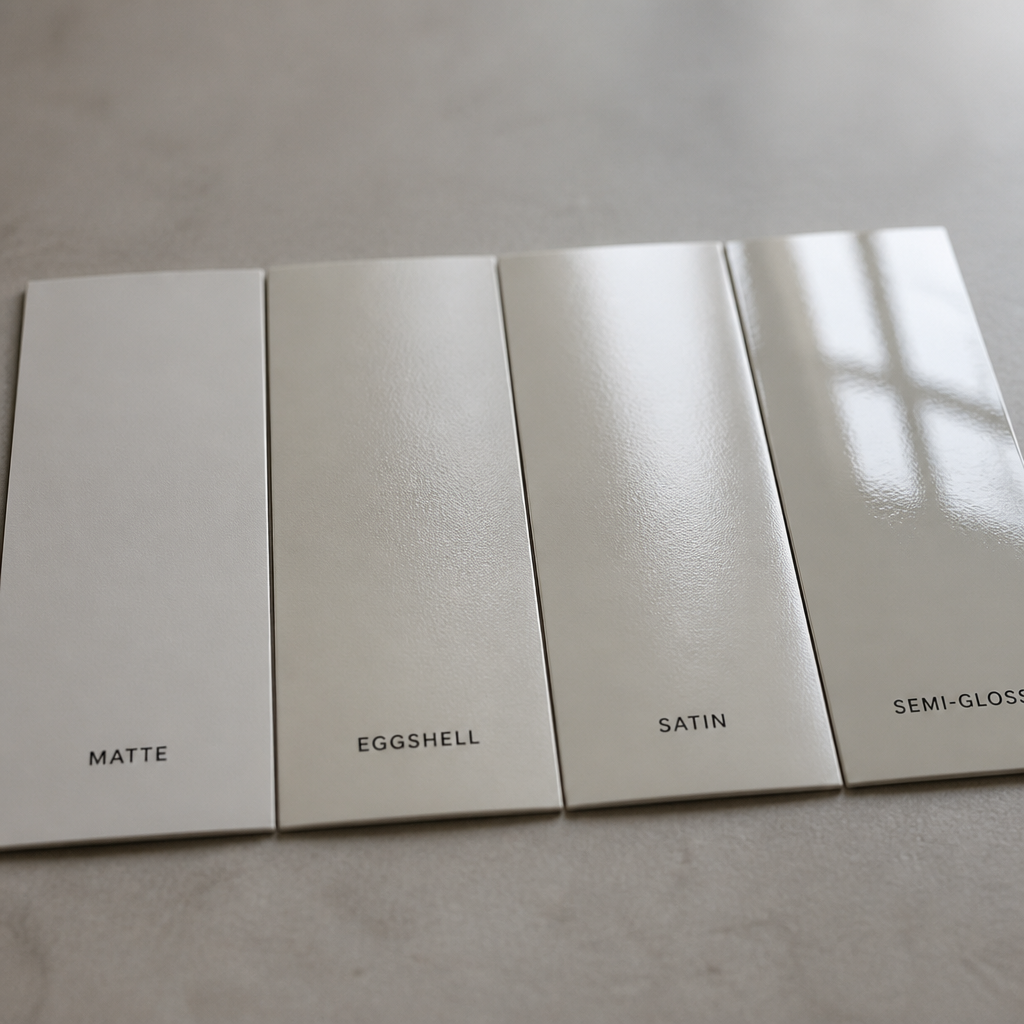
Paint finish refers to the level of sheen, or reflectivity, in the dried paint film. It is determined by the ratio of resin to pigment in the formula. More resin means more shine, more durability, and better moisture resistance. Less resin means a flatter, softer look that absorbs light instead of bouncing it back.
Sheen is not just an aesthetic choice. It directly controls how cleanable a surface is, how well it resists moisture, and how mercilessly it reveals surface imperfections. A high-gloss finish on a wall with patched drywall looks worse than the original damage. A flat finish in a kitchen used by a family with young children is a maintenance nightmare within months.
Pro tip: Before you commit to any finish, do a test patch under the lighting conditions that room actually uses day-to-day. Natural light at noon and warm artificial light at 8 p.m. can make the same finish look completely different.
The Five Finish Types Explained
There are five standard finish categories used across the residential painting industry. Every product on the shelf fits somewhere in this spectrum.
Flat and Matte
Flat has virtually no sheen. It absorbs light, minimizes the appearance of wall imperfections, and creates the richest, most saturated color depth of any finish. Matte sits just above flat with a tiny amount of added resin, which gives it marginally better washability. Neither belongs in a high-traffic or high-moisture area without significant caveats.
Flat and matte finishes work best in low-traffic bedrooms, formal dining rooms, and ceilings. Their weakness is scrubbing. Aggressive cleaning can permanently damage or dull the surface. Some newer matte formulations are marketed as washable, but they still underperform satin or eggshell when wall cleaning is a regular reality.
Eggshell
Eggshell gets its name from the subtle, soft glow of an actual eggshell. It has a very low sheen that hides surface texture reasonably well while offering noticeably better durability than flat. It is easier to clean than flat or matte but not as forgiving as satin when you need to scrub. Touch-ups on eggshell can be tricky because the sheen level is sensitive enough that patched areas sometimes read differently than the surrounding wall.
Eggshell is a solid general-purpose choice for living rooms and bedrooms where there is some traffic but not the kind of daily splashing and grease that kitchens and bathrooms produce. Our interior painters can help you match finish to room.
Satin
Satin has a pearl-like appearance that catches light without being overtly shiny. It is durable, easy to clean with a damp cloth, and resists moisture better than eggshell. This is the finish that handles daily family life without failing. It works in hallways, children’s bedrooms, living areas, and home offices. It is also the most popular choice for trim and doors in newer or modern homes because it gives a clean, finished look without the intensity of semi-gloss.
Semi-Gloss
Semi-gloss is sleek, moisture-resistant, and built for surfaces that face regular abuse. Kitchens and bathrooms are its home territory. It wipes down easily, resists mildew, and holds up to repeated cleaning. The trade-off is that its reflectivity will expose every imperfection in the substrate beneath. Wall prep matters more with semi-gloss than with any lower-sheen finish.
High-Gloss
High-gloss is the most durable, most reflective, and most demanding finish of the group. It is rarely used on walls. Its place is on surfaces that take repeated physical contact: cabinetry, shelving, and occasionally furniture. It requires a flawlessly prepared substrate, because it reflects light so directly that any surface imperfection becomes obvious.
Matching the Right Finish to Each Room
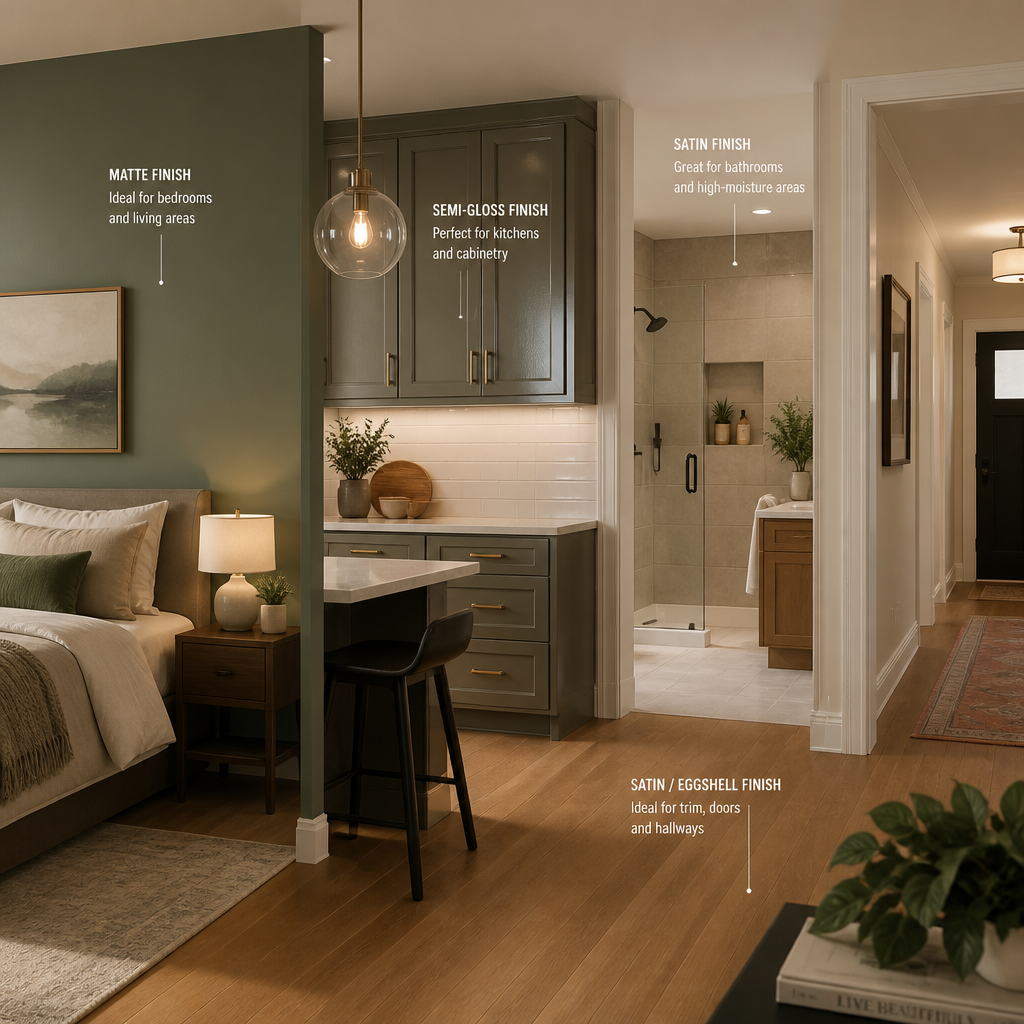
Matching finish to room is not complicated once you understand the logic: the more moisture, traffic, and cleaning a room demands, the higher the sheen needs to be. Here is how that plays out room by room.
Kitchens
Semi-gloss is the right call for kitchen walls. Grease, steam, and the routine mess of cooking require a surface that wipes clean without absorbing stains. The higher resin content in semi-gloss makes cleaning practical rather than an exercise in frustration. If you have a kitchen with a lot of natural character in the walls, you can drop to satin, but commit to more frequent cleaning.
Bathrooms
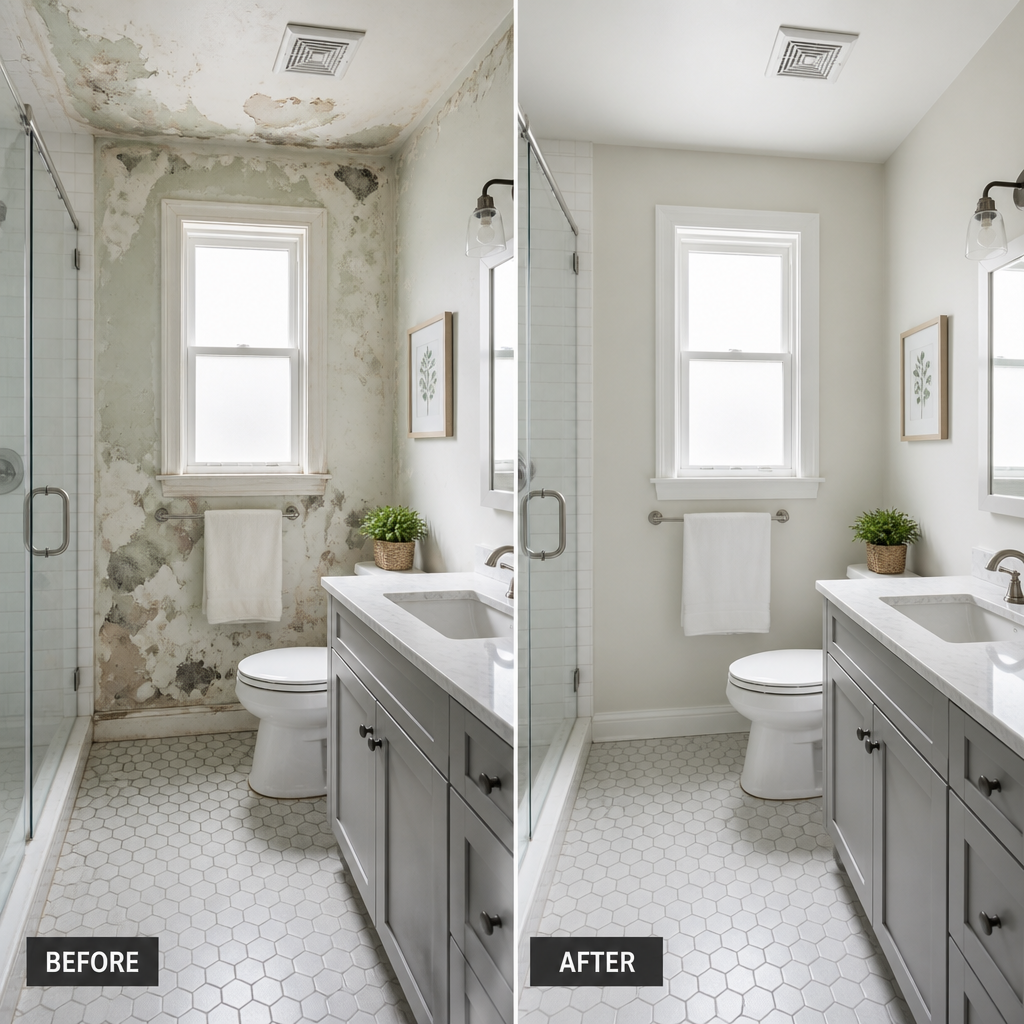
Semi-gloss or satin are both defensible in bathrooms. Semi-gloss is the stronger choice wherever moisture is most concentrated, particularly around the shower and sink. Satin is acceptable in a powder room or half-bath where steam and splash are minimal. What you should never use in a bathroom is flat or eggshell. Persistent humidity will cause those finishes to break down and allow mold to take hold behind the paint film.
Living Rooms and Dining Rooms
Eggshell or satin work well in these spaces. If you want walls that look smooth and refined without a shiny surface, eggshell is a strong choice. If the room sees heavier traffic, has children, or connects directly to the kitchen, step up to satin. Satin holds up to casual wiping without losing its appearance, which matters in rooms where people actually live.
Bedrooms
Flat or matte finishes suit master bedrooms and guest rooms well. Traffic is low, moisture is minimal, and the non-reflective quality of a flat finish creates a calm, intimate atmosphere. Children’s bedrooms are a different story. A child’s bedroom wall gets touched, scuffed, and occasionally decorated with unasked-for artwork. Eggshell or satin makes far more sense in those rooms.
Hallways and Mudrooms
Satin is the practical minimum for any hallway. These are high-contact, high-traffic areas where shoulders brush walls and bags knock against corners. The scuff resistance and cleanability of satin prevents a hallway from looking worn out within a single season. A mudroom, which in a Fraser Valley home often doubles as an entry point during wet, muddy winters, benefits from satin or semi-gloss on the lower half of the wall.
The finish you choose is not just about the look on the day of painting. It is about what the surface still looks like two years of daily use later. Choose for maintenance first, aesthetics second.
Paint Finish Comparison: At a Glance
Use this table as a quick reference when making finish decisions. The ratings reflect real-world performance across common residential painting situations, not manufacturer marketing claims.
| Finish Type | Best Rooms and Surfaces | Key Trade-offs |
|---|---|---|
| Flat / Matte | Ceilings, low-traffic adult bedrooms, formal dining rooms | Hides imperfections well; difficult to clean without damaging the film; not moisture-safe |
| Eggshell | Living rooms, guest bedrooms, dining rooms | Soft appearance, some cleanability; touch-ups can show; not suitable for wet areas |
| Satin | Hallways, children’s rooms, home offices, trim in modern homes | Durable and cleanable; pearl sheen not ideal for heavily textured walls |
| Semi-Gloss | Kitchens, bathrooms, trim, baseboards, doors | Moisture and mildew resistant; highlights surface imperfections; requires solid wall prep |
| High-Gloss | Cabinetry, furniture, accent millwork | Maximum durability; demands a perfectly prepared surface; rarely used on walls |
The Fraser Valley Humidity Factor
Homeowners in Abbotsford, Langley, Surrey, and the rest of the Fraser Valley face a specific challenge that interior painting guides written for drier climates overlook entirely: persistent humidity. The Lower Mainland regularly records high relative humidity in fall and winter, and that moisture affects paint performance at the surface level, not just the application level.
In bathrooms, kitchens, and laundry areas across Lower Mainland homes, persistent humidity makes finish selection a functional decision rather than a purely decorative one. Choosing a moisture-resistant interior paint with a semi-gloss or satin sheen in these areas is a straightforward decision that significantly extends the life of the finish. Flat paint in a humid space is not just a maintenance inconvenience. It is a surface that will fail early and potentially allow moisture damage behind the wall.
Pro tip: In Fraser Valley homes with open floor plans, pay attention to how humidity moves between rooms. A kitchen that flows directly into a dining area can carry enough ambient moisture to make eggshell a borderline choice for the dining room wall. Satin in both spaces is the safer long-term decision.
Trim, Doors, and Ceilings: The Rules Are Different
Walls are not the whole story in any interior painting project. Trim, doors, and ceilings each have their own finish logic, and getting those wrong affects the overall result as much as a poor wall color choice.
Trim and Baseboards
Satin is the most popular finish for trim, doors, and mouldings in most residential settings. It is washable without being so reflective that every nick and scuff stands out. Older heritage homes in the Fraser Valley, particularly properties with original wood millwork in Abbotsford and Langley, can look excellent with a semi-gloss trim. Modern or updated homes typically read cleaner with satin. The important thing is that trim sheen should always be at least one level above the adjacent wall sheen. The contrast defines the architecture visually.
Doors
Interior doors take more daily contact than almost any other painted surface in a home. Hands push and pull at the same spot repeatedly. Semi-gloss is the sensible choice for most interior doors. It resists the wear and allows cleaning without degrading the surface. If the rest of the room uses satin, a semi-gloss door still works without looking jarring, because the contrast reads as intentional.
Ceilings
Flat finish is the right choice for ceilings in almost every situation. Ceilings have imperfections, texture variations, and uneven surfaces that a sheen level above flat will expose immediately under any overhead lighting. A flat white ceiling also reflects light evenly, which is exactly what overhead illumination needs to do. The exception is a bathroom ceiling, which should use a flat paint specifically formulated with mildew resistance, or step up to eggshell if the ventilation is poor.
Common Finish Mistakes That Are Easy to Avoid
After 35 years of painting homes across the Lower Mainland, the patterns in finish selection mistakes are predictable. Here are the ones that show up most often, and how to avoid them before the first roller hits the wall.
Using the Same Finish Everywhere
Some homeowners choose one finish for the whole house to keep things simple. The result is either walls that look greasy and highlight every flaw (if they chose semi-gloss throughout), or bathrooms that start peeling within a year (if they chose flat throughout). Each room has different demands. The finish selection should reflect those demands, not be driven by a desire to buy one product.
Skipping Wall Prep Before a High-Sheen Finish
This is the most predictable mistake in any semi-gloss or high-gloss application. The higher the sheen, the more it reveals. Old nail pops, patched areas, uneven joint compound, and textured sections that were not properly sanded will all be obvious under a shiny finish. Proper preparation before any finish above eggshell is not optional. Filling, sanding, and priming surfaces properly is the difference between a professional result and a surface that looks worse than before.
Ignoring Lighting When Testing Finishes
A satin finish sample card in a paint store under fluorescent lighting looks very different from a satin finish on a north-facing bedroom wall in November. Test your finish choice with a sample applied directly to the room, and evaluate it at multiple times of day. What looks matte-ish in the morning can develop a noticeable sheen under evening artificial light.
Choosing Flat for a Child’s Room to Avoid Shine
Parents often opt for flat finish in children’s rooms because it looks soft and non-institutional. Within six months, the marks, handprints, and general chaos of daily child use make flat paint look dingy and impossible to clean. Eggshell or satin in a child’s room keeps cleanability without sacrificing a warm, livable appearance.
Frequently Asked Questions
What is the best paint finish for a kitchen?
Semi-gloss is the strongest choice for most kitchen walls. Its higher resin content makes it resistant to grease, steam, and moisture, and it wipes clean easily. If the kitchen has walls with visible imperfections or an older, uneven surface, satin is a reasonable compromise, though it will require more frequent cleaning to maintain its appearance.
Can I use eggshell paint in a bathroom?
Eggshell is not recommended for bathrooms with regular shower or bath use. The persistent humidity in those spaces will break down an eggshell finish faster than expected and can allow mold to develop behind the paint film. Semi-gloss or satin is the appropriate choice. Reserve eggshell for powder rooms or half-baths where moisture exposure is minimal.
What finish should I use for interior trim and baseboards?
Satin is the most widely used finish for trim, baseboards, and mouldings in modern and updated homes. It is washable, durable, and gives a clean finish without being aggressively shiny. Semi-gloss is a good option for heritage homes with original wood millwork, or in any situation where the trim takes heavy daily contact and needs extra resilience.
Does paint finish affect how long the paint lasts?
Yes, significantly. Higher-sheen finishes contain more resin, which creates a harder, more durable film on the surface. A semi-gloss finish in a bathroom will outlast a flat finish in the same room by years, assuming both are applied properly. In high-humidity areas like those common across the Fraser Valley, finish selection is directly tied to how long the paint job holds up before requiring attention.
Is it worth hiring a professional painter just to get the finish right?
Finish selection is part of the decision, but professional application matters just as much. A higher-sheen finish like semi-gloss is unforgiving of lap marks, brush strokes, and uneven application. A professional painter knows how to prepare surfaces properly, apply paint with consistent technique, and avoid the common errors that make a semi-gloss or satin finish look amateur. For rooms where finish performance matters most, the investment in professional work pays off in the quality and longevity of the result. Dreamscape Painting has been doing this work across Abbotsford, Langley, Surrey, and the Lower Mainland for over 35 years, and finish selection is always part of the conversation before a single can is opened. See how we approach interior painting in Abbotsford.
What finish works best in an open-plan home where rooms flow into each other?
In open-plan layouts, consistency matters. Using eggshell in the living area and satin in the adjacent hallway creates a visible sheen change that can look unintentional. Choosing satin throughout connected open spaces creates a unified, cohesive look while still offering the cleanability those areas need. The exception is the kitchen zone, which should still step up to semi-gloss regardless of the open-plan layout.
Have you recently tackled a paint finish decision in your home, or are you still weighing your options? Share your experience or questions below, and our team is happy to weigh in.
References
- Sherwin-Williams paint sheen selection guide covering room-by-room finish recommendations
- KILZ guide to paint sheen types and how durability and moisture resistance vary by finish level
- Benjamin Moore painting 101 guide to choosing the right interior paint finish
- Interior design resource on the best paint finish for walls, ceilings, trim, and doors
- Angi overview of paint sheen levels, trade-offs, and when to hire a professional painter

