

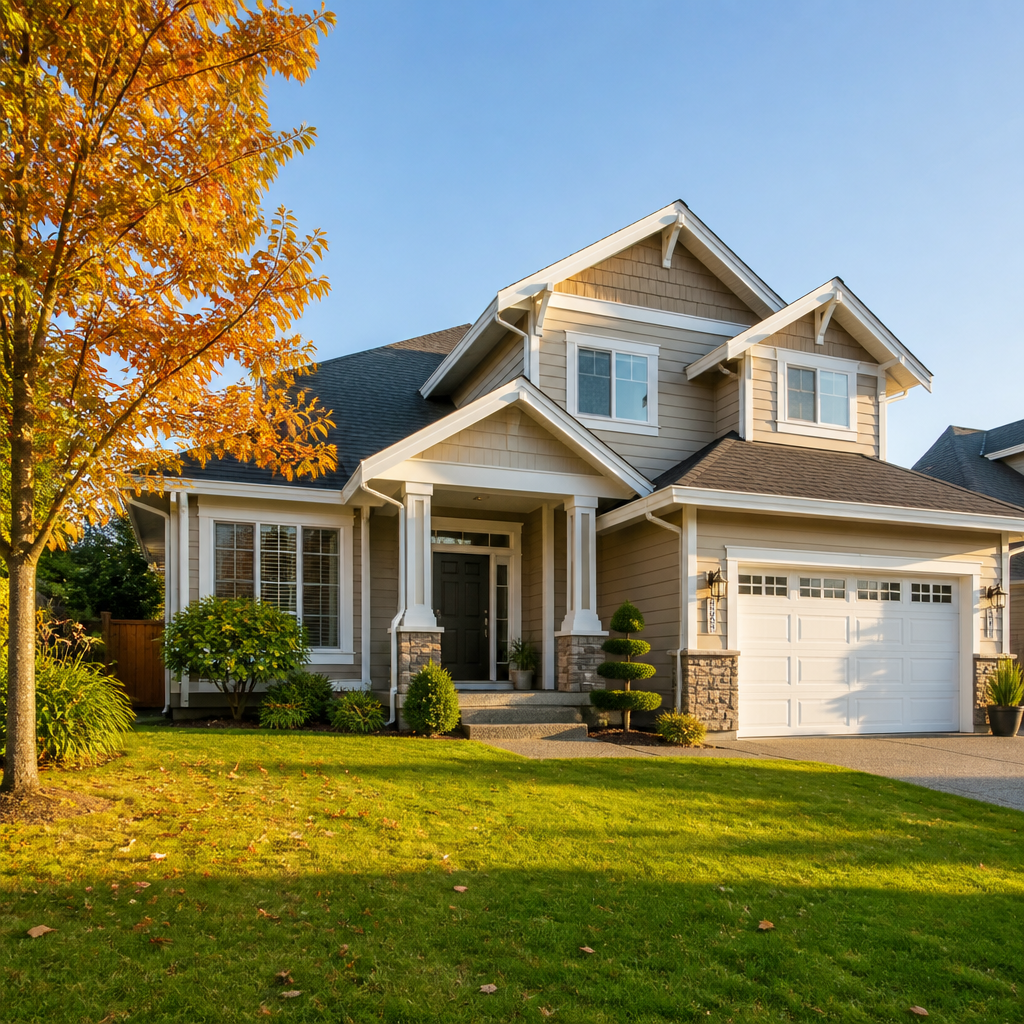
Most homeowners in Abbotsford, Langley, and Surrey assume summer is the only sensible window for exterior painting in the Fraser Valley. That assumption leaves a genuinely useful season on the table. Early-to-mid fall, roughly mid-September through mid-October, offers a combination of stable daytime temperatures, lower contractor demand, and reduced UV intensity that makes it one of the most practical times to repaint your home’s exterior. The key word is “early.” Fall in the Fraser Valley is not one season. It is two very different windows divided by mid-October, and knowing the difference is what separates a paint job that lasts a decade from one that starts peeling by spring.
Table of Contents
- Why Early Fall Works for Exterior Painting
- The Fraser Valley Climate You Actually Have to Plan Around
- Temperature and Paint Chemistry: What the Numbers Actually Mean
- Fall vs. Summer vs. Spring: A Practical Comparison
- What to Watch Out For in a Fraser Valley Fall Paint Job
- Prep Work Is More Important in Fall Than Any Other Season
- Frequently Asked Questions
- References
Why Early Fall Works for Exterior Painting
Early fall earns its reputation for a specific reason: the weather window that stretches from mid-September into mid-October across the Fraser Valley routinely delivers daytime temperatures in the range that paint manufacturers actually recommend. Surfaces are warm enough for proper film formation, nights have not yet dropped to the level that stalls curing, and the extended summer dry spell has left siding, trim, and stucco in low-moisture condition.
There is a second advantage that does not show up in paint spec sheets. Summer is the busiest season for every professional painting company in the Lower Mainland. Booking a crew in July means competing with every other homeowner who had the same idea. Early fall brings a measurable drop in scheduling pressure. At Dreamscape Painting, we see this every year: homeowners who plan their exterior repaint for September or early October get better availability, more attention from their crew, and frequently better pricing than peak-summer bookings.
Pro tip: Book your fall exterior paint job by late August. Experienced local crews fill their September and early October slots quickly, and the homeowners who wait until the weather cools to start making calls often end up pushed into November conditions that are genuinely unsuitable for exterior work.
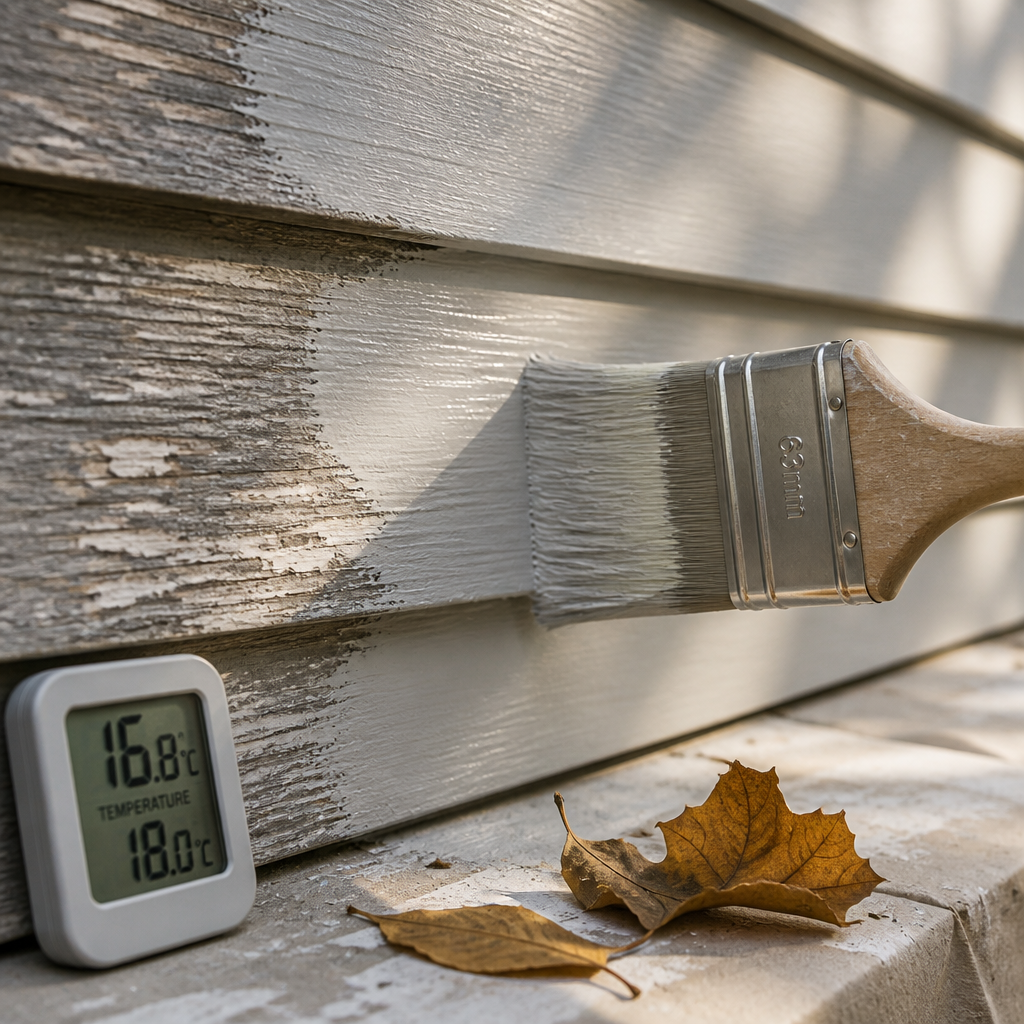
The reduced UV intensity in fall also matters more than most people realize. In July and August, direct sun on south-facing and west-facing walls can drive surface temperatures well above air temperature. That superheated surface causes latex paint to skin over before it has properly bonded, leaving a finish that looks fine on day one but develops micro-cracks within the first heating and cooling cycle. In September, the sun angle drops and intensity moderates, giving paint the time it needs to flow, level, and cure correctly.
The Fraser Valley Climate You Actually Have to Plan Around
The Fraser Valley is one of the wettest inhabited regions in Canada. Abbotsford receives roughly 1,530 millimetres of rainfall annually, with the bulk of that precipitation falling between October and April. That pattern defines everything about exterior painting in this region. It is not a minor scheduling inconvenience. It is the primary variable that determines whether a paint job survives five years or fifteen.
What this climate means in practical terms is that exterior surfaces in Abbotsford, Langley, and Surrey spend more than half the year under sustained moisture stress. Wood siding absorbs and releases moisture repeatedly through the wet season, causing expansion and contraction that paint must flex with or fail against. Paint applied to a substrate that is too wet will not bond properly, and that failure will show up as bubbling, peeling, or lifting within one to two seasons.
In the Fraser Valley, the challenge is not just rain volume. It is the pattern: long wet seasons from October through April, followed by a relatively dry summer and early-fall window. Exterior surfaces spend more than half the year under sustained moisture stress. A paint job planned around that reality lasts. One that ignores it does not.
The dry window in the Fraser Valley typically runs from late May through mid-October, though it varies year to year. Early fall falls within that window. Late fall does not. Communities closer to the mountains, including parts of Abbotsford near Sumas Mountain, can see the wet season arrive earlier than communities further west. A professional estimator who knows the region will factor that into scheduling recommendations.
Temperature and Paint Chemistry: What the Numbers Actually Mean
Paint is a chemistry problem before it is an aesthetics problem. Most professional-grade exterior latex paints are formulated to be applied between 10°C and 30°C surface temperature, with ideal conditions around 15°C to 21°C. Below 10°C, paint thickens, adhesion weakens, and curing slows to the point where a single overnight frost can ruin a fresh coat. Above 30°C, paint on south-facing walls dries too rapidly, leaving brush marks, uneven sheen, and poor film formation.
Why Nighttime Temperature Matters as Much as Daytime Highs
A common mistake homeowners make when evaluating fall painting conditions is focusing only on daytime highs. Nighttime temperature is equally critical. Paint does not stop curing at sunset. If overnight temperatures drop below 10°C during the curing period, film formation is compromised even if the application itself went smoothly. In mid-to-late October across the Fraser Valley, nighttime lows become unreliable. Mid-September through early October is the window where daytime and nighttime temperatures cooperate together.
Humidity and Surface Moisture: The Hidden Variable
Wood siding must test below 15% moisture content before paint application. After a typical Fraser Valley rain event, wood siding can take 48 to 72 hours to dry sufficiently, even in partial sun. Experienced painters use handheld moisture meters as a standard pre-application check, not an optional one. Stucco, which is common throughout Surrey, Langley, and Abbotsford, holds moisture deep in the substrate long after the surface appears dry. Early fall conditions, following an extended summer dry period, mean substrates are typically at their lowest seasonal moisture levels. That is a genuine advantage. See our exterior painting services to book a free quote.
Pro tip: If a contractor does not check surface moisture with a meter before painting your exterior, that is a red flag. Visual inspection of wood and stucco is not a substitute for measurement. Insist on moisture testing as a pre-application step, especially on wood siding and any areas that face north or stay in shade for most of the day.

Fall vs. Summer vs. Spring: A Practical Comparison
Understanding how early fall stacks up against the other viable painting seasons helps homeowners make a genuinely informed decision rather than defaulting to summer out of habit. Each season has real trade-offs. The table below breaks them down honestly.
| Season | Conditions for Fraser Valley Exterior Painting | Key Risk or Limitation |
|---|---|---|
| Summer (June to mid-September) | Most reliable dry window. Temperatures consistently above 10°C day and night. Lowest moisture content in substrates. | Highest contractor demand and wait times. Surface temperatures on south/west walls can exceed 30°C in July-August, causing rapid drying and poor film formation. UV intensity can fade fresh paint faster in the first weeks. |
| Early Fall (mid-September to mid-October) | Daytime temperatures suitable for most paint products. Lower UV intensity benefits film leveling. Substrates still dry from summer. Reduced scheduling pressure means better crew availability. | Narrower usable window. Nighttime temperatures become a concern after mid-October. Requires weather monitoring and flexibility in scheduling around early fall rain events. |
| Spring (April to May) | Temperatures warming into the usable range. Less UV intensity than summer. | Highest risk of rain interruptions. Substrates are at peak seasonal moisture after winter. Unpredictable weather patterns mean frequent delays. Humidity often remains high, slowing cure times. |
The honest take: summer remains the most reliable season for exterior painting in the Fraser Valley. But early fall is a genuinely good second choice, not a desperate compromise. Spring is the riskiest of the three viable windows, primarily because substrates are wet, humidity is high, and weather is least predictable.
What to Watch Out For in a Fraser Valley Fall Paint Job
Early fall is not without its hazards. A professional crew that understands local conditions will manage these proactively. Homeowners should know what to expect and what questions to ask.
Shorter Daylight Hours
By late September, daylight in the Fraser Valley has shortened considerably compared to July. A professional crew needs to work efficiently to complete application and allow meaningful dry time before evening temperatures drop. This is not a reason to avoid fall painting, but it is a reason to avoid the cheapest crew with the fewest experienced painters. Production pace matters more in fall than in summer.
Falling Leaves and Surface Debris
Debris from deciduous trees is a real nuisance during fall exterior painting. Fresh paint picks up leaf material, dust, and organic matter more readily than cured paint. Surfaces must be cleaned thoroughly before application, and crews should monitor for debris landing on wet paint during the work day. This is a minor inconvenience, not a reason to delay the project. It just requires attentiveness.
Monitoring the Forecast Closely
Fall weather in the Fraser Valley is more variable than summer. A professional painter plans around a 5 to 7 day forecast window rather than a single day’s conditions. Scheduling around a clear stretch of 4 to 5 days allows application and initial curing to complete before any rain arrives. Homeowners should expect a reputable contractor to build forecast flexibility into the schedule rather than committing to fixed dates that ignore weather reality.
Prep Work Is More Important in Fall Than Any Other Season
Preparation is always the majority of a quality exterior paint job. In fall, it is even more critical because there is less margin for error. The usable window is narrower, and any substrate problems that surface during prep work take longer to correct before conditions change.
What Proper Fall Exterior Prep Looks Like
A thorough fall exterior prep sequence includes pressure washing to remove biological growth, dirt, and chalking from old paint. After washing, surfaces must be allowed to dry fully before any paint is applied. Given the 48 to 72 hour drying window that the Fraser Valley climate requires after any moisture exposure, prep work should begin at least 3 to 4 days before the scheduled paint application, assuming no additional rain occurs in that period.
Caulking is a second critical prep step. Any gaps around window frames, door frames, trim joints, and penetrations must be sealed with a flexible paintable caulk before primer or topcoat goes on. In fall, the importance of this step increases because the wet season is approaching. Uncaulked gaps are direct entry points for moisture, and paint over an unsealed gap will fail from the inside out within one winter.
Priming bare wood or repaired surfaces is non-negotiable. In fall, a primer seals the substrate against moisture during the curing period and improves topcoat adhesion significantly. Crews that skip primer to save time on a fall job are cutting a corner that will cost the homeowner within 18 to 24 months.
At Dreamscape Painting, our estimators evaluate every exterior surface for moisture content, adhesion condition, caulking gaps, and biological growth before recommending a fall start date. That evaluation determines whether the September or October window is appropriate for a specific home and substrate type. Every home is different, and generalizations about fall painting only take you so far. The condition of your specific siding, stucco, or wood trim is what actually determines the right call.
Frequently Asked Questions
Is fall a good time for exterior painting in Abbotsford and Langley?
Early fall, from mid-September through mid-October, is a viable and often excellent window for exterior painting in Abbotsford and Langley. Daytime temperatures are typically within the 10°C to 21°C range that most professional paint products require, substrates are at their lowest seasonal moisture content after a dry summer, and contractor availability is better than during peak summer. The key is booking early and monitoring nighttime temperatures closely as October progresses.
What temperature is too cold for exterior painting in the Fraser Valley?
Most professional-grade exterior latex paints require surface temperatures at or above 10°C during application and throughout the curing period. In the Fraser Valley, nighttime temperatures in late October and November frequently drop below this threshold, making late fall painting genuinely risky. Even if daytime highs are adequate, overnight lows below 10°C during the curing window can compromise film formation and lead to adhesion failure. Always check the specific product requirements and monitor overnight forecasts, not just daytime highs.
How long does exterior paint take to cure in fall conditions?
Cure time is longer in fall than in peak summer. In warm summer conditions, exterior latex paint can reach a working hardness within 24 to 48 hours. In cooler fall temperatures, that window extends. A conservative rule for Fraser Valley fall conditions is to allow at least 3 to 5 days of dry weather above 10°C before any sustained rain exposure. This is why professional crews monitor extended forecasts rather than committing to fixed schedules in the fall season.
Does fall exterior painting in the Fraser Valley void paint warranties?
It depends on the specific product and the conditions under which it was applied. Most major paint manufacturers specify minimum application temperatures in their product data sheets. If paint is applied within those specifications, the warranty typically remains valid. A reputable contractor keeps product data sheets on record and applies paint only within the manufacturer’s approved conditions. If you are concerned about warranty validity, ask your contractor to confirm the application temperature range for the specific product being used on your home.
Should I paint my exterior in fall or wait until next summer?
If your exterior is showing significant peeling, bare wood exposure, or failed caulking, waiting until the following summer means exposing your siding and substrate to an entire Fraser Valley wet season without protection. In those cases, scheduling a fall paint job before mid-October is the better financial decision. A paint job done in good early-fall conditions will protect your home through the wet season far better than no paint job at all. If your existing paint is holding and only cosmetic refreshing is planned, a summer booking is a reasonable choice. Dreamscape Painting’s estimators can assess your specific exterior and give you an honest recommendation based on current condition rather than general rules.
What should I look for in a contractor for fall exterior painting near Abbotsford or Surrey?
Look for a contractor who checks surface moisture before painting, monitors extended weather forecasts, and can explain how they adjust scheduling around fall conditions. Ask whether they use moisture meters as a standard pre-application check, and ask which specific paint products they recommend for fall application and why. A contractor who cannot answer those questions clearly is not a good fit for a fall exterior job. Experience with Fraser Valley and Lower Mainland climate conditions specifically is important. Generic painting experience does not automatically translate into sound judgment about local weather patterns and substrate behavior.
Have you tackled an exterior paint project in the fall in Abbotsford, Langley, or elsewhere in the Fraser Valley? We would love to hear what worked and what you would do differently.
References
- Exterior painting timing and preparation guide for the Lower Mainland from Dreamscape Painting
- Exterior painting schedule and seasonal planning guide for Abbotsford from ProCoat Property Services
- Fraser Valley exterior painting timing, prep, and paint selection guide from Dreamscape Painting
- Exterior painting temperature requirements and cold-weather paint performance from Ringsend
- House painting costs and climate considerations in Abbotsford from Home Service BC

