

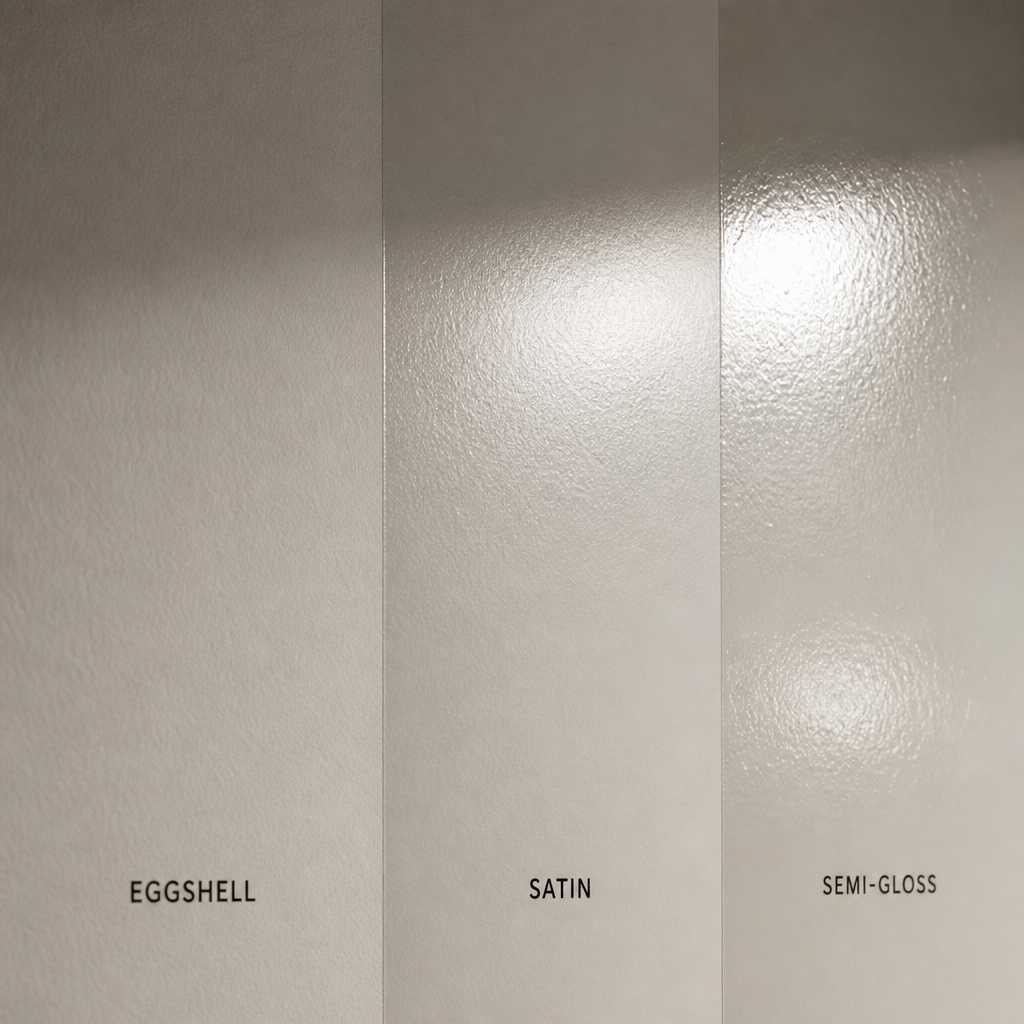
Most homeowners spend hours picking the perfect colour and then choose the wrong finish in under thirty seconds. That single mistake can make a freshly painted room look dull, show every fingerprint on a hallway wall, or peel in a steamy bathroom within a year. A solid paint finish guide is not optional reading before a project. It is the difference between a result that impresses every visitor and one that quietly bothers you every morning. Whether you are refreshing a living room in Langley or repainting a Surrey kitchen, the sheen level you choose matters as much as the colour itself.
Table of Contents
- Quick Takeaways
- What Paint Sheen Actually Means
- Eggshell Finish Explained
- Satin Finish Explained
- Semi-Gloss Finish Explained
- Eggshell vs Satin Paint: Which Wins by Room
- Finish Comparison Table
- Common Mistakes Painters See Every Week
- How Fraser Valley Conditions Affect Your Choice
- Frequently Asked Questions
- References
Quick Takeaways
| Key Insight | Explanation |
|---|---|
| Sheen level controls durability | Higher sheen finishes resist moisture and repeated cleaning far better than lower sheen options. Semi-gloss can handle daily scrubbing; eggshell cannot. |
| Eggshell hides surface imperfections | Its low reflectivity scatters light, which means minor drywall texture, patched areas, and slight wall irregularities are far less visible than with satin or semi-gloss. |
| Satin is the true all-purpose finish | For most interior living spaces in the Lower Mainland, satin delivers the right balance of washability and a subtle glow without overpowering the room. |
| Semi-gloss belongs on trim and wet areas | Kitchens, bathrooms, window casings, baseboards, and door frames benefit from semi-gloss because its hard surface sheds moisture and grease without absorbing them. |
| Mixing sheens is intentional design | Professional painters routinely use eggshell on walls and semi-gloss on trim in the same room. This contrast is purposeful, not inconsistent. |
| Interior paint sheen in Vancouver requires moisture awareness | The Lower Mainland’s wet climate makes finish selection even more critical. A finish that works in a dry climate may fail faster here if moisture resistance is ignored. |
| Application quality affects final sheen appearance | Poor rolling technique, cheap rollers, or inadequate surface prep can flatten or streak a finish regardless of its specified sheen level on the tin. |
What Paint Sheen Actually Means
Paint sheen refers to how much light a dried paint film reflects back at the viewer. It is measured scientifically using a gloss meter at a 60-degree angle, with results expressed as a percentage. Flat paint reflects almost nothing. High-gloss paint reflects so much it looks lacquered. Everything covered in this guide, eggshell, satin, and semi-gloss, falls in the practical middle range used on the vast majority of interior walls and surfaces.
Sheen is not just cosmetic. The more light a finish reflects, the denser its resin structure, and the more resistant it is to moisture, abrasion, and cleaning chemicals. This is why a paint finish guide always needs to connect appearance goals to practical room function. A finish that looks beautiful in a showroom can be a poor performer in a busy family kitchen.
In practice, the sheen level also affects how forgiving the paint is of surface imperfections. Higher sheen films are essentially mirrors, and mirrors show everything underneath. Lower sheen films diffuse light and are more forgiving of walls that are not perfectly smooth.


“>
Eggshell Finish Explained
Eggshell sits just above flat paint in terms of reflectivity. Its name describes exactly what it looks like, the quiet, subtle sheen of a real eggshell. It reflects roughly 10 to 25 percent of light depending on the brand and formulation. That low-level glow is enough to make a room feel warmer and more finished than flat paint, without drawing attention to itself.
Where Eggshell Works Best
Eggshell is the preferred finish for adult bedrooms, formal dining rooms, and living rooms where walls receive minimal direct contact. It hides surface flaws well, making it the right call on older plaster walls or any surface where skim coating was not part of the prep work. Our painters at Dreamscape use eggshell on bedroom walls regularly in older Abbotsford and Langley homes precisely because the walls have character that a high-sheen finish would expose unkindly.
Eggshell is also easier to touch up than satin or semi-gloss. When the sheen is low, a patched area blends back in more readily because the low reflectivity hides the edge of the repair.
Where Eggshell Falls Short
Do not use eggshell in kitchens, bathrooms, hallways, or children’s rooms. It will absorb grease and moisture rather than repel it. Scrubbing an eggshell wall more than lightly will dull the surface and create visible burnish marks. For high-traffic areas, it is simply the wrong tool for the job.
Pro tip: If a wall has been patched, re-skimmed, or has visible texture variation, choose eggshell over satin. The lower reflectivity does the work of hiding imperfections that would cost you an extra prep day to sand smooth.
Satin Finish Explained
Satin paint reflects roughly 25 to 40 percent of light, producing a soft, velvety sheen that is clearly visible but never aggressive. It is the most commonly specified finish for interior living spaces in the Lower Mainland and for good reason. It threads the needle between the practicality demanded by family life and the refined look homeowners want.
Where Satin Outperforms Eggshell
Satin holds up to wiping and light scrubbing without losing its appearance. Kids’ bedrooms, family rooms, hallways, and staircases are all strong candidates. The finish repels light moisture well, which means the occasional splash or condensation from a cold glass will not leave a permanent watermark the way it might on eggshell.
The eggshell vs satin paint debate almost always resolves in satin’s favour when the client has children or pets. Activity levels matter more than aesthetics when you are choosing between these two.
The Trade-Off With Satin
Satin shows lap marks and roller lines more readily than eggshell during application. It requires a disciplined wet-edge technique, which is exactly why DIY satin paint jobs often look worse than DIY eggshell jobs. The finish is also less forgiving of surface imperfections. Any bump, crack, or uneven patch becomes more visible under satin’s added reflectivity. Proper surface preparation is not optional when you commit to satin.
Pro tip: When painting a hallway in satin, always use a 9-inch roller with a 3/8-inch nap and maintain a wet edge from ceiling to floor on each pass. Stopping mid-wall and coming back will show a lap line under the sheen that no amount of touch-up will fully hide.
Semi-Gloss Finish Explained
Semi-gloss reflects between 40 and 70 percent of light. It has a noticeable shine that reads as polished and deliberate. On a flat wall, that level of reflectivity is too high for most residential tastes. But on trim, doors, cabinets, and moisture-prone surfaces, it is exactly right.
The Correct Applications for Semi-Gloss
Baseboards, door casings, window frames, kitchen cabinets, and bathroom walls all benefit from semi-gloss paint. The dense resin film resists steam, grease splatter, and the daily physical contact that trim surfaces endure. Grease wipes off cleanly. Steam does not penetrate. Crayon marks lift with a damp cloth.
In bathrooms specifically, semi-gloss on walls is a legitimate choice because the moisture resistance is genuine, not cosmetic. For a Lower Mainland home where showers run daily through cold, damp winters, that resistance is not a luxury.
When Semi-Gloss Becomes a Problem
Using semi-gloss on imperfect wall surfaces is a professional mistake that amateur painters make frequently. Any wall defect, from roller stipple texture to a poorly feathered patch, will be amplified by the high reflectivity. The finish also shows every drip, run, and brush stroke during application, demanding a higher standard of technique than eggshell or satin. If your walls are not skimmed smooth, do not use semi-gloss on them.

“>
Eggshell vs Satin Paint: Which Wins by Room
The eggshell vs satin paint choice is a room-by-room decision. There is no single answer that applies to an entire house. Below is how experienced painters at Dreamscape approach each space.
Master Bedroom and Guest Rooms
Eggshell wins in low-traffic sleeping rooms. The softness of the finish complements natural light and hides any surface variation in older drywall. These rooms are not scrubbed. They do not see grease or steam. Eggshell is correct here.
Children’s Bedrooms and Playrooms
Satin wins without argument. Children produce contact, marks, and mess that eggshell cannot handle. Satin’s washability pays for itself within the first month of a child living in that room.
Living Rooms and Dining Rooms
This depends on the homeowner’s lifestyle. A couple with no children and no pets can safely use eggshell in the living room and enjoy its sophisticated appearance. A family with regular activity in those rooms should step up to satin. The data from our 35 years of projects consistently shows that eggshell call-backs for damage come almost exclusively from living rooms and hallways that should have been painted in satin.
Kitchens and Bathrooms
Satin on kitchen walls is the minimum. Semi-gloss on kitchen cabinets and bathroom tile surrounds is the right call. Do not use eggshell in either room unless it is on a ceiling specifically rated for kitchen and bath environments.
“The sheen of a paint is not a stylistic afterthought. It is a functional specification that determines how the surface will perform for the next ten years.” – Bob Vila, home improvement authority and author of numerous guides on residential painting and renovation.
Finish Comparison Table
This table compares the three finishes across the practical criteria that matter most to homeowners in the Fraser Valley and Lower Mainland.
| Criteria | Eggshell | Satin | Semi-Gloss |
|---|---|---|---|
| Light Reflectivity | 10 to 25 percent | 25 to 40 percent | 40 to 70 percent |
| Washability | Low. Light wiping only. | Moderate. Handles scrubbing with mild soap. | High. Tolerates repeated scrubbing and disinfectants. |
| Moisture Resistance | Poor. Absorbs moisture over time. | Good. Suitable for moderate humidity. | Excellent. Designed for steam and splash zones. |
| Hides Surface Imperfections | Very well. Low reflectivity scatters light. | Moderately. Prep quality matters more. | Poorly. Every flaw is amplified. |
| Best Rooms | Bedrooms, dining rooms, low-traffic living rooms. | Hallways, kids’ rooms, family rooms, kitchens. | Trim, cabinets, bathrooms, kitchens. |
| Touch-Up Ease | Easiest. Blends well. | Moderate. Sheen variation can show. | Difficult. Sheen variation is obvious. |
| Application Difficulty | Forgiving. Suitable for experienced DIYers. | Moderate. Requires wet-edge discipline. | Demanding. Technique errors show clearly. |
Common Mistakes Painters See Every Week
After 35 years of residential and commercial painting across Abbotsford, Surrey, Langley, and the wider Lower Mainland, the team at Dreamscape has seen the same finish-selection errors repeated constantly. Knowing these mistakes in advance is worth real money in avoided repaints.
Using Flat or Eggshell in Bathrooms
This is the most common error. Flat and eggshell paints absorb moisture. In a bathroom that is used daily, this leads to mould growth behind the paint film within two to three years. The wall looks fine from the outside until the paint starts peeling in sheets. Semi-gloss or a purpose-formulated bathroom paint is the minimum specification for any room with a shower or bathtub.
Applying the Same Finish to Walls and Trim
A common mistake is painting baseboards and door casings in the same eggshell or satin finish used on the walls. Trim takes enormous abuse. Shoes, furniture, pets, and cleaning equipment all make contact with baseboards. Semi-gloss on trim is not optional. It is standard practice for a reason.
Skipping Primer Before a Sheen Upgrade
When a homeowner repaints over flat paint with satin or semi-gloss without priming first, the existing flat paint absorbs the new finish unevenly. The result is a blotchy, inconsistent sheen across the wall that cannot be fixed with a second coat. It requires stripping back and starting with primer. Primer is not a cost-cutting line item. It is part of the specification.
How Fraser Valley Conditions Affect Your Choice
Choosing interior paint sheen in Vancouver and across the Fraser Valley requires one additional consideration that does not apply in drier climates. The Lower Mainland averages over 1,150 millimetres of annual rainfall and experiences persistently high relative humidity from October through April. That moisture does not stay outside. It migrates into homes through ventilation, daily activity, and building envelope imperfections.
Eggshell paint on north-facing walls in a Langley or Abbotsford home can develop condensation problems in winter months. The porous film holds moisture against the drywall paper, which creates the conditions for mould. In these specific conditions, moving up one sheen level is a reasonable precaution that costs almost nothing extra but significantly extends the life of the paint job.
For exterior walls or rooms adjacent to the building envelope, the team at Dreamscape consistently recommends satin as the minimum sheen for any room that shares a wall with the outside. This is not overcaution. It reflects the climate reality of painting in this part of British Columbia.
“>
Frequently Asked Questions
Can I use eggshell paint in a bathroom if I have good ventilation?
Good ventilation reduces the risk but does not eliminate it. Even a well-ventilated bathroom produces enough steam and moisture over time to degrade an eggshell finish. The investment in semi-gloss or a purpose-built bathroom paint is small compared to the cost of repainting in two years. The answer is: do not use eggshell in a bathroom, regardless of ventilation quality.
Is satin or eggshell better for a living room with north-facing windows?
In a north-facing living room, eggshell is usually the better choice. North-facing rooms receive diffuse, indirect light rather than direct sun, so the room already tends to feel dimmer. Eggshell’s lower reflectivity works with that quality of light rather than against it. Satin in a dark room can make the walls look flat despite having more sheen because there is not enough directional light to activate the finish.
Why does my satin paint look blotchy after drying?
Blotchiness in satin paint almost always points to one of three causes: inadequate primer over a porous surface, lap marks from stopping mid-wall during application, or painting over a surface with residual grease or cleaning product residue. Satin finishes amplify application inconsistencies because their moderate reflectivity catches variations in film thickness. A thorough clean, a bonding primer, and proper wet-edge technique resolve all three causes before they become problems.
Should kitchen cabinets use semi-gloss or satin?
Semi-gloss is the correct specification for kitchen cabinets. Cabinets accumulate cooking grease, condensation, and repeated hand contact around handles. Satin will hold up reasonably well for a time, but semi-gloss resists grease absorption better and cleans more completely with a damp cloth. For painted cabinet refinishing work, which Dreamscape specialises in across the Lower Mainland, semi-gloss or a purpose-built cabinet enamel is always the recommendation.
What finish should I use on staircase walls and handrail areas?
Staircase walls take more concentrated physical contact than almost any other surface in a home. Hands brush the walls constantly, bags and furniture scrape the lower sections, and cleaning is frequent. Satin is the minimum for staircase walls, and semi-gloss is justified on any section below shoulder height where contact is heaviest. The handrail itself should always be semi-gloss or higher.
Does paint sheen affect colour appearance?
Yes, significantly. The same colour formulation will look noticeably different at different sheen levels. A colour in eggshell will appear slightly richer and deeper because the diffused light creates subtle shadow. The same colour in semi-gloss will look lighter and more saturated because reflected light washes back into the room. Always ask to see a colour sample painted in the actual finish you plan to use before approving a colour, not just a chip from the deck.
Have you recently repainted a room and found the finish choice made more difference than the colour itself? Share what you experienced in the comments below.
References
- United States Environmental Protection Agency, resource on indoor air quality and paint volatile organic compounds
- Forbes Home, editorial coverage of home improvement standards and paint product performance
- National Research Council Canada, technical publications on building envelope moisture management and interior finishes
- This Old House, practitioner-written guidance on paint finish selection and interior painting techniques
- Bob Vila, homeowner-focused reference on residential painting specifications and finish performance

