
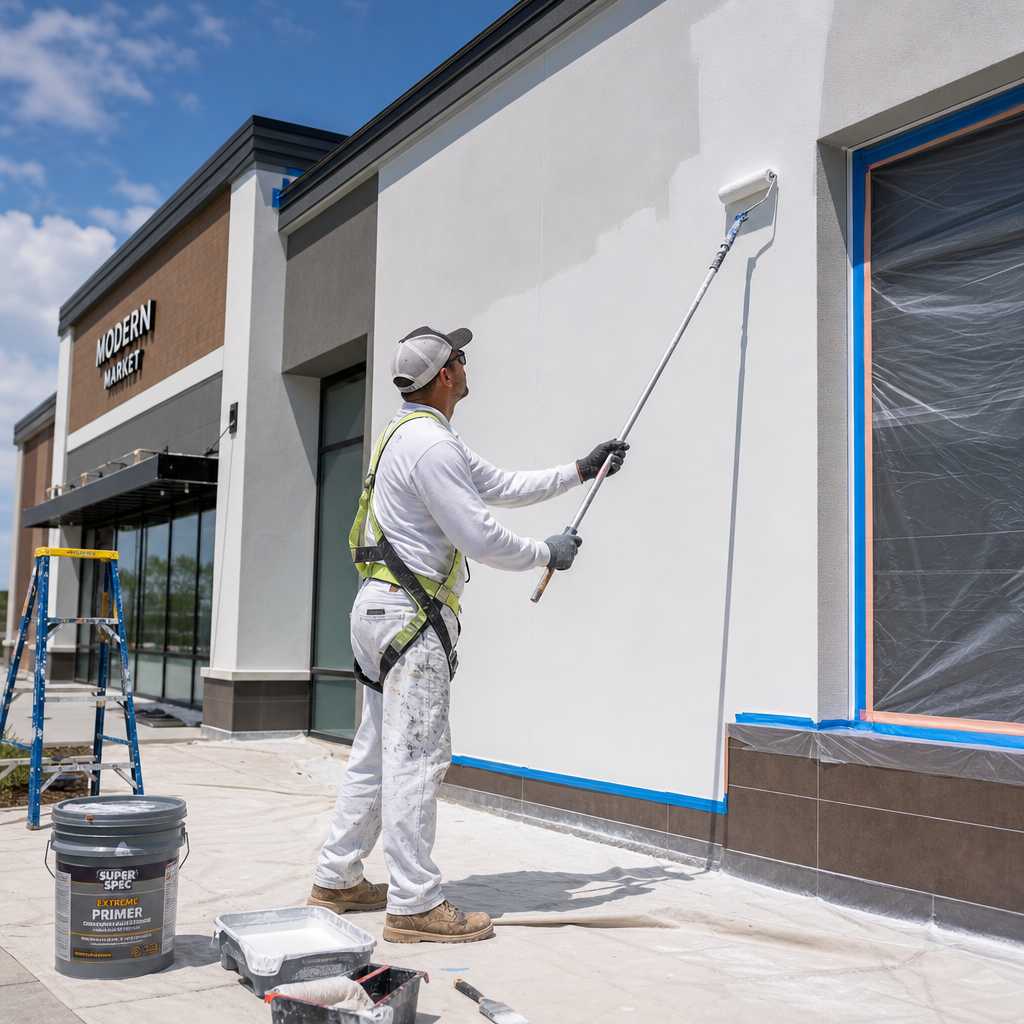
Most business owners underestimate what a professional paint job actually costs them when it goes wrong. Peeling exterior paint on a retail storefront in Langley or a dingy lobby in Abbotsford sends a message before a single word is spoken. Commercial painting in the Lower Mainland is not the same as slapping a coat of latex on a bedroom wall. It involves surface preparation, the right product for the right substrate, scheduling around business hours, and compliance with strata or municipal requirements. This guide breaks down everything a business owner in the Fraser Valley and Greater Vancouver area needs to know before signing a contract.
Table of Contents
- Quick Takeaways
- What Commercial Painting Actually Includes
- Why the Lower Mainland Climate Matters
- How to Evaluate Commercial Painters in Vancouver and Fraser Valley
- Comparison of Commercial Painting Approaches
- Scheduling and Minimizing Business Disruption
- Cost Factors for Business Painting Services in the Fraser Valley
- Cabinet and Fine Finish Work in Commercial Settings
- Frequently Asked Questions
- References
Quick Takeaways
| Key Insight | Explanation |
|---|---|
| Climate dictates product selection | The Lower Mainland’s wet winters and UV-heavy summers demand exterior coatings with high moisture resistance and flexibility ratings. Not every product sold at a hardware store qualifies. |
| Surface prep is 70% of the job | In practice, most paint failures on commercial properties in the Fraser Valley trace back to inadequate surface preparation, not the paint brand itself. |
| Licensing and insurance are non-negotiable | A commercial painter in BC must carry WorkSafeBC coverage and general liability insurance. Verify both before work begins, not after an incident. |
| Scheduling protects your revenue | A qualified commercial painting company will work after-hours, in phases, or on weekends to avoid disrupting customer-facing operations in retail or hospitality settings. |
| Lowest bid rarely means best value | Business owners in Abbotsford and Surrey who choose the cheapest quote often repaint within three years. A properly applied commercial coating should last seven to ten years on interiors. |
| Colour and sheen affect brand perception | Flat paint in a high-traffic corridor shows scuffs immediately. Choosing the wrong sheen level for a commercial space is a common mistake that compounds maintenance costs. |
| Experience with commercial substrates matters | Concrete block, aluminum storefront framing, and T-bar ceiling systems each require different primers and application methods that residential painters typically have not encountered. |
What Commercial Painting Actually Includes
Commercial painting is a different discipline from residential work, and treating it like an upsized house project is where many painting companies fall short. A commercial painting project in the Lower Mainland typically covers office buildings, retail units, warehouses, strata common areas, restaurants, medical clinics, and multi-unit residential lobbies. Each of these environments has specific requirements around VOC levels, dry times, access control, and surface types.
In practice, the scope of work on a commercial job almost always includes more than just applying paint. Surface cleaning, caulking gaps, repairing damaged drywall or stucco, priming bare or repaired areas, and masking fixtures are all part of a professional commercial paint project. A company that skips any of these steps is cutting corners that will show up within twelve to eighteen months.
Dreamscape Painting Ltd. has been completing commercial projects across the Lower Mainland since 1990. That experience means the estimating team knows the difference between a quick refresher coat and a full system application, and they will tell you honestly which one your property needs rather than defaulting to the more expensive option to pad the invoice.


“>
Why the Lower Mainland Climate Matters
The Greater Vancouver and Fraser Valley region receives an average of 1,150 to 1,500 millimetres of precipitation annually, according to Environment and Climate Change Canada. That moisture load is punishing on exterior coatings that were not selected or applied with the local climate in mind. Expansion and contraction cycles from winter rain to summer heat cause paint to crack and peel on surfaces that were not primed correctly or where caulking was skipped.
Exterior coatings for commercial buildings in the Lower Mainland need to be vapour-permeable enough to let trapped moisture escape without blistering. Products that work fine in drier climates like the BC Interior often fail on the coast within two to three years. A commercial painter who works exclusively in this region will know which product lines perform here, rather than specifying whatever the local supplier is promoting.
“Moisture management is the single most important factor in exterior paint longevity in coastal British Columbia. No amount of topcoat quality compensates for a product that traps water vapour behind the film.” — BC Housing, Research and Technology
Interior commercial spaces also face humidity challenges. Kitchens, bathrooms, and server rooms in commercial buildings require moisture-resistant formulations with mould-inhibiting additives. Specifying a standard interior flat finish in a commercial kitchen is a mistake that generates a call-back within a year.
Pro tip: Ask your commercial painting contractor to specify the exact product line and sheen level for each surface in writing before work begins. If they cannot provide this detail, that is a red flag about their planning process.
How to Evaluate Commercial Painters in Vancouver and Fraser Valley
Not every company advertising commercial painters in Vancouver or the Fraser Valley has meaningful experience with true commercial projects. There is a meaningful difference between a residential painter who occasionally does a small office and a team that manages multi-phase commercial projects with active tenants, project managers, and strata councils involved.
What to Ask Before You Hire
Ask for a list of completed commercial projects in the last two years, with property types and approximate square footage. Ask specifically whether they have experience with your type of property, whether that is a retail strip mall in Langley, a warehouse in Abbotsford, or a medical office in Surrey. Vague answers or references that only include residential work are telling.
Verify WorkSafeBC registration independently at the WorkSafeBC employer registry. Verify their general liability insurance certificate directly, not by accepting a verbal confirmation. A company without both is a financial liability risk to your business, not just an inconvenience.
What References Should Actually Tell You
When you contact a reference, ask three specific questions: Did the crew show up when scheduled? Was the site left clean at the end of each work day? Did the final result match the written estimate? These three questions expose more about a contractor than any amount of marketing material. A common mistake is accepting a glowing but vague reference without probing for specifics.
Dreamscape Painting Ltd. has built its commercial client base almost entirely on referrals and repeat business over 35 years of operation. That kind of longevity in a competitive market does not happen without consistently delivering on those three reference questions.
Comparison of Commercial Painting Approaches
Business owners in the Fraser Valley and Lower Mainland are often comparing multiple bids with very different approaches. The table below breaks down the most common scenarios to help you understand what you are actually comparing.
| Approach | Best Suited For | Key Risks or Limitations |
|---|---|---|
| Full system application (primer plus two finish coats) | New construction, repaints where existing coating is failing, high-traffic commercial interiors, all exterior commercial work in the Lower Mainland | Higher upfront cost, longer project timeline. Not appropriate to cut this process short to save money. |
| Single recoat over existing sound paint | Refreshing colour on a well-maintained interior in good condition, low-traffic areas, tenant improvement touchups | Only appropriate when existing coating is verified as clean, sound, and compatible with the new product. A common mistake is skipping adhesion testing. |
| Spray application with backrolling | Large open commercial spaces, warehouses, strata parkades, exterior stucco, new drywall | Requires thorough masking of all surfaces not being painted. Not suitable for occupied spaces without proper containment. Requires experienced operators to avoid texture inconsistency. |
Pro tip: If a contractor does not mention backrolling after spray application on a new commercial drywall project, ask about it directly. Spraying without backrolling leaves a film that looks good immediately but does not bond as well, which shortens coating life significantly.
Scheduling and Minimizing Business Disruption
This is the area where many business owners in the Lower Mainland have been burned before. A painting crew that arrives during peak business hours, leaves equipment in customer walkways, or fails to contain dust and odour is a direct problem for your operations and your customer experience.
A qualified commercial painting company structures its schedule around your business, not the other way around. For retail operations in Surrey or Langley, that typically means evening or weekend work. For office buildings in Abbotsford, it often means phased work by floor or zone so that tenants are never fully displaced. For food service businesses, it means using low-VOC or zero-VOC products to meet health code requirements and avoid odour complaints.

“>
Dreamscape Painting’s approach to commercial scheduling includes a pre-project walkthrough with the business owner or property manager to map out exactly which areas are done in which order, what the daily start and stop times are, and how the crew will handle access to secure areas. That level of planning is what separates a professional commercial painting company from a residential crew that occasionally takes on commercial work.
Cost Factors for Business Painting Services in the Fraser Valley
Commercial painting costs in the Lower Mainland vary significantly based on factors that have nothing to do with the square footage of walls. Understanding these factors protects you from both overpriced bids and bids that are suspiciously low.
Surface Condition and Preparation Complexity
A commercial space with water-stained ceilings, peeling paint on concrete block, or years of accumulated grime on trim requires substantially more prep time than a clean, well-maintained space. The data consistently shows that surface prep is the largest single variable in the cost difference between bids on the same property. A low bid that does not address prep is not saving you money. It is deferring a failure.
Access Requirements
Painting high ceilings in a warehouse near Abbotsford requires scissor lifts or boom lifts, which are rental costs that appear in a professional quote but are often omitted from a low bid. Exterior work on a multi-storey commercial building may require swing stage equipment or scaffolding. These are not optional items. They are safety and access requirements that must be budgeted.
Paint Product Specification
A commercial-grade washable interior finish from a manufacturer like Sherwin-Williams or Benjamin Moore costs more per litre than a builder-grade product. The difference in a 3,000 square foot commercial space can be several hundred dollars in materials alone. That cost difference pays back in durability, cleanability, and appearance retention over a seven to ten year lifespan.
Cabinet and Fine Finish Work in Commercial Settings
Not all business painting services in the Fraser Valley include cabinet refinishing or fine finish carpentry painting. These are specialty skills that require a different level of preparation, product selection, and application technique than standard commercial wall painting. For retail environments, restaurant fit-outs, and professional office spaces in the Lower Mainland, the quality of millwork and cabinetry finish is often more visible and more scrutinized than the walls.
Cabinet refinishing in a commercial setting, whether it is a reception desk, built-in shelving, or kitchen cabinetry in a break room, requires proper deglossing, filling, priming, and finish application in controlled conditions. Brush marks, runs, or uneven sheen in a fine finish application are immediately obvious and reflect directly on your brand environment.
Dreamscape Painting Ltd. offers cabinet refinishing as a dedicated service, applying the same level of preparation and finish quality to commercial millwork that they bring to residential kitchen cabinet projects. This is not a service every commercial painting company in the Lower Mainland offers at a fine-finish standard.
Frequently Asked Questions
How long does a typical commercial painting project take in the Lower Mainland?
The timeline depends on the size of the space, the complexity of surface preparation, and scheduling constraints. A 2,000 square foot retail interior with no major prep issues typically takes three to five working days. A full exterior repaint of a commercial building in the Fraser Valley, including caulking and pressure washing, often runs one to two weeks depending on weather windows. Any company that quotes a firm timeline without first doing a detailed site assessment is guessing.
Do I need to close my business during commercial painting?
Not necessarily, but it depends on the space and the scope of work. Phased scheduling, after-hours work, and the use of low-VOC products make it possible to paint many commercial interiors while business continues. The right commercial painting company will plan the project in phases that keep at least part of your space operational. Dreamscape Painting has completed painting projects in occupied retail and office spaces across Surrey, Langley, and Abbotsford without requiring full closures.
What is the difference between commercial and residential painting beyond the scale?
Commercial painting involves different substrates like concrete block, metal framing, and high-density drywall, different product requirements including low-VOC and scrubbable finishes, different access equipment, and accountability structures involving property managers, strata councils, or lease agreements. Residential painters occasionally handle commercial work, but the experience gap shows in scheduling discipline, site cleanliness, and product specification knowledge.
How do I compare commercial painting quotes accurately?
Compare quotes line by line on the same scope. Confirm each quote specifies the same prep steps, the same number of coats, the same product lines, and includes the same access equipment if needed. A quote that is 30% lower almost always reflects a difference in one of these areas, not superior efficiency. Ask each bidder to clarify what is and is not included before making a decision.
Is exterior commercial painting in the Lower Mainland best done in summer?
Summer is preferred because dry conditions allow for better adhesion and faster cure times, but it is not the only viable window. Experienced commercial painters in Vancouver and the Fraser Valley know how to work in the shoulder seasons using appropriate products rated for application at lower temperatures. The bigger constraint is avoiding painting in rain or when surfaces are wet, which rules out many winter days but not all. Spring and early fall are often workable with proper scheduling.
Does Dreamscape Painting serve the entire Lower Mainland for commercial projects?
Yes. Dreamscape Painting Ltd. serves the full Lower Mainland and Fraser Valley for commercial painting projects, including Abbotsford, Langley, Surrey, Chilliwack, and the Greater Vancouver area. They have been operating across these markets since 1990, which gives their estimating team direct knowledge of local climate conditions, building types, and municipal requirements that affect commercial painting specifications.
Have you recently completed a commercial painting project in the Lower Mainland, or are you currently evaluating contractors? Share your experience or questions below so others in the Fraser Valley business community can benefit from what you have learned.
References
- WorkSafeBC employer registration and insurance verification for BC contractors
- National Research Council Canada guidance on building envelope performance and moisture management
- Forbes analysis of commercial property maintenance costs and return on investment for facility upgrades
- Statista data on the painting and decorating contractor industry size and market trends in Canada
- Natural Resources Canada resources on building material performance in coastal and high-precipitation climates

