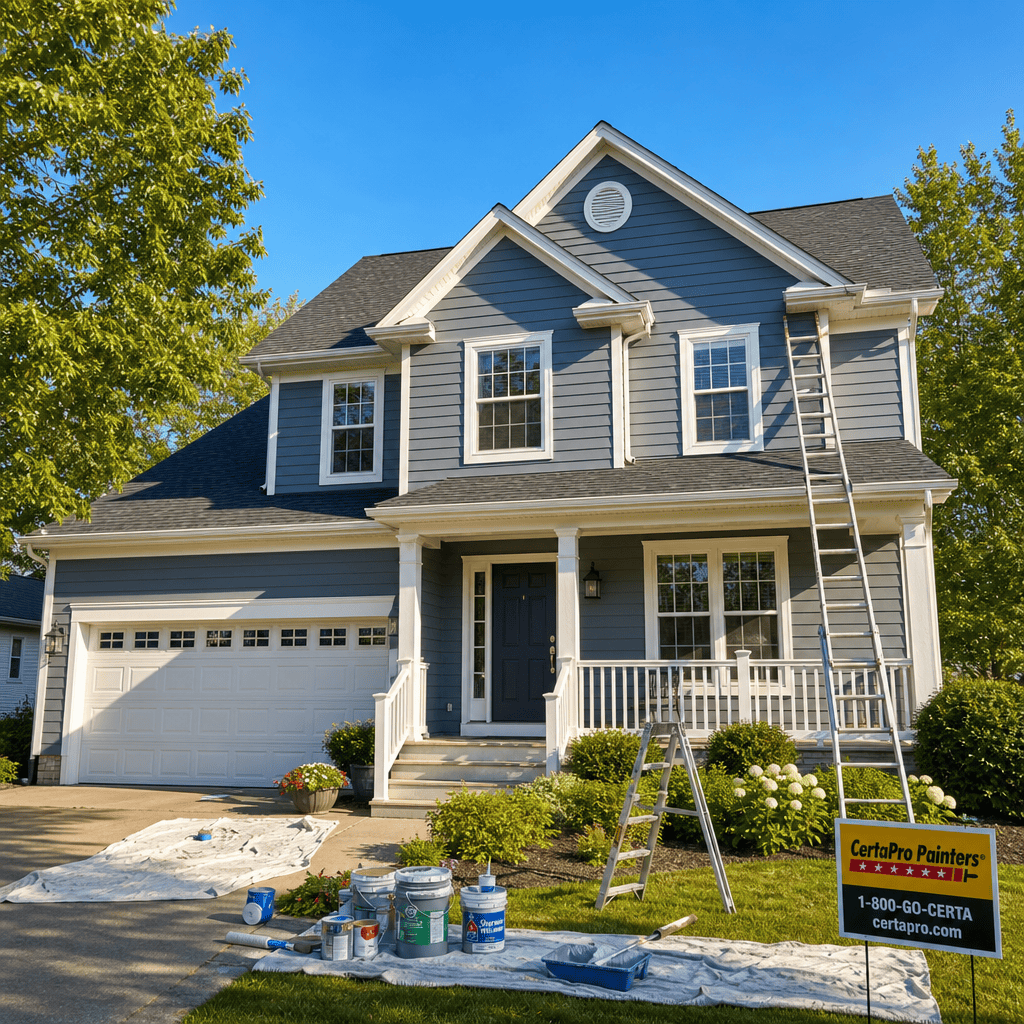
Most homeowners in the Lower Mainland think about exterior painting when they notice peeling, fading, or water stains, and then they wonder why the job never quite holds up. The answer is almost always timing. Exterior painting Lower Mainland projects succeed or fail based on temperature, humidity, and surface conditions, and no season delivers those variables more consistently than summer. After 35 years of painting homes across Abbotsford, Langley, Surrey, and the broader Fraser Valley, the team at Dreamscape Painting Ltd. has seen exactly what happens when paint is applied in the wrong conditions, and exactly what happens when it is applied in the right ones.
Table of Contents
- Quick Takeaways
- Why Weather Drives Everything in Exterior Painting
- What Summer Conditions Actually Look Like in the Lower Mainland
- Paint Adhesion and Curing: Why Temperature and Humidity Matter More Than the Paint Brand
- The Best Time to Paint a House Exterior: Season-by-Season Breakdown
- Summer Painting in Vancouver and the Fraser Valley: How to Schedule Your Project
- What to Look for in an Exterior Painting Contractor During Peak Season
- Frequently Asked Questions
- References
Quick Takeaways
| Key Insight | Explanation |
|---|---|
| Summer offers the widest dry-weather window in the Lower Mainland | July and August average fewer than 10 rain days per month in the Fraser Valley, giving contractors consistent working conditions that are nearly impossible to replicate in spring or fall. |
| Most exterior paints require a minimum of 10°C to cure properly | Summer daytime temperatures in Abbotsford and Langley regularly sit between 22°C and 30°C, well inside the optimal curing window for latex and acrylic formulations. |
| Low humidity prevents lap marks and blistering | The Lower Mainland’s summer months bring relative humidity well below the 85% threshold that causes paint to blister. Fall and spring regularly exceed that threshold. |
| Wood substrates expand and contract less in summer heat | Stable temperatures reduce micro-movement in wood siding, which means paint bonds more uniformly and is less likely to crack within the first two years. |
| Summer bookings at reputable contractors fill fast | Companies like Dreamscape Painting Ltd. start receiving summer project inquiries as early as March. Waiting until June or July often means scheduling delays of four to six weeks. |
| Surface preparation is more effective on dry, warm surfaces | Sanding, caulking, and priming all perform better when surfaces are dry and warm. Cold or damp surfaces compromise the mechanical adhesion of primer, which shortens paint life regardless of product quality. |
| Longer daylight hours increase project efficiency | With up to 16 hours of daylight in June and July, professional crews can complete more work per day, reducing the number of days your home is partially painted and exposed to weather shifts. |
Why Weather Drives Everything in Exterior Painting
Paint is a coating that bonds to a surface through a chemical process. That process is not forgiving of bad conditions. When moisture is present on the substrate, when temperatures drop below 10°C, or when relative humidity climbs above 85%, the paint film does not cure uniformly. The result is adhesion failure, and adhesion failure shows up as peeling within 12 to 24 months, sometimes sooner.
In practice, this means the region’s famous rainfall is not just inconvenient. It is a direct threat to paint longevity. The Lower Mainland receives an average of 1,150 to 1,600 millimetres of precipitation annually depending on the subregion, with the bulk of that rain falling between October and April. Scheduling an exterior painting project during those months is the single most common mistake homeowners make, and it is also the most expensive mistake because the work often has to be redone.
Pro tip: Before any exterior painting project begins, ask your contractor to confirm that surface moisture readings are below 15% using a pin-type moisture meter. This is a standard professional check at Dreamscape Painting Ltd. and it should be non-negotiable regardless of which contractor you hire.
What Summer Conditions Actually Look Like in the Lower Mainland
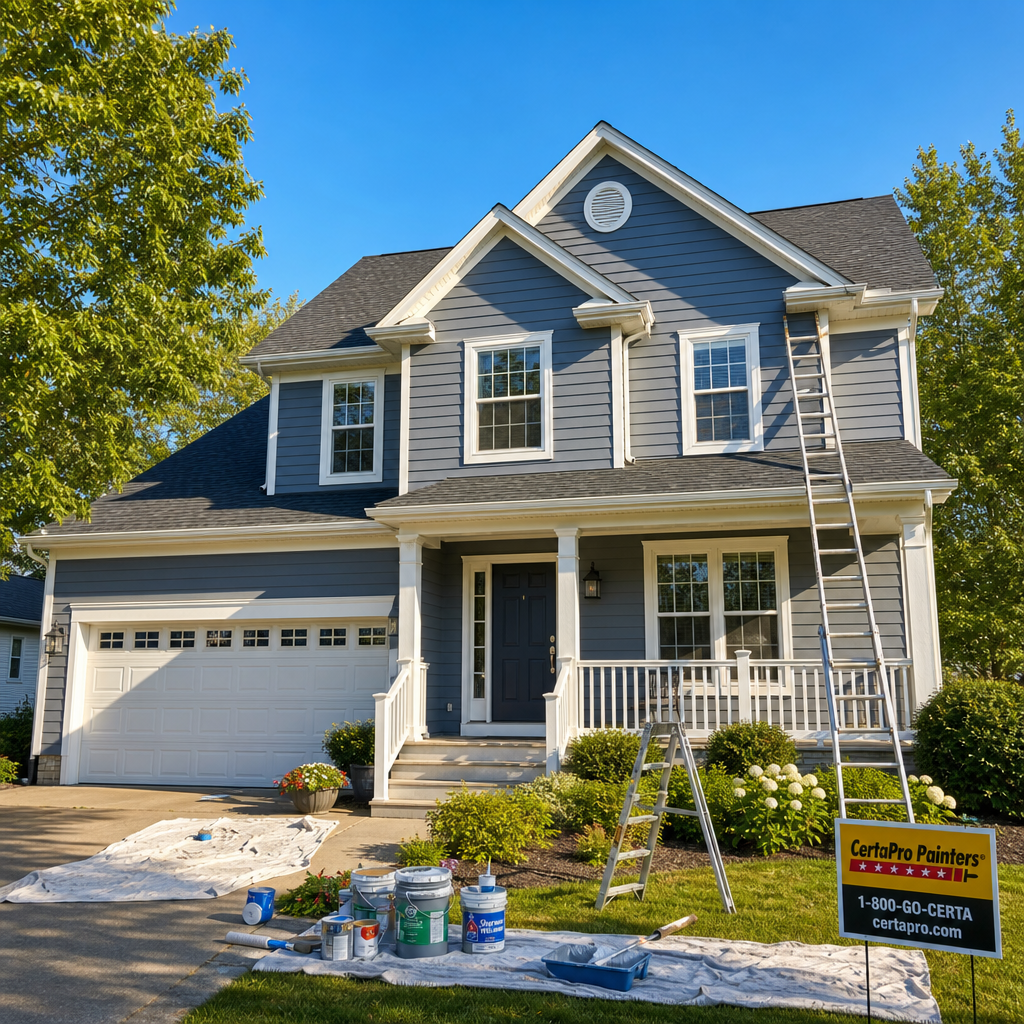
There is a misconception that the Lower Mainland has unpredictable weather year-round. In winter and fall, that is accurate. In summer, the Fraser Valley and Greater Vancouver area actually settles into a remarkably stable weather pattern driven by a persistent high-pressure ridge over the Pacific. From late June through early September, dry days dominate.
Temperature Ranges That Support Exterior Paint Application
Abbotsford and Langley average daytime highs between 25°C and 31°C in July and August. Surrey sits slightly cooler but still comfortably above the 10°C minimum that most paint manufacturers specify for application. The key is that nighttime temperatures rarely drop below 12°C during peak summer, which means the curing process continues through the evening rather than stalling.
Paint manufacturers including Benjamin Moore and Sherwin-Williams specify application temperatures between 10°C and 32°C for their exterior latex products. Summer in the Lower Mainland hits that range almost every day for roughly ten weeks. That is a substantial, reliable working window that no other season offers.
Humidity Levels That Protect the Paint Film
Relative humidity in the Fraser Valley drops to between 40% and 65% during summer afternoons, the hours when most paint application happens. Compare that to October through March, when afternoon humidity regularly sits above 80% and morning dew leaves surfaces wet until 10 or 11 a.m. Painting into a humid surface traps moisture beneath the paint film, and that trapped moisture eventually forces the film off the substrate.
The data consistently shows that paint failures reported by homeowners in the Lower Mainland cluster heavily around projects completed in October, November, and March. This is not a product quality issue. It is a timing issue.
Paint Adhesion and Curing: Why Temperature and Humidity Matter More Than the Paint Brand
Homeowners often ask whether a premium paint product will compensate for poor application conditions. The honest answer is no. A $90-per-gallon exterior acrylic applied in 6°C weather with 90% humidity will underperform a $55-per-gallon product applied correctly in summer. The chemistry is unambiguous on this point.
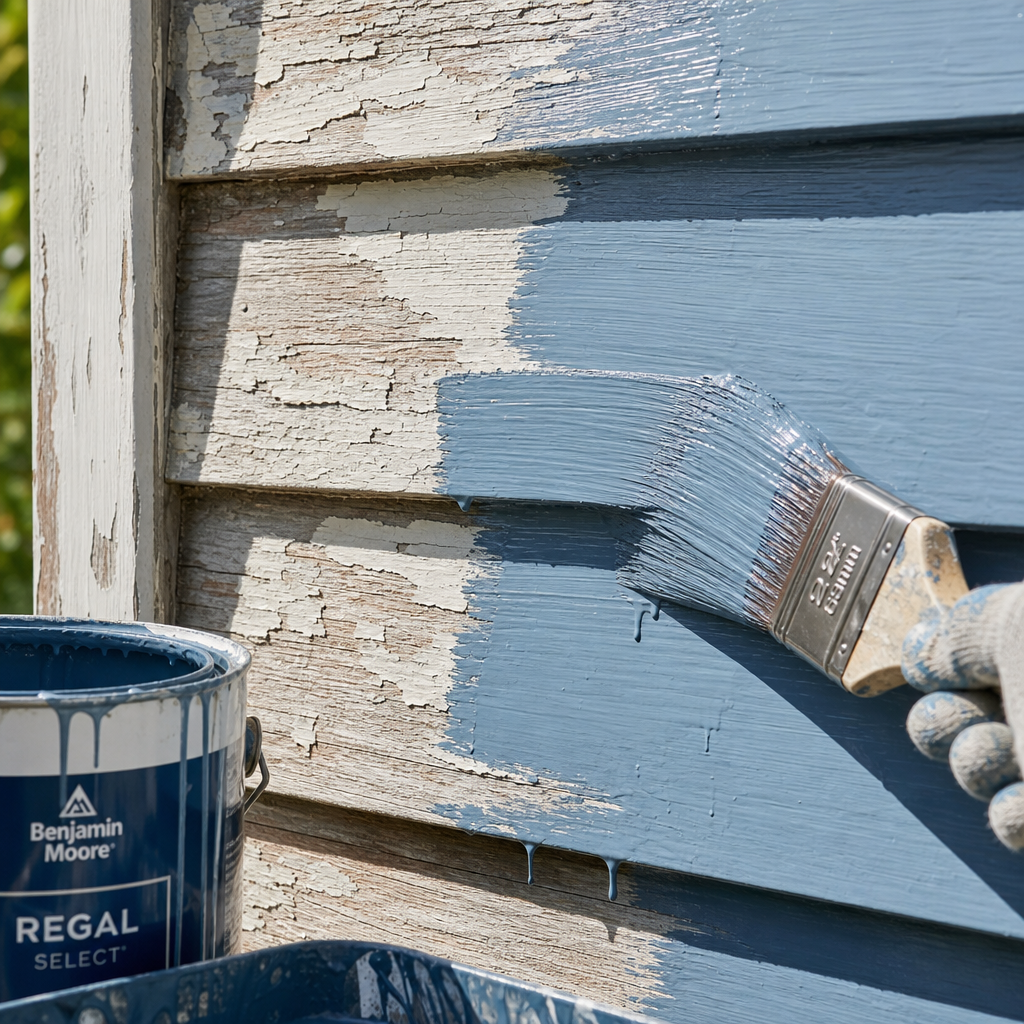
Latex and acrylic exterior paints cure through a process called coalescence. As the water carrier evaporates, polymer particles fuse together to form a continuous film. When temperatures are too low or humidity is too high, that evaporation slows or stalls. The film never fully coalesces, leaving it soft, porous, and vulnerable to dirt pickup, moisture intrusion, and early peeling.
“Paint application in conditions below recommended temperature and humidity thresholds is one of the leading causes of premature coating failure, regardless of product quality. Proper environmental conditions are not optional, they are part of the application specification.” – Paint Quality Institute, Technical Advisory
Summer in the Lower Mainland eliminates most of these risks. Warm, dry afternoons allow water to evaporate quickly and consistently. The polymer chains have time to bond fully before the next temperature cycle, which is what produces a paint job that lasts eight to twelve years rather than three to five.
Pro tip: Direct summer sun on a surface can actually push temperatures above 35°C on south and west-facing walls. A skilled exterior painting crew will follow the shade around the house during a summer project, applying paint to each wall face after direct sun has moved off it. This is standard practice at Dreamscape Painting Ltd. and it prevents flash drying, which is just as damaging as slow drying.
The Best Time to Paint a House Exterior: Season-by-Season Breakdown
Understanding the best time to paint a house exterior in the Lower Mainland requires an honest look at each season, not a generic national recommendation. The Lower Mainland’s climate is distinct. Vancouver and the Fraser Valley do not behave like Calgary or Toronto, and advice calibrated for those climates will mislead homeowners here.
Season-by-Season Comparison for Exterior Painting in the Lower Mainland
| Season | Typical Conditions | Suitability for Exterior Painting |
|---|---|---|
| Summer (June to September) | Temperatures 22°C to 30°C, humidity 40-65%, fewer than 10 rain days per month in July and August | Optimal. Consistent curing conditions, long daylight hours, low moisture risk. Strongly recommended. |
| Spring (March to May) | Temperatures 8°C to 17°C, humidity 70-85%, frequent rain events, morning dew common | Marginal. A few dry windows exist in May, but early spring is consistently too wet and too cold. High risk of adhesion failure. |
| Fall (October to November) | Temperatures 8°C to 14°C, humidity 75-90%, increasing rain frequency | Not recommended. Temperatures approach and drop below the 10°C application minimum. Humidity regularly exceeds safe thresholds. |
| Winter (December to February) | Temperatures 2°C to 8°C, high humidity, frequent rain and frost | Unsuitable. Frost formation on surfaces, temperatures below minimum application spec. Any paint applied will fail prematurely. |
Late May and early October can occasionally work if a contractor monitors conditions daily and the project is small. For full house exterior painting, summer is the only season that offers the reliability needed to protect your investment. A paint job is not cheap, and cutting corners on timing to save a few weeks of waiting costs far more in the long run.
Summer Painting in Vancouver and the Fraser Valley: How to Schedule Your Project
Summer painting Vancouver and Fraser Valley projects follow a predictable booking pattern. The best contractors, the ones with experienced estimators and skilled crews who take surface preparation seriously, begin filling their summer calendars in March and April. By late May, prime July and August slots are often fully committed.
When to Request Your Estimate
The most effective approach is to request your exterior painting estimate between February and April. This gives you time to review the scope of work, understand what surface preparation is included, compare proposals, and secure a booking before the summer rush. Waiting until June is the second most common mistake homeowners make, behind only choosing to paint in the wrong season.
At Dreamscape Painting Ltd., estimates are provided by experienced estimators who assess the condition of your siding, trim, fascia, and any areas requiring wood repair or caulking before paint is applied. That level of assessment takes time to schedule properly, which is another reason early booking matters.
How Long a Full Exterior Project Takes
A typical two-storey home in Langley or Abbotsford requires three to five days for a full exterior repaint, assuming good surface condition. Homes with significant wood repair, multiple colors, or complex architectural details may take seven to ten days. Summer scheduling allows crews to work full days without weather interruptions, which keeps projects on timeline and reduces the disruption to your household.
A common mistake is assuming that a one-day exterior painting offer delivers the same quality as a properly staged multi-day project. Surface preparation, priming, and multiple coats cannot be compressed into eight hours without serious quality compromises. The durability of any paint job is determined almost entirely by what happens before the topcoat goes on.
What to Look for in an Exterior Painting Contractor During Peak Season
Summer demand means that every painting company in the Lower Mainland is busy. That is not a reason to lower your standards. It is a reason to know exactly what questions to ask before you commit to anyone.
Surface Preparation Standards
Ask specifically what surface preparation is included in the quote. A professional exterior painting project should include power washing, full dry time, sanding of peeling areas, spot priming of bare wood, caulking of all joints and gaps, and masking of windows, doors, and trim before any topcoat is applied. If a contractor cannot clearly articulate these steps, the quality of the finished work will reflect that gap.
Dreamscape Painting Ltd. has operated with a preparation-first philosophy since 1990. In practice, this means that a significant portion of every exterior project’s labor hours go into preparation rather than paint application. That ratio is what separates a paint job that lasts a decade from one that starts failing in year three.
Cleanliness and Site Management
A professional painting crew protects your landscaping, cleans up daily, and leaves your property in better condition than they found it. This is not a luxury expectation. It is a baseline standard. Ask any contractor how they protect plants and hardscaping during the project, and pay attention to how specifically they answer.
The cleanest job sites tend to reflect the most disciplined crews. Attention to site cleanliness and attention to paint quality are not separate values. They come from the same professional standard.
Frequently Asked Questions
Can exterior painting be done in the Lower Mainland outside of summer?
It can be attempted in May or early October under the right conditions, but these windows are narrow and unreliable. Temperatures must stay above 10°C for at least 48 hours after application, and surfaces must be fully dry before paint goes on. In practice, the Lower Mainland’s shoulder seasons rarely provide enough consecutive suitable days to complete a full house exterior safely. For anything larger than a small accent project, summer is the dependable choice.
How far in advance should I book an exterior painting project?
For a summer project in the Fraser Valley or Greater Vancouver area, booking two to four months in advance is strongly recommended. Quality contractors with experienced crews start filling July and August slots as early as March. Contacting Dreamscape Painting Ltd. in the February to April window gives you the best chance of securing your preferred dates.
Does the type of paint matter for summer exterior projects in the Lower Mainland?
Yes, but not in the way most homeowners assume. The chemistry of the product matters less than the match between the product’s application specifications and the actual conditions on your project day. Premium exterior acrylic latex formulations are the standard for wood and fiber cement siding in this region because they flex with temperature changes and resist moisture well. Your contractor should be able to justify their product selection with specific technical reasons, not just a brand name.
What surfaces can be painted on the exterior of a home?
Wood siding, fiber cement siding, stucco, trim, fascia, soffits, garage doors, and wood fences are all common exterior painting surfaces. Each requires specific preparation and in some cases specific primer products. Stucco, for example, requires a masonry-compatible primer and benefits greatly from summer’s low humidity to cure properly. A professional estimator will identify the specific needs of each surface during the quoting process.
Why do some exterior paint jobs peel within a few years?
Premature peeling almost always comes down to one of three causes: application in conditions outside the paint manufacturer’s temperature and humidity specifications, insufficient surface preparation including skipped priming of bare wood, or moisture intrusion through failed caulking after the job is complete. Summer application eliminates the first cause entirely. Choosing a contractor who prioritizes surface preparation and caulking addresses the other two. Cutting costs on any of these elements produces visible failure within two to four years.
How long does a quality exterior paint job last in the Lower Mainland’s climate?
A professionally applied exterior paint job on a well-prepared surface, completed during summer conditions, should last eight to twelve years in the Lower Mainland’s climate. The Fraser Valley’s wet winters accelerate weathering compared to drier inland climates, so the quality of surface preparation and the application conditions matter more here than in most Canadian regions. Homes painted in poor conditions or with skipped preparation steps often require repainting within three to five years.
If you have recently completed an exterior painting project or are planning one this summer, share what questions came up during your planning process. Your experience might help a neighbour make a better decision.
We would love your feedback and any insights you would share with others. What perspective would you add?
References
- Environment and Climate Change Canada, climate normals and precipitation data for the Lower Mainland and Fraser Valley
- Forbes, home improvement cost and contractor selection guidance for property owners
- Statista, residential renovation and painting industry market data for Canada
- National Research Council Canada, building envelope and exterior coating performance research
- Canada Mortgage and Housing Corporation, home maintenance guidance including exterior painting best practices for Canadian climates