
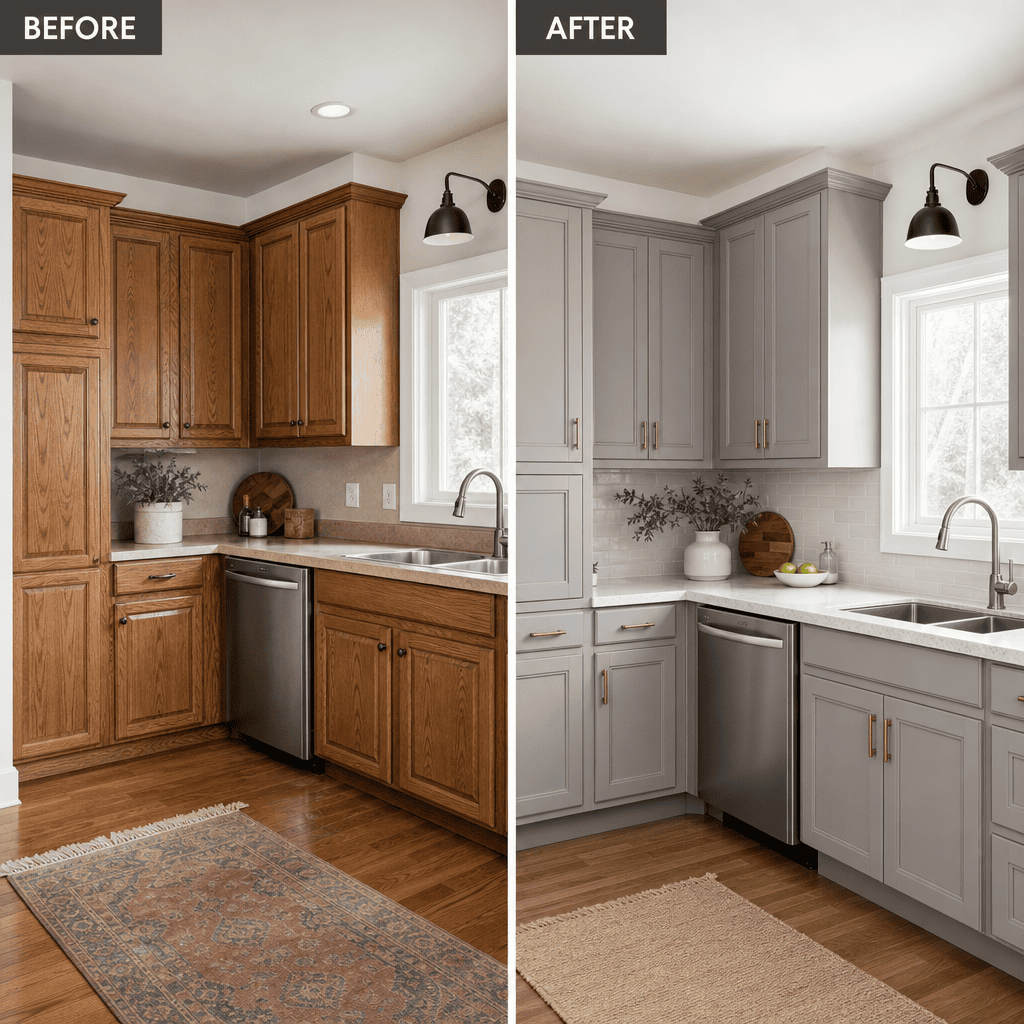
Your kitchen cabinets are showing their age, and you are staring down a decision that could cost you anywhere from $1,500 to $50,000 depending on which path you choose. Most homeowners in the Fraser Valley and Lower Mainland assume replacement is the premium option and refinishing is the budget shortcut. That assumption is wrong, and it costs people real money. At Dreamscape Painting Ltd., we have been walking homeowners through this exact decision for over 35 years, and the answer depends on factors most contractors will never take the time to explain to you.
Table of Contents
- Quick Takeaways
- What Cabinet Refinishing Actually Means
- What Cabinet Replacement Actually Involves
- Cost Comparison: Refinishing vs. Replacement
- When Refinishing Is Clearly the Right Call
- When Replacement Is Genuinely Worth It
- The Structural Condition Test
- Side-by-Side Comparison
- Frequently Asked Questions
- References
Quick Takeaways
| Key Insight | Explanation |
|---|---|
| Refinishing saves 60-80% over full replacement | A professional kitchen cabinet refinishing project in the Vancouver and Fraser Valley area typically runs $1,500 to $6,000. Full cabinet replacement routinely exceeds $15,000 to $50,000 for the same kitchen. |
| Cabinet box integrity is the deciding factor | If the cabinet boxes are structurally sound with no water damage, warping, or mould, refinishing will deliver a result that looks and performs like new construction. |
| Kitchen cabinet painting is not the same as DIY painting | Professional kitchen cabinet painting involves degreasing, sanding, priming, and applying specialty coatings designed for high-use surfaces. A brush-and-roll DIY job will fail within 12 months. |
| Replacement is only necessary in specific conditions | Structural damage, layout changes, or severely outdated cabinet sizing are the only scenarios where replacement is objectively the better investment. |
| Refinishing adds resale value without over-improving | According to Remodeling Magazine’s Cost vs. Value data, minor kitchen remodels consistently deliver higher ROI than major gut renovations, and cabinet refinishing falls squarely in the minor remodel category. |
| Turnaround time is dramatically different | Professional cabinet refinishing in a standard Lower Mainland kitchen takes 3 to 5 days. Full cabinet replacement, including ordering, delivery, demolition, and installation, typically takes 4 to 8 weeks. |
| Cabinet refinishing in the Fraser Valley has unique considerations | Humidity levels in Abbotsford, Langley, and Surrey affect paint adhesion and dry times. Experienced local painters account for this in their product selection and application schedule. |
What Cabinet Refinishing Actually Means
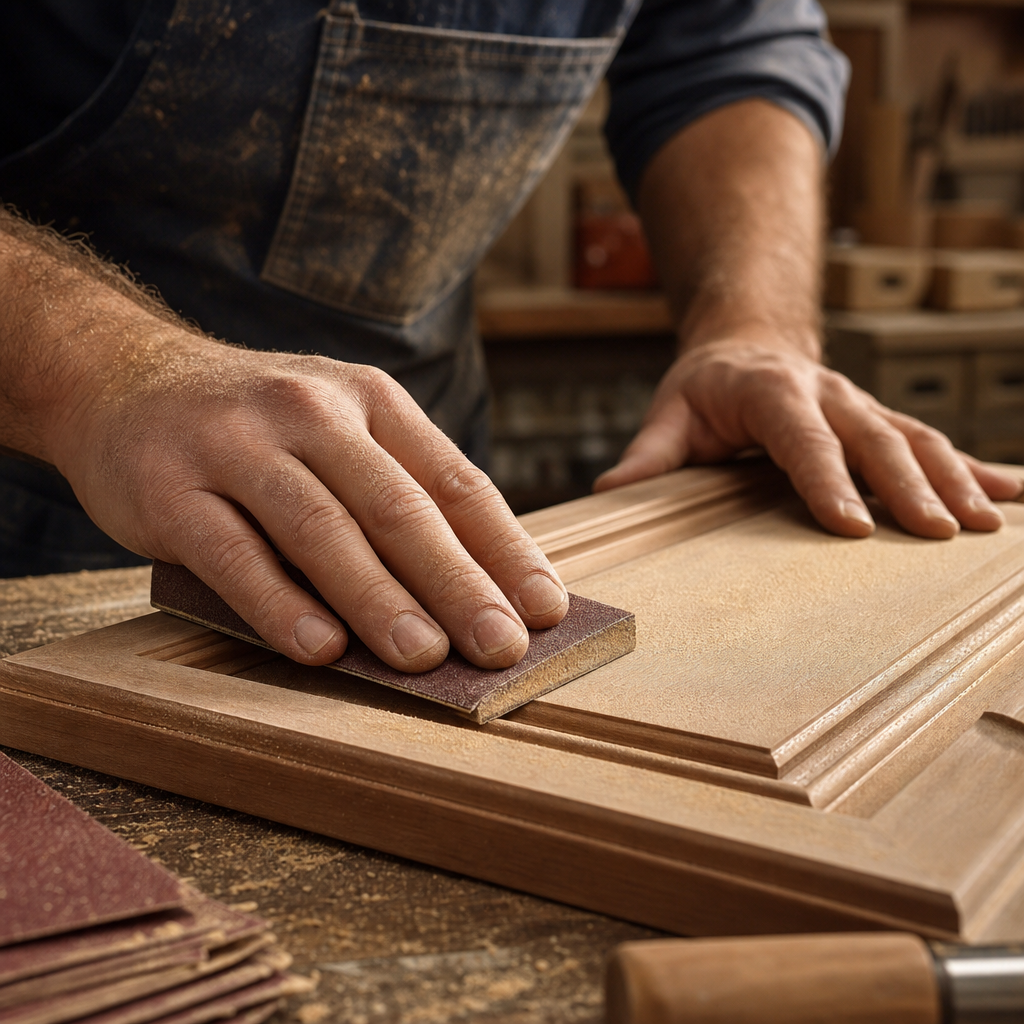
Cabinet refinishing is a process that strips or sands the existing finish from your cabinet doors, drawer fronts, and frames, then applies a fresh coat of primer and topcoat. Done correctly, it produces a factory-smooth finish that is indistinguishable from newly manufactured cabinetry. Done poorly, it looks like someone painted their kitchen with a foam roller on a Saturday afternoon, and those results are unfortunately common.
In practice, professional cabinet refinishing in Vancouver and the surrounding Lower Mainland involves several non-negotiable steps: thorough degreasing with a TSP substitute or dedicated cabinet cleaner, mechanical sanding to ensure adhesion, a shellac or specialty bonding primer, and two topcoats of waterborne alkyd or catalyzed lacquer. Each coat requires proper flash and cure time. Skipping any step is what separates a finish that lasts 10 years from one that peels by spring.
The cabinet doors are typically removed, labeled, and finished flat in a controlled environment to eliminate sags and runs. Hardware is replaced at this stage if needed. The cabinet frames, which remain installed, are masked and finished in place using airless spray equipment for a consistent sheen across the entire kitchen.
What Refinishing Cannot Fix
Refinishing is a surface treatment. It cannot correct a cabinet door that is warped beyond 3mm of deflection. It cannot fix a cabinet box that has swollen from water infiltration under the sink. It cannot reposition a cabinet that is too shallow for a modern refrigerator. Understanding these limits is what allows you to make a genuinely informed decision instead of a hopeful one.
Pro tip: Before any refinishing quote, open every cabinet under your sink and inspect the interior floor for soft spots, discolouration, or swelling. Water damage here is the number one reason a refinishing project should be paused until plumbing is addressed first.
What Cabinet Replacement Actually Involves
Full cabinet replacement means demolishing your existing cabinetry down to the studs, then purchasing, delivering, and installing entirely new cabinet boxes, doors, and hardware. It also almost always triggers secondary costs that contractors either forget to mention or assume you already know about.
In the Lower Mainland, full cabinet replacement projects routinely involve drywall patching where old cabinets were anchored, touch-up painting of surrounding walls, potential tile replacement if the backsplash is disturbed, and new countertop installation if the cabinet depths or heights change. A kitchen that looked like a $20,000 project on paper can land at $35,000 to $45,000 by the time those secondary costs are factored in.
Stock, Semi-Custom, and Custom Cabinet Grades
Replacement cabinets come in three tiers. Stock cabinets from big box stores are the lowest cost option but come in fixed sizes that may not fit your kitchen layout cleanly. Semi-custom cabinets offer more sizing flexibility and finish options at a significant price premium. Custom cabinets are built to your exact specifications and represent the top of the market, with lead times that routinely run 10 to 16 weeks from order to delivery.
The important thing to understand is that the cabinet box quality in mid-range stock and semi-custom lines is often no better than the original cabinets in a well-built 1990s or 2000s home. You may be spending $25,000 to replace boxes that are structurally equivalent to what you already own.
Cost Comparison: Refinishing vs. Replacement
The numbers are not close. This is the most important section of this article, and the figures below reflect what homeowners in Abbotsford, Langley, Surrey, and the broader Fraser Valley are actually paying in 2024 and 2025.
A professional cabinet refinishing Fraser Valley project for a standard kitchen with 20 to 35 cabinet doors and drawer fronts typically costs between $2,500 and $5,500 depending on door profile complexity, the number of coats required, and whether hardware replacement is included. A kitchen with ornate raised-panel doors that require more prep time and hand-sanding will land closer to the top of that range.
Full cabinet replacement for the same kitchen, using mid-grade semi-custom cabinets installed by a reputable local contractor, will typically cost $18,000 to $35,000 before countertops. Add new countertops, backsplash work, and touch-up painting, and you are looking at $28,000 to $50,000 for a complete kitchen overhaul.
“A minor kitchen remodel, which includes cabinet refinishing or repainting, new hardware, and updated fixtures, consistently returns 96 cents on the dollar at resale, outperforming major kitchen renovations that return only 54 cents on the dollar.” – Remodeling Magazine, Cost vs. Value Report
The ROI argument for refinishing is strong regardless of whether you plan to sell or stay. If you are staying, you get a kitchen that looks brand new for a fraction of the cost. If you are selling, you avoid over-improving relative to your neighbourhood’s price ceiling, which is one of the most common and expensive mistakes Fraser Valley homeowners make before listing.
Pro tip: Get your refinishing quote before you get your replacement quote. Once you see the actual cost difference on paper with your specific kitchen’s door count, the decision becomes much clearer for most homeowners.
When Refinishing Is Clearly the Right Call
There are scenarios where kitchen cabinet painting and refinishing is not just a reasonable option but the objectively better one. These are not edge cases. They describe the majority of kitchens we see in Langley, Abbotsford, and Surrey.
Solid Wood or Solid Plywood Box Construction
If your existing cabinets were built with solid wood frames and plywood boxes, they are almost certainly worth refinishing. These cabinets were built to last 40 to 60 years. The finish wears out long before the structure does. Replacing a cabinet built this way with a stock replacement cabinet made from particleboard is a lateral move at best and a downgrade at worst.
Layout Works But Looks Are Dated
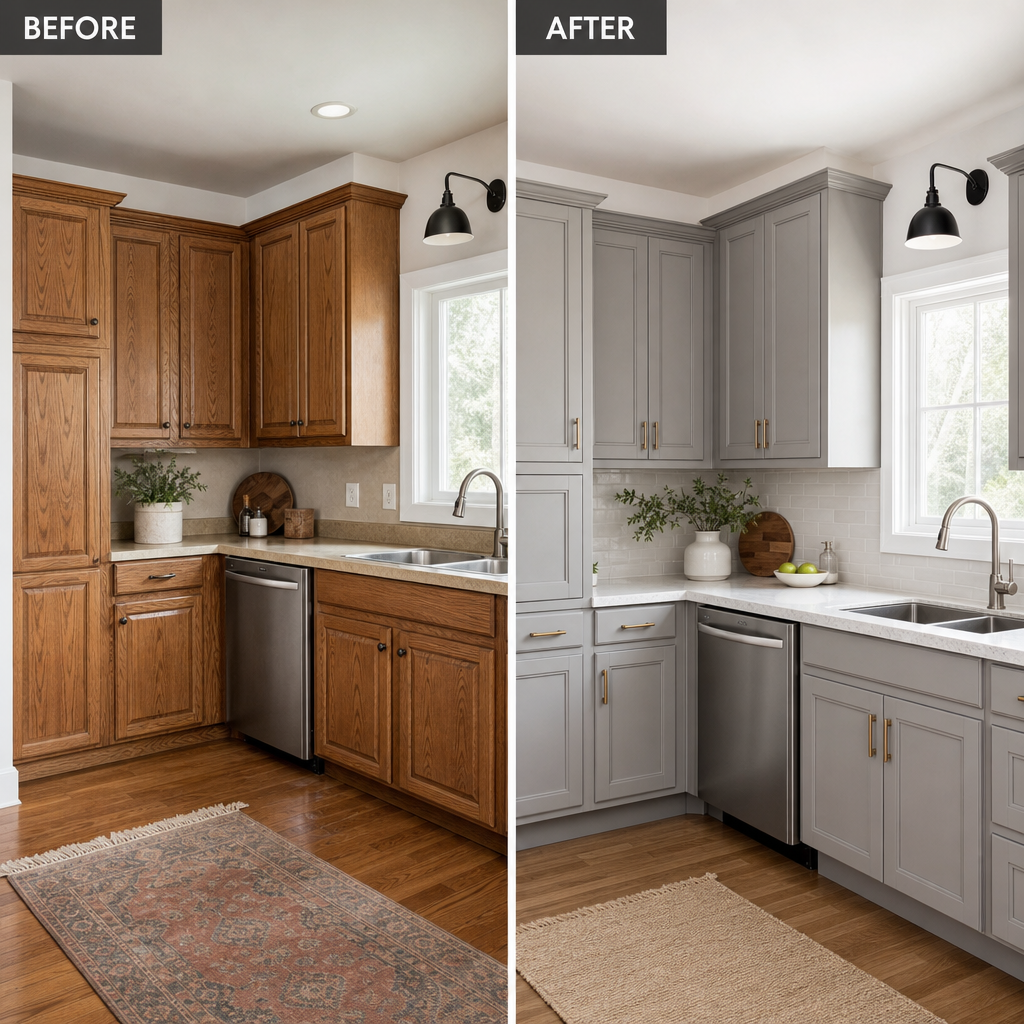
If your kitchen flows well and you have no complaints about the usability of your storage, the only problem is aesthetic. That is exactly the problem refinishing solves. Changing a honey oak kitchen to a crisp white or two-tone look transforms how the entire room feels without touching the floor plan.
Budget Constraints With a Firm Ceiling
If your kitchen renovation budget is under $10,000, refinishing is where you should spend it. Pairing professional cabinet refinishing with new hardware, a fresh backsplash, and updated light fixtures delivers a result that photographs and lives like a full renovation at a fraction of the investment.
When Replacement Is Genuinely Worth It
Replacement is the right call in a narrower set of circumstances, but those circumstances do exist and it would be dishonest to pretend otherwise. Knowing when to recommend replacement is part of what makes a 35-year-old company trustworthy.
Water Damage or Mould in the Cabinet Boxes
A cabinet box that has been saturated by a long-term plumbing leak will be structurally compromised. The particleboard or MDF used in many 1980s and 1990s cabinet boxes swells and delaminate permanently when wet. You cannot refinish your way out of that problem. The box needs to go.
You Are Changing the Kitchen Layout
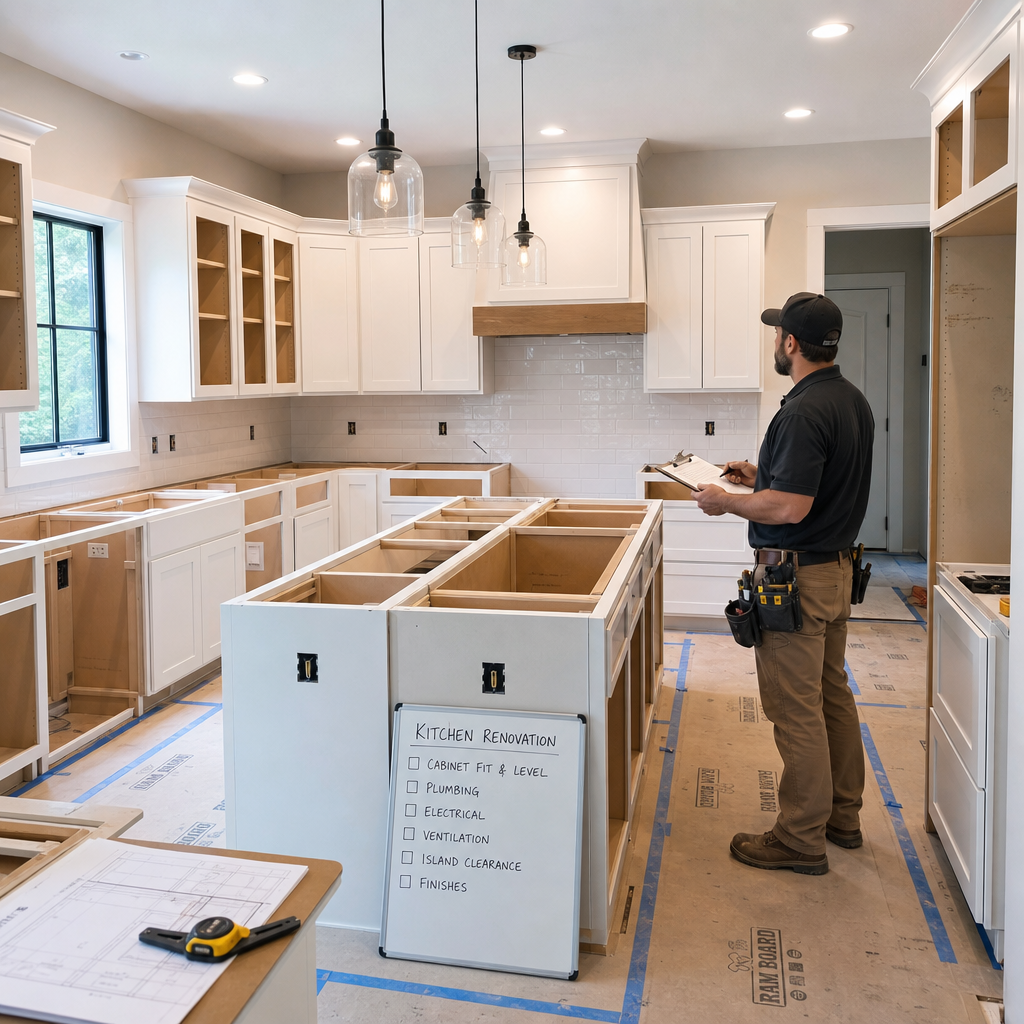
If you are moving a sink, adding an island, or reconfiguring the room’s footprint, you will need new cabinetry regardless of the existing cabinets’ condition. Refinishing makes no sense when the layout is changing and cabinet dimensions need to shift with it.
Cabinet Boxes Are Particleboard and Failing
Some lower-quality original cabinet installations, particularly in builder-grade homes from the late 1990s and early 2000s, used particleboard boxes with thin laminate exteriors. If those boxes are showing delamination, hinge blowout, or shelf sag, refinishing the doors while the boxes fail is money wasted. In this case, replacement of the boxes is the honest recommendation.
The Structural Condition Test
Before any professional should quote you on cabinet refinishing, they should conduct what we call a structural condition assessment. This is not complicated, but it is non-negotiable for giving you an honest recommendation. If a contractor quotes you without doing this, that is a red flag.
The assessment involves checking each cabinet box for soft spots on the interior floors and shelves, inspecting hinge mounts for blowout or cracking in the substrate, checking doors for warping by laying them on a flat surface, and looking for delamination or bubbling on any flat-panel or thermofoil doors. Thermofoil doors, which are common in many Abbotsford and Langley builder homes, cannot be refinished because paint will not bond to the vinyl wrap without extensive and costly preparation. Those doors need replacement even if the cabinet boxes are fine.
A common mistake is treating all cabinet components as a single unit. In practice, you may have perfectly sound boxes that pair beautifully with new replacement doors that are then finished to match. This hybrid approach, replacing only the doors while keeping the original boxes, is often the best value outcome for kitchens with solid structural bones but problem doors.
Side-by-Side Comparison
| Factor | Professional Cabinet Refinishing | Full Cabinet Replacement |
|---|---|---|
| Typical Cost (Fraser Valley, 2024-2025) | $2,500 to $5,500 | $18,000 to $50,000 installed |
| Project Timeline | 3 to 5 days | 4 to 10 weeks |
| Kitchen Downtime | Minimal, kitchen usable within 24-48 hours of completion | Full kitchen out of service for 2 to 6 weeks |
| Resale ROI | High, classified as minor remodel | Lower, major renovations recoup 54% on average |
| Environmental Impact | Low, existing materials kept out of landfill | High, significant demolition waste |
| Best Suited For | Structurally sound cabinets needing cosmetic refresh | Damaged boxes, layout changes, or failing cabinet structures |
| Finish Quality | Factory-smooth when done by experienced professionals | Depends entirely on cabinet grade and installer quality |
Frequently Asked Questions
How long does professionally refinished cabinet paint last?
A professionally applied waterborne alkyd or catalyzed lacquer finish on kitchen cabinets will last 8 to 15 years with normal use and proper cleaning. The data consistently shows that finish longevity is determined primarily by surface preparation quality, not the topcoat brand. Cabinets that were properly degreased, sanded, and primed before painting will outlast a premium topcoat applied over inadequate prep every time.
Can I refinish cabinets that were previously painted?
Yes, and this is one of the most common situations we encounter in Lower Mainland kitchens. Previously painted cabinets require additional preparation to ensure the new coating bonds correctly. If the existing paint is peeling, flaking, or has poor adhesion, it must be stripped or sanded back before any new product is applied. Painting over a failing existing coat is the single most common reason cabinet refinishing fails prematurely.
Do thermofoil cabinet doors need to be replaced before refinishing?
In most cases, yes. Thermofoil is a vinyl wrap applied over MDF, and conventional paints and primers do not bond to it reliably. When thermofoil begins to peel, the delamination will continue under any new coating. The practical recommendation is to replace thermofoil doors with new MDF or solid wood doors that match the profile of your existing design, then refinish everything together for a cohesive result.
Is cabinet refinishing a good investment before selling a home in Langley or Abbotsford?
Yes, consistently. Buyers in the Fraser Valley respond strongly to updated kitchens, and dated or worn cabinet finishes are one of the most common objections buyers raise during walkthroughs. A professional refinishing project costing $3,000 to $5,000 can shift buyer perception from a dated kitchen to a move-in-ready kitchen, which at current Fraser Valley home prices can affect offers by $15,000 to $30,000. The math is straightforward.
What colours are most popular for cabinet refinishing in the Lower Mainland right now?
In 2024 and into 2025, the dominant choices we are seeing in Abbotsford, Langley, and Surrey are warm whites such as Benjamin Moore White Dove and Chantilly Lace, soft greens in the sage and olive family, and two-tone combinations with white or cream uppers and a charcoal or navy lower cabinet. The pure grey trend that dominated from 2015 to 2021 has notably cooled. Homeowners are moving toward warmer, more livable tones that photograph well and age better over time.
How do I know if my cabinets are worth refinishing or should be replaced?
Apply three tests. First, push firmly on the interior floor of every base cabinet. If it flexes or feels soft, the box has water damage. Second, remove a hinge and inspect the screw holes. If the substrate is crumbling or won’t hold a screw, the box is failing. Third, lay a cabinet door on a flat surface. If it rocks more than 3mm, it is warped beyond what refinishing can fix. If your cabinets pass all three tests, refinishing is almost certainly the right call. If they fail one or more, book a professional assessment before committing to either option.
Have you recently refinished or replaced your kitchen cabinets? We would love to hear what made the difference in your decision and whether the result matched your expectations.
References
- Forbes Home Improvement and Renovation Cost Research and Guides
- Statista Data on Kitchen Renovation Spending and Homeowner Investment Trends
- U.S. Environmental Protection Agency Guidance on Indoor Air Quality and Low-VOC Paint Products
- International Association of Certified Home Inspectors Standards for Cabinet and Millwork Inspection
- The Home Depot Resource Centre for Cabinet Types, Grades, and Installation Cost Benchmarks