
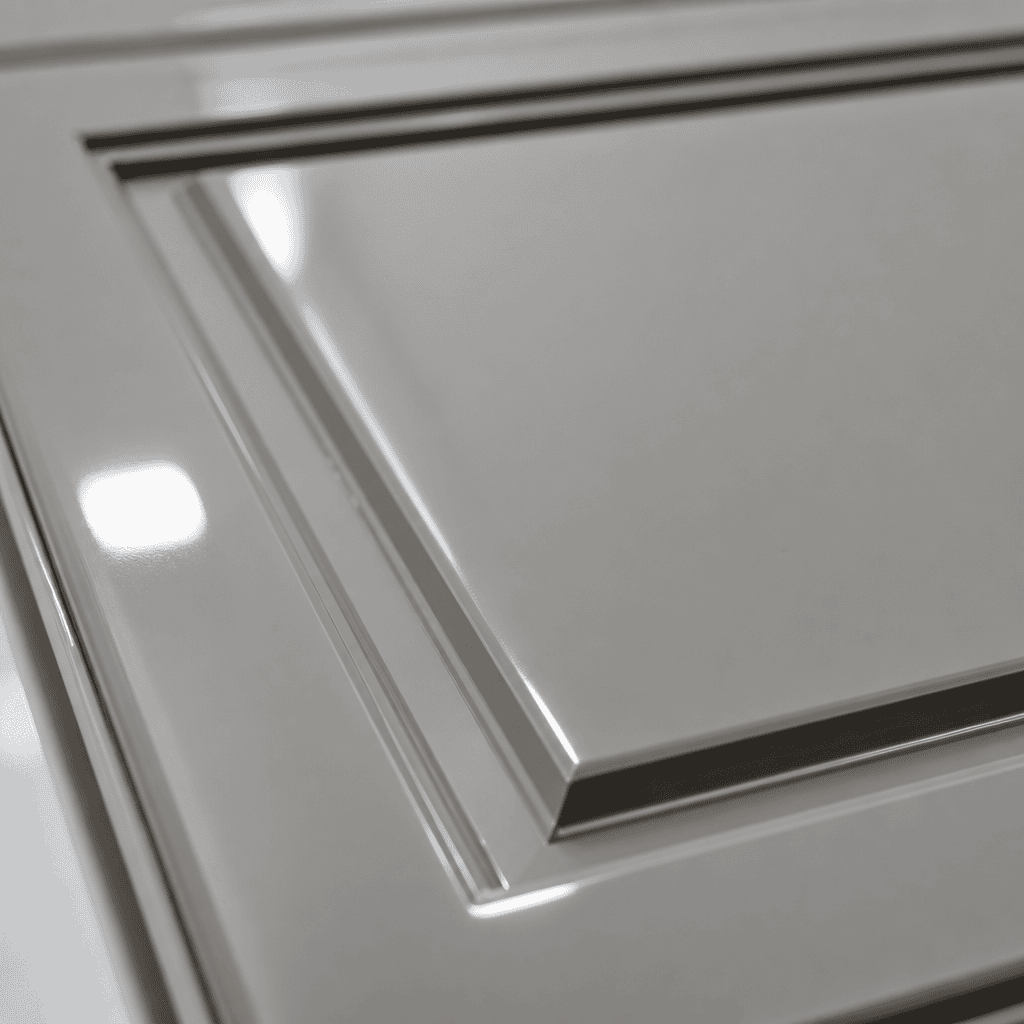
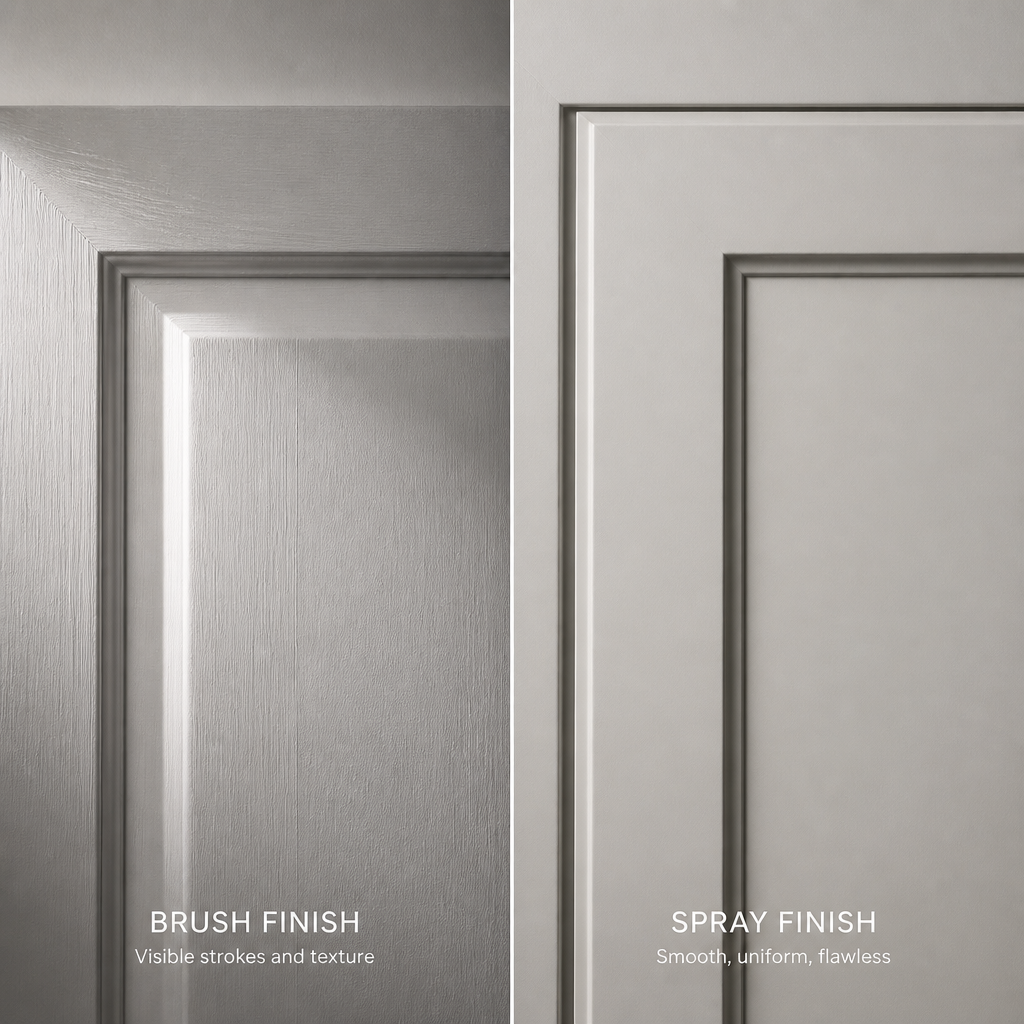
You can tell within seconds whether kitchen cabinets were sprayed or brushed. Run your fingertip across a door panel. If you feel ridges, texture, or faint stroke lines, someone used a brush or roller. If the surface feels like glass, someone used a spray gun. That difference is not cosmetic vanity. It is the difference between a finish that holds up to daily kitchen use for a decade and one that starts showing wear in two or three years. Spray cabinet painting has become the professional standard precisely because cabinets are the hardest-working painted surface in any home, and the cabinet refinishing technique you choose determines everything about long-term durability, appearance, and value.
Table of Contents
- Quick Takeaways
- Why the Application Method Matters More Than the Paint Brand
- What Spray Cabinet Painting Actually Involves
- The Honest Case for Brush-and-Roll
- Method Comparison: Spray vs. Brush vs. Hybrid
- Prep Work: The Part That Determines the Outcome
- What Lower Mainland Homeowners Should Ask Before Hiring
- Frequently Asked Questions
- References
Quick Takeaways
| Key Insight | Explanation |
|---|---|
| Spray finishing produces a factory-smooth surface | A professional HVLP spray gun atomizes paint into a fine mist, eliminating brush marks and roller stipple entirely. No brush-and-roll process replicates this level of smoothness on flat cabinet doors. |
| Brush-and-roll costs roughly 25% less upfront | The reduced equipment setup and faster masking time lower the labor cost, making it a reasonable choice for small projects or tighter budgets where a factory finish is not the priority. |
| Spray finishes are more durable on high-contact surfaces | Cabinet doors and drawer fronts are touched hundreds of times a week. Spray-applied coatings lay down at a more consistent film thickness, which translates directly to better resistance against grease, moisture, and daily wear. |
| Spray painting requires significantly more prep and masking | Overspray is real and travels. Professional crews spend more time masking countertops, appliances, and walls before a spray job than before a brush job. Skipping this step ruins surrounding surfaces. |
| HVLP sprayers are the right tool for cabinet refinishing | High-volume, low-pressure (HVLP) spray equipment delivers more control and a finer finish than airless sprayers for cabinetry. It reduces overspray and puts more paint exactly where it belongs. |
| Doors should always be removed and finished flat | Whether sprayed or brushed, cabinet doors need to come off and be painted horizontally. Painting doors in place almost always results in sags, runs, or uneven sheen on vertical surfaces. |
| The finish product matters as much as the method | Some of the highest-performance cabinet coatings, including catalyzed lacquers and conversion varnishes, are spray-only products. They cannot be applied with a brush or roller and still cure correctly. |
Why the Application Method Matters More Than the Paint Brand
Most homeowners in Abbotsford, Langley, Surrey, and across the Fraser Valley spend their research time comparing paint brands. They look at Benjamin Moore versus Sherwin-Williams, water-based versus oil-based, sheen levels. Those are legitimate questions, but they are secondary to a more fundamental decision: how will the paint actually be applied? The cabinet refinishing technique drives the end result more than the product label does.
Cabinets are not walls. They are high-contact, grease-exposed, moisture-adjacent surfaces that get cleaned with degreasers and wiped down repeatedly. A paint job that would look fine on a bedroom wall for ten years may start failing on a cabinet door in eighteen months if the application method created an inconsistent film. This is not theoretical. It is the most common reason refinished cabinets look good at installation and bad by the second winter.
The smoothest possible finish and the most durable result come from the same place: consistent film thickness applied in a controlled environment. A spray gun achieves both at the same time. A brush or roller achieves neither as reliably.
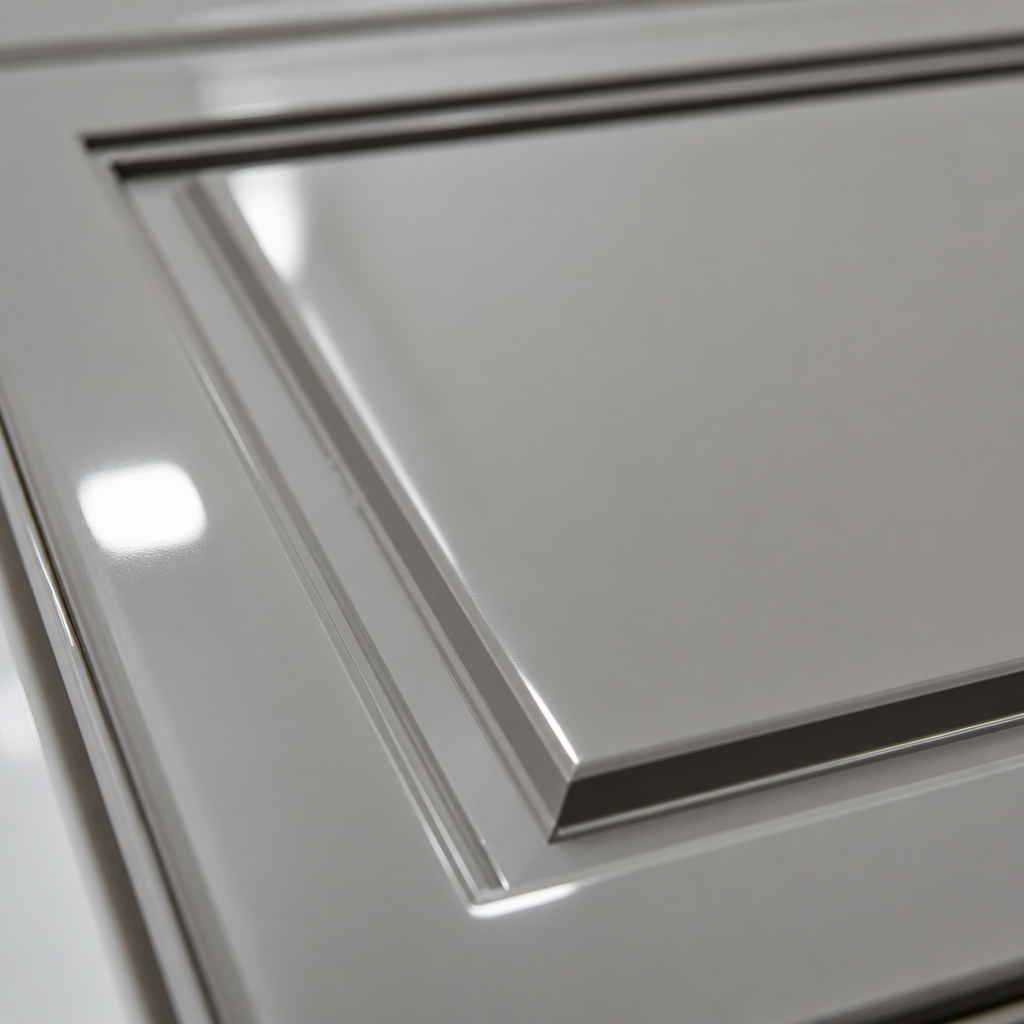
Spray cabinet painting resolves the film-consistency problem structurally. The atomized spray pattern lays down paint at a controlled, even thickness across the entire panel, including recessed areas, edges, and profiles that a brush has to reach individually. The result is uniform sheen, uniform protection, and a surface that looks the same across every cabinet in the kitchen.
What Spray Cabinet Painting Actually Involves
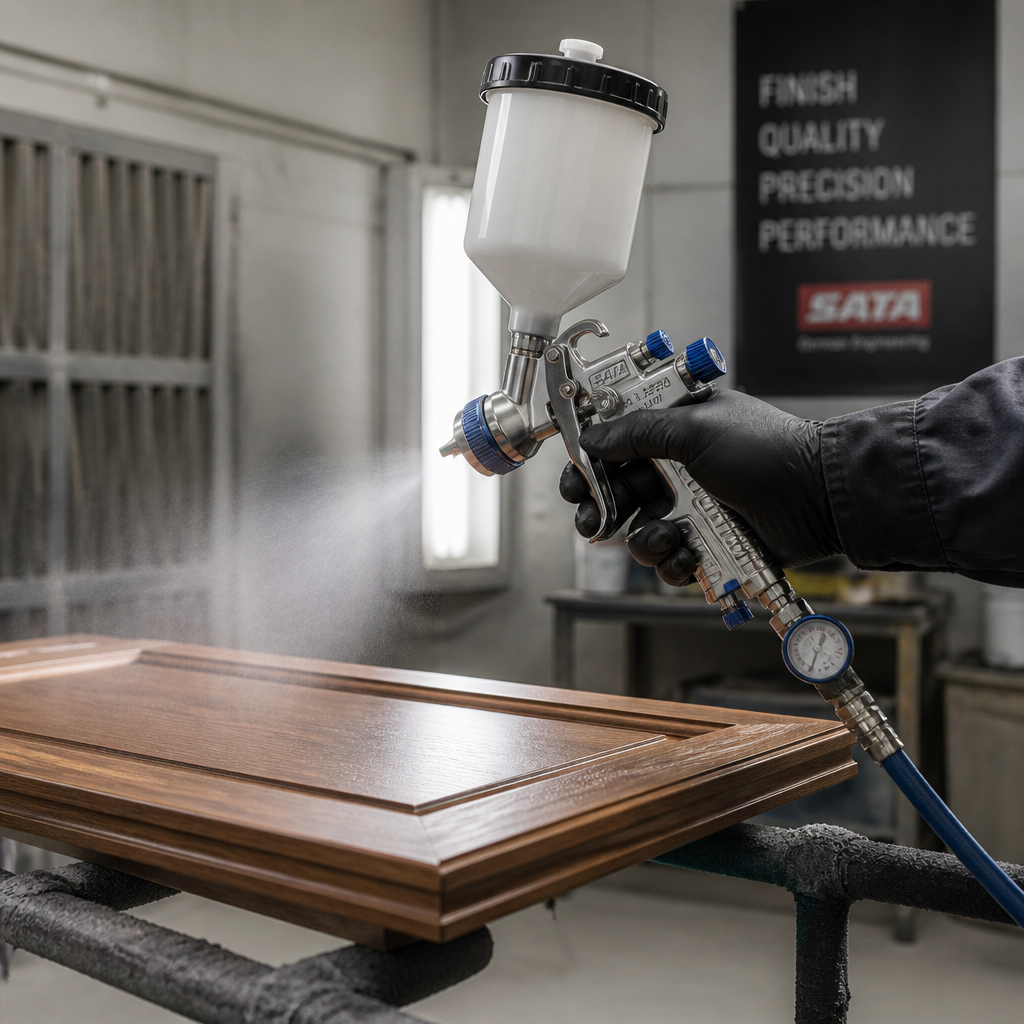
The phrase “spray painting” gets misread. It does not mean a can of spray paint from a hardware store. Professional spray cabinet painting uses HVLP (high-volume, low-pressure) equipment that atomizes a properly thinned, high-performance coating through a precision tip. The result is a finish that is, in practice, indistinguishable from what cabinet manufacturers apply at the factory.
The Role of HVLP Equipment
HVLP sprayers are the preferred tool for cabinetry because they deliver more control and a finer finish compared to airless sprayers. The low pressure means the paint travels a shorter distance and lands where it is aimed. Overspray is minimized. The fan pattern is consistent. For profiled doors, raised panels, and detailed millwork, HVLP equipment reaches every surface simultaneously rather than requiring multiple brush strokes to work into corners and edges.
Professional painters typically spray cabinet doors after removing them and laying them flat. This prevents sags and runs, and allows both faces to cure properly before reinstallation. The cabinet frames that remain in the kitchen are masked carefully and sprayed in place. Both surfaces end up with the same sheen, the same film build, and the same visual continuity across the entire kitchen.
Paint Products That Require Spray Application
Some of the most durable cabinet finishes available are spray-only products. Catalyzed lacquers and conversion varnishes, which are among the hardest and most chemically resistant coatings used on kitchen cabinetry, require spray application to cure correctly. These products cannot be brushed or rolled and still achieve their rated hardness. If a refinishing company offers conversion varnish or a two-component (2K) polyurethane topcoat, they are necessarily working with spray equipment. If they are brushing your cabinets, they are not using those products.
Pro tip: When getting quotes for cabinet refinishing in the Lower Mainland, ask the company specifically which topcoat product they plan to use and whether it is spray-applied or brush-applied. The answer tells you immediately what quality category their work falls into.
The Honest Case for Brush-and-Roll
Brush-and-roll cabinet painting is not a failure. It is a different tool for a different situation, and dismissing it entirely gives homeowners incomplete information. The method has real strengths, and any professional who refuses to acknowledge them is selling you something rather than advising you.
Where Brush-and-Roll Makes Sense
For small projects, touch-ups, single bathroom vanities, or laundry room cabinets where a full spray setup would be disproportionate, brush-and-roll is a practical and cost-effective approach. Using a high-quality angled brush with synthetic bristles and a foam roller, a skilled painter can produce a finish that reads as clean and even at normal viewing distance. It will not be glass-smooth under raking light, but for lower-traffic applications it holds up adequately.
Older, more traditional cabinetry sometimes benefits from brush application. Original woodwork with grain texture that a homeowner wants to preserve, or cabinets where the existing character of a hand-applied finish is part of the aesthetic, are cases where spraying would actually work against the desired result. Brush strokes on a period-appropriate kitchen are not a defect. They are the intended look.
The Real Limitations You Need to Know
Brush-and-roll cannot produce the same level of surface smoothness as spray application. That is not a preference or an opinion. The physical process of dragging a brush or rolling a roller across a surface leaves texture, even with the best tools and the most skilled hands. Paint applied by brush also tends to go on in thicker individual coats, which sounds like an advantage but creates longer drying windows and increases the risk of telegraphed texture through the topcoat.
Rolling with a foam roller and back-brushing immediately can reduce visible texture significantly, but it introduces its own risk: overworking a wet surface creates streaks and uneven sheen. The margin for error with brush-and-roll on cabinets is narrow, because cabinet paint dries faster than wall paint and does not allow the same forgiveness during application.
Method Comparison: Spray vs. Brush vs. Hybrid
In practice, professional refinishers in the Lower Mainland use one of three approaches. Here is an honest comparison of what each delivers and where each belongs.
| Method | Best Application | Finish Quality |
|---|---|---|
| Full HVLP Spray | Full kitchen refinishing, detailed millwork, raised-panel doors, high-traffic cabinetry, any project where factory-smooth appearance is the goal | Highest. Glass-smooth surface with zero brush marks or roller stipple. Uniform sheen across all panels. Compatible with the most durable topcoat products available. |
| Brush-and-Roll | Small vanities, laundry cabinets, touch-ups, traditional woodwork where texture is acceptable or desired, tighter-budget projects with lower traffic demands | Good at normal viewing distance. Visible texture under raking light or close inspection. Not suitable for spray-only high-performance coatings. |
| Hybrid (Spray Doors, Brush-and-Roll Frames) | Full kitchens where spray setup for in-place frames is impractical, or where budget requires a compromise between methods | High on doors and drawer fronts. Moderate on frames. Some sheen variation between sprayed and brushed surfaces is common and worth discussing with your contractor before committing. |
The hybrid approach is common and, when done by an experienced crew, produces results that satisfy most homeowners. The key variable is whether the contractor is honest with you about the sheen variation you may notice between sprayed doors and brushed frames under different lighting conditions.
Prep Work: The Part That Determines the Outcome
Neither spray nor brush-and-roll produces a durable finish over unprepared surfaces. The prep work is where the real quality difference between a professional job and a failed refinish is decided. This is also the part that separates legitimate cabinet refinishing from a quick coat-over-coat paint job that looks acceptable for six months and then peels.
What Proper Preparation Looks Like
Before any paint or primer goes on, every cabinet surface needs to be degreased with a dedicated cabinet cleaner or TSP substitute that breaks down cooking oil and grease contamination accumulated over years of kitchen use. Sanding follows, not to remove the existing finish entirely, but to create mechanical adhesion. A shellac-based or specialty bonding primer goes on next, matched to the substrate and the existing finish type. Skipping the primer, or using an incompatible one, is the single most common cause of peeling refinished cabinets across the Fraser Valley.
For spray jobs, the masking requirements are substantially greater than for brush-and-roll. Countertops, appliances, backsplash tile, flooring, and any surface within overspray range of the spray gun needs to be covered. A professional crew accounts for this in their setup time. An amateur or a corner-cutting contractor skips it and causes collateral damage that ends up costing more than the original job.
The Controlled Environment Advantage
Professional shops that remove cabinet doors and spray them off-site in a dedicated spray booth have a significant advantage over any on-site application method. A controlled environment eliminates airborne dust and debris landing in wet paint, controls temperature and humidity for consistent cure times, and allows the finisher to work on multiple panels simultaneously without contaminating adjacent surfaces. The result is a cleaner, harder, more consistent finish than anything achievable in a live kitchen, regardless of how skilled the on-site painter is.
Pro tip: When a cabinet refinishing contractor tells you they will spray your doors in your kitchen without removing them, ask how they plan to manage overspray and dust contamination in the wet finish. The answer is usually that they are not spraying with professional equipment at all, or they are cutting corners that will show up in the final result.
What Lower Mainland Homeowners Should Ask Before Hiring
For homeowners in Abbotsford, Langley, Surrey, and the surrounding Fraser Valley, the cabinet refinishing market includes a wide range of operators, from experienced professional crews with dedicated spray equipment to generalist painters who offer cabinet work as an add-on service without the tools or technique to deliver a quality result. Knowing what to ask separates a good hire from an expensive mistake.
The Five Questions Worth Asking Every Contractor
First, ask whether doors will be removed and finished flat or sprayed in place. Any professional spray operation removes doors. Second, ask what primer product they plan to use and whether it is matched to the existing cabinet substrate. Third, ask whether they have dedicated spray equipment or whether they work primarily with brush-and-roll. The answer changes the quality expectation significantly. Fourth, ask what topcoat product they plan to apply, whether it is water-based alkyd, catalyzed lacquer, or something else, and what the rated cure time is before the cabinets can be put back into regular use. Fifth, ask whether they carry liability insurance and how long they have been specifically refinishing cabinets, not just painting walls.
Dreamscape Painting has been refinishing and painting kitchens across the Lower Mainland for over 35 years, with a process built around thorough surface preparation, proper product selection, and the kind of attention to detail that only comes from doing fine finish work on hundreds of kitchens. If you are weighing your kitchen cabinet painting Lower Mainland options, the specifics of how a contractor answers these questions will tell you everything. You can learn more about the full refinishing process on the cabinet refinishing service page, or review the approach to interior finish work on the interior painting page.
Frequently Asked Questions
Is spray cabinet painting worth the higher cost compared to brush-and-roll?
For a full kitchen, yes. The higher upfront cost of spray cabinet painting reflects better equipment, more setup time, and a finish that outperforms brush-and-roll on every quality metric that matters for kitchen cabinetry: smoothness, durability, and uniformity of sheen. For a single bathroom vanity or a small cabinet project, brush-and-roll is a reasonable and cost-effective alternative where the difference in finish quality is less noticeable under normal conditions.
Can a brush-and-roll finish on cabinets ever look as smooth as a sprayed finish?
No, not under close inspection or raking light. A skilled painter with quality tools can produce a very clean brush-and-roll finish that reads as smooth at normal viewing distance, but the physical process of applying paint with a brush or roller always leaves some degree of texture. Spray application atomizes paint into a fine mist that settles without any mechanical contact, which is why it produces a surface that brush-and-roll cannot match on flat cabinet door panels.
What is an HVLP sprayer and why does it matter for cabinet refinishing?
HVLP stands for high-volume, low-pressure. This type of spray equipment atomizes paint at lower air pressure than conventional or airless sprayers, which means more paint lands on the surface and less is lost to overspray. For cabinet refinishing, HVLP equipment provides better control over the spray pattern, a finer finish, and less risk of contaminating surrounding surfaces. It is the professional standard for fine finish work on cabinetry precisely because it combines quality output with manageable overspray in residential settings.
Do cabinets need to be removed for spray painting, or can they be sprayed in place?
Cabinet doors and drawer fronts should always be removed and finished flat, regardless of whether the application method is spray or brush-and-roll. Painting doors in place, vertically, dramatically increases the risk of sags, runs, and uneven sheen. For spray application specifically, removing doors also allows them to be finished in a controlled environment away from kitchen dust, cooking residue, and other contaminants that settle into wet paint and create surface defects. Cabinet frames can be sprayed in place when properly masked, but doors should always come down.
Which cabinet refinishing technique is better for older oak cabinets with visible grain?
It depends on the desired result. If you want to minimize the appearance of grain texture and achieve a smooth, contemporary finish, spray application with a grain-filling primer produces the best outcome. If you want to preserve or are comfortable with some visible grain texture, brush-and-roll with a high-build primer is an appropriate and more affordable approach. Open-grain woods like oak are one area where the prep work, specifically the grain-filling step, matters as much as the application method in determining the final surface quality.
How long does a professionally spray-painted cabinet finish last in a typical Lower Mainland kitchen?
A properly prepared and spray-applied cabinet finish using a quality waterborne alkyd or catalyzed topcoat can last ten years or more under normal kitchen use when maintained correctly. The variables that shorten that lifespan are almost always in the prep work: insufficient degreasing, incompatible primer, or inadequate cure time before the cabinets return to use. The application method itself, assuming it is professional spray work with correct product selection, is rarely the point of failure. Brush-and-roll finishes, when done well, typically hold up for a shorter period on high-contact surfaces because film consistency and thickness are harder to control manually.
Have you had cabinets refinished using spray application or brush-and-roll? Share what the experience was like and whether the finish held up the way you expected.
References
- Comparing brush, roller, and spray methods for painting kitchen and bathroom cabinets
- Professional cabinet painting options: spray versus fine brush and roller explained
- Spray versus brush-and-roll for kitchen cabinets: pros, cons, and practical guidance
- Spray finish versus fine brush and roller: choosing the best option for cabinet painting
- Professional spray painting versus brush painting for kitchen cabinets: a practical comparison

