

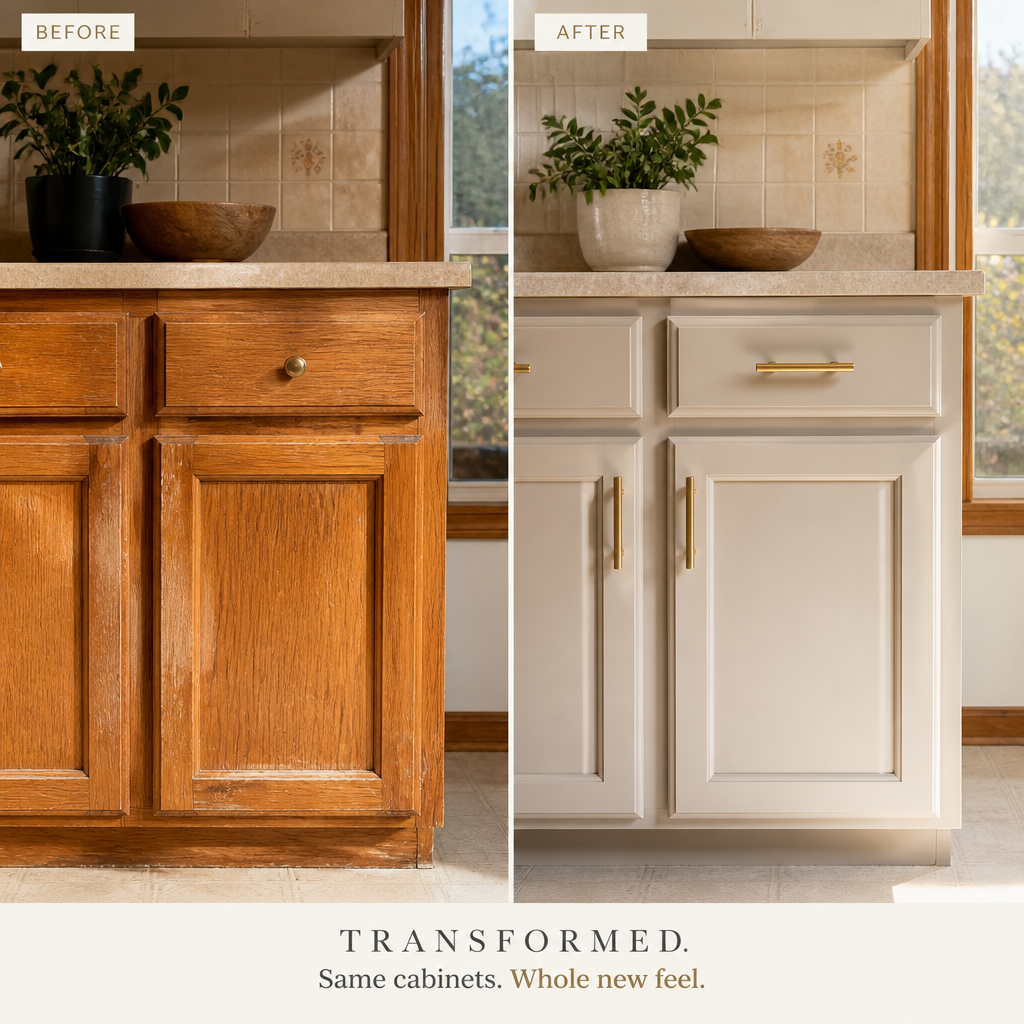
Most Fraser Valley kitchens that look tired and dated are not structurally failing. The bones are fine. The cabinets open and close, the hinges work, the layout functions. What has aged out is the finish, and that finish is exactly what cabinet painting before and after results consistently prove you can fix without tearing anything out. Across Abbotsford, Langley, Surrey, and the wider Lower Mainland, homeowners who have gone through a professional cabinet refinishing project tend to say the same thing: they wish they had done it sooner. This article walks through real transformation scenarios specific to Fraser Valley kitchens, explains what produces those results, and gives you a clear picture of what the process actually involves.
Table of Contents
- Why Fraser Valley Kitchens Age Fast
- Cabinet Painting Before and After: What Actually Changes
- The Process Behind the Transformation
- Comparing Your Options: Paint, Reface, or Replace
- Colour Choices Driving Fraser Valley Kitchen Transformations in 2026
- What Makes a Cabinet Refinishing Result Last
- Frequently Asked Questions
- References
Why Fraser Valley Kitchens Age Fast
The Lower Mainland and Fraser Valley housing stock includes a significant number of homes built or renovated between the late 1980s and early 2000s. That era produced a very specific cabinet aesthetic: honey oak, pickled maple, and dark walnut-stained finishes applied over solid wood or medium-density fibreboard doors. Those finishes were considered high quality at the time. In 2026, they read as dated the moment a buyer or guest walks into the kitchen.
The climate in the Fraser Valley compounds the problem. Humidity swings between wet winters and warm, drier summers cause wood and cabinet surfaces to absorb and release moisture repeatedly. Over time, this leads to finish crazing, edge lifting, and discolouration that no amount of cleaning corrects. Grease deposits from cooking bond into the finish, and UV exposure from south-facing windows further yellows any previously white or light-toned cabinet doors.
The result is a kitchen that feels permanently grimy even when it is clean, permanently old even when the appliances are new. This is exactly the problem professional cabinet painting is designed to solve, and the before-and-after contrast it produces in Fraser Valley kitchens tends to be dramatic precisely because the starting point is so compromised.
Cabinet Painting Before and After: What Actually Changes
When homeowners describe a kitchen transformation Fraser Valley projects produce, they almost always focus on light. A kitchen that had honey oak uppers and dark granite counters absorbs light. The same cabinet boxes painted in a warm white or sage green reflect it. The room feels physically larger without a single wall being moved.
The Abbotsford Oak-to-White Transformation
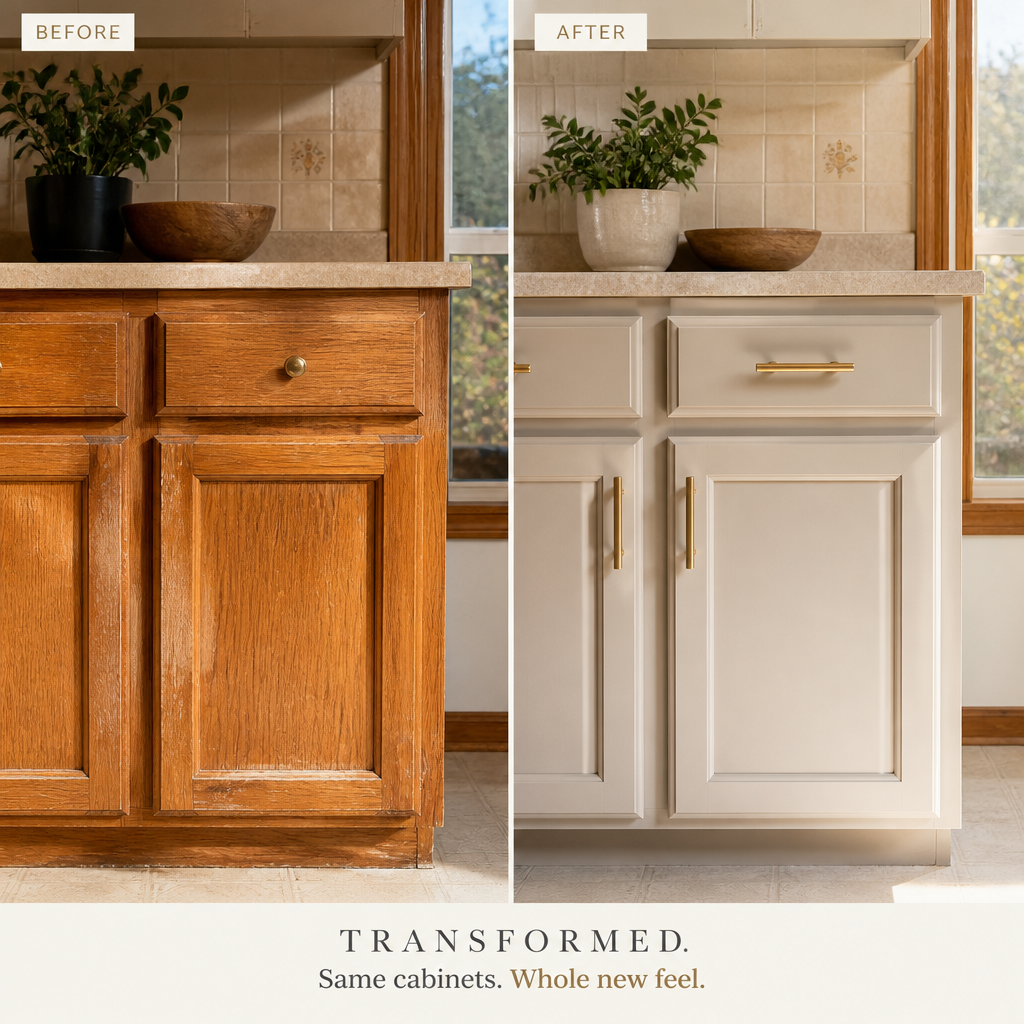
One of the most common project types Dreamscape Painting handles in Abbotsford involves homes built in the 1990s with full honey-stained oak cabinetry. The before state typically includes orange-toned doors with visible grain, aged brass hardware, and a finish that has dulled from years of grease and steam. After a full professional cabinet refinishing, with doors removed and sprayed off-site in a controlled environment, the same kitchen emerges with a clean, smooth warm white finish. Hardware is updated to brushed nickel or matte black. The kitchen reads as a completely different room, even though nothing structural has changed.
The Langley Two-Tone Upgrade
A growing number of Langley homeowners are requesting two-tone cabinet finishes, pairing a deeper colour on the lower cabinets with a lighter, warmer tone on the uppers. Before the work, these kitchens usually have a single flat-painted finish from a previous DIY attempt, often applied without proper preparation, with visible brush marks and areas of adhesion failure. After a professional two-tone application with proper bonding primer and fine-finish topcoat, the result is the kind of tailored look that defines higher-end kitchens. The contrast gives the space visual structure that a single flat colour cannot provide.
The Surrey Dark-to-Light Refresh
Dark-stained cabinetry was popular in Surrey new builds from roughly 2005 to 2015. In smaller kitchens, these finishes make the space feel enclosed and heavy. The before images from these projects consistently show low ceilings that seem even lower because the dark cabinetry pulls the eye down. After painting in a greige, sage, or pale blue-grey, the ceiling reads higher, the countertops pop, and the backsplash that was barely visible before becomes a genuine design feature.
The Process Behind the Transformation
The visual result of a cabinet refinishing project is only as good as the preparation that precedes it. This is the part most people do not see, and it is exactly where professional results diverge from DIY attempts. Cutting corners on preparation is the single most common reason cabinet paint jobs fail within a year.
Cleaning and Degreasing
Kitchen cabinet surfaces accumulate grease in places that are not obviously visible. The tops of doors, the areas around hardware, and the frame edges near the cooktop all carry a layer of bonded grease that standard household cleaners cannot fully remove. Professional preparation uses dedicated degreasers that break this layer down completely. Paint applied over residual grease simply does not bond, and the failure shows up six months later as peeling along the edges.
Pro tip: If you can run a fingernail along the edge of an existing cabinet door and feel a slight tackiness, there is grease present. No primer in the world fully compensates for incomplete degreasing. This step takes longer than most homeowners expect, and it should.
Sanding and Priming
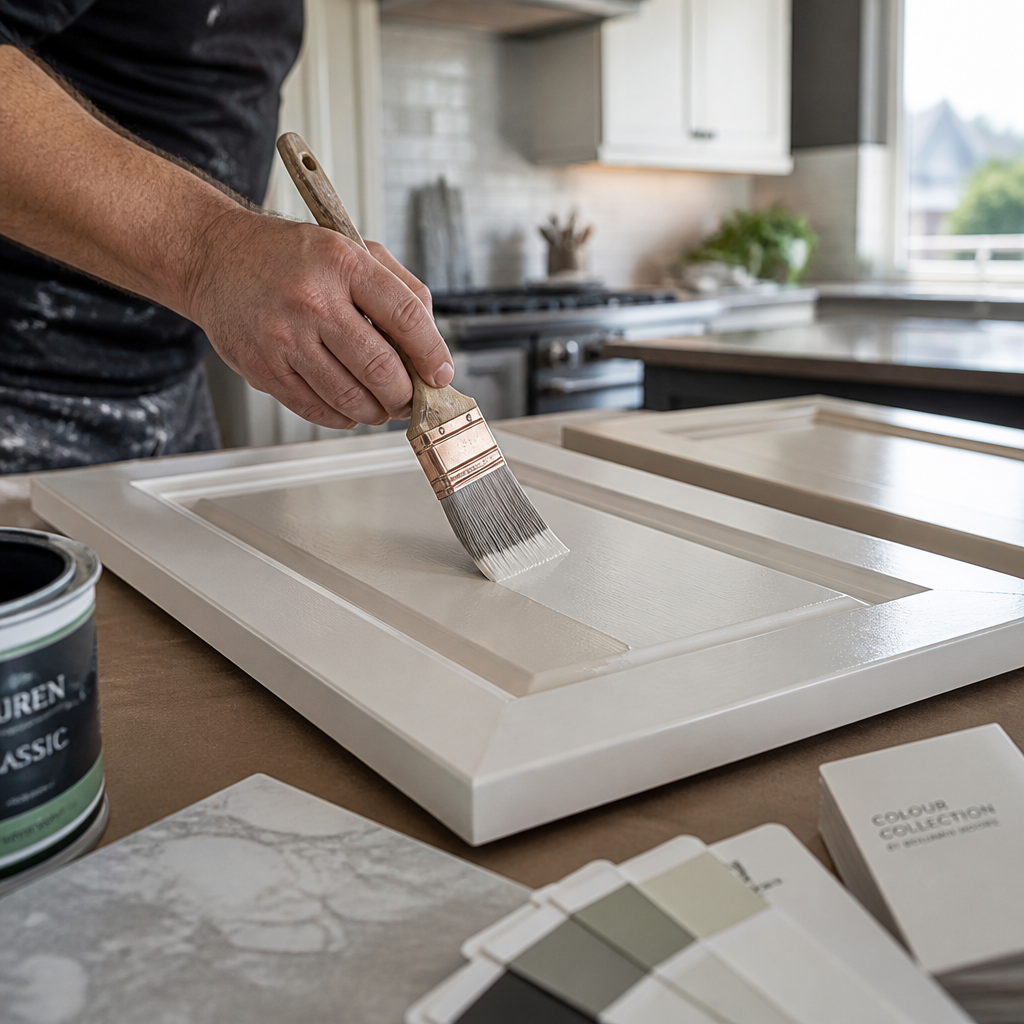
After degreasing, every surface is lightly sanded to create mechanical adhesion. The goal is not to strip the existing finish but to give the primer something to grip. A high-quality bonding primer is then applied to all surfaces. This step is non-negotiable on previously painted or stained cabinets. Skipping primer to save time or cost is the second most common cause of early adhesion failure.
Spray Application in a Controlled Environment
Professional cabinet painters remove all doors and drawer fronts and spray them in a dedicated, dust-free environment. This produces the smooth, factory-quality finish that separates professional cabinet refinishing results from anything applied in-situ with a brush or roller. Cabinet frames, which stay in place, are carefully masked and sprayed on-site. When doors are reinstalled, the result is a consistent sheen across every surface with no brush marks, roller stipple, or drip lines.
The difference between a kitchen that looks professionally done and one that looks like a home renovation project almost always comes down to surface preparation and application method. A beautiful colour applied poorly looks worse than a plain colour applied correctly.
Pro tip: Ask any cabinet painting contractor specifically where they spray the doors. If the answer is “in the garage” or “on-site,” follow up by asking how they control dust contamination. A professional operation will have a clear, specific answer about their spray environment. Vague answers here predict a finish full of embedded dust nibs.
Comparing Your Options: Paint, Reface, or Replace
When Fraser Valley homeowners realize their kitchen needs attention, they typically weigh three paths. Understanding the trade-offs between these options helps explain why cabinet refinishing produces such a strong cabinet refinishing results story in terms of value per dollar spent.
| Option | Typical Cost Range (Fraser Valley) | Best For |
|---|---|---|
| Cabinet Painting / Refinishing | Fraction of replacement cost | Structurally sound cabinets with dated finish; maximum ROI on resale; homeowners wanting a dramatic visual update without construction disruption |
| Cabinet Refacing | Moderate, but significantly higher than refinishing | Cabinets with damaged door fronts but solid box construction; when a different door profile is desired; mid-budget refresh with new hardware and veneers |
| Full Cabinet Replacement | Highest cost, full renovation budget required | Structurally compromised boxes; complete layout change needed; full kitchen gut renovation already underway |
The financial logic here is straightforward. Minor kitchen updates including cabinet refinishing return roughly 75 to 85 percent of their cost at resale, and the broader category of minor kitchen remodels has been documented returning over 100 percent in some markets. Full cabinet replacement, by contrast, rarely recovers its cost dollar for dollar. For homeowners in Abbotsford, Langley, or Surrey who are preparing to sell or simply want to enjoy a better kitchen without a full renovation, cabinet painting occupies the strongest position in that table. See Abbotsford cabinet painting and Surrey cabinet refinishing.
Colour Choices Driving Fraser Valley Kitchen Transformations in 2026
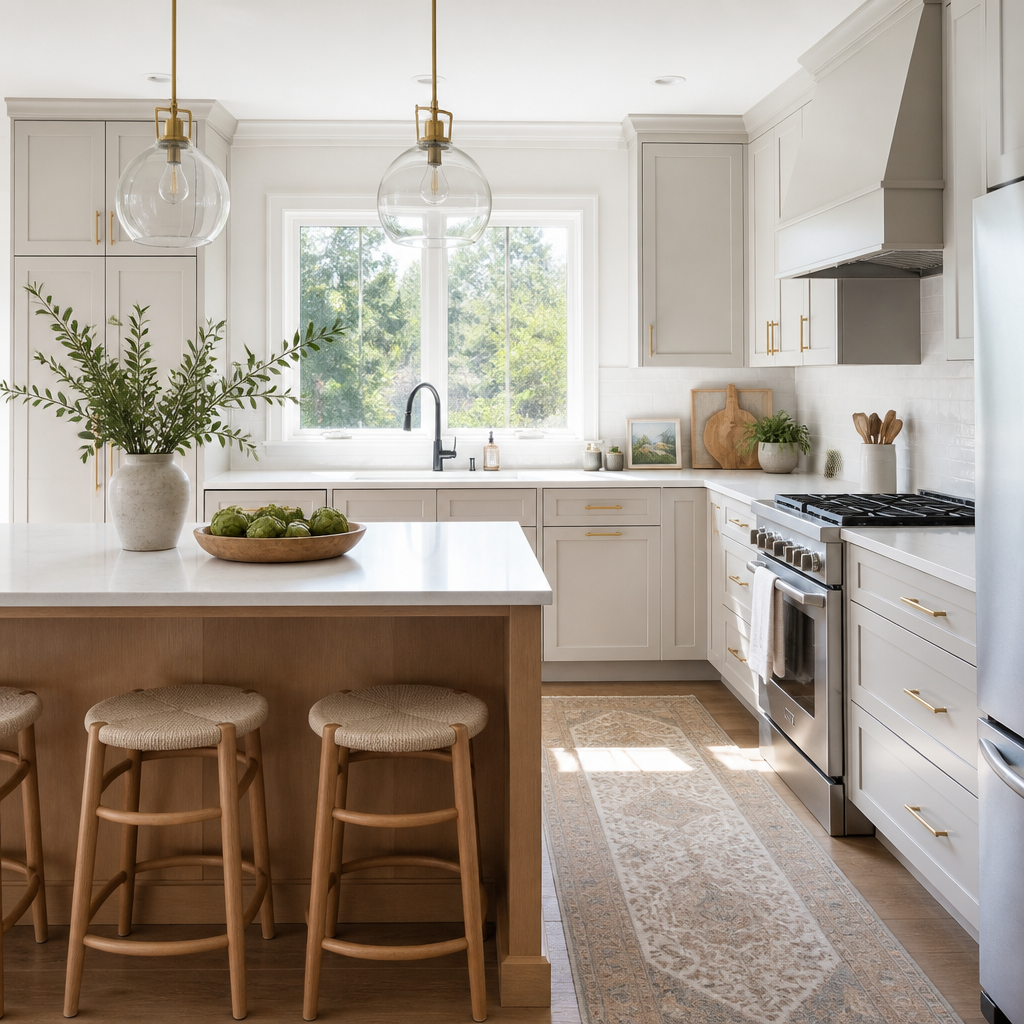
Colour selection is where cabinet painting projects either look current or miss the mark. In the Fraser Valley and broader Lower Mainland, the palette for kitchen cabinetry in 2026 has moved clearly away from the stark bright whites and cool greys that dominated the previous decade.
Warm Whites and Off-Whites
The most requested cabinet colour for upper cabinets in Fraser Valley kitchens right now is a warm white with a slight cream or linen undertone. These tones do not show grease and fingerprints as aggressively as cooler whites, they pair well with the quartz countertops that are common in Lower Mainland homes, and they create a sense of warmth that cool whites actively fight against in BC’s grey-sky months.
Sage Green and Muted Olive
Sage green has emerged as the single most popular choice for lower cabinet islands and perimeter base cabinets across Abbotsford, Langley, and Surrey projects. It reads as sophisticated without being loud, it pairs well with brass, matte black, or brushed nickel hardware, and it has enough grey in it to stay current without becoming a trend victim. Muted olive is a slightly warmer variant showing up in homes with more natural wood elements and warmer countertop tones.
Navy and Deep Forest Green
For kitchen islands specifically, deeper tones like navy blue and deep forest green are producing some of the strongest before-and-after contrasts in 2026 Fraser Valley projects. These colours anchor the island visually and make it feel like a piece of furniture rather than a structural afterthought. Against warm white perimeter cabinetry, the effect is dramatic without being aggressive.
What Makes a Cabinet Refinishing Result Last
The before-and-after photos from a cabinet painting project are taken shortly after completion, when everything looks its best. What separates a professional result that still looks excellent five years later from one that has started to chip, peel, or look worn within two years comes down to three factors: product specification, application conditions, and cure time.
Product Specification Matters More Than Colour
Cabinet-specific topcoats are formulated to handle repeated contact, wiping, humidity, and temperature fluctuation. General interior wall paint applied to cabinets will fail under kitchen conditions regardless of how well it is applied. Professional cabinet refinishers specify products designed for high-wear horizontal and vertical surfaces, typically waterborne alkyd or catalyzed conversion varnish systems that cure to a hard, washable film rather than the softer film of standard wall paint.
Application Conditions and Cure Time
A common mistake in DIY cabinet projects is returning doors to service before the finish has fully cured. Paint can be dry to the touch within hours but may take weeks to reach full hardness. Closing cabinet doors on a finish that has not fully cured causes the surfaces to stick together and then peel apart, leaving permanent marks. Professional cabinet painters communicate exact cure timelines and often provide specific instructions for the first weeks of use.
Ongoing Care for a Painted Finish
Painted cabinets are not fragile, but they respond better to microfibre cloths than to abrasive sponges. Grease should be wiped promptly rather than allowed to bond into the finish over time. Touch-up product, in the exact colour specified for the project, should be kept on hand. Dreamscape Painting’s approach includes providing clients with touch-up information so that minor scuffs from years of normal use can be addressed before they become visible defects.
Frequently Asked Questions
How long does a professional cabinet painting project take in the Fraser Valley?
Most residential kitchen cabinet painting projects in Abbotsford, Langley, and Surrey take between three and five days from start to finish, depending on the number of doors and the complexity of the kitchen layout. The preparation phase, including degreasing and priming, typically takes the first day or two. Spray application and reinstallation follow. Homeowners usually have limited access to the kitchen during this window, so planning meals in advance is practical advice worth taking seriously.
Will cabinet paint hold up in a busy family kitchen?
When the correct products are specified and applied properly, a professionally painted cabinet finish handles daily family kitchen use without issue. The key variables are product selection and cure time. A cabinet-grade topcoat applied over proper primer and allowed to fully cure is washable, resistant to common household chemicals, and does not show normal wear the way softer wall paint would. The finish is not indestructible, but it performs comparably to a factory-applied finish on new cabinetry.
Can I paint over previously painted cabinets or stained cabinets?
Yes, both previously painted and stained cabinets are candidates for refinishing. Stained cabinets often require a shellac-based or high-adhesion primer to prevent tannin bleed-through, which can cause yellowing or discolouration in the topcoat over time. Previously painted cabinets need thorough degreasing, light sanding, and a bonding primer. The critical factor is that any existing loose or peeling finish must be addressed in preparation. Painting over a failing finish simply traps the failure underneath and accelerates the eventual breakdown.
What is the difference between cabinet painting and cabinet refinishing?
The terms are often used interchangeably in the Fraser Valley market, and the distinction is primarily one of scope. Cabinet painting typically refers to applying a new painted finish over existing surfaces. Cabinet refinishing may include stripping the existing finish entirely before repainting, which is necessary when the current finish is significantly damaged, heavily checked, or when a stained-to-painted conversion requires maximum adhesion. Dreamscape Painting assesses each project individually and recommends the level of preparation the specific finish condition requires, rather than applying a one-size-fits-all approach.
How do I know if my cabinets are good candidates for painting versus replacement?
The structural integrity of the cabinet box is the deciding factor. If the hinges mount securely, the doors align properly, the drawers operate smoothly, and the boxes themselves are not soft, swollen, or delaminating, the cabinets are almost certainly good candidates for painting. If the boxes show water damage, significant delamination of the substrate material, or structural failure at the joints, replacement becomes the more honest recommendation. An experienced estimator can assess this in a walkthrough and give a direct answer. Dreamscape Painting has been making this assessment in Fraser Valley homes since 1990, which means the team recognizes quickly which situations refinishing handles well and which ones it does not.
Does cabinet painting add resale value to a Fraser Valley home?
It contributes meaningfully to the kitchen’s presentation, which is one of the highest-weighted factors buyers consider in the Lower Mainland market. Minor kitchen updates, which cabinet refinishing falls within, have been documented returning 75 to 85 percent of their cost at resale, with broader minor kitchen remodels tracking even stronger returns in competitive markets. More practically, a kitchen with dated or visually worn cabinetry creates an immediate negative impression that can affect how buyers perceive the entire home’s condition, even when everything else is well-maintained. Addressing the cabinets removes that friction from the buyer’s experience.
Have you recently had your kitchen cabinets painted or refinished in the Fraser Valley? We would love to hear what colour you chose and how the transformation turned out.
References
- Cabinet refinishing return on investment and resale value analysis
- 2026 kitchen remodel ROI report with minor remodel and cabinet data
- Kitchen remodel ROI by scope including cabinet refinishing benchmarks
- Professional guidance on painting kitchen cabinets including preparation and primer steps
- Professional cabinet preparation workflow for preventing peeling and adhesion failures

