

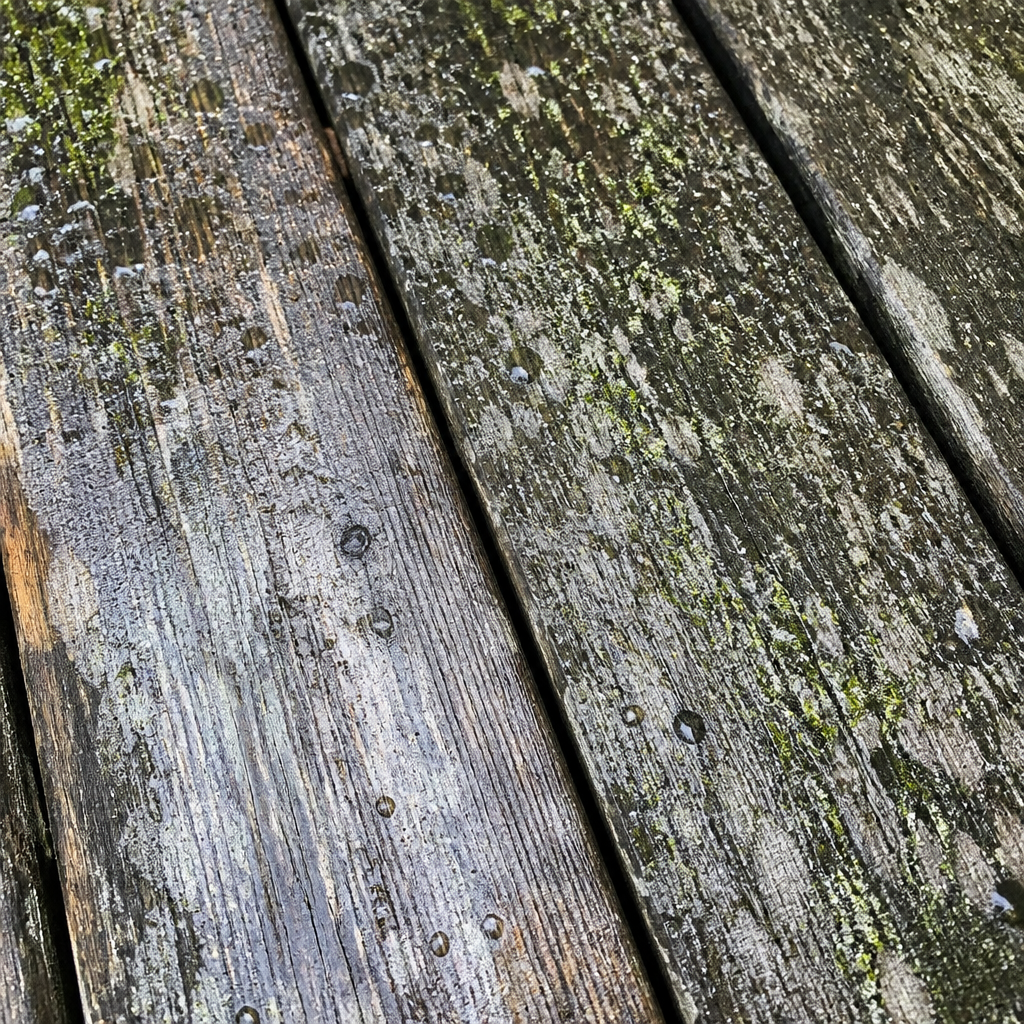
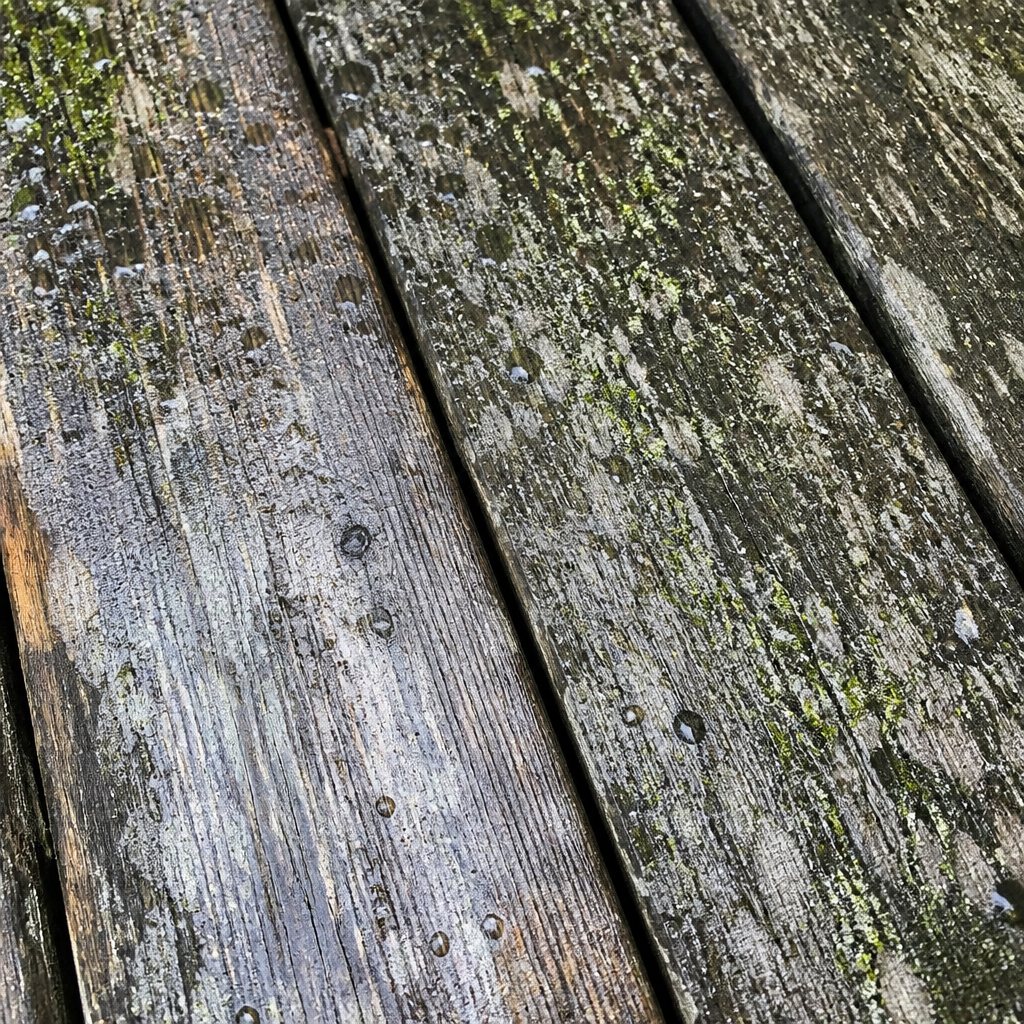
If your deck survived another Fraser Valley winter looking dull, grey, and rough to the touch, that is not just a cosmetic problem. Unprotected outdoor wood in this region faces one of the harshest combinations of stressors in Canada: months of relentless rain, high humidity, persistent mildew, UV exposure in summer, and the repeated expansion and contraction that comes with temperature swings between seasons. Wood staining in the Fraser Valley is not a luxury upgrade, it is straightforward maintenance that separates a deck that lasts 20 years from one that needs replacing in 10. This guide covers everything you need to know to get that job done properly, from prep to product selection to timing.
Table of Contents
- Quick Takeaways
- Why the Fraser Valley Climate Is Hard on Outdoor Wood
- Surface Preparation: The Step Most Homeowners Rush
- Choosing the Right Stain or Finish for BC Conditions
- Stain Type Comparison
- Timing Your Project: The Fraser Valley Weather Window
- Deck Finishing in Abbotsford, Langley, and the Broader Fraser Valley
- How Often Should You Re-Stain or Refinish?
- Frequently Asked Questions
- References
Quick Takeaways
| Key Insight | Explanation |
|---|---|
| Prep is 80% of the result | Applying stain over dirty, damp, or mildewed wood guarantees early failure. Clean, dry, and sand before anything touches the surface. |
| Semi-transparent penetrating stains outperform solid paints in BC | Film-forming finishes like solid paints trap moisture beneath the surface and peel. Penetrating stains move with the wood and let it breathe. |
| Wood moisture must be below 15% before staining | Use a moisture meter. Staining damp wood traps moisture, promotes rot, and causes the finish to fail within months. |
| The staining window in the Fraser Valley is narrow | You typically have a reliable dry period from late spring through early September. Outside that, moisture and temperature make lasting adhesion difficult. |
| Bleach is the wrong mildew treatment | Bleach strips the wood’s natural oils and makes it brittle. Use a dedicated commercial deck cleaner that removes mildew without degrading the wood fibres. |
| Surface restoration can add years to a structurally sound deck | Cleaning, sanding, and re-staining a deck that has been neglected can extend its usable life significantly without full replacement. |
| Apply stain out of direct sunlight | Staining in full sun causes the product to dry before it penetrates. Work in shade or choose an overcast day for even absorption. |
Why the Fraser Valley Climate Is Hard on Outdoor Wood
The Fraser Valley sits in a temperate rainforest climate zone. Abbotsford, Langley, and Surrey all receive significant rainfall from October through April, with humidity remaining high well into spring. That sustained moisture does not just sit on the surface of your deck, it works its way into the wood fibres, and when it freezes in cooler months or evaporates rapidly in summer, the wood expands and contracts. Do that cycle enough times and you get cracking, warping, and eventually rot.
UV exposure in summer is the second major factor. While the Fraser Valley is known for its rain, the summer months bring intense sunlight that bleaches and degrades unprotected wood surfaces, breaking down lignin and causing that familiar grey, weathered appearance. Mildew and algae compound the damage because the combination of warmth and moisture in spring and fall is exactly what these organisms need to establish themselves on wood surfaces.
The result is a region where outdoor wood needs more protection, applied more thoughtfully, than in drier parts of Canada. A product or method that works well in Calgary or the interior of BC will not necessarily hold up the same way here.
Surface Preparation: The Step Most Homeowners Rush
No stain or finish, regardless of price or brand, will perform well on a poorly prepared surface. This is the single most important phase of the job, and it is the one that is most consistently skipped or abbreviated by homeowners trying to get to the visible part of the project.
Cleaning: Remove Everything That Should Not Be There
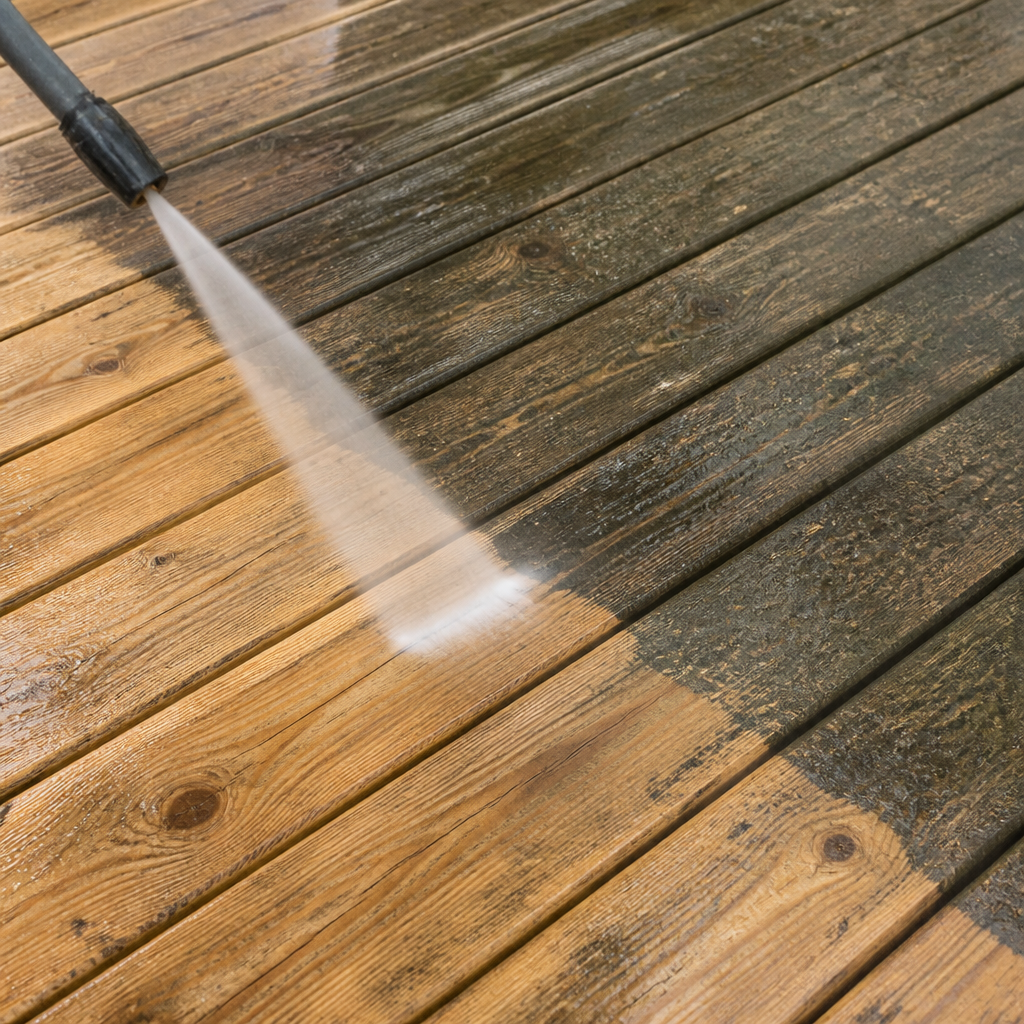
Start with a thorough clean. Any dirt, mildew, or failed finish left on the surface will trap water beneath whatever you apply next. Use a professional-grade wood cleaner designed specifically to remove mildew, dirt, and tannin buildup. Do not use household bleach. Bleach strips the wood’s natural oils and leaves it brittle, which accelerates the very deterioration you are trying to prevent.
A pressure washer set between 1,500 and 2,000 PSI works well on softwoods like cedar and fir, which are common decking materials throughout the Lower Mainland. Anything significantly higher risks raising the grain or damaging the fibres, especially on older wood. After washing, apply a wood brightener to restore the pH balance and open the grain for better stain penetration.
Sanding: Opening the Grain Properly
Sand with 80-grit sandpaper to open the wood grain and ensure the stain penetrates evenly. The goal is not to smooth the wood to a fine finish, it is to remove oxidized surface material and mill glaze so the stain has something to bond with. On new cedar or pressure-treated lumber, mill glaze is a real issue because the manufacturing process can seal the surface enough to repel stain even when the wood looks porous.
Pro tip: After pressure washing, let the deck dry completely before sanding. Sanding damp wood clogs the sandpaper immediately and does nothing useful for the surface. In the Fraser Valley, this drying period can take several days depending on the time of year and current humidity levels.
Checking Moisture Content Before You Open Any Can
A moisture meter is not an optional tool. The wood must read at or below 15% moisture content before you apply any stain or sealer. Staining damp wood traps moisture inside, which leads to mould growth, premature stain failure, and long-term wood rot. The hours spent waiting for the deck to properly dry will save you from redoing the entire project within a single season.
Choosing the Right Stain or Finish for BC Conditions
The Lower Mainland and Fraser Valley have specific demands that should guide your product selection. Breathability and water repellency are the two properties that matter most here. A finish that looks great in dry conditions but traps moisture in a wet climate will fail faster than if you had left the wood bare.
Why Penetrating Stains Beat Film-Forming Finishes in This Climate
Film-forming finishes, including solid-colour paints and thick deck coatings, sit on top of the wood rather than soaking into it. When moisture gets underneath that film, which it will in this climate, the finish begins to peel and blister. Once peeling starts, you have a significant stripping job before any recoat is possible.
Penetrating, semi-transparent stains work differently. They soak into the wood fibres, move with the natural expansion and contraction of the material, and do not create a surface film that can lift. Semi-transparent penetrating stains are clearly the better choice for the Fraser Valley, and this is not a close call. They allow the wood to breathe, resist moisture intrusion from inside the grain, and when they do weather, they do so gradually and evenly rather than peeling in sheets.
UV Protection and Mildewcides: Non-Negotiable in This Region
Whatever product you choose, it must contain UV stabilizers and mildewcides. UV stabilizers slow the bleaching and breakdown of the wood’s surface from summer sun. Mildewcides inhibit the growth of mould and algae during the long damp seasons. In BC’s coastal and Fraser Valley climate, a stain without these two components is simply undersized for the job.
The finish you choose must offer UV protection and water repellency. Avoid simple stains that only add colour. Opt for semi-transparent, penetrating stains that penetrate the wood grain while leaving a protective film, containing mildewcides and UV stabilizers designed to resist both the bleaching power of sun and moisture damage.
For maximum durability in coastal and high-humidity environments, a three-coat system gives the best results: two coats of pigmented semi-transparent stain for colour depth and base protection, followed by one coat of a clear UV-resistant topcoat to lock in the stain and shield against rain and UV degradation.
Pro tip: Water-based stain formulas have improved significantly and are now a strong choice for BC conditions because they allow wood to breathe while still blocking water intrusion. Oil-based formulas can trap moisture in already-damp wood, which creates problems in the Fraser Valley where the wood may never fully dry to ideal levels during autumn applications.
Stain Type Comparison
| Finish Type | Performance in Fraser Valley Climate | Best Application Scenario |
|---|---|---|
| Semi-Transparent Penetrating Stain (oil or water-based) | Excellent. Moves with wood expansion/contraction. Breathable. No peeling. UV and mildew resistance built in. Easy to maintain with future coats. | Most residential decks, cedar fencing, wood railings. Ideal for both new wood and weathered surfaces in good structural condition. |
| Clear Sealers / Transparent Waterproofers | Moderate. Water repellent but minimal UV protection. Greying continues despite sealing. Requires more frequent reapplication. | New wood where you want to preserve natural colour short-term. Not recommended as a standalone long-term solution in BC. |
| Solid Colour Stain or Deck Paint | Poor to moderate. Film-forming finish traps moisture in BC’s wet climate. Prone to peeling and blistering. Significant prep required before recoating. | Appropriate only for heavily weathered wood where appearance is more important than breathability, or where the wood grain is no longer worth preserving. |
Timing Your Project: The Fraser Valley Weather Window
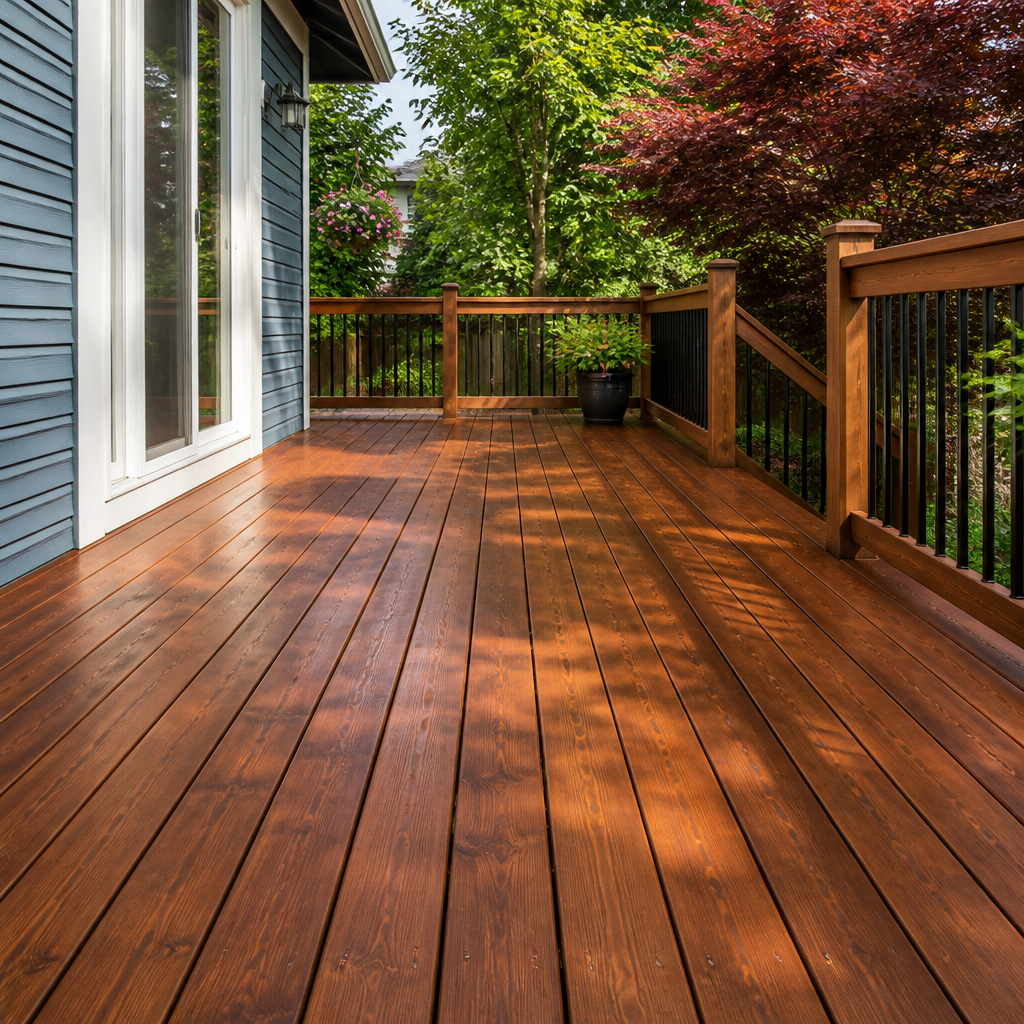
Timing is where many well-intentioned deck staining projects go wrong. The Fraser Valley is not a forgiving region when it comes to applying coatings in poor conditions, and the window of genuinely suitable weather is shorter than most homeowners assume.
Temperature and Humidity Requirements
The ideal conditions for exterior wood staining are temperatures between 10°C and 32°C (roughly 50°F to 90°F), low to moderate humidity, indirect sunlight, and no rain forecast for at least 48 hours before and after application. High humidity, above approximately 70%, slows the curing process and can lead to uneven adhesion, poor penetration, and mildew growing into the wet finish.
Never stain in direct sunlight. When your deck is in full sun, the surface temperature of the wood can far exceed the air temperature, causing the stain to skin over and dry before it has had time to penetrate into the grain. The result looks fine initially but fails much faster. Choose an overcast day, work in the early morning, or follow the shade as it moves across your deck.
The Best Months in the Fraser Valley
Late spring through early September is the most reliable window for exterior wood staining in the Fraser Valley. June, July, and August typically offer the combination of dry weather and moderate temperatures needed for a proper result. May can work well in drier years. Avoid starting a deck staining project in October or later unless you have specific knowledge that a dry spell of at least five consecutive days is confirmed in the forecast.
For fall maintenance specifically, the approach should shift to inspection and spot treatment rather than full recoats. Apply a final protective coat of stain or sealant before the autumn rains arrive, ideally in September, and clear debris and furniture so wood can dry as much as possible heading into the wet season.
Deck Finishing in Abbotsford, Langley, and the Broader Fraser Valley
Deck finishing in Abbotsford and across the Fraser Valley involves cedar and pressure-treated pine as the two most common decking materials. Cedar is prized for its natural resistance to rot and insects, but that resistance is not unlimited and fades significantly without regular maintenance. Pressure-treated lumber is durable but can be slow to accept stain when new, requiring a weathering period of several months before it absorbs product reliably.
In communities like Langley and Surrey, where properties often include large rear decks, pergolas, wood fences, and garden structures, the total area requiring treatment can be substantial. Homeowners sometimes focus on the deck boards themselves while neglecting railings, posts, and fascia boards, which are actually more exposed to moisture because they do not dry as quickly after rain. Treating the entire structure as a system, not just the walking surface, is the correct approach.
Exterior Wood Painting BC: When Staining Is Not the Right Answer
There are situations where exterior wood painting in BC makes more sense than transparent or semi-transparent staining. If a deck surface has deteriorated to the point where the grain structure is significantly damaged, where rot spots have been patched, or where the colour inconsistency is severe, a semi-solid or solid stain can mask those imperfections while still providing protection. The trade-off is the maintenance burden: once you go solid, future recoating requires stripping back to a clean surface if any peeling occurs.
Trim, soffits, fascia boards, window surrounds, and decorative exterior woodwork often call for a painted finish rather than a stain. These surfaces receive more direct weather exposure on their edges and ends, and a quality exterior paint with a good primer base will outperform a stain in longevity on these specific applications. The right call depends on the specific surface, its condition, and the look the homeowner wants to achieve.
How Often Should You Re-Stain or Refinish?
In the Fraser Valley, a well-applied semi-transparent penetrating stain on a properly prepared deck will typically last two to three years before needing maintenance. This is shorter than what you might see in drier climates, and that is simply the reality of maintaining outdoor wood in a high-moisture environment.
The signs that it is time to re-stain are straightforward: the colour has faded significantly, water is no longer beading on the surface, the wood feels rough and splintery, or you can see grey weathering and black mildew spots appearing. If water soaks into the surface rather than beading up, the protective finish has failed and you are past due for recoating.
Refinishing every two to three years through proper sanding and recoating keeps the job manageable. Skipping maintenance cycles means the surface degrades to a point where stripping becomes necessary, which is a significantly larger job. Staying on schedule is always cheaper than catching up.
For a structurally sound deck that has been left without treatment for several years, surface restoration through thorough cleaning, sanding, and full re-staining is still the right move before considering replacement. This approach can meaningfully extend the life of the wood and defer a major expense.
Frequently Asked Questions
How long should I wait after pressure washing before applying deck stain in the Fraser Valley?
After pressure washing, you need to wait until the wood reaches a moisture content at or below 15%, which you should confirm with a moisture meter rather than guessing. In the Fraser Valley, where humidity stays high, this can take anywhere from 48 hours to several days depending on the weather. Do not rely on how the surface looks, because wood can appear dry on top while remaining damp below the surface where it counts.
Can I stain my deck in the fall in Abbotsford or Langley?
It is possible in early September if the conditions cooperate, but the window is narrow. You need temperatures above 10°C, humidity below 70%, and a confirmed dry period of at least 48 hours before and after application. By October, the combination of cool nights, frequent rain, and elevated humidity in the Fraser Valley makes it very difficult to achieve conditions where stain will cure properly. September is your last reliable opportunity for a full recoat.
What type of wood stain works best for cedar decks in BC?
Semi-transparent, penetrating stains with UV stabilizers and mildewcides are the clear choice for cedar in BC. They absorb into the wood fibres, allow the material to breathe, and resist the peeling and blistering that film-forming finishes develop when moisture gets underneath. Oil-based and water-based semi-transparent options both perform well, though water-based formulas have particular advantages in damp conditions because they are more tolerant of slightly elevated moisture content in the wood.
Why does my deck stain keep peeling after only one season?
Premature peeling is almost always a preparation failure. The most common causes are staining over damp wood, not removing old failing finish before recoating, skipping the cleaning and sanding steps, or using a film-forming finish like deck paint in conditions where moisture can get underneath. In the Fraser Valley specifically, applying stain when humidity is too high or rain arrives within 48 hours of application will also cause adhesion failure. A solid or semi-solid stain applied over a deck that was not completely stripped of the old finish will peel every time.
Is it better to hire a professional painter for deck staining or do it myself?
For a deck in good condition that just needs routine recoating, a prepared and patient homeowner can get a good result. The honest answer is that most DIY deck staining failures come from rushing the prep phase or getting the timing wrong, not from applying the stain itself. For larger projects, older decks that need significant surface restoration, multi-level structures, or situations where the deck connects to the main exterior painting of the house, a professional crew will diagnose the right products, execute the prep correctly, and deliver a finish that actually lasts. The job looks simple but the variables that cause failure are real.
Does Dreamscape Painting handle deck staining and exterior wood finishing?
Yes. Dreamscape Painting has been handling exterior painting and wood finishing across the Lower Mainland and Fraser Valley for over 35 years. The team works on deck staining, exterior wood surfaces, fences, trim, and all components of a home’s exterior. If you are in Abbotsford, Langley, Surrey, or the surrounding Fraser Valley region, contact Dreamscape Painting for an estimate and let experienced professionals assess your deck’s specific condition and recommend the right approach.
If you have recently tackled a deck staining project in the Fraser Valley, share what worked for you and what you would do differently. Your experience helps other local homeowners make better decisions for their own outdoor spaces.
We would love your feedback and any insights you would share with others. What perspective would you add?
References
- Expert tips for protecting wood in BC’s coastal and high-humidity climate
- Deck weatherproofing techniques and seasonal maintenance guide for BC homeowners
- Complete deck maintenance guide for Vancouver’s wet and variable climate
- How dry wood needs to be before applying deck stain, with moisture meter guidance
- Seven essential maintenance tips for wood decks in rainy Vancouver conditions

