

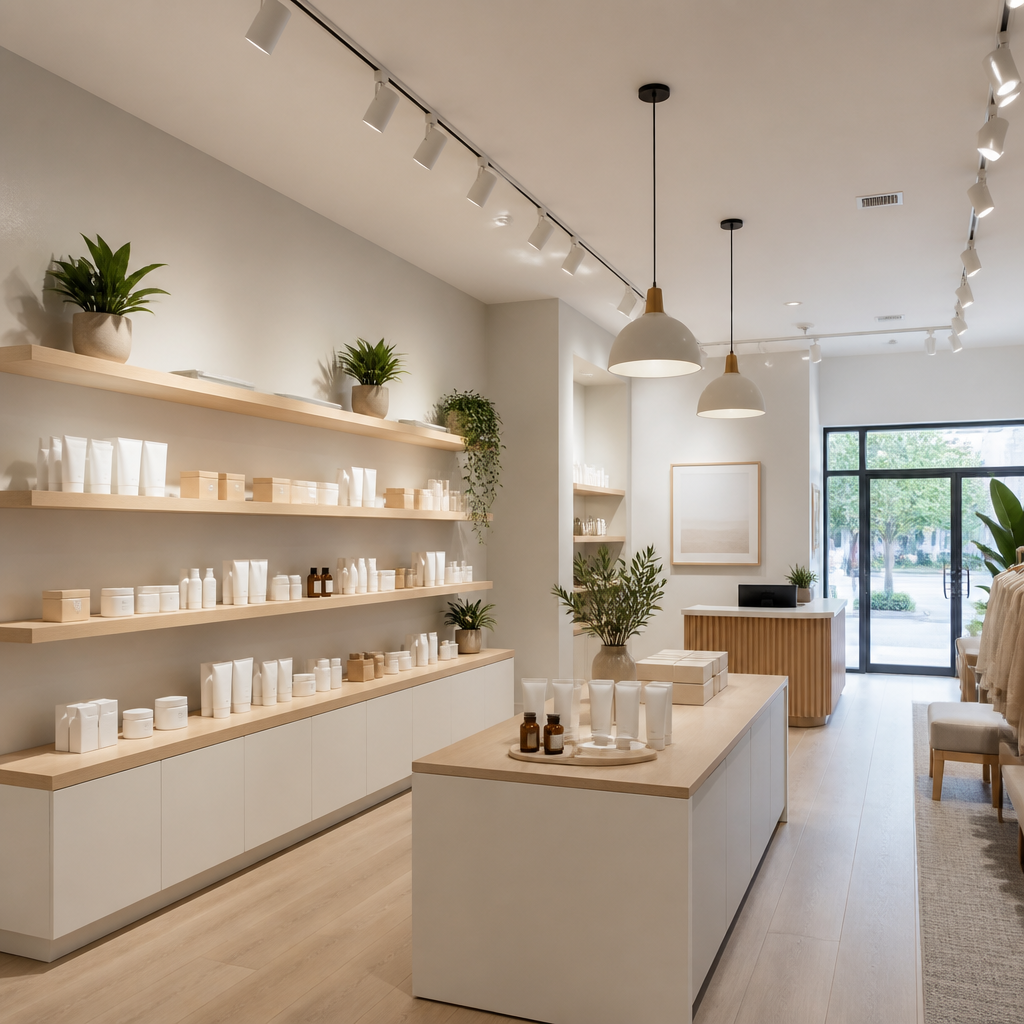
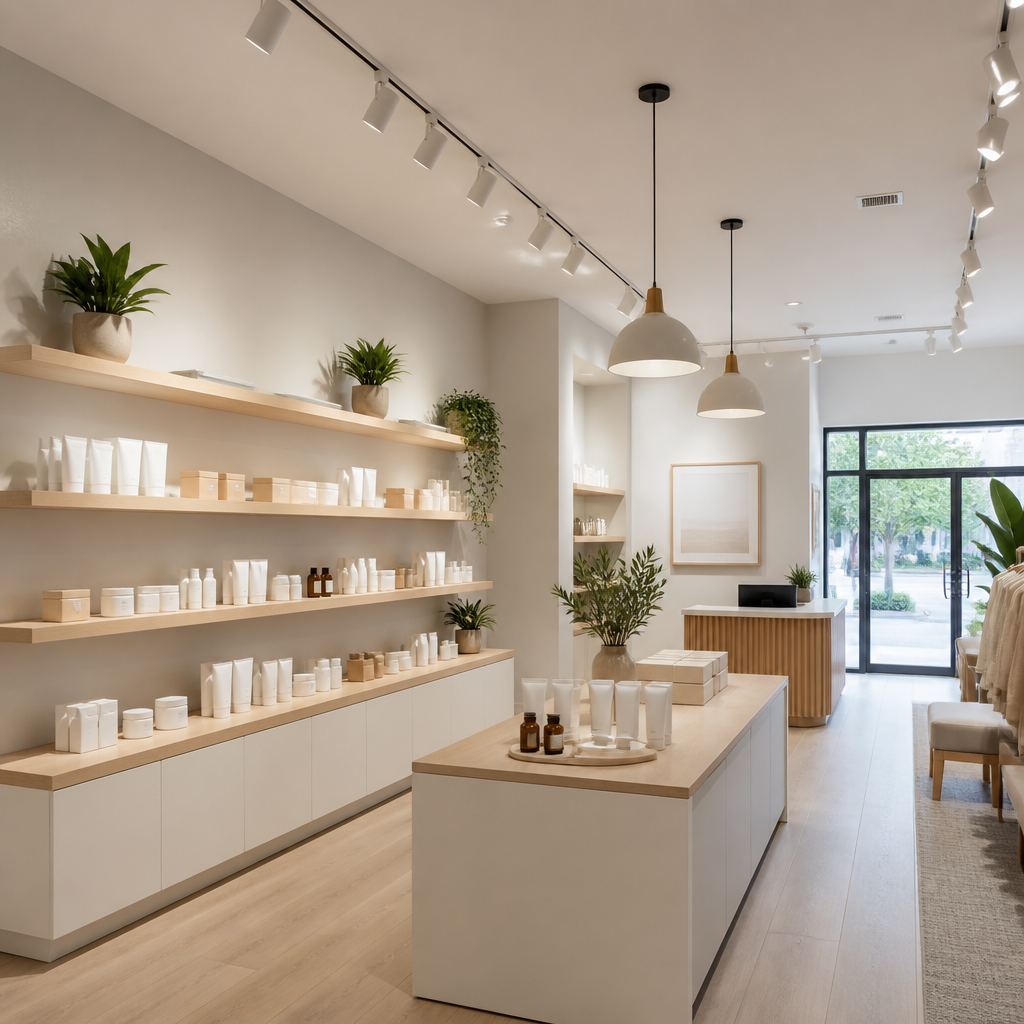
Your office or retail space makes a first impression before a single word is spoken. If the walls are scuffed, dated, or the colour scheme belongs to a decade that has long passed, that impression is working against you. Commercial painting in Surrey and Langley is one of the most cost-effective ways to reset that impression, lift staff morale, and signal to customers that your business is sharp and well-run. The Lower Mainland’s competitive commercial landscape means that appearance matters more than most owners admit, and a professional repaint is one of the few upgrades that delivers a visible result from day one.
Table of Contents
- Quick Takeaways
- Why Commercial Painting Matters for Surrey and Langley Businesses
- When to Repaint Your Office or Retail Space
- Choosing the Right Colours for Your Commercial Space
- Paint Finishes for Commercial Interiors and Exteriors
- Planning Your Commercial Paint Project Without Disrupting Business
- Interior vs. Exterior Commercial Painting: What to Prioritise First
- Frequently Asked Questions
- References
Quick Takeaways
| Key Insight | Explanation |
|---|---|
| Retail spaces need repainting more often than offices | High foot traffic, cart scuffs, and merchandise display changes mean retail walls typically show wear every 2 to 3 years, while moderate-traffic offices can stretch to 3 to 5 years. |
| Colour directly affects staff productivity | Colour psychology research consistently shows that workplace colour influences focus, mood, and energy. Blue tones support concentration; warm yellows and greens support creativity. |
| Finish selection is as important as colour | Semi-gloss and satin finishes hold up to cleaning in high-traffic corridors and retail floors. Flat or matte finishes may look refined in offices but scuff and stain easily in busy areas. |
| After-hours scheduling protects your operations | A competent commercial painting crew in Surrey or Langley can work evenings and weekends so your team arrives Monday morning to a freshly painted, ready-to-use space. |
| Exterior painting is a retention and acquisition tool | Faded or peeling exterior paint signals neglect to passersby and prospective tenants. Repainting before visible deterioration begins is cheaper than repairing damaged substrate later. |
| Proper prep is the difference between a 2-year and a 7-year paint job | Filling cracks, sanding surfaces, and priming correctly determines how long the finish lasts. Cutting corners on prep is the single most common cause of premature paint failure. |
| One contractor for interior and exterior saves time and money | Coordinating a single project through one experienced painting company reduces scheduling gaps, colour inconsistencies, and the cost of two separate site mobilisations. |
Why Commercial Painting Matters for Surrey and Langley Businesses
Surrey is one of the fastest-growing cities in British Columbia, and Langley’s commercial corridors have expanded significantly alongside residential growth across the Fraser Valley. More businesses competing for the same customers means the physical presentation of your space has a direct commercial consequence. A tired-looking storefront on a busy stretch of Fraser Highway or 200 Street is not a neutral detail. It actively costs you walk-in traffic.
This is not just about aesthetics. Commercial painting protects building materials from moisture, UV exposure, and surface degradation. In the Lower Mainland’s wet climate, unpainted or inadequately coated exterior surfaces absorb moisture, which leads to rot, mould, and costly structural repairs. Repainting on a sensible schedule is far cheaper than remediation work that stems from years of neglect.
Inside, fresh paint communicates care and professionalism to every client, customer, and employee who walks through the door. Staff who work in a clean, well-maintained environment consistently report higher job satisfaction. That matters in a tight labour market across the Lower Mainland, where attracting and keeping good people is already difficult enough without your workplace looking like it was last painted before the millennium.
When to Repaint Your Office or Retail Space
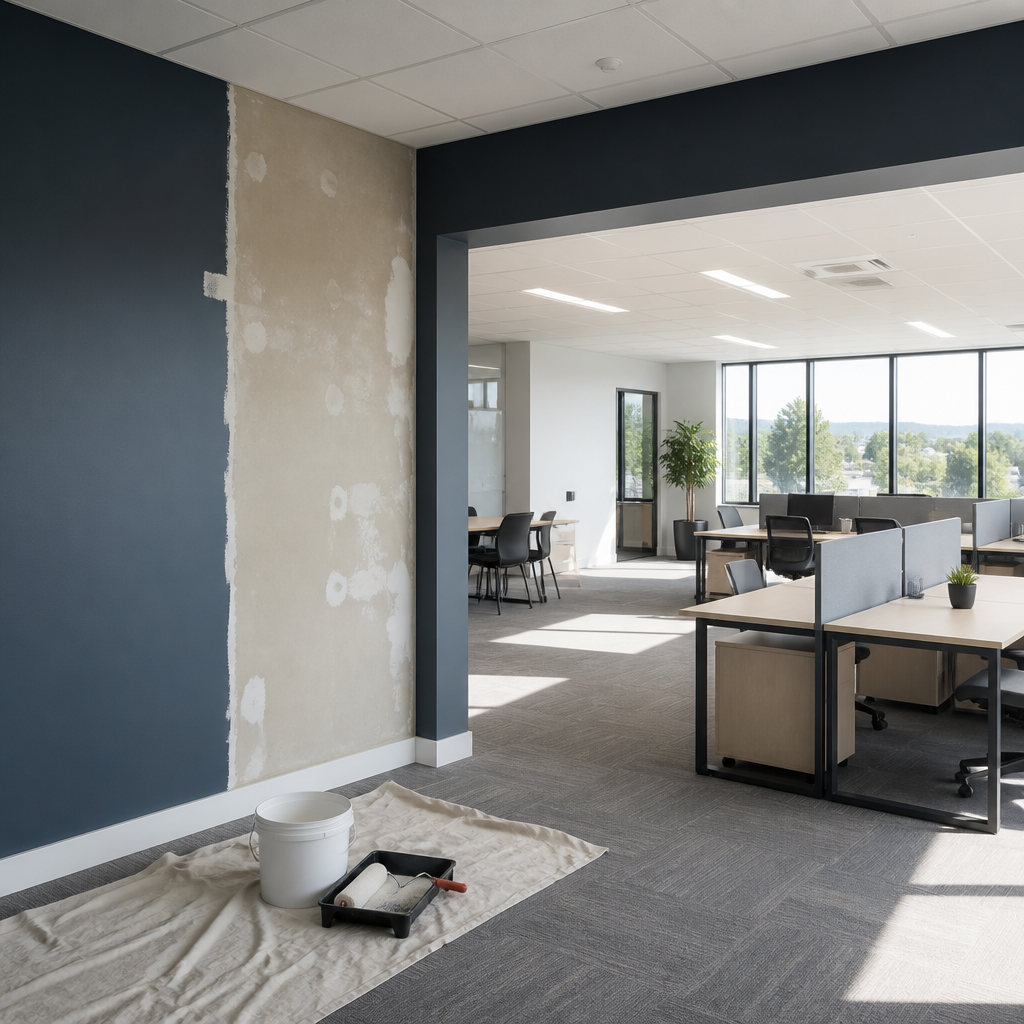
The honest answer is: more often than most business owners realise, and less often than a sales-driven estimator might suggest. The right interval depends on how hard your space gets used, what the last paint job involved, and what type of surface you are dealing with.
Office Spaces: 3 to 5 Years for Interiors
Office buildings with moderate foot traffic typically need interior repainting every 3 to 5 years, depending on how well the space is maintained between paint jobs. Reception areas and corridors see more wear than private offices and should be assessed on their own schedule rather than as part of a blanket whole-building timeline.
Watch for these signals: scuff marks that cleaning cannot remove, visible yellowing or discolouration around vents, fading colour near windows, and any area where the paint has begun to chip or peel. Any one of these means it is time to act.
Retail Spaces: Every 2 to 3 Years in High-Traffic Areas
Retail and restaurant spaces take considerably more punishment than offices. Shopping carts, clothing racks, customer bags, and the constant movement of people against walls mean that a finish that looks polished at year one can look genuinely shabby by year two. High-traffic retail businesses often need repainting every 2 to 3 years in the most-used areas, even with a quality paint job in place.
Pro tip: Do not wait until your store looks bad to schedule a repaint. Book your commercial painting project for a quieter trading period, such as early January or mid-autumn in the Lower Mainland, so the disruption falls outside your peak revenue window.
Exterior Commercial Surfaces: A Broader Range
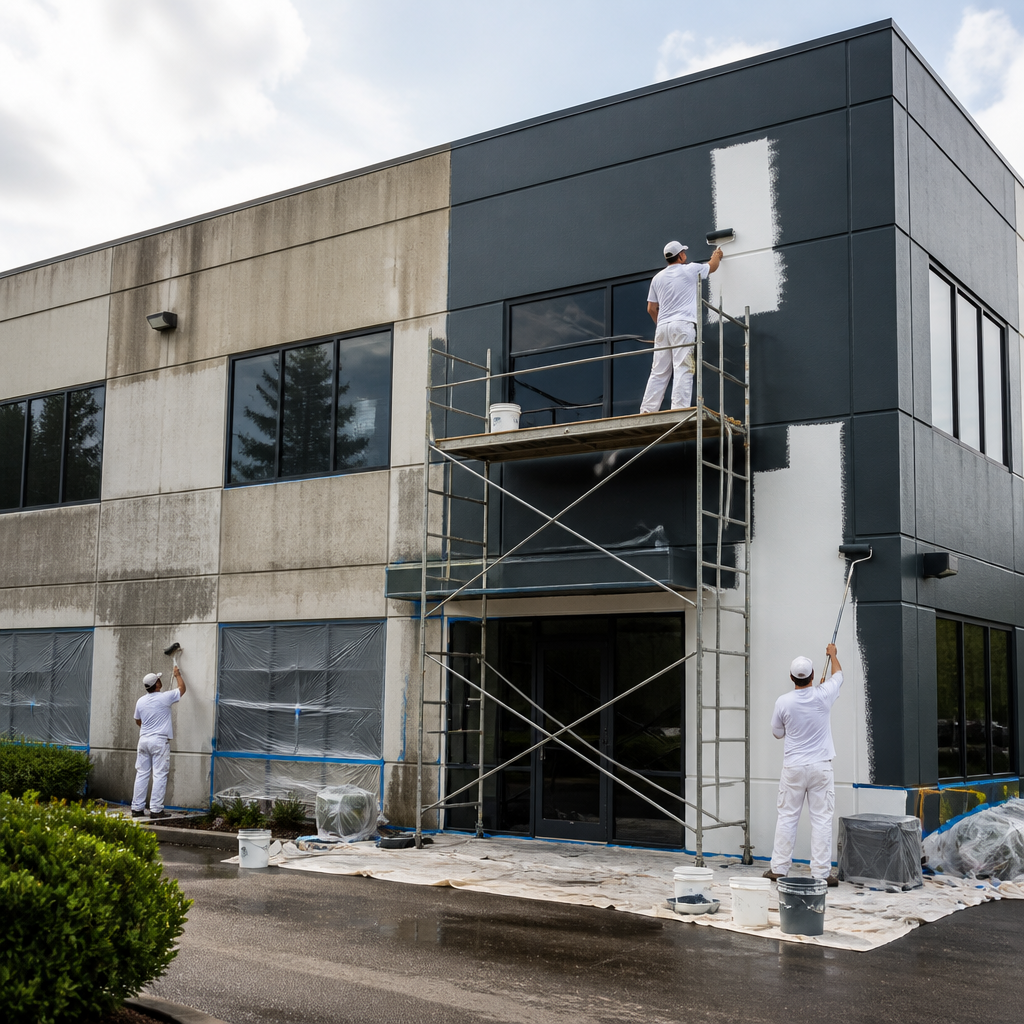
Most commercial buildings need exterior repainting on a range of anywhere from 3 to 7 years, with the actual interval driven by the materials involved, the quality of the previous coating, and how much sun and rain the surface absorbs. South-facing walls in Surrey and Langley take more UV exposure and may need attention sooner. Wood siding requires more frequent maintenance than concrete or fibre-cement cladding.
Choosing the Right Colours for Your Commercial Space
Colour selection is where many commercial painting projects either succeed or miss the mark. The worst outcome is choosing a colour because it was the owner’s personal preference, without thinking about how it functions in the space 8 hours a day, 5 days a week.
Colour Psychology in the Office
The research on colour in commercial environments is clear enough to act on. Blue tones, particularly mid-range blues and blue-greys, are consistently associated with focus and calm, which makes them effective in open-plan offices and task-heavy workspaces. Green tones sit at a natural equilibrium point for the human eye and tend to reduce visual fatigue over long work days. Yellow, used carefully, supports creative thinking but becomes fatiguing when overused on large surfaces.
The colours chosen for a commercial workspace impact occupants’ productivity, creativity, concentration, and energy levels. That is not just a wellbeing consideration. It is a business decision.
Neutral backdrops, specifically warm whites, soft greys, and greige tones, remain the workhorse of commercial office interiors because they photograph well for marketing, age gracefully, and do not impose on staff who spend all day in the space. They pair easily with branded accent colours on feature walls, which is an effective strategy for companies wanting to bring their identity into the workplace without committing the whole office to a bold hue.
Colour Strategy for Retail Environments
Retail requires a different calculus. Here the goal is to set a mood that supports purchasing decisions and keeps customers comfortable enough to browse. Warm whites and soft neutrals work for boutiques and showrooms where the product itself needs to stand out. Energetic colours like deep red, warm orange, and rich teal work for food and beverage retail where you want to stimulate appetite and energy. Darker accent colours on lower walls in retail environments can also disguise the scuffing that accumulates quickly at floor level.
Pro tip: Use a colour that appears in your logo or brand palette as a single accent wall or fascia colour, and keep the remaining surfaces in a complementary neutral. This approach ties the space to your brand identity without the maintenance cost of a fully saturated colour on every wall.
Paint Finishes for Commercial Interiors and Exteriors
Colour gets the attention, but finish selection determines how long your investment lasts. In a commercial environment, this decision has a real impact on maintenance costs and cleaning time over the life of the paint job.
Interior Finish Options
For high-traffic corridors, restrooms, kitchens, and retail floors, a semi-gloss or satin finish is the correct choice. These surfaces can be wiped down without damaging the paint film. Eggshell is acceptable for moderate-traffic office interiors where scuffing is less frequent. Flat or matte finishes are best reserved for low-traffic feature walls and ceilings where cleanability is not a priority.
A common mistake in commercial spaces is specifying the same finish throughout to simplify procurement. In practice, a corridor that gets a flat finish will look dirty within months, and no amount of cleaning will restore it. Specifying finishes by zone is worth the extra step at the planning stage.
Exterior Finish Considerations
Exterior commercial coatings need to handle moisture, temperature cycling, UV exposure, and in the Lower Mainland, significant rainfall. Elastomeric coatings are well-suited to concrete and masonry surfaces because they bridge minor surface cracks and remain flexible through temperature changes. Acrylic latex finishes dominate most commercial exterior applications for wood and fibre-cement because of their durability, breathability, and ease of application. Avoid alkyd-based finishes on exteriors unless you are dealing with specific metal surfaces that require them, as they are more prone to chalking and cracking over time in wet climates.
Planning Your Commercial Paint Project Without Disrupting Business
This is where many business owners get nervous, and understandably so. The idea of having painters on-site during business hours, moving equipment and furniture, and dealing with paint smell during client meetings is genuinely disruptive. The good news is that a well-organised commercial painting contractor in Surrey or Langley will handle this as a scheduling and logistics problem, not just a painting one.
Phased and After-Hours Scheduling
The standard approach for occupied commercial spaces is to work in phases. A section of the office or retail floor is cleared, painted, and returned to use before the next section is started. Alternatively, for smaller spaces or complete overhauls, after-hours and weekend scheduling means your staff arrives on Monday morning to a freshly painted space with no exposure to active painting work during business hours.
When speaking with a painting contractor in the Lower Mainland, ask specifically whether they have experience with phased commercial work. A residential crew that occasionally takes commercial jobs is not the same as a company that regularly manages multi-day commercial projects in occupied buildings.
Ventilation and Odour Control
Modern low-VOC and zero-VOC commercial paints have significantly reduced the issue of paint odour in occupied spaces. Choosing a low-VOC product for interior commercial work is worth the marginal cost difference, particularly in office environments where staff would otherwise spend a week working through paint fumes. Good contractors will specify appropriate products for occupied settings without needing to be asked.
Site Protection and Cleanup
A professional commercial crew protects flooring, furniture, fixtures, and equipment before any painting begins. In retail environments, this includes protecting display cases, shelving, and any branded signage. Ask to see the contractor’s process for daily cleanup, particularly in retail spaces where the floor needs to be clean and safe for customers if you are staying open during a phased project.
Interior vs. Exterior Commercial Painting: What to Prioritise First
If your budget is limited and you cannot address the entire building at once, the question of where to start matters. The comparison below outlines how the two scopes differ and what each delivers.
| Factor | Interior Commercial Painting | Exterior Commercial Painting |
|---|---|---|
| Primary benefit | Employee morale, client perception, brand reinforcement | Curb appeal, moisture protection, structural preservation |
| Urgency driver | Visible scuffing, fading, dated colour scheme | Peeling, cracking, substrate exposure, mould growth |
| Weather dependency | None, can proceed year-round | Requires dry conditions above a minimum temperature; Lower Mainland summers are ideal |
| Business disruption | Managed through phased or after-hours scheduling | Generally lower disruption as work is external |
| Recommended interval | Every 2 to 5 years depending on traffic | Every 3 to 7 years depending on materials and exposure |
| Best for Lower Mainland timing | Any season, with low-VOC products in occupied spaces | Late spring through early autumn for best conditions |
In practice, if your exterior is showing active paint failure, that takes priority. Peeling paint allows moisture to reach the substrate, which creates repair costs that dwarf a repainting budget. If the exterior is holding but the interior looks tired and your business is customer-facing, the interior will deliver a faster return on the investment in terms of how the space feels to staff and clients.
Dreamscape Painting handles both interior and exterior commercial painting across Surrey, Langley, Abbotsford, and the wider Lower Mainland, which means you can coordinate a full building refresh under one project rather than splitting it across multiple contractors. Their service area coverage spans the full Fraser Valley, and their commercial painting services are structured specifically for business environments where timing, cleanliness, and minimal disruption are not optional extras.
Frequently Asked Questions
How much does commercial painting in Surrey or Langley typically cost?
Commercial painting costs vary significantly based on the size of the space, the number of coats required, surface preparation involved, and whether the work needs to happen outside of business hours. Rather than estimating from a per-square-foot figure, which can be misleading without knowing the full scope, the most reliable approach is to request an on-site estimate from a painting contractor who works regularly in the Lower Mainland commercial sector. Dreamscape Painting offers estimates across Surrey, Langley, and the surrounding Fraser Valley region.
Can painters work around my business hours so we do not have to close?
Yes, and this is standard practice for experienced commercial painting crews in the Lower Mainland. Phased daytime work, after-hours scheduling, and weekend-only projects are all feasible approaches depending on your space and timeline. The key is discussing this at the estimate stage so the contractor can account for it in their scheduling and pricing. A crew that cannot accommodate flexible scheduling is probably not the right fit for an occupied commercial space.
What paint finishes should I use in a busy retail environment?
For retail environments with significant foot traffic, satin and semi-gloss finishes are the practical choice for walls and trim. They can be wiped down without damaging the paint film, and they hold up to the kind of contact that retail walls take daily. Reserve eggshell for lower-traffic areas such as stockrooms or office spaces off the shop floor, and use flat finishes on ceilings only.
How long will a commercial interior paint job last in a high-traffic space?
With proper surface preparation and quality commercial-grade paint products, a high-traffic retail interior should hold up well for 2 to 3 years before touch-up work becomes necessary, and a full repaint may not be needed for 3 to 5 years in the less-trafficked areas. This range shifts significantly based on how well the prep work was done and whether the right finish was specified for each zone. A rushed job with inadequate priming will begin showing wear within the first year regardless of the paint brand used.
Does Dreamscape Painting take on commercial painting projects in Surrey and Langley?
Yes. Dreamscape Painting is a Lower Mainland-based family-owned company that has been serving the Fraser Valley, including Surrey and Langley, for over 35 years. They handle commercial painting alongside interior and exterior residential work and cabinet refinishing. Their estimators assess commercial projects on-site so that the scope, scheduling, and product specification are matched to the actual conditions of your space.
Should I repaint my office exterior before or after winter in the Lower Mainland?
The best window for exterior commercial painting in Surrey and Langley is between late spring and early autumn, roughly May through October, when rainfall is less frequent and temperatures are consistently above the minimum required for paint adhesion and curing. If your exterior is already showing active paint failure heading into autumn, address it before winter arrives rather than waiting, since moisture penetration over a wet Lower Mainland winter will accelerate the damage significantly.
What is office painting Langley businesses should prioritise first: reception areas or open-plan floors?
Reception areas should always come first. This is the first space every client, visitor, and prospective employee sees, and its condition sets the tone for the entire visit. An open-plan floor matters for staff morale and daily experience, but it is the reception and meeting room spaces that carry the most commercial weight in terms of first impressions. Once reception and client-facing areas are addressed, schedule the open-plan floor during a phase that works around the team’s workflow.
If you have had a commercial painting project done in Surrey or Langley recently, share what worked and what you would do differently. Your experience could be genuinely useful to another business owner planning the same process.
We would love your feedback and any insights you would share with others. What perspective would you add?
References
- Guide to commercial interior repainting intervals and what determines how long a paint job lasts
- How often commercial buildings should be repainted, covering interior and exterior schedules
- Colour psychology in commercial office environments and how paint colour affects productivity
- How colour choices in commercial painting influence customer behaviour and employee performance
- After-hours and phased commercial painting scheduling for occupied business spaces in the Lower Mainland

