

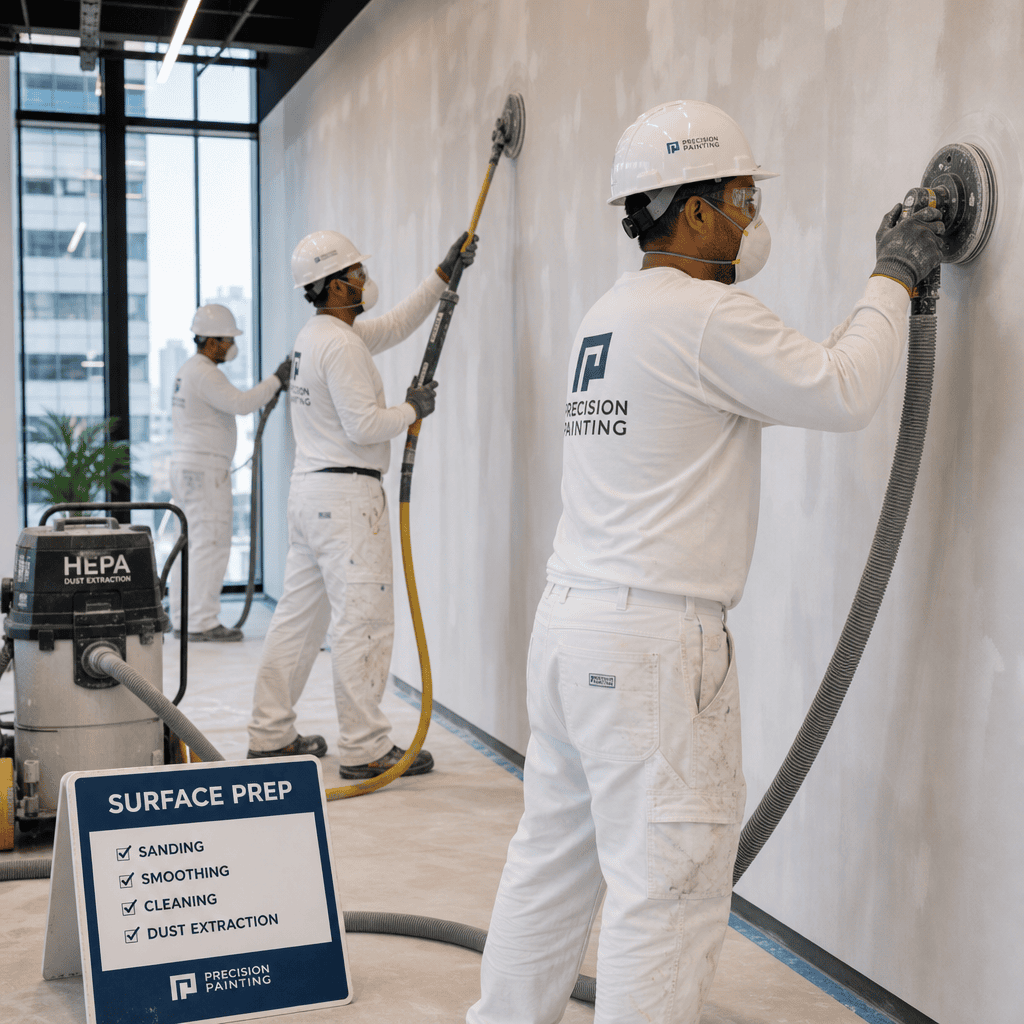
Most commercial painting projects in Surrey and the Lower Mainland go sideways not because of bad paint, but because of bad process. Timelines slip, surfaces are prepped poorly, and crews show up without a clear scope of work. Property managers and business owners across the Fraser Valley deal with this repeatedly, cycling through contractors who underdeliver. Commercial painting Surrey projects demand a different standard, one that accounts for occupied spaces, strict scheduling windows, and the kind of finish quality that reflects on your brand or tenants. Dreamscape Painting Ltd. has been setting that standard since 1990.
Table of Contents
- Quick Takeaways
- Why Commercial Painting Is Different from Residential Work
- The Dreamscape Commercial Painting Process
- Surrey and Lower Mainland Coverage: What It Actually Means
- Common Mistakes Commercial Painting Contractors Make
- Comparing Commercial Painting Approaches in BC
- Frequently Asked Questions
- References
Quick Takeaways
| Key Insight | Explanation |
|---|---|
| Surface preparation drives final quality | In commercial environments, skipping prep on high-traffic surfaces leads to peeling within months. Dreamscape’s crews treat prep as non-negotiable, not optional. |
| Occupied-space protocols matter | Painting around active staff or tenants requires MSDS-compliant low-VOC products and phased scheduling. This is standard practice at Dreamscape, not an upsell. |
| 35 years of Lower Mainland experience | Dreamscape has been operating since 1990, giving them real knowledge of BC’s climate conditions, substrate types, and regional building codes that newer contractors simply lack. |
| Estimators who understand commercial scope | Accurate quotes require experienced estimators who can read commercial drawings and identify hidden scope. Dreamscape’s estimating team does this before any contract is signed. |
| Cleanliness is part of the service | Commercial clients report that job-site cleanliness is one of the top differentiators. Dreamscape protects flooring, furniture, and fixtures throughout every project stage. |
| Fine finish painting for commercial interiors | Boardrooms, lobbies, and retail spaces require fine finish painting skills. Dreamscape’s painters are trained beyond standard roll-and-brush applications. |
| Single point of contact accountability | Commercial clients working with Dreamscape get consistent communication, not handoffs between subcontractors who don’t know the project history. |
Why Commercial Painting Is Different from Residential Work
The gap between residential and commercial painting is wider than most property owners expect when they first start sourcing quotes. A residential painter who does excellent work in a three-bedroom home is not automatically equipped to handle a 12,000-square-foot office building with active occupants, fire-rated assemblies, and a two-week completion deadline.
Commercial painting in Surrey and across the Lower Mainland involves a distinct set of requirements. Scheduling must accommodate business hours, tenant leases, or retail trading windows. Product selection must account for durability in high-footfall zones, compliance with WorkSafeBC air quality guidelines in occupied spaces, and the adhesion demands of commercial substrates like concrete block, metal cladding, and drywall over steel stud framing.
Durability Standards Are Higher
In a commercial setting, paint in corridors, stairwells, and washrooms is subjected to far more physical contact than anything in a home. Scrubbability ratings, sheen selection, and primer compatibility all directly affect how long a finish holds up. A common mistake is using a residential-grade product at a commercial price point. The finish looks identical at handover but begins chipping within a year.
Dreamscape’s team specifies products appropriate to each surface type and traffic level, drawing on decades of practical experience with commercial substrates across the Fraser Valley and Greater Vancouver.
Scheduling Is a Technical Skill
For commercial painters operating in the Lower Mainland, the ability to phase work around occupied spaces is genuinely a technical skill. It requires sequencing rooms, managing dry times in BC’s variable coastal humidity, and coordinating with building managers to avoid disrupting operations. This is not something a crew learns on its first few commercial jobs.
The Dreamscape Commercial Painting Process
Dreamscape Painting Ltd. approaches every commercial project with a documented process that begins well before a painter sets foot on site. This is where the difference between a 35-year-old company and a newer operator becomes immediately visible.
Pre-Project Site Assessment
Every commercial engagement starts with a thorough site walkthrough conducted by an experienced estimator, not a salesperson. The estimator identifies substrate conditions, existing coatings, moisture concerns, and access limitations. This assessment shapes both the quote and the production plan, which means there are no surprise change orders once work begins.
In practice, this step alone eliminates the majority of disputes that plague commercial painting projects in BC. When scope is defined accurately upfront, timelines and budgets hold.
Product Specification and Approval
Dreamscape specifies products by name and manufacturer before work begins, submitting product data sheets to the client or their property manager when required. This transparency is standard in institutional and strata projects but rare among smaller commercial painters Lower Mainland operators. Clients know exactly what is going on their walls and why.
“Specifying the right paint system for a commercial substrate is as important as the application itself. The wrong primer under the right topcoat will still fail. Experience tells you which combinations hold up in BC’s coastal climate.” – Dreamscape Painting Ltd., field estimator notes from Fraser Valley commercial projects.
On-Site Execution and Cleanliness Standards
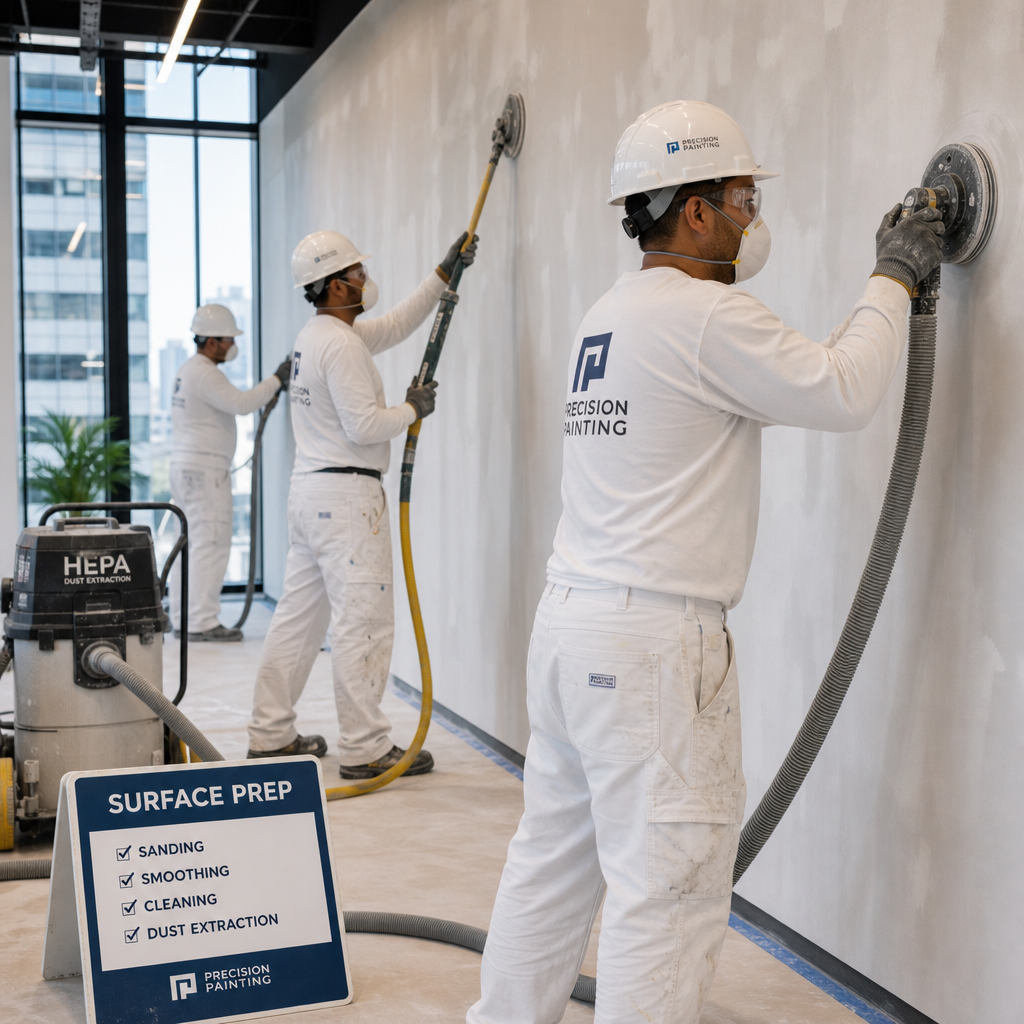
Dreamscape’s painters protect every surface that is not being painted. This means floor coverings, door hardware, light fixtures, and furniture are masked or moved before any spray or roller application begins. At the end of each day, the work area is left in a condition that does not disrupt the client’s operations overnight.
Pro tip: When evaluating commercial painting contractors, ask specifically what their end-of-day cleanup protocol is. Contractors who cannot describe it in detail are telling you something important about their operational maturity.
Surrey and Lower Mainland Coverage: What It Actually Means
Dreamscape Painting Ltd. serves the entire Lower Mainland and Fraser Valley, which includes Surrey, Langley, Abbotsford, and Vancouver. For commercial clients, regional coverage matters for a specific reason: it means the crew showing up is familiar with local suppliers, regional inspection requirements, and the logistical realities of working in different municipalities.
Commercial painting Vancouver projects often involve heritage buildings with specific coating restrictions. Commercial painting Surrey projects frequently involve newer strata commercial units with developer-grade drywall finishes that require careful surface preparation before painting. Abbotsford and Langley properties often include industrial or agricultural-adjacent facilities with unique substrate demands. Dreamscape has operated across all of these environments for over three decades.
Why Local Experience Directly Affects Quality
BC’s coastal climate creates specific painting challenges that contractors from outside the region consistently underestimate. Humidity levels in the Fraser Valley can vary dramatically between seasons, affecting dry times, adhesion windows, and the risk of flash rusting on exterior metal surfaces. A contractor who has been painting in this region since 1990 has encountered and solved these problems repeatedly.
This is not a minor advantage. The data consistently shows that paint failures on commercial exteriors in the Lower Mainland are disproportionately caused by application in adverse humidity conditions, not by product quality. Knowing when not to paint is as important as knowing how.

Common Mistakes Commercial Painting Contractors Make
After 35 years in this market, Dreamscape’s team has seen the same failures repeat themselves across BC’s commercial painting sector. Understanding these mistakes helps property managers and business owners ask better questions before signing a contract with any contractor.
Underestimating Prep Time on Commercial Surfaces
A common mistake is treating commercial prep the same as residential prep. Commercial buildings often have existing paint layers applied by multiple contractors over decades, with incompatible systems layered on top of each other. Without proper testing and mechanical preparation, a new topcoat can delaminate within months regardless of its quality.
Dreamscape’s estimators identify existing coating systems during their site assessment and specify the appropriate preparation approach, whether that means mechanical scraping, chemical stripping, or a specialized bonding primer.
Ignoring VOC Compliance in Occupied Spaces
WorkSafeBC regulations and BC’s environmental management framework set clear standards for VOC emissions in occupied commercial spaces. Using non-compliant products in an active office building is both a legal risk and a practical one: it forces project shutdowns and damages the client relationship. Painting contractor commercial BC operators who skip this step are creating liability for their clients.
Dreamscape uses low-VOC and zero-VOC formulations where required, and documents product selections for client records. This is standard operating procedure, not an additional service tier.
Overcommitting on Timeline Without Buffer
Commercial projects almost always encounter minor complications: an elevator out of service, a tenant who needs 48 hours notice before access, unexpected moisture in a concrete substrate. Contractors who build zero buffer into their timeline guarantees are setting up a conflict.
Dreamscape’s project planning includes realistic contingency allowances, and the team communicates proactively when a phase is running ahead or behind schedule. This keeps property managers informed and prevents the kind of last-minute chaos that derails commercial handovers.
Pro tip: Ask any commercial painting contractor you are considering to walk you through how they handled a project complication on a past job. Their answer will tell you more about their operational quality than any reference list.
Comparing Commercial Painting Approaches in BC
Not all commercial painters operating in Surrey and the Lower Mainland work the same way. The table below compares three distinct operational approaches common in the BC market, helping property owners understand what they are actually buying when they select a contractor.
| Approach | Typical Characteristics | Risk Profile for Commercial Clients |
|---|---|---|
| Large volume, fast-turnaround operators | High crew turnover, standardized product lists regardless of substrate, aggressive pricing, limited pre-job assessment, subcontracted labour common | High. Inconsistent quality across crew rotations. Limited accountability after handover. Prep shortcuts common under time pressure. |
| Single-trade generalist contractors | Residential-focused operators taking on occasional commercial work, limited experience with commercial substrates and scheduling, lower overhead but also lower commercial expertise | Medium to High. Product selection may be inappropriate for commercial durability standards. Scheduling flexibility limited by residential workload. |
| Established regional specialists (Dreamscape model) | Experienced estimators, dedicated commercial crews, documented processes, product specification by substrate, WorkSafeBC-compliant VOC practices, 35-year regional track record | Low. Consistent results, clear communication, accountability built into standard operating procedure. Experienced with Lower Mainland site conditions. |
The pricing gap between these approaches is frequently smaller than commercial clients assume, particularly when factoring in remediation costs when a low-bid project fails within the first year. In practice, the cost of repainting a commercial space after a premature failure is almost always higher than the premium paid for a qualified contractor upfront.
Frequently Asked Questions
How do I get an accurate quote for commercial painting in Surrey?
The most reliable quotes come from contractors who conduct an in-person site assessment before submitting any pricing. Dreamscape Painting Ltd. sends experienced estimators to every commercial site to evaluate substrate conditions, existing coatings, access constraints, and scope before producing a quote. Quotes generated from photos or square footage alone are almost always inaccurate in either direction.
Can commercial painting be done without disrupting business operations?
Yes, and any experienced commercial painting contractor should offer a phased work plan that accommodates your operating hours. Dreamscape routinely schedules commercial projects in phases, working evenings, weekends, or section by section to keep disruption minimal. Low-VOC products are used where staff or tenants remain in adjacent spaces during application.
What is the difference between commercial and residential painting for exterior work?
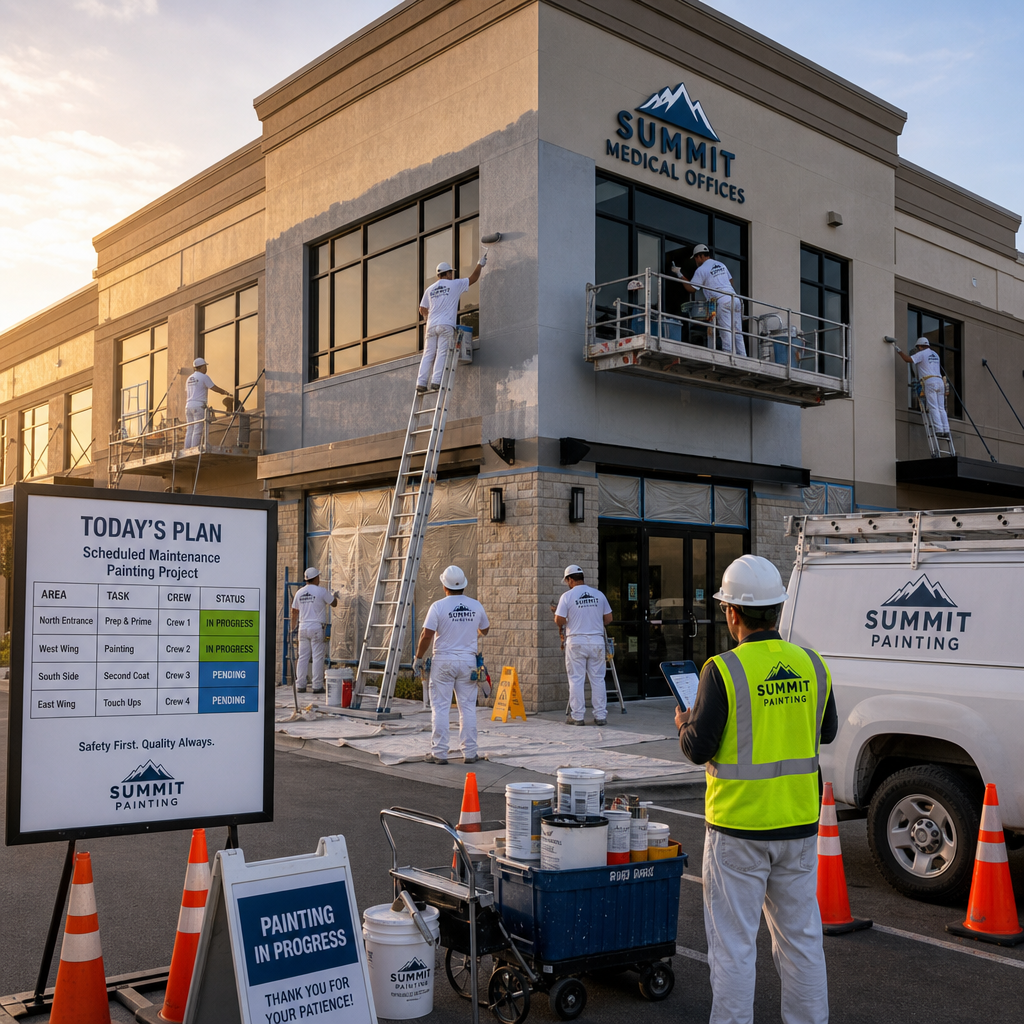
Commercial exterior painting in the Lower Mainland often involves larger surface areas, more complex access requirements such as scaffolding or boom lifts, and substrate types including stucco, concrete, metal cladding, and EIFS that require specific preparation and product selection. The scheduling pressure is also different because a commercial exterior affects building occupants, tenant businesses, and in some cases strata regulations. Dreamscape has handled all of these scenarios across the Fraser Valley and Greater Vancouver for over three decades.
Does Dreamscape handle strata commercial properties in Surrey and Langley?
Yes. Strata commercial properties are a regular part of Dreamscape’s workload across Surrey, Langley, and Abbotsford. These projects often require coordination with strata councils, adherence to colour and material specifications, and scheduling that respects shared property rules. Dreamscape’s estimators are experienced with strata project requirements and can work directly with property managers throughout the process.
How does Dreamscape ensure paint quality holds up in BC’s climate?
BC’s coastal humidity and temperature cycling are hard on exterior coatings, particularly on the Lower Mainland. Dreamscape’s team monitors weather conditions before and during exterior applications, adheres strictly to manufacturer-specified temperature and humidity application windows, and selects products tested for performance in Pacific Northwest conditions. This is not something that can be shortcut on a commercial project with a multi-year durability expectation.
What commercial property types does Dreamscape paint?
Dreamscape works across a wide range of commercial property types including office buildings, retail spaces, industrial facilities, strata commercial units, medical and dental offices, restaurants, and multi-unit residential buildings. Their cabinet refinishing service also applies to commercial millwork in hospitality and retail environments. The consistent factor across all project types is the same preparation standards and crew accountability.
How far in advance should I book commercial painting services in the Lower Mainland?
For commercial projects requiring more than one week of on-site work, booking four to six weeks in advance is realistic during peak season from late spring through early fall. Dreamscape recommends early consultation even for projects with flexible start dates, because the estimating and product specification process takes time to do correctly. Last-minute bookings are sometimes possible but should not be relied upon for time-sensitive commercial handovers.
If you have worked with a commercial painting contractor in Surrey or the Lower Mainland recently, we would genuinely like to hear what mattered most to you in that experience.
We would love your feedback and any insights you would share with others. What perspective would you add?
References
- WorkSafeBC official site covering occupational health standards including VOC exposure limits for painting contractors in British Columbia
- Statista industry data and market statistics covering construction and commercial painting sector trends in Canada
- Forbes business coverage including contractor selection criteria and commercial property maintenance best practices
- National Research Council of Canada research on building envelope performance and coating durability in Canadian climate conditions
- Government of Canada environmental regulations covering VOC limits and compliant coating products for commercial applications

