Choosing the wrong exterior colour in the Fraser Valley does not just look bad. It can drop your home’s perceived value before a buyer even steps out of the car. With exterior paint colours 2026 shifting decisively away from the cool greys that dominated the last decade, homeowners in Abbotsford, Langley, and Surrey are facing a real decision: follow the trend or play it safe and fall behind. At Dreamscape Painting Ltd., we see hundreds of exterior projects across the Lower Mainland every year, and the colour conversations we are having right now are fundamentally different from those we had in 2022.
Table of Contents
- Quick Takeaways
- Why Fraser Valley Exterior Colours Differ from National Trends
- Top Trending Exterior Paint Colours for 2026
- Best Colour Choices by Home Style in the Lower Mainland
- Colours That Are Fading Fast in 2026
- Colour Strategy Comparison: Safe vs. Trending vs. Bold
- How Fraser Valley Light Affects Your Final Colour Result
- What to Expect When Working with a Professional Exterior Painter
- Frequently Asked Questions
- References
Quick Takeaways
| Key Insight | Explanation |
|---|---|
| Warm neutrals are replacing cool greys | Benjamin Moore and Sherwin-Williams both named warm off-whites and earthy taupes as their dominant 2025-2026 exterior direction. Fraser Valley homes are already reflecting this shift. |
| Deep olive and forest greens are peaking | Earthy greens read as luxurious against the natural backdrop of the Fraser Valley, and they photograph exceptionally well for real estate listings. |
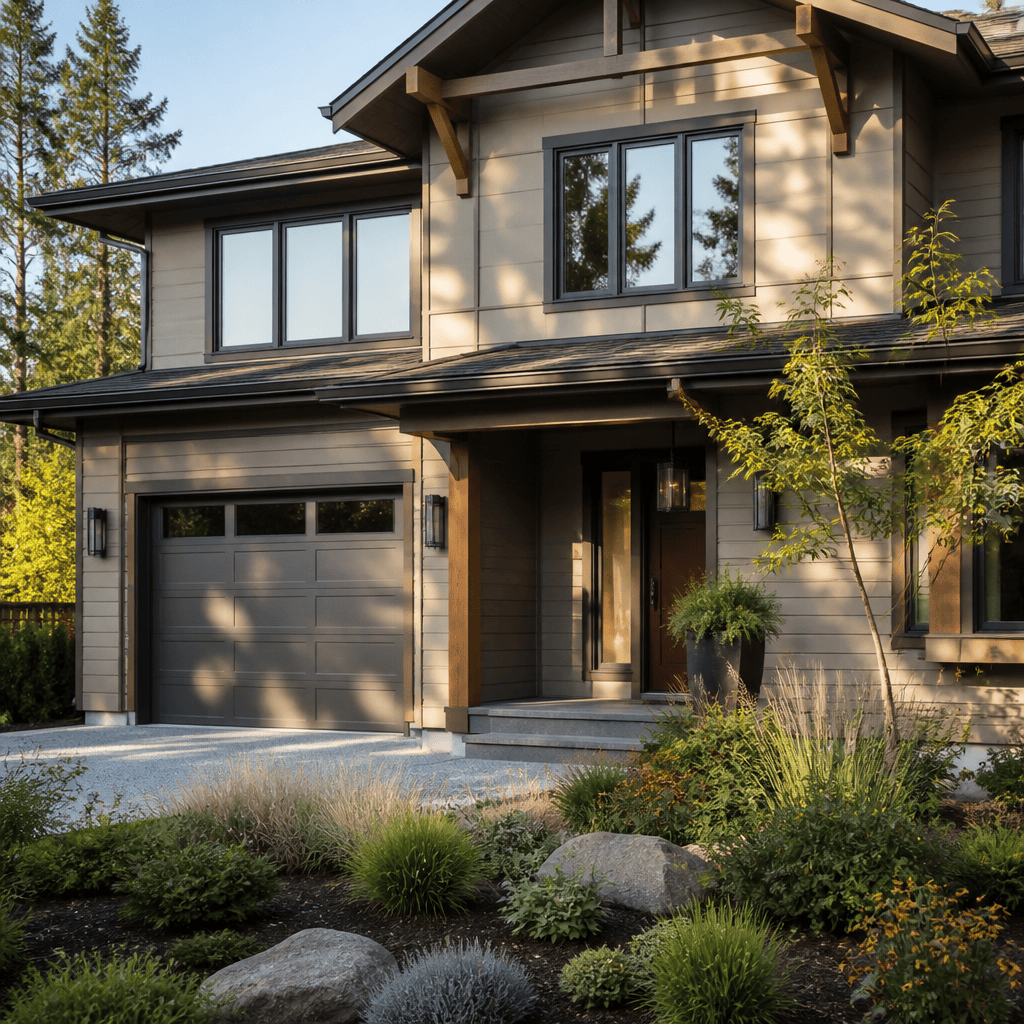
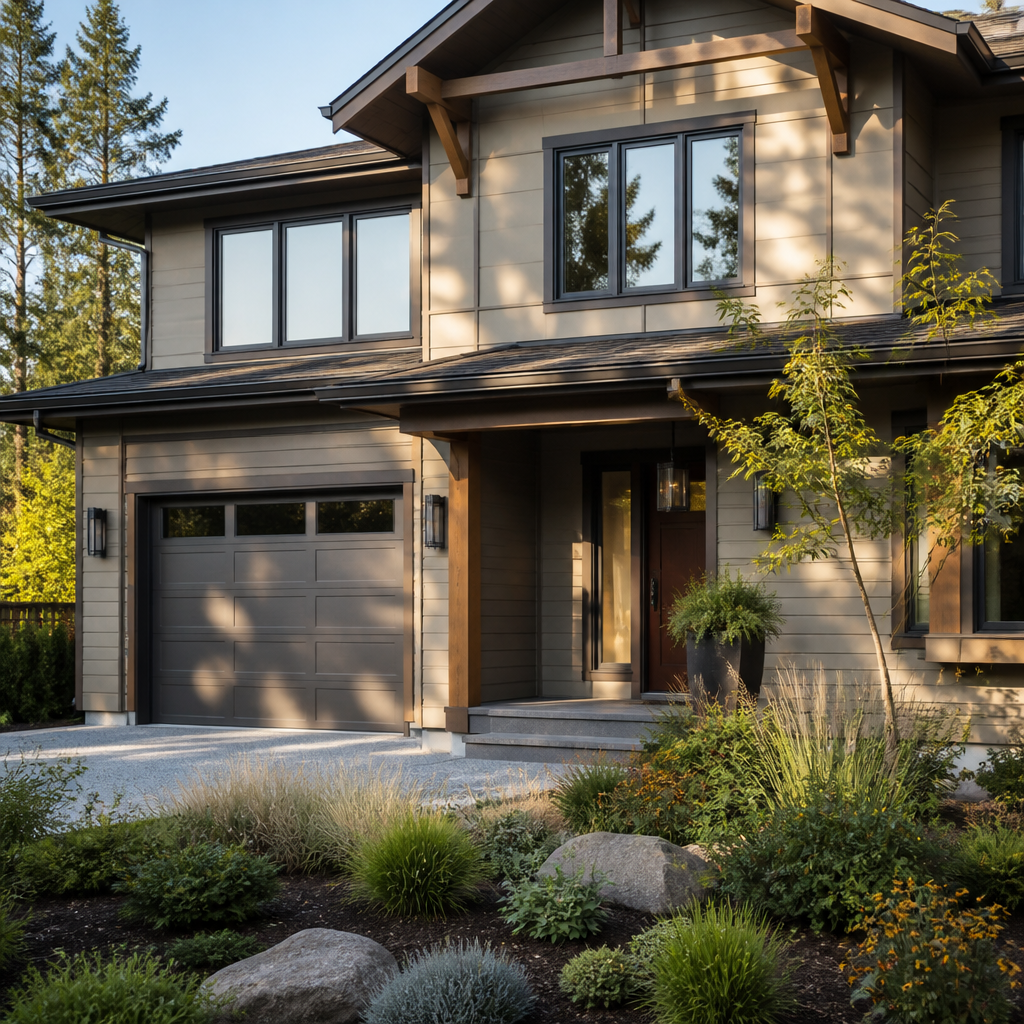
| Black trim is becoming standard, not bold | Dark window frames and fascia boards have moved from a design statement to a baseline expectation on modern and craftsman homes throughout Langley and Surrey. |
| Terracotta and rust tones are emerging | These warm, clay-based tones pair well with the cedar and stone features common in Fraser Valley new builds and renovations. |
| Bright whites require careful product selection | In the wet Lower Mainland climate, pure whites show mildew and dirt faster than warm whites or cream tones. Product quality matters as much as colour choice. |
| Two-tone exteriors are standard on new construction | Combining a mid-tone body with a contrasting trim colour adds depth and curb appeal without requiring bold choices on the main field colour. |
| Neighbourhood context still matters | A colour that looks stunning in isolation can look jarring on a street. The most successful exterior projects in Abbotsford and Langley reference the surrounding neighbourhood palette while still standing out. |
Why Fraser Valley Exterior Colours Differ from National Trends
National paint trend reports are useful starting points, but they are written for a broad audience. The Fraser Valley has specific conditions that change how colours perform and how they are perceived. The region’s consistent overcast light during fall and winter months means colours read cooler and flatter than they would under bright southern exposure. A colour that looks warm and inviting in a Vancouver showroom can look washed out and lifeless on a home in Abbotsford by November.
The natural landscape is the other major factor. Surrounded by mountains, farmland, river corridors, and dense tree canopy, Fraser Valley homes sit against a backdrop that favours earthy, organic tones. Exterior painting in Langley specifically involves streets lined with mature trees, which means greens, warm browns, and muted ochres blend harmoniously rather than competing with the surroundings.
In practice, we always advise clients to test their shortlisted colours on the actual wall surface for at least 48 hours, including one overcast day. A 12-inch paint chip in a store is not even close to accurate enough for an exterior decision.
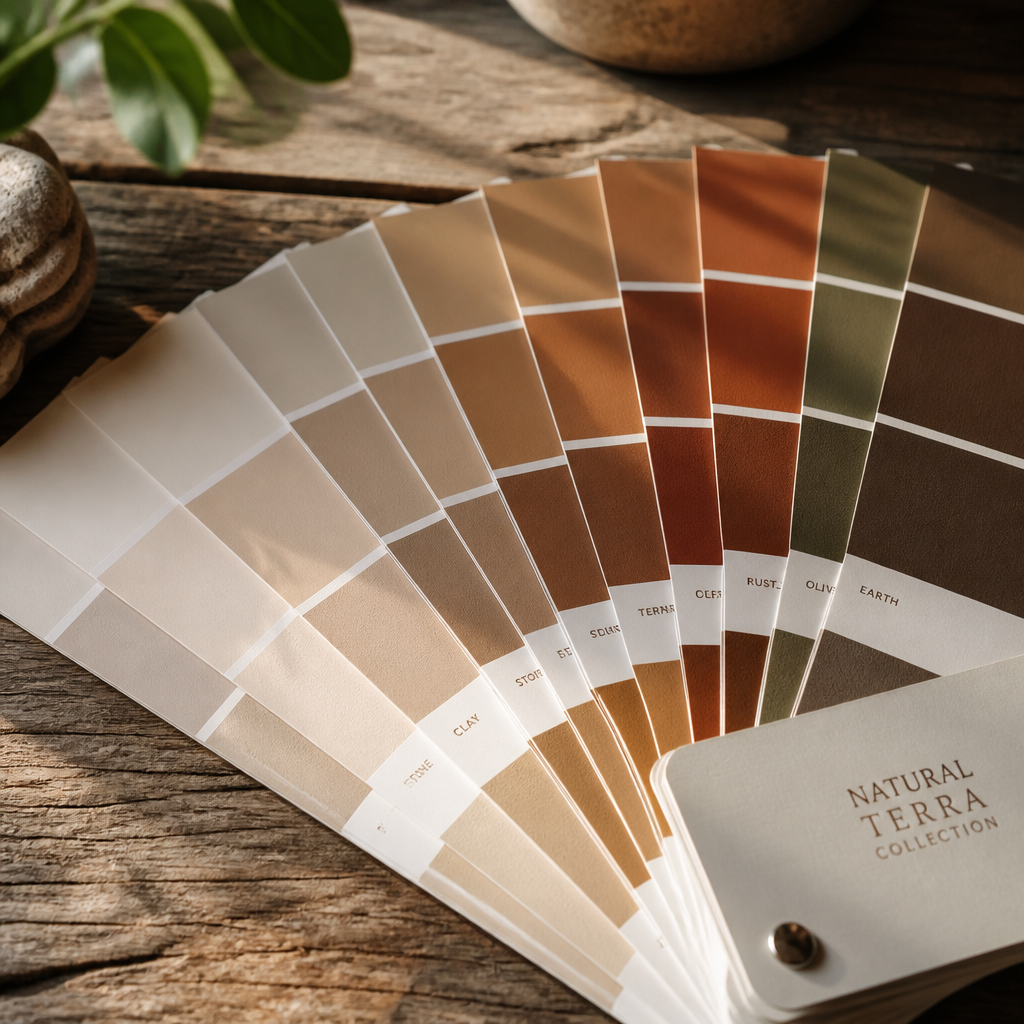
Top Trending Exterior Paint Colours for 2026
Based on what we are specifying and applying across house painting Fraser Valley projects right now, these are the colours and colour families gaining serious ground heading into 2026.
Warm Whites and Greige Tones
The clean-cool-grey era is clearly over. Homeowners are moving toward whites with yellow, pink, or brown undertones. Benjamin Moore’s White Dove, Sherwin-Williams’ Alabaster, and similar warm off-whites are dominating new construction and full repaints across Surrey and Langley. These colours provide a fresh, classic look without the sterile coldness of pure whites.
Greige (grey-beige blends) remains a safe but increasingly refined choice. The versions getting traction in 2026 have more beige warmth than in previous years, leaning toward stone and sand rather than the blue-grey greiges of 2019 to 2022.
Forest and Olive Greens
This is the colour family showing the most upward momentum on Fraser Valley exteriors. Shades like Sherwin-Williams’ Jasper or Benjamin Moore’s Salamander are being applied to craftsman-style homes throughout Abbotsford and Langley with outstanding results. These colours hold up well against cedar shake accents and stone foundations, both of which are common in this region.
The data consistently shows that homes with deeper, saturated exterior colours photograph better for real estate and generate more engagement on listing platforms. A well-executed forest green exterior with white trim is genuinely difficult to scroll past.
Muted Terracotta and Clay
Terracotta has moved from an accent-only colour to a viable field colour on smaller homes and cottages. The versions gaining traction are not the bright orange-reds from the 1990s. These are sophisticated, muted clay tones that sit closer to a warm mushroom than a Mexican restaurant. They work particularly well on ranchers and bungalows with exposed wood details.
Charcoal and Near-Black
Deep charcoals and off-blacks continue to grow in popularity on modern and transitional homes. This is not a fad. The maintenance considerations are real, as darker colours show fading faster on south and west-facing walls, but with quality exterior paint and proper surface preparation, these finishes can look exceptional for years.
Pro tip: If you want a dark exterior but are concerned about heat absorption and fading, choose a colour with a slightly cooler undertone, such as a blue-black or green-black rather than a straight warm charcoal. It holds better on sun-exposed surfaces in the Lower Mainland.
Best Colour Choices by Home Style in the Lower Mainland
The right colour depends heavily on your home’s architectural style. A colour that works beautifully on a craftsman bungalow can look completely wrong on a stucco rancher or a newer farmhouse-style build.
Craftsman and Heritage Homes (Langley and Abbotsford)
Craftsman homes have strong horizontal lines, exposed structural details, and often mix wood, brick, or stone cladding. These homes suit a darker body colour with clearly contrasting trim. Forest greens, deep navies, and warm chestnuts are excellent choices. The key is using three values: a mid-tone body, a lighter trim, and a darker accent on doors and porch columns.
Modern Farmhouse Style (Surrey and New Builds)
The modern farmhouse exterior still dominates new construction in Surrey and the Township of Langley. The expected palette is warm white or greige body with black or dark iron trim. In 2026, the most current interpretation adds a warm wood-tone accent element, such as a cedar soffit, cedar garage door panel, or stained front door. This breaks the two-tone formula and adds warmth that photographs beautifully.
Stucco Homes (Throughout the Fraser Valley)
Stucco is still extremely common across the Fraser Valley, especially on homes built between 1985 and 2005. The texture of stucco responds differently to colour than wood siding. Darker colours can look heavy and oppressive on large stucco surfaces. The trending approach for stucco in 2026 is a warm taupe or greige body with a slightly deeper trim rather than the traditional white-on-stucco look.
Pro tip: On stucco homes, always use a dedicated masonry-compatible exterior paint. Standard latex exterior formulas do not provide adequate breathability on stucco, which can trap moisture and lead to cracking and peeling within two to three years in the Fraser Valley’s wet climate.
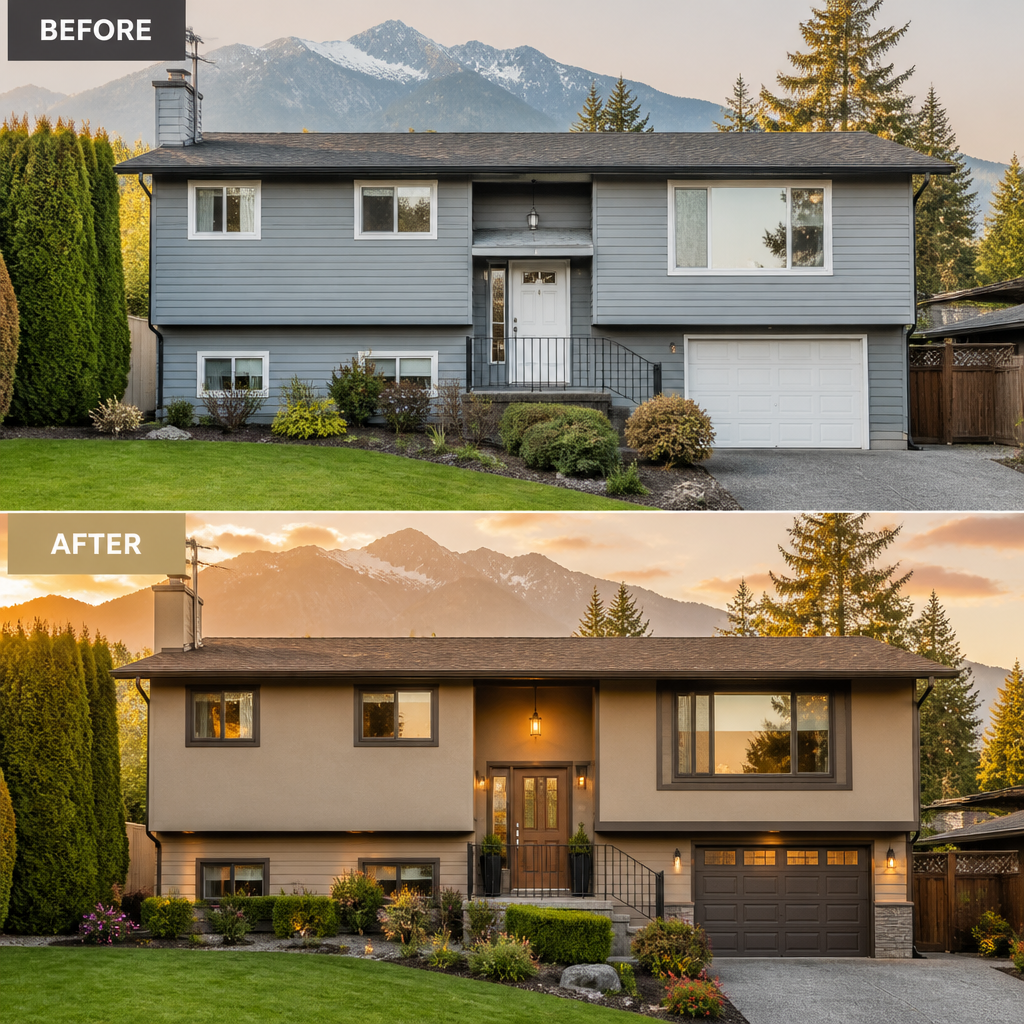
Colours That Are Fading Fast in 2026
Knowing what to avoid is as useful as knowing what is trending. A common mistake is choosing a colour that was popular five years ago and applying it to a home you plan to sell in the next two to three years. It does not look timeless. It looks dated.
Cool blue-greys and slate tones had a long run but are now clearly in their decline phase. They still look acceptable, but they no longer create any positive reaction from buyers or neighbours. They read as a safe default choice rather than a considered decision.
Beige in its flattest, most desaturated form is also fading. The warm beige revival in 2026 is specifically about richer, earthier versions. The thin, papery beiges of the 2000s suburban boom period are associated with low-effort colour choices and do not photograph well.
Bright, saturated colours such as cobalt blue, kelly green, or fire engine red applied across the entire exterior are rarely successful in the Fraser Valley. They may generate short-term attention but they create resale risk and age poorly as the cultural moment that made them feel relevant passes. The exception is a bold front door, where a saturated accent colour is generally a positive addition to any exterior palette.
Colour Strategy Comparison: Safe vs. Trending vs. Bold
| Strategy | Best For | Risk Level and Considerations |
|---|---|---|
| Safe (Warm White, Greige) | Homeowners planning to sell within 1-2 years, homes in tightly regulated strata communities, properties in mixed-style neighbourhoods | Low resale risk. Minimal visual impact. May not differentiate the home in a competitive Fraser Valley market. Strong product quality is still required for durability. |
| Trending (Forest Green, Warm Taupe, Charcoal) | Homeowners investing in long-term curb appeal, craftsman or farmhouse-style homes, properties with strong natural surroundings | Medium. Trends shift over 5-10 year cycles. Current trending colours are organic and classic-leaning, which reduces the risk of them feeling dated quickly. High visual reward now. |
| Bold (Deep Navy, Terracotta Field Colour, Two-Tone Contrast) | Owners who plan to stay long-term, architecturally distinctive homes, clients with a clear design direction and professional guidance | Higher execution risk. Bold colours are unforgiving of poor surface prep or application quality. When done well by an experienced team, they produce the most memorable and distinctive results. |
How Fraser Valley Light Affects Your Final Colour Result
Light in the Fraser Valley is softer and more diffuse than in drier, sunnier climates. This is not a complaint, it is just a physical fact that should inform every exterior colour decision. Overcast light, which the region receives for roughly 150 to 180 days per year, flattens contrast and shifts colours slightly toward the cool end of the spectrum.
“Colour perception is not static. The same exterior paint can look three different shades across a single day as cloud cover, sun angle, and surrounding reflections change. Testing under actual site conditions is not optional for professional results.” – Dreamscape Painting Ltd., based on over 35 years of exterior projects across the Lower Mainland.
This means colours with warm undertones often appear more neutral on a Fraser Valley exterior than they would in, say, Calgary or Phoenix. A warm beige that looks almost orange on a paint chip can appear as a clean, balanced neutral on a north-facing wall in Abbotsford on a cloudy November afternoon.
West-facing walls receive intense afternoon sun in summer, which accelerates fading on darker colours. If your home has significant west exposure, factor that into your product selection as much as your colour selection. High-quality exterior paints with UV inhibitors, such as Sherwin-Williams Emerald Exterior or Benjamin Moore Aura Exterior, are worth the premium on these exposures specifically.
East-facing walls, common on older subdivisions in Langley and Surrey, receive morning light that casts warm golden tones and then spend the afternoon in flat shade. Colours that look inviting at 9 a.m. can look dull at 2 p.m. on these orientations. Mid-value warm tones tend to perform the most consistently across both lighting conditions.
What to Expect When Working with a Professional Exterior Painter
The colour conversation is only one part of a successful exterior painting project. At Dreamscape Painting Ltd., the process begins with a thorough on-site assessment before any colour decisions are finalized. Surface condition, cladding type, sun exposure, and neighbourhood context all feed into the recommendation.
Experienced exterior painters do not just apply paint. They assess substrate conditions, identify any areas needing caulking, priming, or repair, and advise on product selection based on the specific conditions of your home. A painter who shows up and starts rolling without that assessment phase is skipping the work that determines whether your paint job lasts 5 years or 15 years.
For exterior painting in Langley, Abbotsford, Surrey, and across the Fraser Valley, the timeline and process matter. Quality exterior work on an average two-storey home typically takes 3 to 5 days when done properly, including prep time. Anyone promising a full exterior in a single day is compressing the prep and dry time that determines long-term adhesion and durability.
Cleanliness and protection of the surrounding property is also non-negotiable. Plants, pathways, vehicles, and windows all need to be protected during the process. This is a standard Dreamscape Painting expectation on every project, and it is the kind of detail that separates professional work from a rushed job.
If you are in the planning stage for a 2026 exterior repaint, the ideal time to book is late winter or early spring. Weather windows in the Fraser Valley become consistent enough for exterior painting between April and October, and the most sought-after painting crews fill their schedules well before the season starts.
Frequently Asked Questions
What are the most popular exterior paint colours for homes in the Fraser Valley in 2026?
The most popular choices trending in the Fraser Valley for 2026 are warm whites and off-whites with yellow or pink undertones, forest and olive greens, warm taupe and greige tones, and deep charcoal shades for modern homes. Forest green with black trim and white accents is arguably the most requested combination we are seeing on craftsman-style homes across Langley and Abbotsford right now.
How do I choose an exterior colour that will still look good in 10 years?
Choose colours that are organic and nature-adjacent rather than colours tied to a specific cultural moment. Forest greens, warm neutrals, and classic off-whites have long track records of staying relevant. Avoid highly saturated, unnatural colours applied across the entire exterior. A bold door accent can be refreshed inexpensively, but a full repaint every few years is a significant cost.
How much does exterior painting cost in Langley or Abbotsford?
Exterior painting costs in the Fraser Valley vary based on home size, surface condition, number of storeys, and product selection. A typical single-family home in Langley or Abbotsford ranges from approximately $3,500 to $8,000 for a full exterior repaint with professional-grade paint. Homes with significant prep needs, multiple cladding types, or detailed trim work fall toward the higher end of that range. Getting a proper on-site estimate is the only accurate way to price your specific project.
Does exterior paint colour affect home resale value in the Fraser Valley?
Yes, meaningfully. Real estate data from the Canadian Real Estate Association consistently shows that curb appeal is among the top factors in first impressions and perceived value. A fresh, contemporary exterior colour palette can increase perceived value and reduce time on market. Conversely, a dated or poorly maintained exterior is one of the first things buyers use to negotiate price reductions.
When is the best time of year to paint the exterior of a home in the Lower Mainland?
The optimal window for exterior painting in the Lower Mainland is May through September. Surface temperatures need to be above 10 degrees Celsius, surfaces must be dry, and rain cannot be forecast within 24 to 48 hours of application. October can work during dry stretches, but it carries more weather risk. Booking in advance for a spring or early summer start is the most reliable approach.
Can I change my exterior colour significantly without needing primer?
Going from a light colour to a significantly darker colour, or from a dark colour to a light colour, almost always requires a tinted primer coat first. Skipping primer in these scenarios leads to uneven coverage, colour bleed-through, and typically requires additional finish coats that cost more in both labour and material than a proper prime coat would have. Any professional painter recommending you skip primer on a significant colour change is cutting corners at your expense.
We would love to hear what colour direction you are considering for your Fraser Valley home in 2026. Share your thoughts or questions in the comments below, or reach out to the Dreamscape Painting team directly for a free on-site colour consultation and estimate.
We would love your feedback and any insights you would share with others. What perspective would you add?
References
- Forbes coverage of home design trends and exterior colour investment value for homeowners
- Statista data on paint and coatings industry trends, consumer preferences, and market direction
- National Research Council Canada guidelines on building envelope performance and exterior coatings in Canadian climates
- Canada Mortgage and Housing Corporation resources on home improvement, curb appeal, and resale value factors
- Color Marketing Group forecasting on global and regional colour trend direction for residential and commercial applications

