

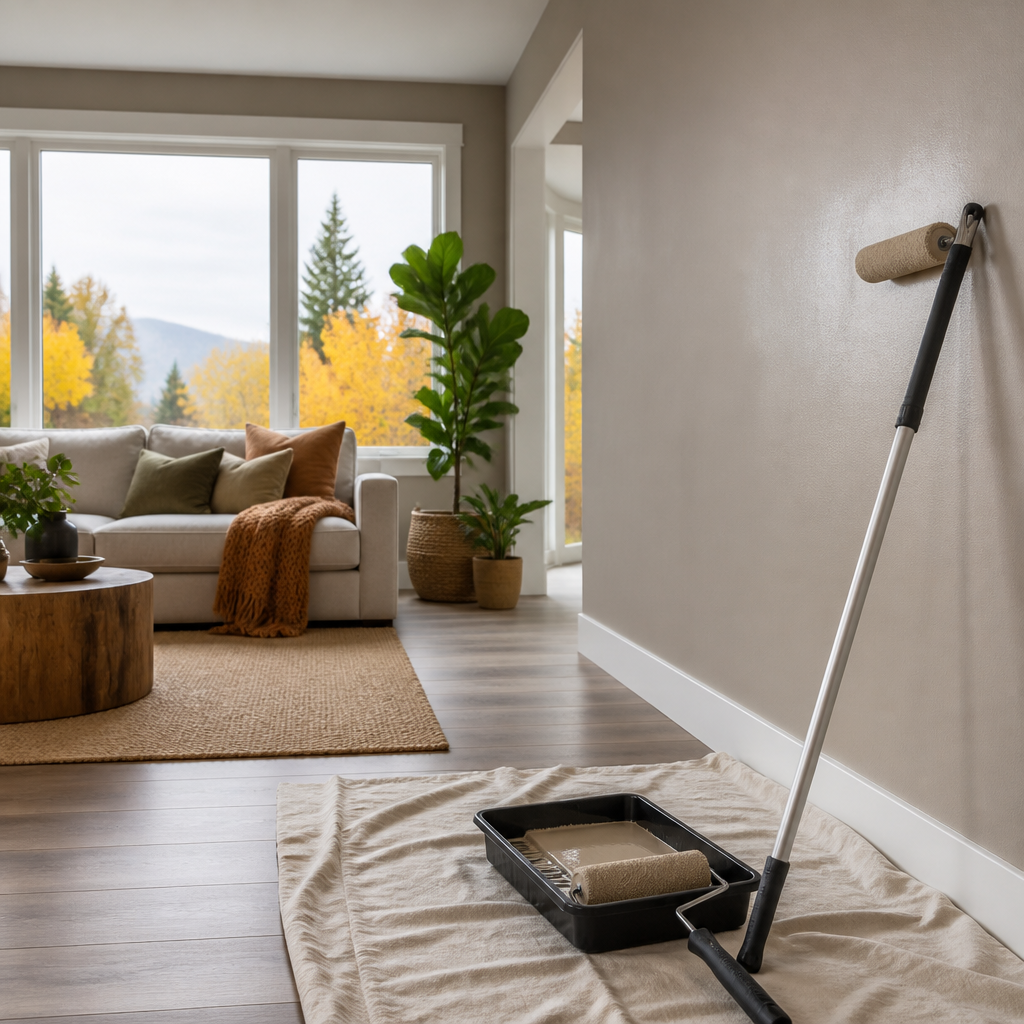
Every fall, the same thing happens in Abbotsford homes. The days shorten, the bathroom mirror fogs up every morning, and the scuffs by the back door that you stopped noticing in July suddenly look like a problem. Fall interior painting in Abbotsford is one of the most practical projects a homeowner can schedule, but only if it is planned around the weather, the heating season, and how the rooms get used once the furnace is running. We have repainted homes across the Fraser Valley for more than 35 years, and the projects that go well usually start in September, not in the first cold week of December.
Table of Contents
- Quick Takeaways
- Why Fall Is the Best Window for Interior Painting
- Assessing Walls Before the Rain Season
- Choosing Colors for Short Winter Days
- Paint Products and Sheens for Humid Months
- Scheduling Work Around Heating and Ventilation
- Comparing Your Options
- Protecting Floors, Cabinets, and Furniture
- Frequently Asked Questions
- References
Quick Takeaways
| Key Insight | Explanation |
|---|---|
| Book the assessment in September | Crews fill their November and December calendars quickly, and an early estimate lets you choose colors and sheens without rushing. |
| Fix moisture before you paint | Mildew near bathroom fans and water stains around window sills will bleed through a fresh coat within weeks if the source is not stopped first. |
| Test colors under evening light | A wall that looks warm at noon can turn flat or cold under the lamps you use after dark, so check samples at several times of day. |
| Match the sheen to the room | Eggshell suits most living spaces, while trim, doors, and kitchens need semi-gloss or a similar washable finish that handles fingerprints. |
| Plan ventilation and temperature together | Paint needs air to dry and the room needs warmth to cure, so run exhaust fans and keep the thermostat steady instead of letting the house cool overnight. |
| Control dust in a closed house | Fall projects happen with windows shut, which means fine dust from sanding and cabinet work settles into every surface unless you contain it. |
Why Fall Is the Best Window for Interior Painting
Fall gives you a window that spring and summer rarely offer. Once school routines settle and the garden winds down, most households have a stable schedule, and you can plan a project around fixed dates. Interior work also moves faster when you are not competing with outdoor projects, guests, and summer travel for the same weekends.
In our experience, the biggest advantage is control over the air. Summer painting often means open doors, box fans, and dust pulled in from the yard. In fall the house stays closed, so you can manage airflow on purpose and keep the work area clean, as long as you ventilate deliberately during the job.
A common mistake is waiting for the first real cold snap before calling. By then, the best crews are booked into November and December, and homeowners end up painting in January with the windows sealed and the schedule squeezed. Book the assessment in September, and the work can start when your calendar allows instead of when the weather forces it.
Pro tip: Ask for the estimate in September even if the work will happen in November. It gives you time to test colors and sheens calmly, and it locks in your preferred dates before the holiday rush.
Assessing Walls Before the Rain Season
Before you choose a single color, walk every room with a flashlight held low against the walls. Raking light shows dents, hairline cracks, and patches that look invisible under overhead lighting. Mark each problem with painter’s tape so nothing gets missed when the prep starts.
Finding Moisture Problems Before They Bleed Through
Damp autumn air shows up on walls in predictable places. Check the exterior corners of bathrooms, the wall behind the toilet tank, and the sill of any window that sweats in the morning. Brown rings, soft paint, and bubbling are signs of a moisture source, not simply a paint failure.
Painting over a stain without fixing it is the most common mistake we see in winter projects. Water, smoke, and mildew stains bleed through new coats, and the homeowner assumes the paint was poor quality. Confirm the source first, whether that is a failed caulk seal, weak bathroom fan venting, or condensation at a window, then seal the stain with a stain-blocking primer before the topcoat.
Walking the Trim, Doors, and High-Traffic Corners
Trim and door frames take the most abuse in the colder months. People carry coats, boots, groceries, and sleds through the same narrow openings every day. Run your hand along the lower third of the hallway trim and mark anything chipped or dented, because those spots need sanding and filling before the finish coat.
Pay special attention to the corner where the mudroom meets the kitchen, the stair rail, and the bottom of the entry door. These areas get the most contact with wet footwear and show water marks first when the house is closed up for the season. Budget an extra hour per room for repairs, and the finish will last through the winter instead of peeling by spring.
Choosing Colors for Short Winter Days
Color choice in fall is about light, not trends. Overcast skies and short afternoons make cool, flat colors look grey and tired, while a well-chosen warm neutral keeps a room feeling settled. The goal is to pick a color that still looks right when the sun is low and the only light is a lamp.
Warm Neutrals That Hold Up Under Grey Light
Benjamin Moore’s trending neutral list includes Revere Pewter HC-172 and Edgecomb Gray HC-173, and its trending white list includes Simply White OC-117. These colors carry enough warmth to avoid looking cold under overcast skies. They also keep their character as the light changes through the day, which matters when a room is used mostly in the evening.
Sherwin-Williams presents gray and beige as long-standing favorites in its Top 50 interior colors collection, and that is a useful place to browse. Paint a sample board on two walls, one facing the main window and one away from it. Check both at mid-morning, mid-afternoon, and after dark before you commit.
Dark Accents Need Good Daylight
Deep colors are where fall projects go wrong most often. A charcoal such as Sherwin-Williams Iron Ore SW 7069 can look dramatic in a room with a large window that catches afternoon sun, and gloomy in a basement family room with two small windows. Use dark color on a single feature wall, a fireplace surround, or built-in shelving, and avoid painting every surface in a room with weak light.
Earthy browns are another strong fall option. Benjamin Moore lists Leather Saddle Brown 2100-20 and Black Bean Soup 2130-10 among its trending brown colors, and both pair well with warm wood furniture. In practice, these colors shine in dining rooms and living rooms, where lamplight is the main source at night.
A paint color is not finished until you have seen it under the lights you actually switch on after five in the afternoon.
Paint Products and Sheens for Humid Months
Product choice matters more in winter than most homeowners expect. Humid rooms, frequent cleaning, and the habit of closing windows all put stress on the finish. A washable product with the right sheen will look better for longer and forgive the small marks that always appear when a family spends the season indoors.
Eggshell on Walls, Semi-Gloss on Trim
For most Lower Mainland living spaces, we recommend a washable product with a low sheen on walls. Benjamin Moore’s Aura Interior in Eggshell is a common choice for living areas because it resists scuffs without the glare that makes wall flaws obvious under winter lamps. For trim and doors, Advance Semi-Gloss gives a finish that can handle repeated cleaning and hands.
Flat finishes look refined in showrooms, but they are hard to clean in hallways and kitchens. A common mistake is choosing a flat sheen in a home with children or pets because it hides texture. Choose a slightly higher sheen wherever fingerprints collect, and keep flat finishes for ceilings and low-traffic bedrooms. Our interior painters in Abbotsford can help you choose.

Ceiling Paint in Bathrooms and Kitchens
Ceilings in bathrooms and kitchens face steam, cooking vapour, and condensation for much of the winter. Benjamin Moore’s Waterborne Ceiling Paint in Ultra Flat is the product we reach for in those rooms, because it is made for ceilings and hides minor imperfections well. Apply it on a dry ceiling and only after the exhaust fan has been running for a while.
Always check the product label for minimum application temperature and recoat times before you start. Cold rooms slow curing and can leave a soft film that picks up dust for days. If a room is too cold, heat it first and delay the coats rather than rushing the job.
Pro tip: Buy a little more paint than you think you need, and label each can with the room name and sheen. Fall projects often need a touch-up after the first winter, when furniture is moved and doorways take a beating.
Scheduling Work Around Heating and Ventilation
The central tension in fall painting is simple. Paint needs air moving to dry and to clear fumes, but a house that is opened up to cold air will drop below the temperature the paint needs. Good scheduling solves both problems at the same time, and it is the part of the job homeowners most often underestimate.
Ventilation Without Freezing the House
In practice, we run bathroom exhaust fans and open one window at a time in the room being painted, closing it between work sessions. We keep the thermostat steady rather than letting the house cool overnight, because a room that cycles between cold and warm will cure unevenly. This approach keeps fumes moving out of the work area without turning the whole house into a cold box.
Avoid unvented combustion heaters indoors unless the manufacturer rates them for indoor use and you have proper ventilation. A safer habit is to raise the heat a few degrees for project days and use a fan to circulate warm air across the room. Keep carbon monoxide alarms working and check them before the crew arrives.
Working Room by Room Through the Heating Season
Schedule the bedrooms first, then the main living areas, and leave the kitchen for last if cabinets are being refinished. That way the household keeps a working bathroom and a room to sleep in throughout the job. A whole-house interior project works best as a sequence of rooms rather than one long block of disruption.
Watch the calendar around the holiday season. Work booked for late November often slides into December when guests arrive and furniture has to be cleared for gatherings. Lock in your dates in October or early November, while there is still room in the schedule for drying time between coats.
Comparing Your Options
Not every fall project needs the same approach. The right choice depends on how much wear the rooms show and how much disruption your household can tolerate. Here is how three common options compare for Fraser Valley homes.
| Approach | Best Fit | Main Risk |
|---|---|---|
| Touch-up and patch repair with leftover paint | Small scuffs, a single hallway, or one bedroom with minor damage | Color match drifts if the original can is old or the paint was tinted at a store |
| Full-room repaint with Benjamin Moore Aura Interior | Living rooms, bedrooms, and main hallways that show general wear | Requires moving furniture and a planned ventilation schedule |
| Cabinet refinishing combined with wall and ceiling work | Kitchens and bathrooms where cabinets and walls both need attention | Dust and fumes spread quickly, so the work zone must be sealed and the completion date fixed |
Our view is that touch-ups suit minor damage but rarely hold up once a whole room has aged. If the walls show dull patches, flashing around switches, or a finish that has yellowed near the windows, a full repaint of that room is the better investment. Mixing a patch into a faded wall usually makes the difference more obvious, not less.
Protecting Floors, Cabinets, and Furniture
Fall projects happen in closed houses, which means dust has nowhere to go. Protection is not an afterthought in winter work. It decides whether the room looks finished or looks like it was painted in a warehouse, and it protects the rest of the house from fine particles.
Dust Control in Closed-Up Homes
Hang plastic sheeting over doorways and tape the seams, but do not seal a room so completely that you create a dust trap or cut off the ventilation the paint needs. If your home has forced-air heating, keep the filter in mind during sanding, since fine dust can travel through the return. Change the filter after the job if the work was heavy.
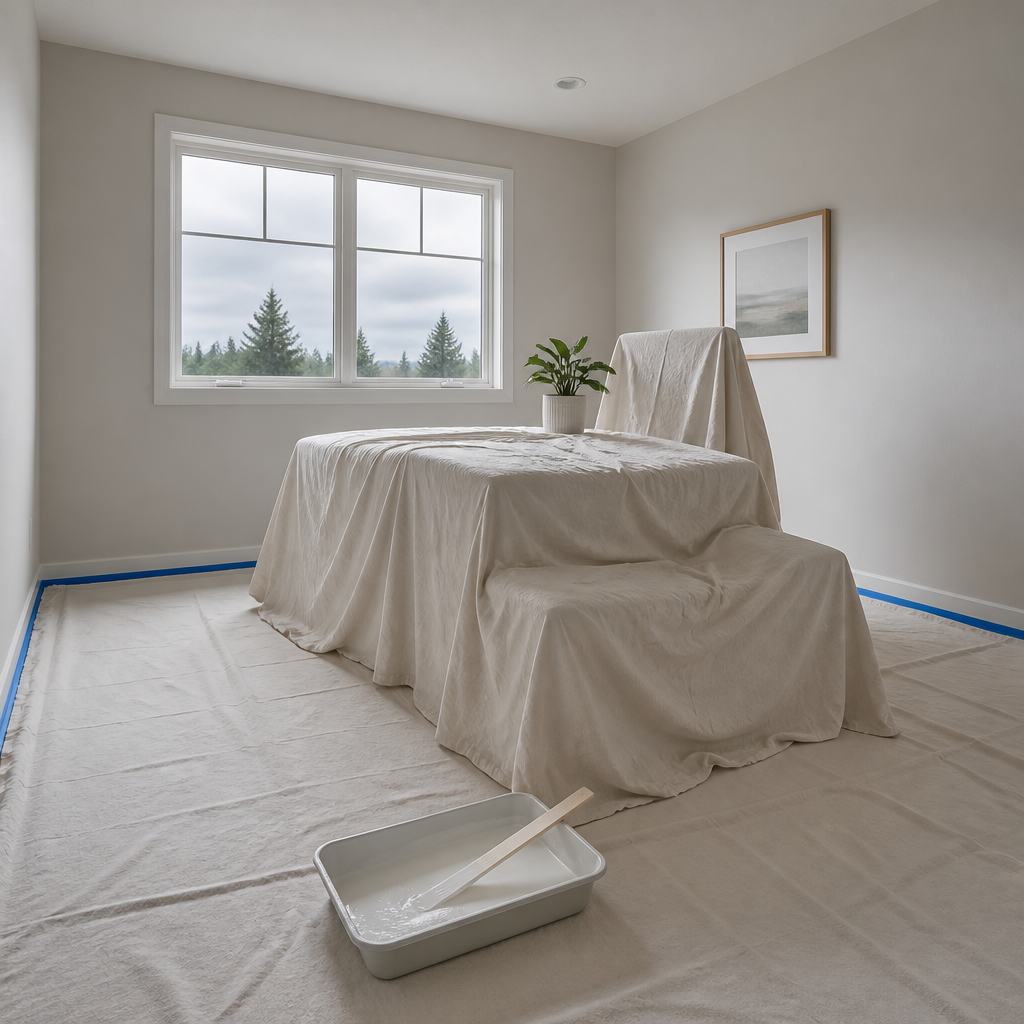
Cover floors with rosin paper or drop cloths, and move furniture to the center of the room where possible. Hardwood and laminate scratch easily when pieces are dragged across them, and wet weather brings grit in on shoes. A few extra minutes of protection prevents an expensive repair later.
Cabinets and Trim Need Their Own Plan
Cabinet refinishing and trim painting produce fine dust and a strong solvent smell that travels into the next room. Remove doors and hardware first, label everything, and work in a dedicated space if you have one. Doors laid flat in a spare room cure more evenly than doors rehung on hinges while the finish is still soft.
Pro tip: Label each cabinet door and drawer front with its exact location before removal, such as upper left beside the pantry. Reinstalling the wrong door on the wrong opening is one of the most frustrating mistakes in a kitchen refinish.
Frequently Asked Questions
When is the best time for fall interior painting in Abbotsford?
Late September through October is the strongest window for scheduling, and work often runs into November when the house is still manageable. Book the assessment early, because the calendars for late fall fill up quickly.
Can I paint indoors in the winter if my house is cold?
You can, but the product label sets the minimum application temperature, and that limit governs the job. Heat the room before the work starts, keep the temperature steady, and do not paint a room that will drop below the recommended range overnight.
Which sheen should I use in a bathroom?
Use a washable eggshell or satin on bathroom walls, semi-gloss on trim and doors, and a ceiling paint made for humid rooms. The exhaust fan should run during the job and for a period after the coats dry.
How do I stop old stains from showing through new paint?
Find and fix the moisture source first, whether that is a failed seal or poor venting. Then cover the stain with a stain-blocking primer before the topcoat, because a regular primer often lets the discoloration return within weeks.
Should I refinish cabinets or repaint them in the fall?
Refinishing usually gives a more durable result, but it creates more dust and takes longer than a repaint. Choose refinishing when the doors and frames are sound and you can set aside a clean, dedicated work area for the job.
How far ahead should I book a fall painting project?
Book the assessment in September for November work. That gives you time to test colors, select products, and plan the room sequence without compromising the drying schedule.
What has your experience been with painting a room during the cold months, and did the finish perform the way you expected in your home?

