

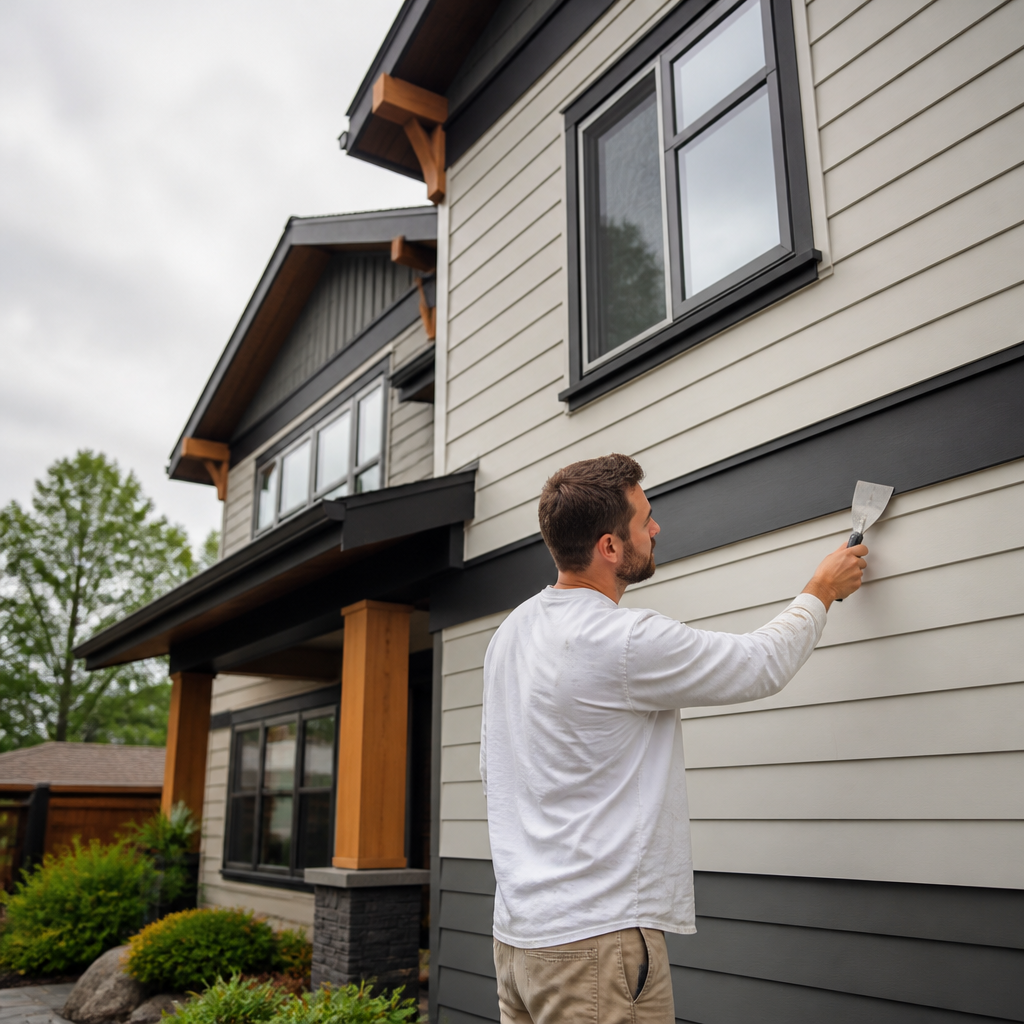
Ask a Lower Mainland homeowner about exterior paint lifespan and you will usually hear a confident number, often copied from the side of the can. In our experience across Abbotsford, Langley, and Surrey, that number rarely survives the first long wet winter. Paint life here depends far more on wall orientation, moisture, and preparation than on the label. This guide covers what actually shortens paint life in our climate, which product choices hold up, and the maintenance habits that add years before a full repaint becomes unavoidable. When it is, see our exterior house painting.
Table of Contents
- Quick Takeaways
- What Shortens Exterior Paint Life in the Lower Mainland
- Choosing Paint That Holds Up Outdoors
- Prep Work That Decides How Long Paint Lasts
- Maintenance Habits That Stretch Paint Life
- Colour and Sheen Choices for Lower Mainland Walls
- Comparing Common Exterior Paint Approaches
- Frequently Asked Questions
- References
Quick Takeaways
| Key Insight | Explanation |
|---|---|
| Judge each elevation separately | South and west walls take the most direct sun and usually need repainting first. Inspect those sides before deciding the whole house is due. |
| Moisture is the real threat | Long damp stretches feed mould and lift paint at weak edges. Clear gutters and fix splash-back at grade before you touch the paint. |
| Prep decides the result | Scraping loose paint, spot priming bare wood, and replacing failed caulk matter more than paying extra for the can. |
| Sheen affects durability | Low lustre and satin finishes hide small flaws and handle wet and dry cycles better than high gloss on siding. |
| Wash siding on a schedule | Removing mould and mildew stops organic growth from holding moisture against the coating. In our practice, a gentle wash every year or two works well. |
| Check joints every autumn | Caulk lines, trim joints, and window sills are where water gets behind paint first. Look at them before the wet season settles in. |
What Shortens Exterior Paint Life in the Lower Mainland
Paint does not age on a calendar. It ages through UV exposure, water, temperature swings, and the slow movement of wood and fibre cement as moisture levels change. Lower Mainland homes take a lot of all four, which is why a repaint that looked fine at year five can start chalking within a few years on the wrong elevation.
Rain and Long Wet Winters
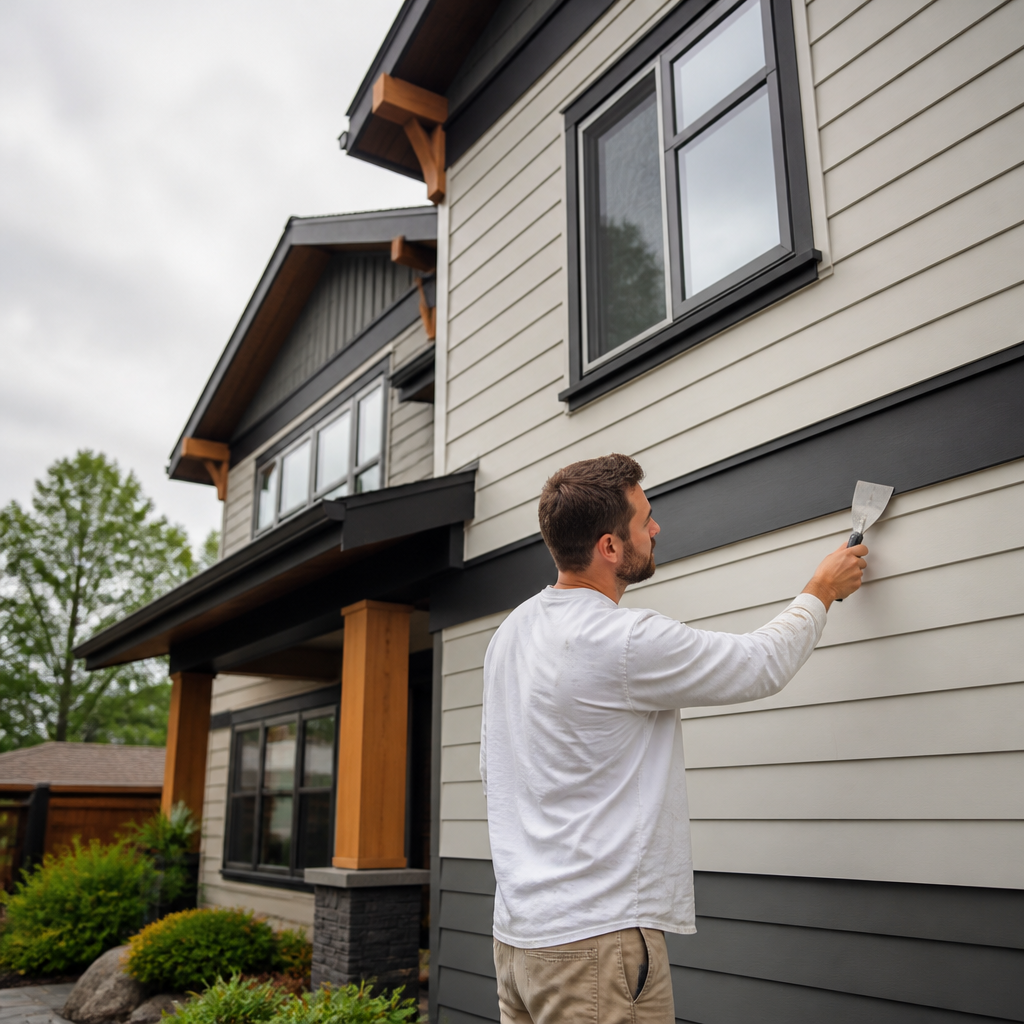
Our biggest threat is not summer sun. It is the long run of grey, damp weeks from late autumn into spring, when siding rarely gets a chance to dry out. Moisture gets trapped behind the film, feeds mould on shaded surfaces, and works under any edge that is already weak.
In practice, the first failures we see rarely appear in the middle of a board. They start at butt joints, under window trim, and below downspouts that have been dumping water onto the same patch of siding for years.
Sun Exposure on South and West Walls
In the Northern Hemisphere, south-facing walls take the most direct sun, and west-facing walls take the hot afternoon blast. UV breaks down pigment and binder over time, so colour loses depth before the surface visibly peels. Many owners only notice when they stand beside an older, shadier wall and see the difference.
Dark colours make this worse. Deep navy and charcoal absorb more heat, and the surface expands and contracts more on warm afternoons. A dark south wall often needs attention long before the north side looks worn.
Shade, Moss, and North-Facing Walls
North-facing walls get less sun, which sounds like good news until you see the green. Shade keeps surfaces damp after a storm, so mould, algae, and moss take hold. Those growths hold moisture against the coating and make it look tired even when the paint film is still intact.
Choosing Paint That Holds Up Outdoors
The product on the label matters, but less than most owners think. Benjamin Moore’s product page for AURA Exterior describes a new resin designed to improve UV and fade resistance, along with reduced chalking and resistance to rain, snow, and wind. Those are the manufacturer’s own claims, so treat them as a starting point rather than a guarantee for your wall.
Reading the Data Sheet Before You Buy
The technical data sheet is more useful than the marketing page. For the AURA low lustre exterior product, the sheet describes a 100% acrylic exterior formula with a mildew-resistant coating, which matters on shaded Lower Mainland elevations. Read the surface preparation section and the warranty terms in full before you compare cans.
Product choice is only one variable. A high-end paint applied over poor preparation will lift at the same spots as a budget paint, only a little later.
Why Sheen Changes Durability
Sheen is a durability decision, not just a style one. Lower sheens such as low lustre or satin hide small surface flaws and generally handle repeated wet and dry cycles better than high gloss. High gloss shows every ripple in the siding and every streak of dirt, which tempts owners to scrub harder and sometimes damage the film.
We usually recommend low lustre or satin on siding, and satin or semi-gloss on trim and doors, where a little more washability helps. Flat on siding is common, but it is harder to clean once dirt builds up through a wet season.
Reading Warranties Without Assuming Too Much
The AURA data sheet lists a limited lifetime warranty. Most limited warranties carry conditions about preparation, application, and maintenance, so a warranty is not a promise that the paint will never need attention. Ask for the full terms before you rely on one.
Prep Work That Decides How Long Paint Lasts
Most premature failures we are called to fix trace back to preparation, not to the paint itself. A premium coating on a poorly prepared wall will lift where the old paint was already failing. Preparation is where a repaint earns its lifespan.
Scraping and Feathering Failing Paint
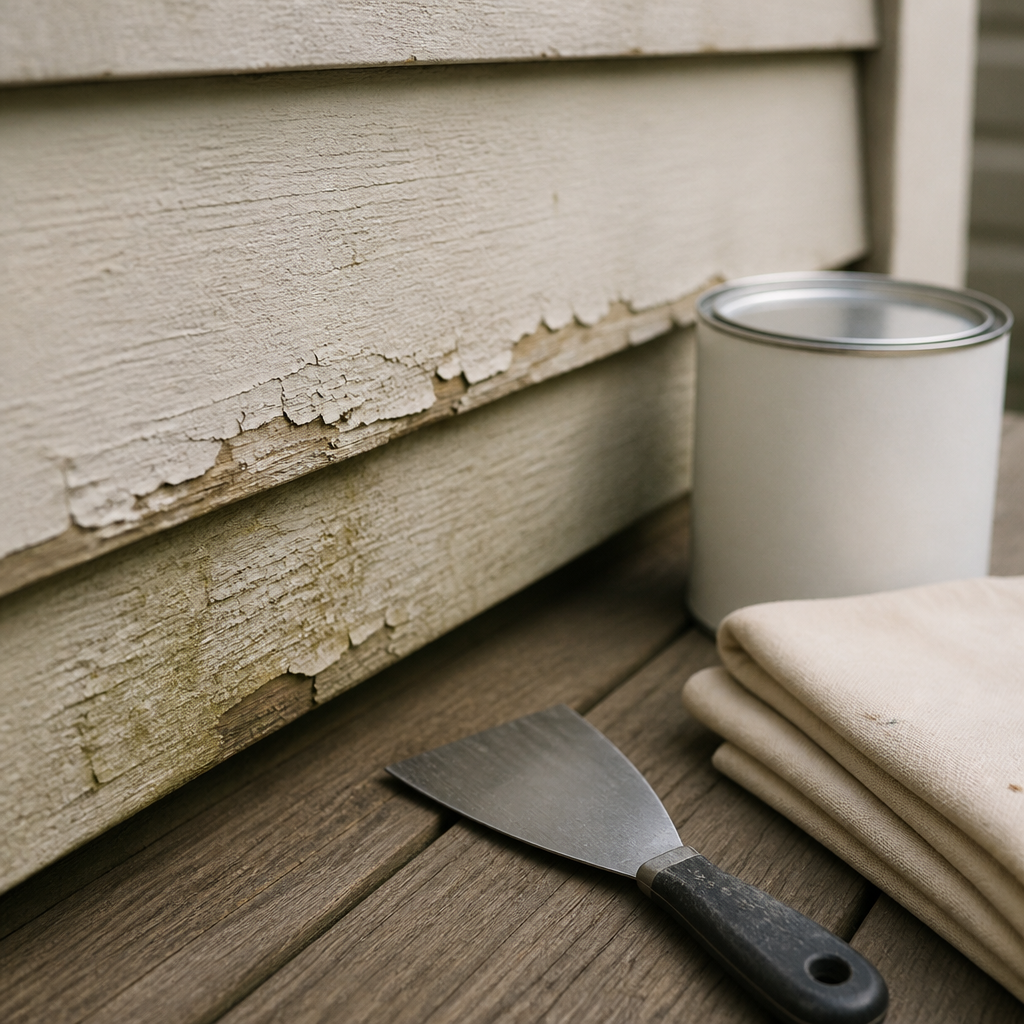
Loose and blistered paint has to come off down to a sound edge. We scrape, sand, and feather the transitions so the new coat does not leave a ridge. A ridge is where water finds purchase during the next wet season.
Spot Priming Bare Wood and Repaired Areas
Bare wood, patched spots, and fresh filler need primer before the topcoat. Priming the entire elevation is not always necessary, but priming only the patches and skipping them on the topcoat is a common shortcut that shows up within a few seasons. Match the primer to the surface, especially on previously glossy trim.
Pro tip: Before you accept any quote, ask exactly how the crew will handle loose paint and failed caulk. A vague answer like “we will prep as needed” is a warning sign.
Caulk, Trim Joints, and Moisture Repair
Caulk is where many jobs quietly fail. Cracked caulk around windows, doors, and trim lets water behind the paint, and no topcoat can fix that. Replace the failed bead, check sills for soft wood, and address the source of any leak before the final coat goes on.
Paint rarely fails because the can was bad. It usually fails because the wall was not ready for it.
Maintenance Habits That Stretch Paint Life
Maintenance is the cheapest way to extend paint life, and it is also the step most owners skip. A few routine checks each year catch small problems while they are still a scraping job rather than a rebuild. The habits below are the ones we recommend most often.
The Autumn Walk-Around
Walk the house each October before the rain settles in. Look for lifted edges, chalky residue that rubs off onto a dark cloth, and staining below gutters and window sills. Catching one bad joint in October costs far less than replacing a section of failed siding in February.
Gentle Cleaning for Mould and Mildew
Wash siding with a soft brush and a mild cleaner made for exterior surfaces, working from the bottom up. High-pressure washing at close range can force water behind siding and strip the film, so keep the nozzle wide and the distance generous. A gentle wash every year or two keeps growth from anchoring to the coating.
Keeping Vegetation and Sprinklers Off the Walls
Keep shrubs, climbing plants, and hedges clear of siding so air can move and the wall can dry. Sprinklers that spray the house put water on the same spot every morning, which does more damage than a wet week in November. Redirect heads that hit the walls and check them after any landscaping work.
Pro tip: Clean downspouts and extensions before the first heavy rain. Water that overflows at the top runs down the same wall section all winter long.
If you want a site walk before the wet season, you can reach our estimators through the Dreamscape Painting website.
Colour and Sheen Choices for Lower Mainland Walls
Colour is one of the few paint decisions you control after the house is built. Lighter and darker shades behave differently on the same wall, so the choice should match the exposure. The trade-offs are predictable once you know what to look for.
Dark Colours on Sun-Exposed Walls
Dark colours are a legitimate choice, but they belong on sheltered walls or on a product with strong UV performance. On a south or west wall, a dark colour fades faster and looks dull sooner, and that elevation will need repainting before the others. Plan for that from the start rather than being surprised by it.
Light Colours and Visible Dirt
Light colours hide fading better, but they show dirt, rain streaks, and mould more quickly, especially on north elevations. If you choose a light shade for a shady side, build the wash schedule around it. A little cleaning every year keeps the wall looking fresh.
Matching Sheen to Each Elevation
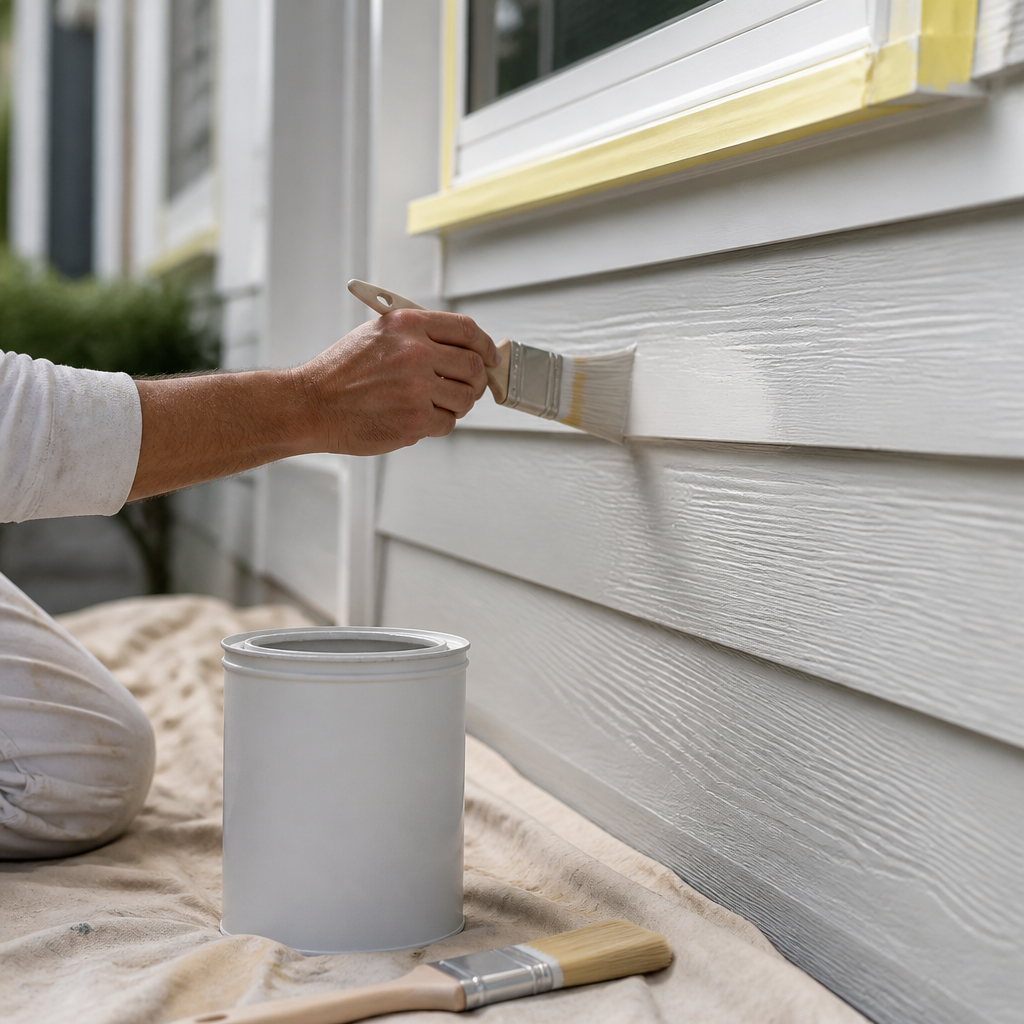
Keep one sheen on the siding for a consistent look, and use a more washable sheen on trim, doors, and high-contact areas. Those spots get handled, scrubbed, and splashed more than the field of the wall. Matching sheen to function usually gives a longer-lasting result than matching it to a showroom sample.
Comparing Common Exterior Paint Approaches
When owners ask what to do, they usually compare three paths. The table below shows where each one makes sense in the Lower Mainland, based on what we see on jobs that hold up and jobs that fail.
| Approach | Where It Makes Sense | Trade-off |
|---|---|---|
| Ultra-premium resin paint with full preparation (for example, AURA Exterior) | Sun-exposed south and west walls, darker colours, and owners who plan to stay in the home for years | Higher upfront cost, and the extra value only shows if the prep work is done properly |
| Mid-tier exterior acrylic with full preparation | Shaded or sheltered elevations, lighter colours, and budget-conscious repaints | Less resistance to fading on exposed walls, which means earlier touch-ups on the sunniest side |
| Premium paint over minimal preparation | Rarely a good choice in our experience, even on sheltered walls | Failures show up at edges and joints within a few wet seasons, often sooner than owners expect |
The third row is the one we see most often in failed jobs. Owners spend money on a top-tier can and then cut the scraping and caulking to save on labour. The product cannot compensate for the missing steps, so the premium price buys very little extra life.
Frequently Asked Questions
How long does exterior paint last in the Lower Mainland?
There is no single number that holds across the whole region. Shaded walls with a quality acrylic and proper preparation usually outlast sun-exposed south and west elevations by a noticeable margin. Judge your house by its worst elevation, not its average.
Does the colour I choose change how long the paint lasts?
Yes, it can. Darker colours absorb more heat and fade faster on sun-exposed walls, while lighter colours hide fading but show dirt and mould sooner. The right choice depends on which side of the house you are painting.
Can I paint over peeling paint without scraping it first?
No. Painting over loose paint traps the failing layer under a new film, and the new coat will lift with it. Scrape and feather the edges to a sound surface before priming and topcoating.
How often should I wash my siding?
For most siding, a gentle wash every year or two keeps mould and mildew from anchoring to the coating. North-facing walls and areas under trees often need more frequent cleaning. Use a soft brush and a mild cleaner rather than high pressure at close range.
Is a limited lifetime warranty on exterior paint worth paying extra for?
It can be, but only after you read the conditions. Most limited warranties depend on correct preparation, application, and maintenance, so a warranty protects you only when the job was done to the manufacturer’s standard. Ask for the full terms before you pay for the upgrade.
What is the first sign that my exterior paint is failing?
Chalky residue that rubs off on a dark cloth is often the first visible sign, followed by fading on sun-exposed walls. Lifted edges, staining below gutters, and cracked caulk around windows and doors are the next warnings. Address those early, before the moisture reaches the wood underneath.
Tell us which side of your home shows wear first and what you did about it, because your experience helps other Lower Mainland homeowners plan their next repaint.
We would love your feedback and any insights you would share with others. What perspective would you add?

