

Most homeowners assume that any professional painter can deliver a flawless interior. The reality is that fine finish painting Vancouver is an entirely different discipline from standard wall painting. It demands surface preparation so thorough it accounts for more than half the total project effort, application techniques that leave zero visible brush marks or roller stipple, and a level of material knowledge that separates true craftspeople from general contractors who happen to own a roller. At Dreamscape Painting Ltd., a family-owned company serving the Lower Mainland and Fraser Valley for over 35 years, fine finish painting is not an upsell. It is the standard.
Table of Contents
- Quick Takeaways
- What Is Fine Finish Painting?
- Why Surface Preparation Is Everything
- The Techniques That Define Interior Fine Finishes
- Fine Finish vs. Standard Paint Job: A Direct Comparison
- How Dreamscape Delivers Museum-Quality Results
- Choosing the Right Sheen for Fine Finish Work
- Frequently Asked Questions
- References
Quick Takeaways
| Key Insight | Explanation |
|---|---|
| Surface prep drives 80% of the result | No amount of premium paint rescues a poorly prepared surface. Skim coating, sanding between coats, and filling every imperfection before primer is applied is what separates fine finish work from a quick roll-and-go job. |
| Fine finish painting is not just about the paint | Product selection, applicator type, environmental conditions, and coat sequencing all contribute to a result that looks flat-perfect or subtly textured by design, not by accident. |
| Back-rolling and tipping are non-negotiable on trim | Fine trim work requires a specific laying-off stroke to eliminate brush marks. Skipping this step is the single most common mistake in mid-tier painting work. |
| Professional craftsmanship lasts significantly longer | A properly prepared and applied interior paint system can last 7 to 12 years. A rushed application on unprepared walls may show wear and peeling within 1 to 2 years. |
| Sheen selection is a technical decision, not a style preference alone | The wrong sheen level will highlight every wall imperfection. Fine finish painters match sheen to surface condition, not just to client taste. |
| Decorative fine finishes are fully custom | Techniques like Venetian plaster, strie, and color washing are hand-applied and hand-tuned, making each result unique to the space and impossible to replicate with standard roller application. |
| Cleanliness is a craft signal | Fine finish painters protect every surface not being painted. Overspray, drips, and hardware staining are signs of a crew that is not operating at a fine finish level. |
What Is Fine Finish Painting?
Fine finish painting is the application of interior paint, decorative coatings, or specialty finishes to a standard where no surface defect, applicator mark, or sheen inconsistency is visible under any lighting condition. Think of it as the difference between a cabinet door that looks smooth from across the room and one that looks smooth under a raking side light held six inches from the surface. The second standard is what fine finish painting demands.
The term covers a range of work. At its most fundamental, it refers to perfectly smooth wall and ceiling painting where the surface reads as a uniform, mark-free plane. At its most expressive, it includes decorative interior fine finishes such as Venetian plaster, color washing, ombre gradients, strie, and faux woodgrain. What all of these have in common is that they cannot be faked with speed or volume of product. They require technique, patience, and experience applied coat by coat.
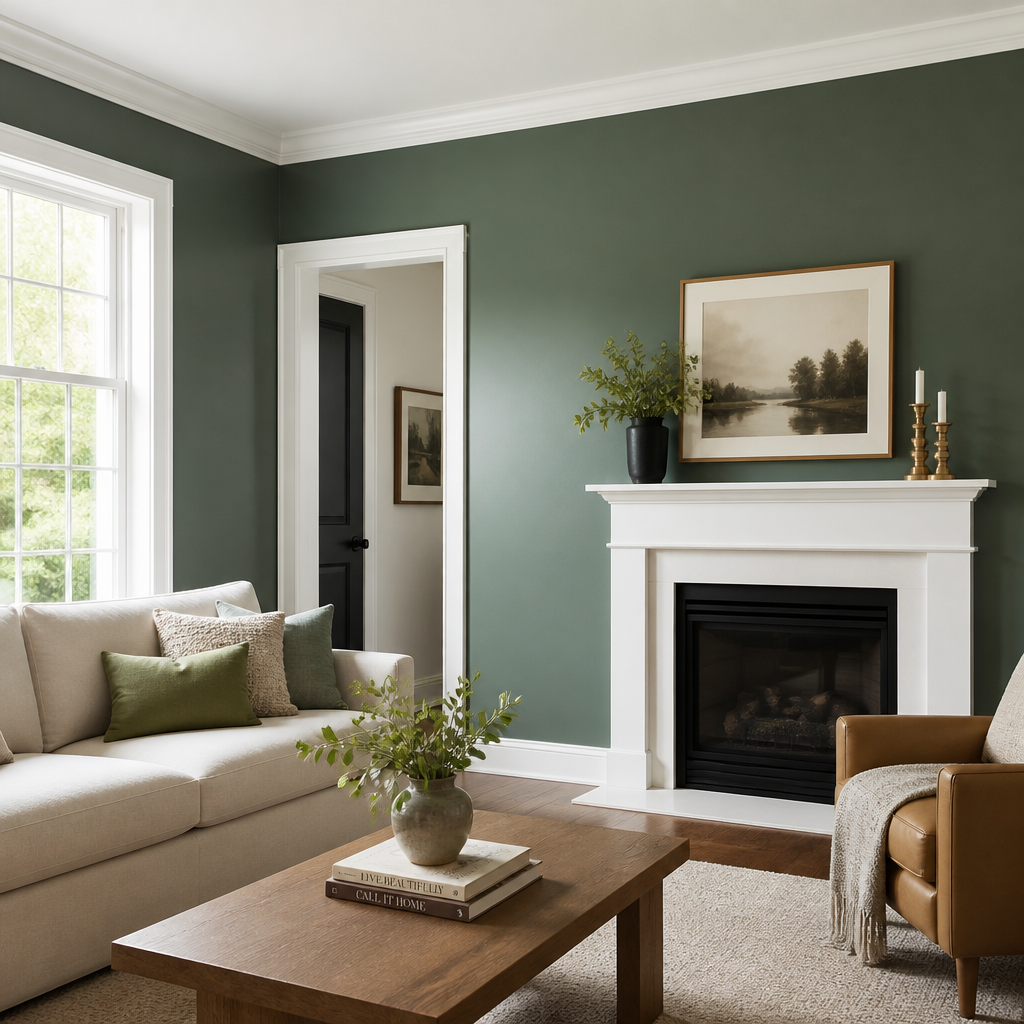
For homeowners in Abbotsford, Langley, Surrey, and across the Fraser Valley, this level of work is particularly relevant in spaces where light is abundant and unforgiving, such as open-concept great rooms, formal dining rooms, and high-ceiling entryways. These are the rooms where a standard paint job, no matter how quick or inexpensive, will always look like exactly what it is.

Why Surface Preparation Is Everything
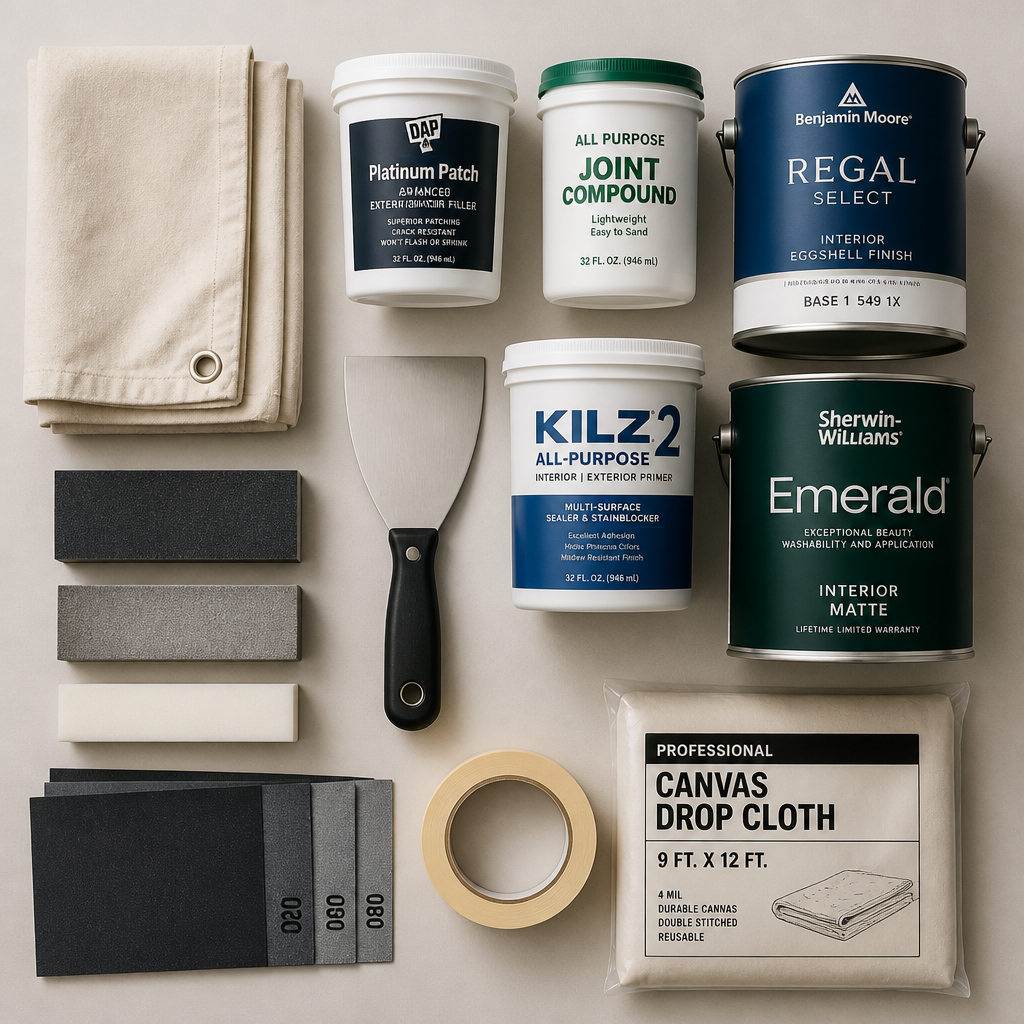
The single most important factor in any fine finish paint job is what happens before the first coat of paint is opened. Surface preparation consistently accounts for 50% or more of total project effort in professional interior painting work. This is not exaggeration. It is the reason why two painters can apply the same paint product to the same room and produce results that look decades apart in quality.
What Proper Prep Actually Looks Like
For fine finish work, preparation begins with cleaning all surfaces to remove grease, dirt, and residue. Kitchen walls in particular often require degreasing before any other work begins. After cleaning, every hole, crack, and surface irregularity is repaired. Small nail holes are filled with spackling compound, sanded flush, and spot-primed. Larger damage is patched with joint compound, allowed to cure fully, then sanded smooth before priming the entire surface.
The next step that most standard painters skip entirely is sanding between coats. Fine finish work requires a full sand of the primed surface before any topcoat is applied. This removes raised grain, dust nibs, and any applicator texture that would telegraph through the finish coat. In trim and cabinet work especially, this intermediate sanding step is what allows the final coat to read as a factory-applied finish rather than a brushed-on field application.
Pro tip: If a painter never mentions sanding between coats during your estimate conversation, that is a clear signal they are not quoting fine finish work. Ask directly. The answer tells you everything about what standard of work you are actually buying.
Why New Construction Walls Require Extra Attention
Freshly drywalled surfaces contain joint compound that has different porosity than the surrounding gypsum face paper. Without a quality primer that seals both surfaces evenly, the finish coat will flash, meaning the sheen will appear different over joints than over the flat drywall. Fine finish painters prime, sand, and often prime again before the first topcoat ever goes on. This is not an upsell. It is the only way to produce a wall that looks genuinely smooth rather than patterned by its own construction history.
The Techniques That Define Interior Fine Finishes
Fine finish painting in Vancouver-area homes encompasses both standard smooth application at an elevated level and full decorative finish work. Understanding the difference helps homeowners communicate clearly with their painting contractor about what they actually want and what budget is appropriate.
Smooth Wall and Ceiling Finishing
This is the baseline of fine finish work. The goal is a wall surface that reads as perfectly uniform in color and sheen, with no roller stipple, no lap marks, and no brush marks at cut-in edges. Achieving this requires back-rolling immediately after application to eliminate roller texture, maintaining a wet edge throughout to prevent lap lines, and cutting in with a technique that feathers the edge rather than leaving a hard line. These are skills, not shortcuts. They take years to develop consistently.
Decorative Finish Techniques
At the expressive end of fine finish painting, decorative techniques are hand-applied and fully custom. Unlike standard painted walls that produce a uniform flat appearance, decorative finishes create depth, texture, and visual movement that changes with the light throughout the day. Popular techniques include color washing, which layers translucent glazes over a base coat to produce a soft, fabric-like depth; strie, a dragged glaze technique that creates fine parallel lines suggesting textile or woodgrain; and ombre gradients that blend two or more colors across a wall surface.
Decorative wall finishes are more than any other wall covering, custom designed and hand-applied, allowing for fine-tuning of color, texture, and pattern to complement architecture, furnishings, and the entire character of a room.
These techniques do not simply cover a wall. They transform it into a surface with its own presence, functioning as art that is built into the architecture of the room rather than hung on top of it.
Pro tip: Ask your painting contractor to show you a sample board of any decorative finish technique before committing to a full wall application. Seeing the technique at scale and in your space’s actual light conditions is the only reliable way to confirm the result before it is on your walls.
Fine Finish vs. Standard Paint Job: A Direct Comparison
The table below makes the practical differences explicit. These are not abstract quality distinctions. They are specific process differences that produce measurable differences in appearance and longevity.
| Criteria | Standard Paint Job | Fine Finish Painting |
|---|---|---|
| Surface preparation depth | Fill major holes, prime, and paint | Clean, fill all imperfections, prime, sand between coats, spot-prime repairs |
| Primer use | One coat, sometimes skipped on repaint | Appropriate primer selected for substrate, sanded after application |
| Trim and millwork technique | Brush applied, marks may be visible | Brush applied with laying-off stroke to eliminate marks, sanded between coats |
| Decorative finish capability | Not typically offered | Color wash, strie, Venetian plaster, ombre, and faux techniques available |
| Expected lifespan | 1 to 2 years before visible wear in high-traffic areas | 7 to 12 years with quality prep and product selection |
| Visible result under raking light | Roller stipple and lap marks often visible | Uniform surface reads as flat and mark-free under all lighting conditions |
How Dreamscape Delivers Museum-Quality Results
Dreamscape Painting Ltd. has been delivering professional painting services across the Lower Mainland since 1990. That longevity is not accidental. Over 35 years, the company has built its reputation on the specific habits and standards that fine finish painting demands: thorough preparation, skilled application, and a cleanliness standard that treats every client’s home as a workspace that must be left better than it was found.
Experienced Estimators Who Assess Before They Quote
Fine finish painting cannot be quoted accurately over the phone or from a photo. The surface condition of existing walls, the complexity of millwork profiles, the ceiling height, and the number of cut-in lines all directly affect the labor time required to do the work properly. Dreamscape’s estimators assess these factors in person before producing a quote. This means the scope of work includes everything required for the actual result, not a reduced scope that sounds affordable but produces a standard finish at a fine finish price.
Skilled Painters Who Prioritize the Process
Professional painting craftsmanship is a function of habit as much as talent. The painters who consistently produce fine finish results are the ones who prime before they roll, sand before they topcoat, protect every surface they are not painting, and lay off their brush strokes before the paint begins to tack. These are not options. At Dreamscape, they are the process every project follows regardless of size.
This approach is particularly visible in Dreamscape’s cabinet refinishing work, where fine finish standards apply to surfaces that are handled daily and examined at close range continuously. The same level of attention carries through to interior painting projects of all scales, from single-room refreshes to full-home repaints in Abbotsford and Langley.
Cleanliness as a Non-Negotiable Standard
A crew that does fine finish work also cleans up like it. Drop cloths cover every floor surface. Hardware, fixtures, and trim that are not being painted are masked or removed before work begins. At the end of each workday, the job site is organized and surfaces are protected. This is not housekeeping. It is part of the craftsmanship, because a painter who is careless about overspray and drips is also careless about the details that define fine finish results.
Choosing the Right Sheen for Fine Finish Work
Sheen selection in fine finish painting is a technical decision that has a direct visual impact on the final result. Higher sheen levels reflect more light, which makes them more durable and washable but also more likely to highlight every surface imperfection. Lower sheen levels are more forgiving of minor wall irregularities but offer less durability in high-traffic areas.
For fine finish work, the practical guidance is straightforward. Walls in living rooms and bedrooms that have been properly prepared can carry an eggshell or satin finish without issue. Trim and millwork should almost always be finished in a semi-gloss or satin that provides durability and a crisp visual contrast to the wall surface. Ceilings should remain in a flat finish to minimize light reflection and avoid drawing attention to minor texture variations.
The common mistake is choosing a sheen based on preference without accounting for surface condition. A high-gloss finish applied over a wall with minor skim coat imperfections will reflect those imperfections in every light condition. If a client wants a higher sheen, the wall preparation must be elevated to match. Fine finish painters know this and adjust the prep scope accordingly before any product decision is finalized.
Frequently Asked Questions
What makes fine finish painting different from a regular interior paint job?
Fine finish painting requires a higher level of surface preparation, more deliberate application technique, and a quality standard measured under raking light rather than just a quick visual scan from across the room. It includes sanding between coats, precise cut-in work with no visible edges, and consistent sheen across every surface. A regular paint job typically skips intermediate sanding, uses faster application methods that leave roller texture, and does not carry the same inspection standard before the job is signed off as complete.
How long does a fine finish interior paint job last?
A properly prepared and applied interior paint system can last between 7 and 12 years before needing repainting, even in moderate-traffic areas. A rushed job on unprepared surfaces may show peeling, flashing, or visible wear within 1 to 2 years. The longevity difference is almost entirely driven by the quality of preparation, not the price of the paint product itself.
Can fine finish painting include decorative techniques like Venetian plaster or color washing?
Yes. Decorative techniques such as Venetian plaster, strie, color washing, and ombre gradients all fall within the fine finish category. These are hand-applied techniques that require the same level of surface preparation as a smooth fine finish, plus additional technical skill in the application of glazes and specialty coatings. Each result is custom to the space and cannot be replicated with standard roller work.
Is fine finish painting worth the cost for a home in the Fraser Valley?
For rooms where light is abundant and the surfaces are examined closely, including entryways, open-concept living spaces, and formal dining rooms, fine finish painting delivers a visible quality difference that holds up for years longer than standard work. Given that paint material cost is typically a small fraction of the total project investment, skimping on the labor and preparation that produce a fine finish is rarely a good trade. The cost of repainting an inferior job in two years far exceeds the difference in upfront cost between standard and fine finish work.
How do I know if a painter is actually quoting fine finish work?
Ask directly whether their process includes sanding between coats, how they handle surface repairs before priming, and what their standard is for trim application. Fine finish painters will answer these questions with specifics. If the answer is vague or the painter redirects to paint brand names as a quality signal, they are likely not quoting a fine finish standard. Also ask to see completed work in person, specifically under a raking sidelight, which is the most honest test of any interior paint job.
Does Dreamscape Painting offer fine finish painting across the entire Lower Mainland?
Yes. Dreamscape Painting Ltd. serves homeowners and property owners throughout the Lower Mainland and Fraser Valley, including Abbotsford, Langley, Surrey, and surrounding areas. Their interior painting services, cabinet refinishing, and commercial painting work are all delivered at a fine finish standard. You can learn more about their services and request an estimate directly through their website.
If you have had fine finish painting done in your home or are weighing it against a standard repaint, share what tipped your decision in the comments. Your experience helps other homeowners in the Fraser Valley ask the right questions before they sign a contract.
We would love your feedback and any insights you would share with others. What perspective would you add?

