

Most homeowners spend hours agonizing over paint colors and then pick a finish at random. That single decision can ruin an otherwise perfect room. A flat finish in a busy kitchen will show every grease smear within weeks. A high-gloss ceiling in a living room will highlight every imperfection your drywall contractor hoped you’d never notice. This paint finish guide will tell you exactly what works in each room, why it works, and what to avoid, drawing on over 35 years of real-world interior painting experience from the Fraser Valley and Lower Mainland.
Table of Contents
- Quick Takeaways
- Understanding Paint Sheens: What the Labels Actually Mean
- Flat and Matte Finishes: Where They Belong and Where They Don’t
- Eggshell and Satin Finishes: The Workhorses of Interior Painting
- Semi-Gloss and Gloss Finishes: High Performance, High Stakes
- Room-by-Room Breakdown: The Definitive Sheen Recommendations
- Fine Finishes Painting: When Standard Sheens Are Not Enough
- Finish Comparison: Durability, Cleanability, and Best Use
- Common Mistakes That Waste Your Paint Budget
- Frequently Asked Questions
- References
Quick Takeaways
| Key Insight | Explanation |
|---|---|
| Flat finish hides imperfections but cannot be scrubbed | Use flat only in low-traffic adult bedrooms and formal dining rooms where walls rarely get touched |
| Eggshell is the best all-purpose interior finish | It has just enough sheen to wipe clean without amplifying wall flaws the way satin or gloss does |
| Satin outperforms eggshell in high-humidity rooms | Bathrooms and laundry rooms need the added moisture resistance that satin’s higher sheen provides |
| Semi-gloss is the standard for trim, doors, and cabinets | It takes repeated cleaning without degrading and creates the crisp contrast that defines fine finishes painting |
| Gloss amplifies every surface flaw | Only use high-gloss on surfaces that are sanded perfectly smooth, such as furniture or accent pieces |
| Ceiling paint is not the same as flat wall paint | Ceiling-specific flat paint is formulated to reduce drip and spatter during application, not just to cut sheen |
| Finish choice affects color perception | The same color in flat vs. semi-gloss can look like two different shades under the same lighting conditions |
Understanding Paint Sheens: What the Labels Actually Mean
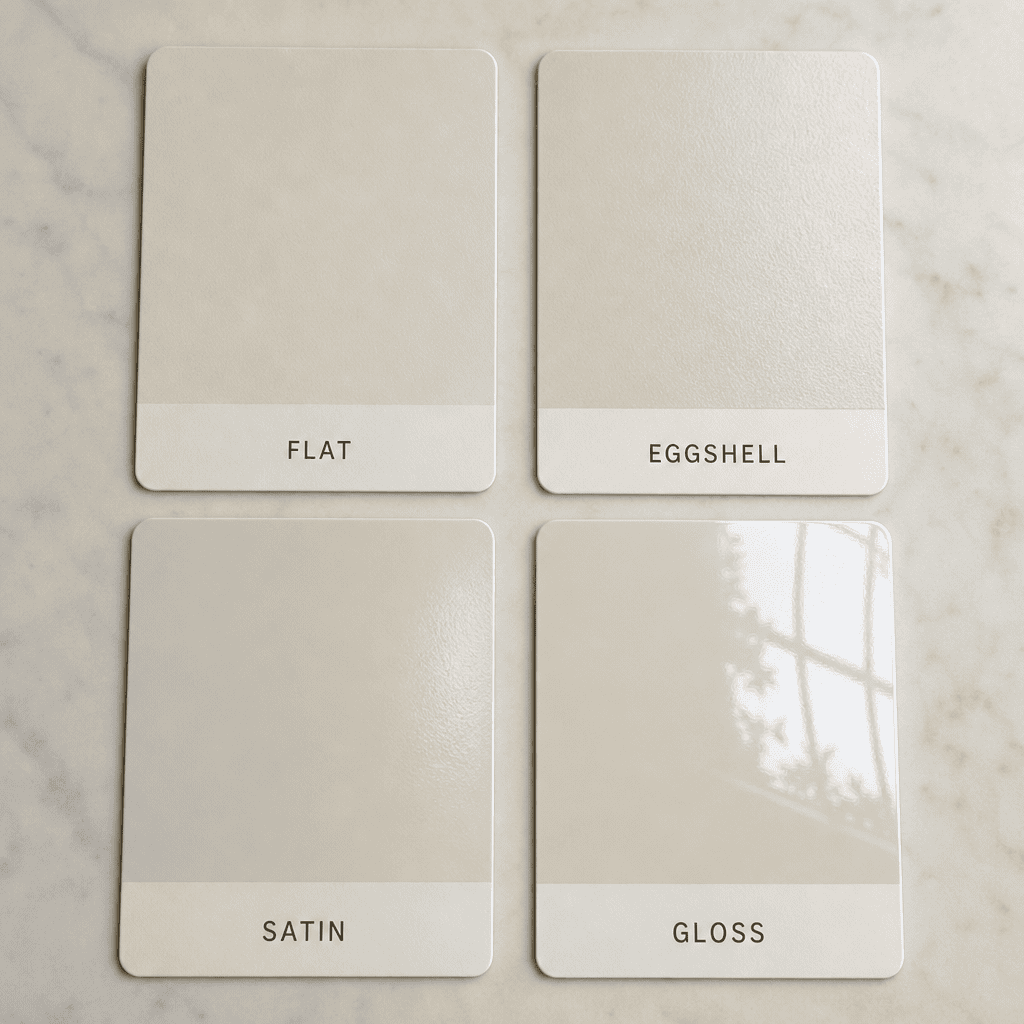
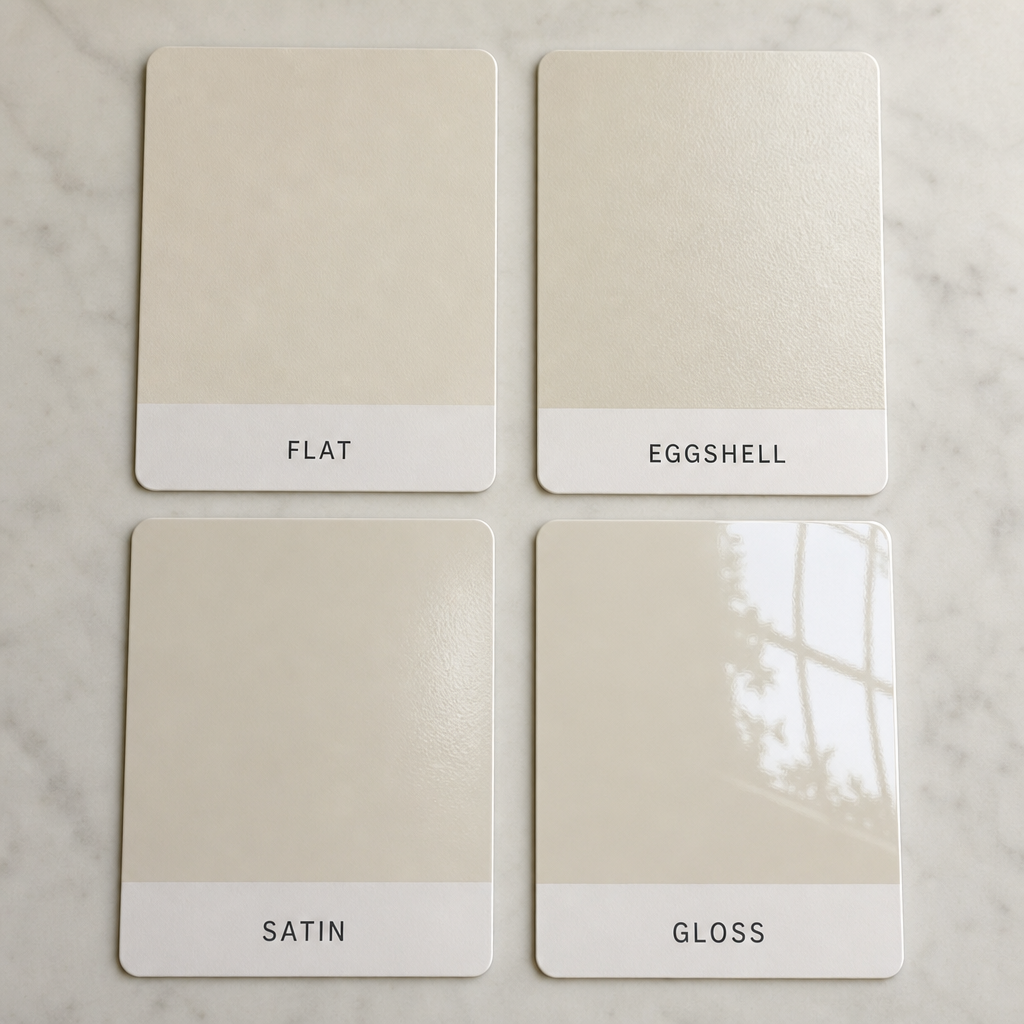
Paint sheen is determined by the ratio of binder and pigment to light-reflective additives in the formula. The higher the sheen level, the more light the cured paint surface bounces back toward your eye. This is not just an aesthetic variable. It directly controls how durable the coating is, how washable it is, and how forgiving it is over imperfect surfaces.
In practice, every major paint brand uses slightly different terminology. Benjamin Moore calls it “Flat, Matte, Eggshell, Pearl, Satin, Semi-Gloss, High-Gloss.” Sherwin-Williams uses similar terms but adds “Flat Enamel” as a washable version of flat. The sheen percentages below are approximate industry standards based on light reflectance values (LRV) at a 60-degree angle measurement.
Flat or Matte reflects less than 10 percent of light. Eggshell reflects roughly 10 to 25 percent. Satin sits around 25 to 35 percent. Semi-gloss runs 35 to 70 percent, and high-gloss exceeds 70 percent. These are not marketing categories. They are measurable physical properties of the dried paint film.
Flat and Matte Finishes: Where They Belong and Where They Don’t
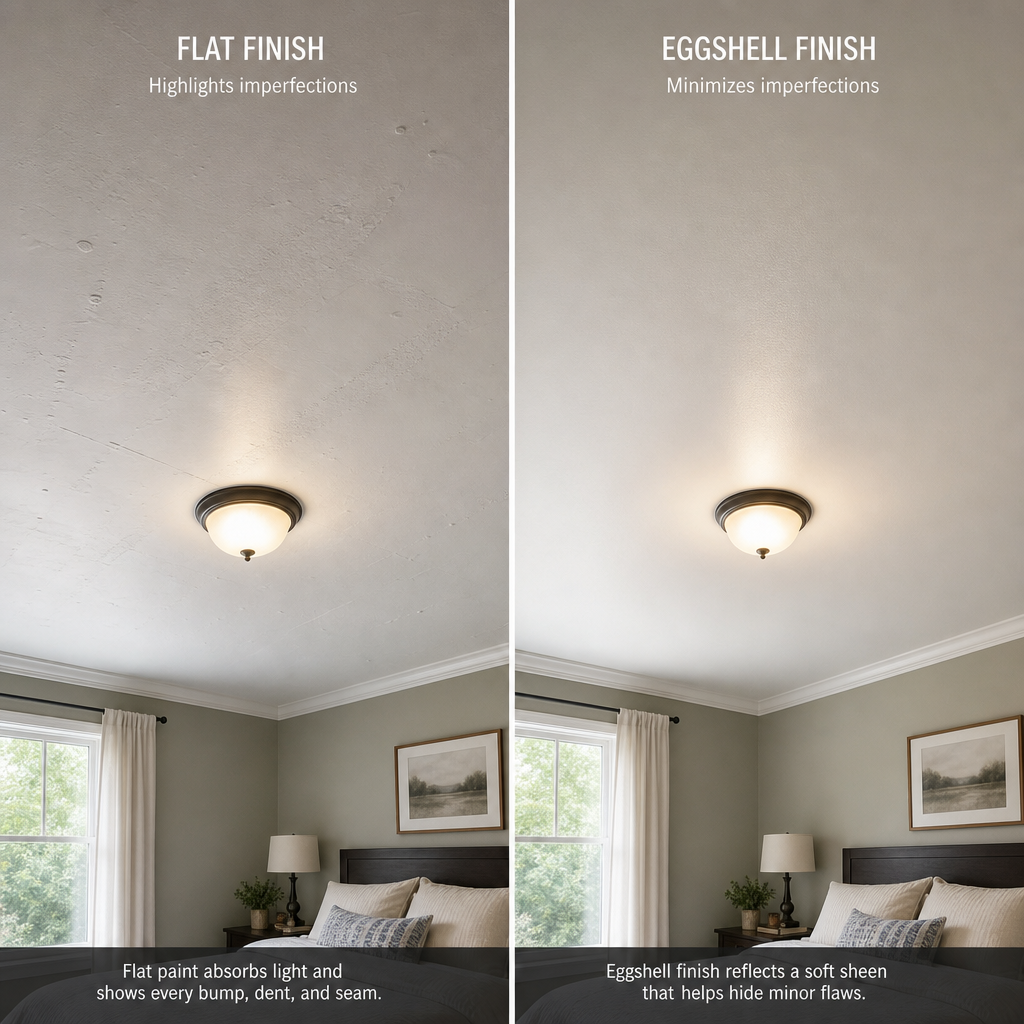
Flat paint is the finish that professional painters reach for when a surface has texture problems, minor dents, or uneven patches that primer alone cannot fully hide. The absence of reflectivity means light does not skim across the surface and reveal ridges or roller marks. For that reason, flat paint is genuinely the right call on ceilings in nearly every home.
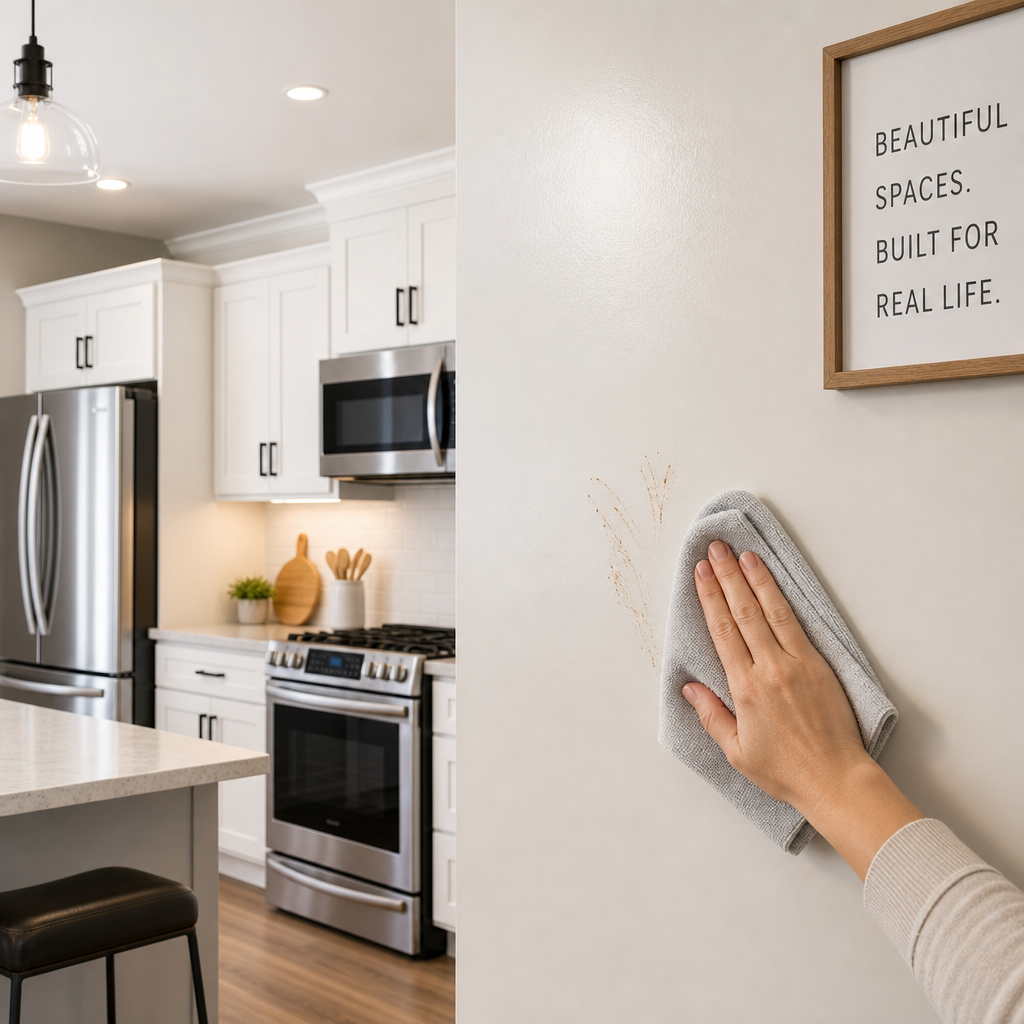
On walls, flat belongs in rooms where people do not touch the surfaces often. A formal living room used mainly for guests, an adult bedroom, or a home office with mature users are all reasonable candidates. A common mistake is applying flat to hallways because the homeowner wants a calm, non-reflective look. Hallways take constant shoulder brushing, bag scuffs, and handprints. Flat paint in a hallway will look dingy within a year, and no amount of careful spot cleaning will fix it because the surface simply cannot be wiped without leaving a dull burnish mark.
Matte paint is essentially a slightly upgraded flat. Some brands formulate it with a small amount of additional binder to make it marginally more scrub-resistant than traditional flat. Do not confuse this with washable performance. It is still far below what eggshell or satin offers in a high-contact zone.
Pro tip: If you love the look of flat paint but need some washability, ask your painting contractor about “flat enamel” formulations from Benjamin Moore or Sherwin-Williams. They deliver a flat appearance with slightly improved cleanability, though they still fall short of eggshell for busy family homes.
Eggshell and Satin Finishes: The Workhorses of Interior Painting
If there is one thing the team at Dreamscape Painting has observed consistently across thousands of residential projects in Abbotsford, Langley, Surrey, and throughout the Fraser Valley, it is this: the majority of homeowners would be better served by eggshell or satin on their main living spaces than by flat or semi-gloss. These two finishes occupy the sweet spot between performance and forgiveness.
Why Eggshell Is the Default for Living Rooms and Bedrooms
Eggshell reflects enough light to allow gentle cleaning with a damp cloth, but not so much that it highlights every skim coat imperfection or roller texture. For a typical family room, master bedroom, or dining room, eggshell gives you a soft, livable look that holds up over years of normal use. It is the finish that experienced residential painters recommend most often, and for good reason.
The data from paint manufacturers backs this up. According to Sherwin-Williams’ own product guidance, eggshell finishes are specifically formulated for low-to-moderate traffic areas where occasional cleaning is expected. This aligns exactly with what living rooms and bedrooms demand.
When to Step Up to Satin
Satin is the right choice when moisture, steam, or repeated scrubbing is a factor. Bathrooms, laundry rooms, mudrooms, and children’s bedrooms all qualify. Satin’s higher binder content creates a harder film that resists moisture penetration better than eggshell. It is also noticeably easier to wipe down after a child’s creative session with a crayon or a muddy handprint from a dog.
The tradeoff is that satin shows surface flaws more readily than eggshell. If your drywall has waviness or the previous owner’s patch jobs were mediocre, satin will make that visible under raking light. This is where the skill of your painter matters enormously. Proper surface preparation before applying satin is non-negotiable.
“The finish you choose is only as good as the preparation underneath it. A high-sheen paint over poor drywall preparation is one of the most common and expensive mistakes in residential painting.” – Paint Quality Institute, guidance on interior paint application
Semi-Gloss and Gloss Finishes: High Performance, High Stakes
Semi-gloss is the industry standard for trim work, baseboards, window casings, doors, and kitchen cabinets. Its durability is significantly higher than eggshell or satin. The harder film it forms is designed to take repeated washing, knocks, and abrasion without breaking down. For cabinet refinishing work, which is one of Dreamscape Painting’s specialties, semi-gloss is the baseline finish that most homeowners request.
High-gloss is a different animal. It is mirror-like, dramatic, and completely unforgiving of surface imperfections. It is best reserved for furniture accents, exterior doors where you want a statement, or specific architectural details that have been sanded to perfection. Do not apply high-gloss to standard drywall walls unless you are prepared to invest significant time in surface preparation and accept that any future nail holes or repairs will be very difficult to blend invisibly.
Cabinet Refinishing and the Case for Semi-Gloss
Cabinet refinishing is one of the areas where finish selection has the most visible impact. Kitchen cabinets take grease splatter, daily handling, and moisture. Semi-gloss on cabinets is not merely an aesthetic choice. It is a functional one. Cabinets painted in flat or even eggshell will absorb grease and begin to degrade within a year of normal kitchen use. Semi-gloss wipes clean and maintains its integrity for years when applied correctly over properly primed surfaces.
Room-by-Room Breakdown: The Definitive Sheen Recommendations
There is a clear, defensible answer for every room in the house. “It depends” is only useful if followed by specific criteria. Here are the criteria and the recommendations they produce.
Living Room and Dining Room
Use eggshell on walls. These rooms see moderate traffic and benefit from the soft glow of eggshell without the reflectivity that would expose every texture flaw. Use semi-gloss on all trim and doors.
Kitchen
Use satin on walls. The cooking environment introduces grease and moisture daily. Eggshell will hold up in a light-use kitchen, but satin is the better long-term investment. Cabinets should receive semi-gloss or, in some fine finishes painting applications, a water-based alkyd for maximum hardness and smoothness.
Bathrooms
Use satin or semi-gloss on walls. Humidity and splashing make anything below satin a poor choice. Many bathroom walls are also tiled partway up, leaving only a band of drywall above. Satin on that upper wall section is the professional standard in the Fraser Valley market.
Bedrooms
Adult bedrooms: eggshell. Children’s bedrooms: satin, full stop. Children’s rooms need washability. Eggshell is a compromise that never fully satisfies when a child is in the room regularly.
Hallways and Entryways
Use satin. Flat and eggshell will not survive the contact traffic in these spaces. Satin’s harder film is the minimum acceptable standard for a hallway in a busy household.
Ceilings
Use flat, always. Flat ceiling paint minimizes the visibility of any imperfections in the ceiling plane. A satin or eggshell ceiling looks unusual under artificial lighting and draws attention to every seam and texture variation. The only exception is a bathroom ceiling, where a satin or semi-gloss is appropriate to resist moisture damage.
Fine Finishes Painting: When Standard Sheens Are Not Enough
Fine finishes painting is a category that goes beyond simply selecting a sheen from a paint brand’s lineup. It encompasses specialty application techniques, decorative coatings, and the kind of meticulous surface preparation that produces results indistinguishable from factory finishes. This is the work that separates a skilled trade painter from a general contractor who happens to own a roller.
In practice, fine finishes painting applies most visibly to cabinet refinishing, built-in millwork, fireplace surrounds, and architectural trim. The goal is a surface that reads as smooth, consistent, and intentional regardless of the viewing angle or lighting condition. Achieving this requires proper sanding between coats, the use of fine-tip spray equipment in many cases, and the discipline to apply multiple thin coats rather than one thick coat.
For homeowners in Abbotsford, Langley, and Surrey who are investing in kitchen renovations or heritage home restoration, fine finishes painting is the difference between a result that photographs well and one that looks equally impressive in person under natural light. Dreamscape Painting’s team applies these techniques to both new construction and restoration projects across the Lower Mainland.
Pro tip: When requesting fine finishes on cabinets or trim, ask your painter specifically whether they will be spraying or brushing the final coats. Spray application on cabinets typically produces a smoother, more uniform result than brushing, provided the preparation work is done properly and the space is adequately masked off.
Finish Comparison: Durability, Cleanability, and Best Use
| Finish Type | Durability and Cleanability | Best Room Application |
|---|---|---|
| Flat / Matte | Low durability, cannot be scrubbed, hides imperfections well | Ceilings, formal living rooms, adult bedrooms with minimal traffic |
| Eggshell | Moderate durability, gentle wiping only, forgiving on walls with minor flaws | Living rooms, dining rooms, adult bedrooms, home offices |
| Satin | Good durability, washable, shows surface imperfections under raking light | Kitchens, bathrooms, hallways, laundry rooms, children’s bedrooms |
| Semi-Gloss | High durability, fully washable, very revealing of surface flaws | All trim, doors, cabinets, bathroom walls, kitchen cabinets |
| High-Gloss | Highest durability, mirror-like finish, absolutely unforgiving of imperfections | Exterior doors, furniture accents, perfectly prepared architectural details |
Common Mistakes That Waste Your Paint Budget
A common mistake is choosing a finish based solely on how a paint chip looks in the store. Paint chips are printed on card stock and do not accurately represent how a finish will behave on a textured drywall surface. The only reliable way to preview a finish is to apply a test area on the actual wall under the actual lighting of the room.
Another frequent error is using the same finish throughout the entire house to simplify the purchase process. This approach saves perhaps twenty minutes at the paint counter and costs you years of performance in the rooms where the wrong finish was applied. Kitchens painted in flat paint are a genuine waste of money. Hallways in eggshell will look dirty within a season in a busy household.
The third mistake is skipping primer when switching between finish types. If you are painting over a semi-gloss wall with eggshell, the existing gloss must be deglossed or primed. Failing to do this results in poor adhesion, and the new finish may peel, especially in humid environments. This is a step that professional painters never skip, even when time pressure exists on a project.
Finally, many homeowners underestimate how dramatically lighting affects sheen perception. A satin finish in a north-facing room with limited natural light will read almost as flat. The same satin in a south-facing sunroom will appear nearly semi-gloss. Always assess your finish choice under the specific lighting conditions of the room, including both natural daylight and the artificial lighting you actually use at night.
Frequently Asked Questions
What is the best paint finish for a living room?
Eggshell is the best paint finish for most living rooms. It offers a soft, low-reflective look that is forgiving of minor wall imperfections while still allowing occasional cleaning with a damp cloth. Semi-gloss should be used on all trim and door casings in the same space for contrast and durability.
Can I use flat paint in a kitchen?
No. Flat paint is not suitable for kitchens under any normal circumstances. Cooking produces grease and moisture that will penetrate and degrade a flat finish rapidly. Satin is the minimum recommended finish for kitchen walls, and semi-gloss is the correct choice for kitchen cabinets.
What is the difference between eggshell and satin?
Eggshell reflects roughly 10 to 25 percent of light and is moderately washable with a gentle wipe. Satin reflects 25 to 35 percent of light, creates a harder film, and is more resistant to moisture and repeated scrubbing. Satin shows surface imperfections more readily than eggshell, which means it requires better surface preparation before application.
Is semi-gloss paint good for bathroom walls?
Semi-gloss is a solid choice for bathroom walls, particularly in smaller bathrooms with high humidity or around the tub and shower area. It resists moisture effectively and cleans easily. Some homeowners prefer satin for a slightly softer look while still getting adequate moisture resistance. Either finish works; the key is avoiding anything below satin in a bathroom.
How does paint finish affect color appearance?
Paint finish significantly affects how a color reads in a room. Higher sheen levels reflect more light, which can make a color appear brighter and slightly different in hue compared to the same color in a flat or matte finish. Flat finishes absorb light and make colors appear richer and slightly deeper. This is why paint professionals always recommend testing the actual color in the actual finish on the actual wall before committing to a full room.
What finish should I use for cabinet refinishing?
Semi-gloss is the professional standard for cabinet refinishing. It provides the durability needed for a surface that is touched multiple times daily, exposed to cooking grease, and cleaned frequently. For a premium result, water-based alkyd paints applied in thin coats via spray equipment can deliver an even harder, factory-like finish that holds up exceptionally well in kitchen environments.
Do interior painting tips differ for older homes with textured walls?
Yes, significantly. Older homes in the Fraser Valley and Lower Mainland often have skip-trowel, orange peel, or knockdown textures that were applied to hide drywall imperfections. On these surfaces, higher sheens amplify the texture dramatically under certain lighting. Eggshell or flat is almost always the better choice on heavily textured walls to keep the surface looking intentional rather than chaotic. If you want a higher sheen, the texture needs to be skim-coated smooth first, which is a separate trade operation before painting begins.
If you have a room where you are unsure which finish to choose, share your specific situation in the comments or reach out directly. Real questions from real rooms get real answers.
We would love your feedback and any insights you would share with others. What perspective would you add?
References
- Forbes coverage of home improvement trends and interior design investment value
- United States Environmental Protection Agency guidance on indoor air quality and low-VOC paint standards
- Statista data on the paint and coatings industry, including residential paint market size and consumer trends
- Better Homes and Gardens editorial guidance on interior paint selection and room-by-room finish recommendations
- National Research Council of Canada resources on building materials performance and moisture resistance in residential construction

