

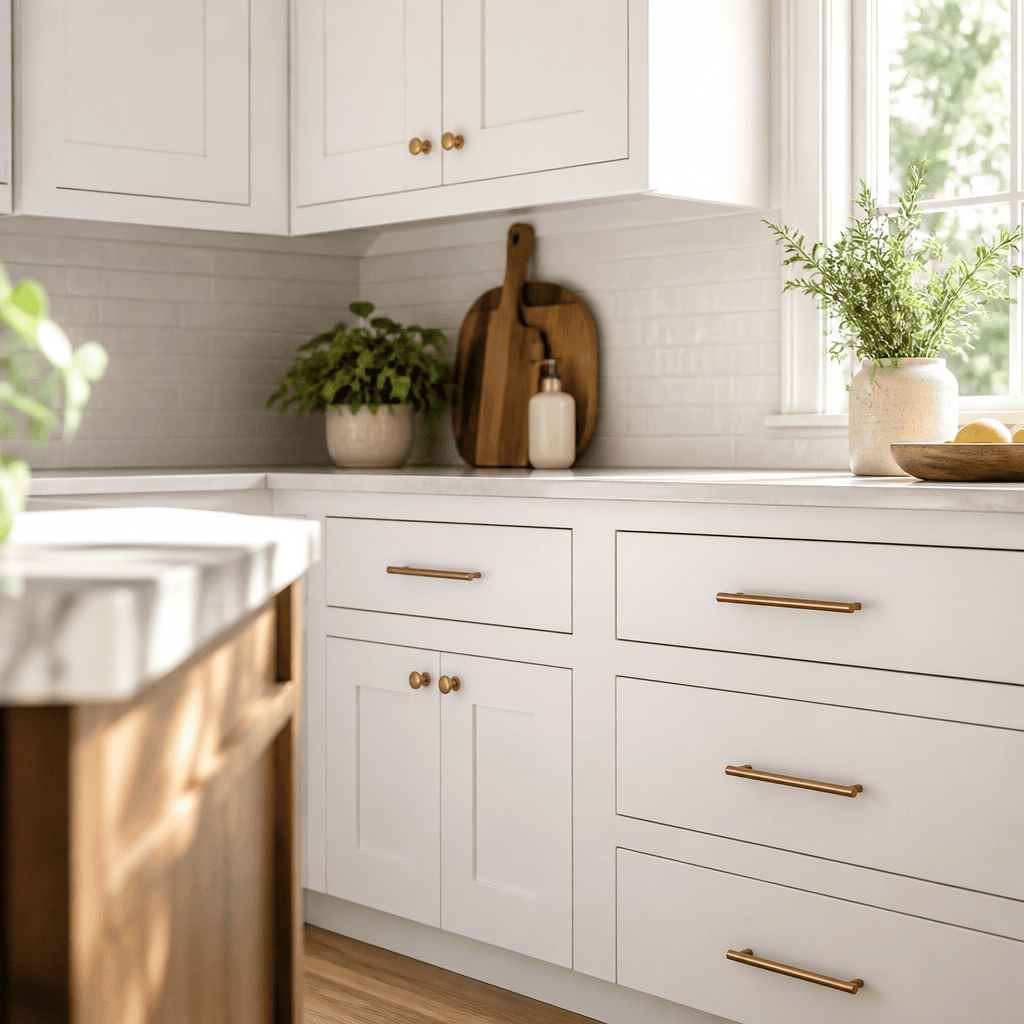
Most Surrey homeowners who walk into their kitchen every morning and feel vaguely annoyed have one thing in common: dated cabinets. Not broken cabinets, not structurally failing cabinets, just cabinets wearing a finish that belongs in a different decade. Kitchen cabinet painting in Surrey has become one of the fastest-growing home improvement requests across the Fraser Valley, and for good reason. A professional repaint costs a fraction of replacement while delivering a transformation that photographs and lives beautifully. This guide walks through exactly what that transformation looks like, what it costs, and how to avoid the mistakes that produce a finish that peels in eighteen months.
Table of Contents
- Quick Takeaways
- Why Surrey Homeowners Choose Cabinet Painting Over Replacement
- The Before: Understanding What You Actually Have
- The Transformation Process, Step by Step
- Cabinet Painting Cost and Cabinet Refinishing in the Lower Mainland
- Comparison: DIY vs. Local Painter vs. Professional Refinisher
- Colour Choices That Hold Their Value
- What the After Really Looks Like
- Frequently Asked Questions
- References
Quick Takeaways
| Key Insight | Explanation |
|---|---|
| Prep work drives the final result | Sanding, degreasing, and priming account for roughly 70 percent of finish quality. Skipping any step produces peeling within months, not years. |
| Cabinet painting costs far less than replacement | Professional cabinet refinishing in Surrey typically runs between $2,500 and $6,000 for a full kitchen, compared to $15,000 to $35,000 for new cabinet installation. |
| Not every cabinet is a good refinishing candidate | Thermofoil and laminate surfaces require different treatment than solid wood or MDF. A professional assessment before booking saves wasted money. |
| Paint product selection is not interchangeable | Alkyd waterborne enamels and cabinet-specific urethane finishes outperform standard interior latex on high-touch surfaces like cabinet doors. |
| Colour choice affects resale value | Neutral tones such as warm whites, soft greiges, and muted navy hold consistent buyer appeal in the Surrey and Fraser Valley market. |
| Downtime is predictable | A professionally managed Surrey cabinet repaint typically takes three to five days from prep to final topcoat, with kitchens usable within 24 hours of completion. |
| Experience with Lower Mainland homes matters | Older Fraser Valley homes often have layered oil-based finishes that require specific primers. A painter unfamiliar with this substrate will produce adhesion failure. |
Why Surrey Homeowners Choose Cabinet Painting Over Replacement
Cabinet replacement is a construction project. It involves demolition, new material orders with weeks-long lead times, installation disruption, and often unexpected costs when old walls reveal surprises. Cabinet painting, done properly, is a finishing project. The structure stays. The layout stays. The hardware can be updated. What changes is everything the eye actually lands on.
The math is not subtle. According to Statistics Canada housing expenditure data, kitchen renovations consistently rank among the highest-cost home improvement categories. Cabinet replacement alone accounts for a significant portion of that spend. Refinishing redirects that budget toward counters, lighting, or simply stays in the homeowner’s pocket.
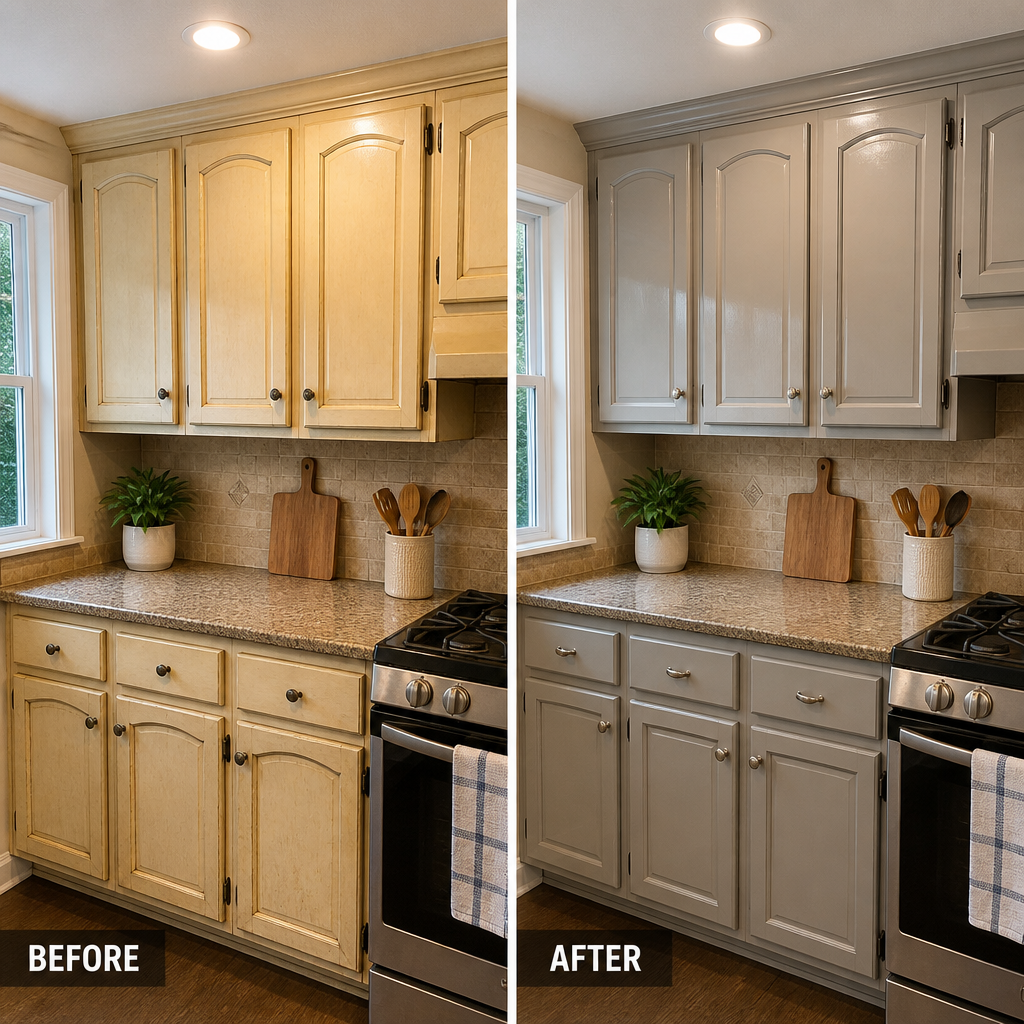
In practice, the homeowners who benefit most from kitchen cabinet painting in Surrey are those with structurally sound boxes and doors that are simply wearing an outdated honey oak, builder-grade white, or 1990s forest green. The bones are good. The aesthetic is not. That is exactly the problem a quality repaint solves.
Dreamscape Painting has been working in Surrey, Langley, Abbotsford, and the wider Fraser Valley for over 35 years. The pattern is consistent: homeowners who invest in professional cabinet refinishing report the highest satisfaction-to-cost ratio of any interior painting service they have purchased.
The Before: Understanding What You Actually Have
The before stage is where most DIY projects and underprepared painters fail. Walking into a kitchen and assuming that all wood cabinet surfaces behave the same is the single most common mistake in this trade. It is not a small mistake. Adhesion failure on a kitchen cabinet costs the homeowner the full project cost to fix, plus the original investment.
Identifying Your Cabinet Material
Solid wood frames with MDF doors are the most common configuration in Surrey homes built between 1985 and 2010. These take paint predictably well with the right primer. Thermofoil doors, which look like a seamless wrapped surface with no visible grain, require adhesion-promoting primers and cannot be sanded aggressively without damaging the substrate. Older homes in Whalley and Newton sometimes have original oil-based finishes that will reject water-based topcoats without a proper bonding primer bridge.
Assessing Structural Condition
Before any product touches the surface, check hinges, drawer slides, and box joints. A repaint will not fix a sagging drawer box or a door that does not hang square. Addressing minor structural repairs before painting, not after, is the professional sequence. Dreamscape’s estimators flag these issues at the quoting stage so there are no surprises mid-project.
The Grease and Grime Reality
Kitchen cabinet surfaces accumulate cooking grease, cleaning product residue, and hand oils over years of use. A standard wipe-down does not remove this adequately. TSP substitute or a dedicated degreaser applied and fully rinsed is the minimum preparation step before any sanding begins. In practice, skipping proper degreasing is the fastest path to a finish that looks fine for six months and then peels in sheets.
Pro tip: Run your fingertip along the inside edge of a cabinet door near the stove. If it feels tacky or leaves a faint residue on your finger, the surface has not been adequately degreased. No primer on the market compensates for surface contamination.
The Transformation Process, Step by Step
A professional cabinet painting project in Surrey follows a specific sequence. Cutting steps to save time is how you get a finish that looks like a DIY project instead of a renovation. Here is what the process looks like when done correctly.
Door and Drawer Front Removal
Every door and drawer front comes off before painting starts. Painting cabinet doors on the hinge produces drips, missed coverage at edges, and uneven sheen. Removed doors get labelled, laid flat, and finished on both faces with proper dry time between coats.
Sanding and Surface Preparation
Light sanding with 150 to 220 grit creates mechanical adhesion for the primer. The goal is not to remove the existing finish entirely. The goal is to scuff the surface so primer grips. After sanding, the surface is wiped clean of all dust before primer application. Any dust left behind becomes a permanent texture defect under the topcoat.
Priming: The Step That Determines Everything
The primer selection depends entirely on the existing substrate. For painted MDF over oil-based original finish, a shellac-based or waterborne alkyd primer is the correct choice. For raw wood repairs or filled areas, a high-build primer seals porosity before topcoating. Using a standard drywall primer on cabinets is a common mistake that dramatically reduces adhesion and durability.
Topcoat Application
Professional cabinet painters use spray application for door faces and flat surfaces to achieve a factory-smooth finish. Brush and roller work is appropriate for cabinet boxes in place. The topcoat is applied in two to three thin coats with full cure time between applications. Rushing this stage to finish in a day produces a soft film that dents and scratches easily.
Pro tip: Ask any cabinet painting contractor what specific topcoat product they use and why. A credible answer will reference the brand, the product line, and the sheen level. A vague answer about using quality paint is a warning sign.
“The number one reason cabinet paint jobs fail is not the paint. It is the surface condition at the time of application. No product available on the market compensates for inadequate prep.” Dreamscape Painting, based on 35 years of residential and commercial finishing experience in the Lower Mainland.
Cabinet Painting Cost and Cabinet Refinishing in the Lower Mainland
Cost is the question every Surrey homeowner asks first, and it deserves a direct answer rather than a non-committal range. Cabinet painting cost in the Lower Mainland depends on four main variables: the number of doors and drawer fronts, the current surface condition, the paint product specified, and whether hardware replacement is included.
Typical Price Ranges in Surrey
For a standard Surrey kitchen with 20 to 30 doors and drawer fronts, professional cabinet refinishing typically falls between $2,500 and $4,500 for a single colour with standard preparation. Larger kitchens with 40 or more doors, two-tone colour schemes, or heavily damaged surfaces requiring significant filling and repair push toward $5,000 to $6,500. These figures reflect professional labour, commercial-grade materials, and a finished result that holds up to daily kitchen use.
What Drives Cost Up
Heavily textured or raised-panel doors require more product and more time to coat without pooling in corners and recesses. Existing finishes in poor condition require more prep. Two-tone designs, where island cabinets are painted a contrasting colour to perimeter cabinets, add masking time and material. Hardware replacement, while often worthwhile for the overall aesthetic result, is an additional line item.
What Is Not Worth Cutting
The cost difference between a budget-grade latex paint and a cabinet-specific alkyd enamel or urethane finish is roughly $80 to $120 per gallon. For a full kitchen, that difference might total $300 to $500. A finish applied with inferior product will show wear at door edges and high-touch areas within two years. The upgrade is always worth it on a surface used multiple times daily.
Cabinet refinishing in the Lower Mainland represents strong value compared to replacement in virtually every scenario where the cabinet boxes are structurally sound. The return on investment from a cosmetic renovation perspective is well-documented, with kitchen updates consistently cited as among the highest ROI home improvements in the Canadian market.
Comparison: DIY vs. Local Painter vs. Professional Refinisher
Not all options for cabinet painting in Surrey are equal. The comparison below reflects real-world outcomes observed across the Lower Mainland market, not theoretical best-case scenarios.
| Approach | Typical Cost Range | Expected Durability and Finish Quality |
|---|---|---|
| DIY with roller and brush | $300 to $800 in materials | Visible brush marks, uneven sheen, adhesion issues common within 12 to 24 months. Acceptable for low-traffic areas, not for kitchen cabinets used daily. |
| General local painter | $1,200 to $2,500 | Finish quality varies significantly. Many general painters lack spray equipment and cabinet-specific product knowledge. Results range from acceptable to requiring a redo within two years. |
| Professional cabinet refinisher (such as Dreamscape Painting) | $2,500 to $6,500 | Factory-smooth spray finish, correct substrate preparation, commercial-grade topcoats. Finish durability of 8 to 15 years with normal care. Proper warranty provided. |
The middle option, hiring a general painter who quotes low and uses standard interior latex, is where most homeowner regret originates. The initial saving disappears when the finish fails and the kitchen needs to be repainted within two years.
Colour Choices That Hold Their Value
Colour choice for kitchen cabinets is both a personal decision and a financial one. In the Surrey and Fraser Valley market, where resale considerations matter to a large percentage of homeowners, certain colour directions consistently perform better than others.
Neutrals That Work in Lower Mainland Kitchens
Warm whites such as Benjamin Moore White Dove and Sherwin-Williams Alabaster remain the most requested cabinet colours across Lower Mainland projects. They read as clean and current without the sterility of a cool bright white. Soft greiges and warm greys such as Agreeable Gray and Revere Pewter pair well with the natural light conditions in Surrey homes, which tend toward cooler northern exposure in many neighbourhoods.
Bolder Choices That Are Working Right Now
Muted navy and forest green cabinets have sustained buyer interest far longer than initial trend forecasts suggested. These colours work particularly well on islands or lower cabinets paired with white or greige upper cabinets. The two-tone approach gives personality without committing the entire kitchen to a colour that may feel dated faster.
Colours to Avoid for Resale
Highly saturated colours, including bright red, deep purple, and bright yellow, consistently narrow the buyer pool in the Fraser Valley market. They are personal expressions that not enough buyers share to make the investment pay off at resale. If the homeowner plans to stay long-term, the calculation changes. But for anyone within five years of a potential sale, staying within the neutral-to-muted spectrum is the safer financial move.
What the After Really Looks Like
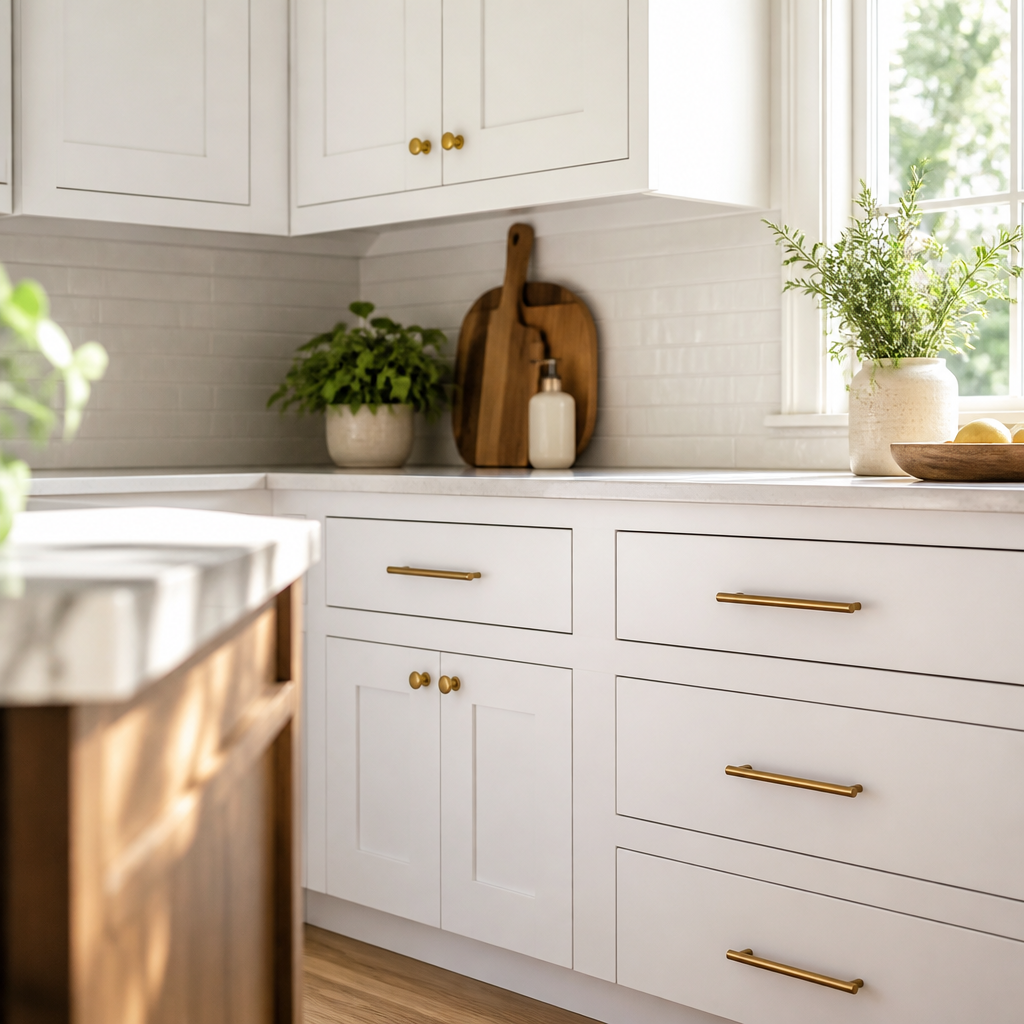
The transformation from dated oak or builder-grade white to a professionally painted cabinet finish is one of the most visually dramatic changes available in home improvement at this price point. What changes is not just the colour. The surface quality changes. The light reflection changes. The way the kitchen photographs for a listing changes.
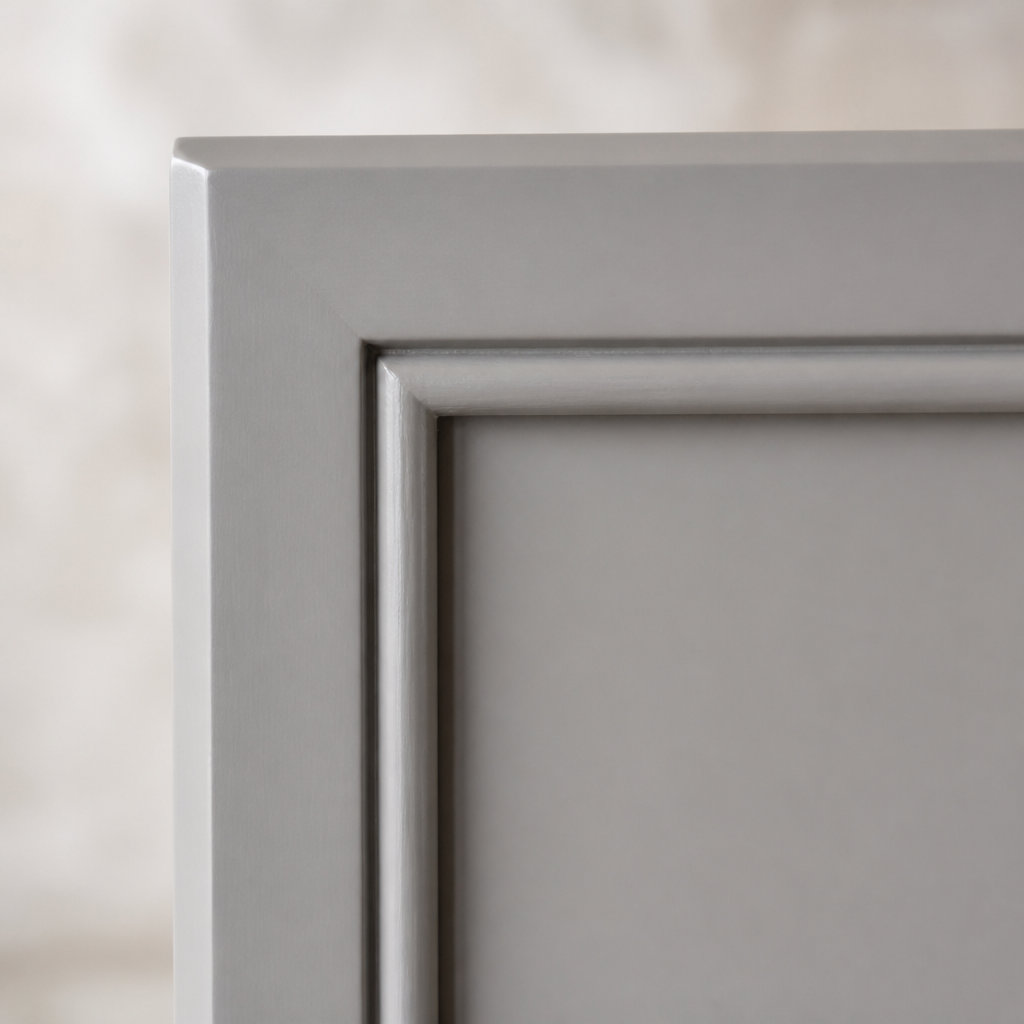
In practice, homeowners consistently report that professionally painted cabinets feel newer than they expected. A well-executed spray finish has a smoothness that cannot be achieved with brush or roller, and that smoothness is what makes the kitchen read as a deliberate design choice rather than a budget shortcut.
The after also includes hardware. New pulls and knobs are a $200 to $600 investment that multiplies the visual impact of the cabinet colour change. Dreamscape’s estimators regularly point this out during quoting because the combined effect of new colour and new hardware is significantly greater than either change alone.
Durability over the first twelve months is where professional work separates from everything else. Properly applied alkyd or urethane enamel on kitchen cabinets resists the daily contact of hands, cooking steam, and cleaning products without dulling, yellowing, or chipping at edges. That performance over time is the real after, not just how it looks on day one.
For Surrey homeowners considering this investment, Dreamscape Painting offers professional estimates with no obligation. The estimators who walk through your kitchen have seen hundreds of cabinet projects across the Lower Mainland and can tell you within minutes whether your cabinets are strong candidates, what the realistic scope looks like, and what the finish will actually cost. Visit www.dreamscapepainting.com to book an estimate.
Frequently Asked Questions
How long does professional kitchen cabinet painting take in Surrey?
A typical Surrey kitchen with 25 to 35 doors and drawer fronts takes three to five working days from prep through final topcoat. The kitchen is generally usable the evening of the last day, with full cure of the finish taking 14 to 30 days depending on the product used. During that cure period, cleaning with harsh scrubbing should be avoided.
Can laminate or thermofoil cabinets be painted?
Yes, but with important qualifications. Thermofoil that is peeling at edges must be re-adhered or those sections addressed before painting. Smooth laminate surfaces require an adhesion-promoting primer specifically formulated for non-porous substrates. Not every painter working in Surrey has experience with these materials. Asking directly about the primer product and process for laminate cabinets is a reliable way to screen for competence.
What is the difference between cabinet painting and cabinet refinishing?
In common usage across the Lower Mainland market, the terms are often used interchangeably to describe painting existing cabinet surfaces. Technically, refinishing can also refer to staining or clear-coating wood cabinets to restore or alter their natural finish. When most Surrey homeowners say refinishing, they mean a full opaque paint transformation. Clarify with your contractor which scope is being quoted.
How much should I expect to pay for cabinet painting in Surrey?
Professional cabinet painting cost in Surrey for a standard kitchen runs from $2,500 to $6,500 depending on door count, surface condition, colour complexity, and the quality of products used. Quotes significantly below $2,000 for a full kitchen should prompt questions about what prep steps are being skipped and what products are being used. The finish durability difference between a $1,800 job and a $3,500 job is not marginal. It is the difference between repainting in two years versus eight.
Will painted cabinets hold up to daily kitchen use?
Professionally painted cabinets using cabinet-specific alkyd or urethane enamel finishes hold up very well to normal kitchen use. The key word is professionally. The prep, primer, and topcoat sequence must be correct. When it is, the finish resists moisture, hand contact, and cleaning without failure. When it is not, the finish degrades within one to two years at high-touch areas like door edges and around pulls.
Does Dreamscape Painting serve all of Surrey and the surrounding area?
Yes. Dreamscape Painting serves the entire Lower Mainland including Surrey, Langley, Abbotsford, and the broader Fraser Valley region. The company has been operating since 1990 and has completed cabinet refinishing projects across all of these communities. Estimators are available for on-site assessments throughout the service area.
Have you recently had your kitchen cabinets painted professionally, or are you weighing your options right now? Share what questions or concerns are shaping your decision, because your experience helps other Surrey homeowners make a more informed choice.
References
- Home improvement spending trends and renovation cost data across Canadian markets
- Expert analysis on kitchen renovation return on investment and resale value in North American housing
- Annual kitchen and bath design trend research covering cabinet colour preferences and renovation scope
- Natural Resources Canada guidance on residential renovation materials and environmental considerations
- Canada Mortgage and Housing Corporation research on home renovation investment and property value impact

