

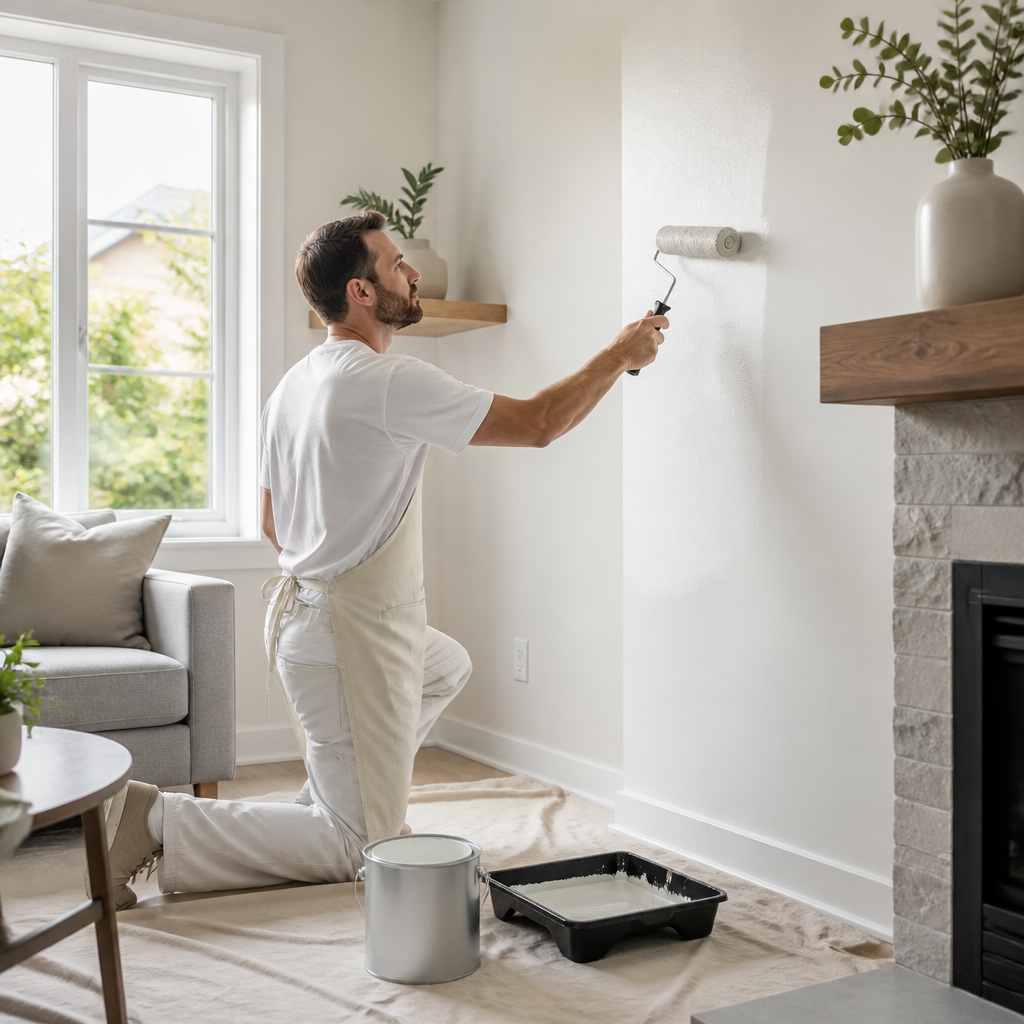
If you have ever walked into a freshly painted bedroom and felt a headache start behind your eyes, you have met volatile organic compounds, or VOCs. Many conventional paints use them to keep the coating liquid in the can and to help it dry once it hits the wall. In Fraser Valley homes that stay closed up through the wet months, those fumes do not leave quickly. Choosing a low VOC paint BC homeowners can buy off the shelf is one of the simplest decisions you can make before any project starts.
Table of Contents
- Quick Takeaways
- What VOCs Are and Why They Linger
- Why Fraser Valley Homes Trap Paint Fumes
- Low VOC vs Zero VOC: Reading the Labels
- Drying Time, Coverage and Finish
- Healthy Home Painting for Families and Pets
- Eco-Friendly Painting Across the Fraser Valley
- Comparison of Paint Types
- Applying Low VOC Paint in Our Climate
- Frequently Asked Questions
- References
Quick Takeaways
| Key Insight | Explanation |
|---|---|
| VOCs are the main source of the paint smell | They are carbon-based compounds that keep paint liquid in the can and help it dry on the wall. They release most heavily at room temperature, which is why the smell peaks on painting day. |
| Indoor painting carries more risk than outdoor | Outdoors, air movement disperses VOCs. Indoors, closed windows in fall and winter let them build up in bedrooms, nurseries and basements. |
| “Low VOC” and “zero VOC” are different claims | Read the technical data sheet before you buy. A zero claim on the base paint does not always cover the colourant added at the store. |
| Modern low VOC paint is not the slow option anymore | Newer formulas are often marketed as drying faster and building a thicker coat in fewer passes. Test a sample board to confirm this on your own wall. |
| Start with bedrooms and kids’ rooms | Spaces where people sleep for hours each night get the greatest benefit from a low odour formula, so they are the best place to start. |
| Ventilation still matters | Low VOC paint reduces the chemical load, but you should still open windows and run exhaust fans during and after painting. |
What VOCs Are and Why They Linger
VOCs are carbon-based compounds added to paint for practical reasons. They keep the liquid stable in the can and help the film dry quickly once it is applied. The trouble is that many of them leave the paint and enter the air you breathe for weeks afterward.
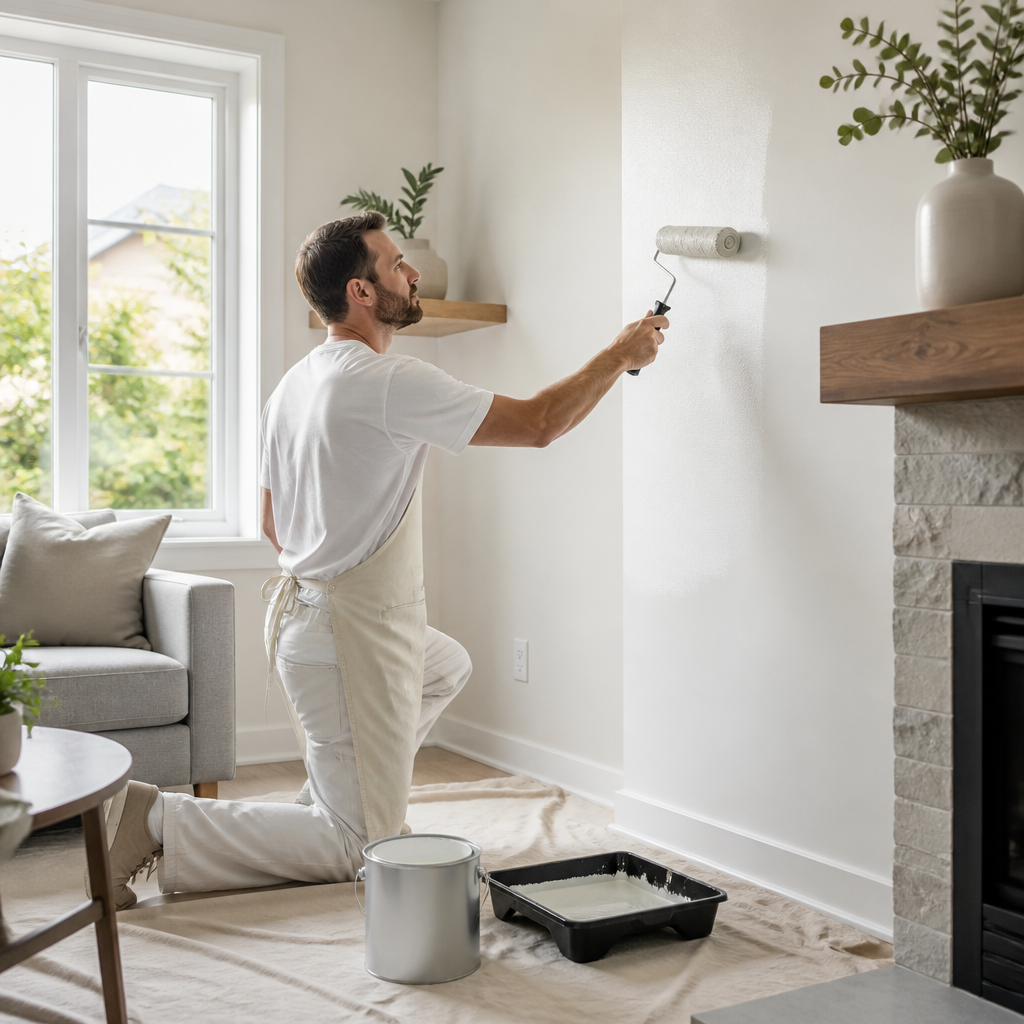
At room temperature, VOCs release in quantity, which explains why the smell is strongest on the day you open the can. Some sources note that off-gassing can continue for months, and occasionally years, after the paint goes on. Outdoors the air moves and carries the compounds away. Indoors, a closed room with poor airflow holds onto them.
The symptoms people report
Many people describe headaches, dizziness, nausea and breathing trouble after spending time in a freshly painted room. Pets can be irritated too. Children, older relatives and anyone with asthma or chemical sensitivities are the people we most often hear from after a project finishes.
Why smell is a clue, not a measurement
A strong odour tells you the paint is loaded with solvents, and that is worth paying attention to. A weak odour does not prove the paint is safe, though. In our estimating work, we tell homeowners to check the product data, not just sniff the can in the store.
Why Fraser Valley Homes Trap Paint Fumes
Painting timing in this region is shaped by the weather. Many interior projects happen in the cooler months, when homeowners keep windows shut to hold in heat and to keep the damp out. That habit works against you when the paint is still releasing compounds.
Closed windows through the rainy season
From the start of autumn into spring, most of our clients in Abbotsford, Langley and Surrey do not want to open windows while the rain is coming down. The result is a sealed room where fumes stay concentrated. A low VOC product gives you a margin of safety that good ventilation alone cannot always provide in a wet week.
Basements, laundry rooms and enclosed spaces
Basements and small utility rooms often have limited airflow even in dry weather. We see homeowners paint a basement rec room or a laundry room and then close the door for the night. Those spaces are where we recommend low or zero VOC formulas first, because the air simply does not move enough to clear the compounds.
Shared living areas and open-plan homes
In open-plan homes, fumes from a kitchen or living room spread into the rest of the house. If you are painting cabinets or trim in one area, the smell can travel. Plan the job so the most sensitive rooms are finished last, or keep those rooms sealed from the work zone with plastic and a closed door.
Low VOC vs Zero VOC: Reading the Labels
“Low VOC” and “zero VOC” sound like the same promise, but they are not interchangeable. A low VOC paint has reduced solvent content compared with conventional products. A zero VOC paint is marketed as containing none, though the exact meaning depends on how the manufacturer tests and reports its product.
What low VOC usually means in practice
Most low VOC paints you see on store shelves are water-based latex or acrylic formulas. They are often sold as a good everyday choice for walls, ceilings and trim. For a typical family home in Surrey or Langley, a quality low VOC interior line is the sensible default, and it covers the majority of rooms. Ask about low VOC options when you book interior wall painting.
Why zero VOC needs a closer look
Some colourants added at the point of sale can contribute a small amount of VOCs. That means a base paint marketed as zero VOC may not stay zero once it is tinted to a deep colour. Ask the store whether the zero claim covers the finished colour, not just the base can.
Pro tip: Ask for the technical data sheet for the exact base and colour you plan to use. If the store cannot provide it, choose a different product line.
Brand catalogues from paint manufacturers show how much of their range now falls into the low and zero categories. Benjamin Moore, for example, lists a complete line of low and zero-VOC paints for contractors, which suggests that these formulas are no longer a niche option.
Drying Time, Coverage and Finish
The old complaint about low VOC paint was that it dried slowly, went on thin and forced you to do extra coats. That reputation is outdated for most current products, though it is not universal. You still need to check performance on the specific formula you buy.
Drying time in a damp Fraser Valley house
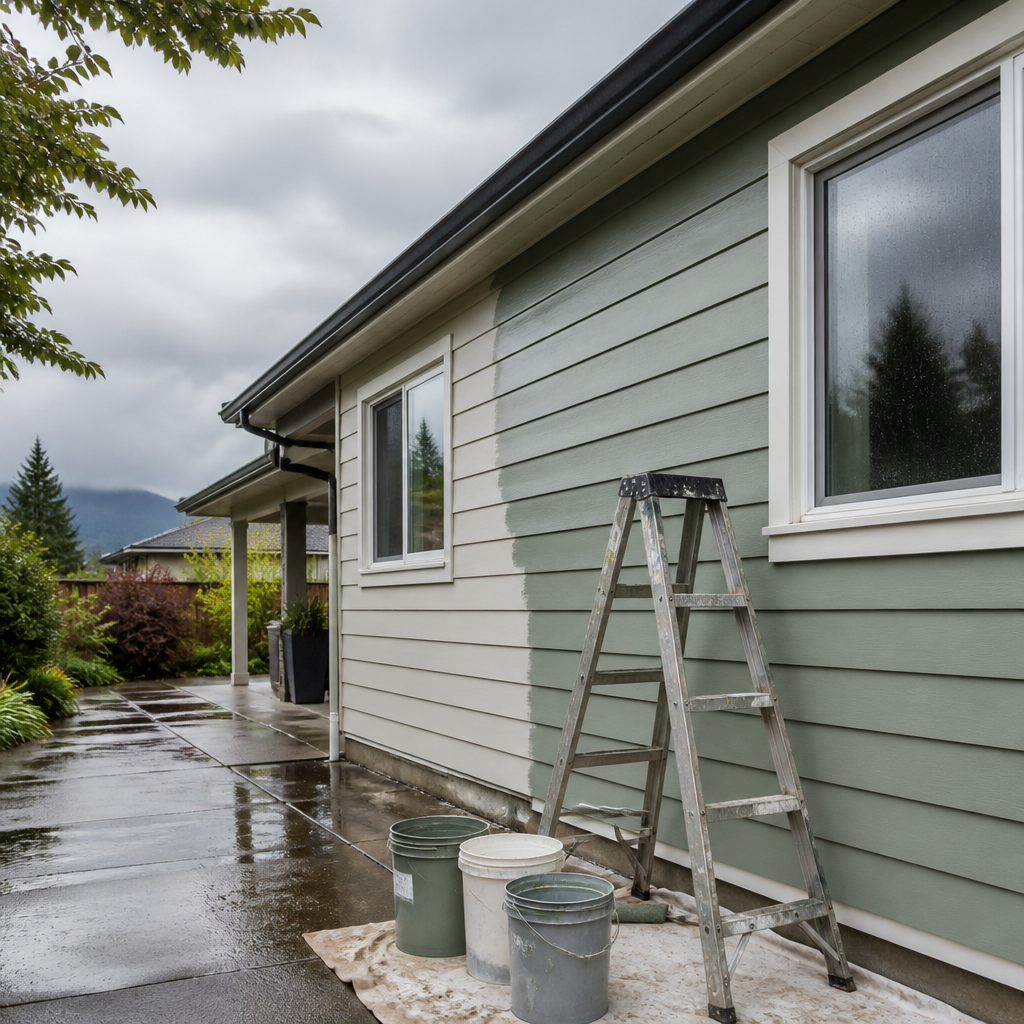
Humidity affects every paint, not just low VOC formulas. In a damp house, the drying window can stretch, and recoat times may need extra care. Manufacturers describe newer low VOC products as drying faster than older versions, so read the recoat time on the can and plan your schedule around it rather than around the old rule of thumb.
Coverage and film build
Some newer formulas are described as providing a thicker coat from the first pass. In practice, that can mean fewer coats on a wall that was previously a dark colour. We still recommend a primer when you are covering stains, patches or a major colour change, because no paint can hide a problem beneath it.
Sheen, washability and durability
Do not assume that a low odour product will match the sheen or scrubbability of your old paint. Hallways, kitchens and kids’ bathrooms take more wear. Test a sample board, wash it with a damp cloth after it cures, and check how it looks under your own lights.
The best low VOC paint is the one that performs on your wall, under your lighting, next to your trim. A sample board tells you more than any marketing claim.
Healthy Home Painting for Families and Pets
Choosing a healthier paint matters most where people spend the most time, and that usually means bedrooms, playrooms and living areas. Our interior painting work in Langley and Surrey often starts with this question: who sleeps in this room, and how long do they stay there.
Nurseries and children’s bedrooms
Infants and toddlers breathe closer to floor level and spend long hours in their rooms. For a nursery, a low odour formula reduces the chance that a freshly painted room will feel stuffy or cause headaches during the first week. We also recommend leaving the room empty and ventilated for a full day after the final coat before furniture goes back in.
Older relatives and people with sensitivities
Older family members, people with asthma and anyone with chemical sensitivities often notice odour before anyone else. If someone in the house has a respiratory condition, plan the painting for a time when they can stay elsewhere. A low VOC product makes that move shorter.
Pets in the painted room
Pets can be irritated by paint fumes, and they have no way to tell you when a room feels wrong. Keep cats and dogs out of the work zone during painting and until the room has aired out. Low VOC paint makes the recovery period noticeably easier to manage.
Pro tip: Schedule painting for a weekday when the house can stay ventilated for at least 24 hours, and run a bathroom or kitchen exhaust fan on a timer during that period.
Eco-Friendly Painting Across the Fraser Valley
Health is the main reason most families switch, but environmental impact is a close second. Lower VOC formulas cut the chemical emissions released during and after construction-related work. Every project adds up, especially in dense neighbourhoods where many renovations happen at once.
Why water-based formulas usually win
Many eco-conscious manufacturers now make low VOC paints in latex, acrylic and other water-based varieties. Water-based products are generally easier to clean up, which means less solvent going down the drain or into the waste stream. They are also the category most homeowners encounter when they shop for a low VOC option.
Cleanup, waste and disposal
Water-based brushes and rollers rinse clean with water, while solvent-based tools need a separate cleaning process. Buy only what you need, and store leftover paint sealed and labelled. Your local waste facility can advise on how to dispose of unused paint responsibly.
Painting as part of a wider home refresh
Many of our clients pair interior painting with cabinet refinishing or trim work. Doing the whole job in one visit reduces the number of times the house is opened up, sanded and aired out. Our Dreamscape Painting team plans these projects so the sensitive rooms are finished with the right product from the start.
Comparison of Paint Types
Most homeowners in the Fraser Valley face three choices at the paint counter. The table below shows how each option compares on indoor air impact and where it fits best in a typical home.
| Paint Type | Odour and Indoor Air | Where It Fits Best |
|---|---|---|
| Conventional high VOC paint | Strong smell during and after application, with compounds that can linger for an extended period in closed rooms | Garages, exterior-adjacent utility spaces or projects where ventilation can be maximized for several days |
| Low VOC water-based paint | Reduced odour, with lower solvent content and a quicker return to normal air in the room | Living rooms, hallways, kitchens and most family spaces in an average Surrey or Langley house |
| Zero VOC water-based paint | Minimal odour on the base paint, though tinted colours should be checked for added VOCs | Nurseries, bedrooms, rooms used by people with sensitivities and any space where fumes need to stay low |
Zero VOC is the strongest choice when a room is used for long stretches, but a quality low VOC product still suits most of the house. We rarely recommend conventional paint for indoor work in a family home, since the performance gap is now small.
Applying Low VOC Paint in Our Climate
Good products fail when they are applied under the wrong conditions. Temperature, humidity and airflow all change how a low VOC paint dries and how quickly the room returns to normal. Plan the job around the weather, not the other way around.
Temperature and humidity during fall and winter
Check the minimum application temperature on the label before you start. Interior rooms in a Fraser Valley home can feel warm while the wall surface is still cold, especially near exterior walls. Keep the room heated and dry during application and drying so the film cures evenly.
Ventilation without losing heat
You do not have to freeze the house to air out a room. Open a window in an adjacent room, close the door to the painted room, and run a fan that pulls air outward. This creates airflow without wasting all of your heat.
Pro tip: Paint the ceiling first, then walls, then trim, and keep the door closed between sessions. This sequence keeps the freshest paint away from the room you are actively using.
Once the final coat has cured, check the room with your nose and your comfort. If the smell is still strong after the recommended drying period, ventilate longer before you move furniture back in. Our painters follow the same routine on every interior project, because a clean finish and a clean room both depend on patience at the end.
Frequently Asked Questions
Is low VOC paint really better for indoor air?
Yes, in most cases. Low VOC formulas release fewer solvent compounds, which means less odour and less build-up in a closed room. They do not eliminate all emissions, so good ventilation still matters during and after painting.
What is the difference between low VOC and zero VOC paint?
Low VOC paint has reduced solvent content compared with conventional products. Zero VOC paint is marketed as containing none, but the exact claim depends on the manufacturer’s testing. Tinted colours can add a small amount, so check the data sheet for the finished colour.
Does low VOC paint take longer to dry?
Not usually for current products. Earlier versions had a reputation for slow drying and thin coats, but many newer formulas are described as drying faster and building a thicker film. Always check the recoat time on the can and test a sample on your own wall.
Is zero VOC paint safe for a nursery?
Zero VOC paint is a sensible choice for a nursery because it produces minimal odour. Still, you should ventilate the room for at least a full day after the final coat and keep the baby out until the room smells normal.
Do I need low VOC paint for exterior work?
VOC exposure is a bigger concern indoors, where air is confined. Outdoor painting disperses the compounds more quickly. Many homeowners still choose low VOC exterior products for the environmental benefit, and the choice is reasonable if it fits your budget and the product performs well in our wet climate.
Have you switched to low VOC paint on a recent project in Surrey, Langley or Abbotsford, and what did you notice about odour and drying time?

