

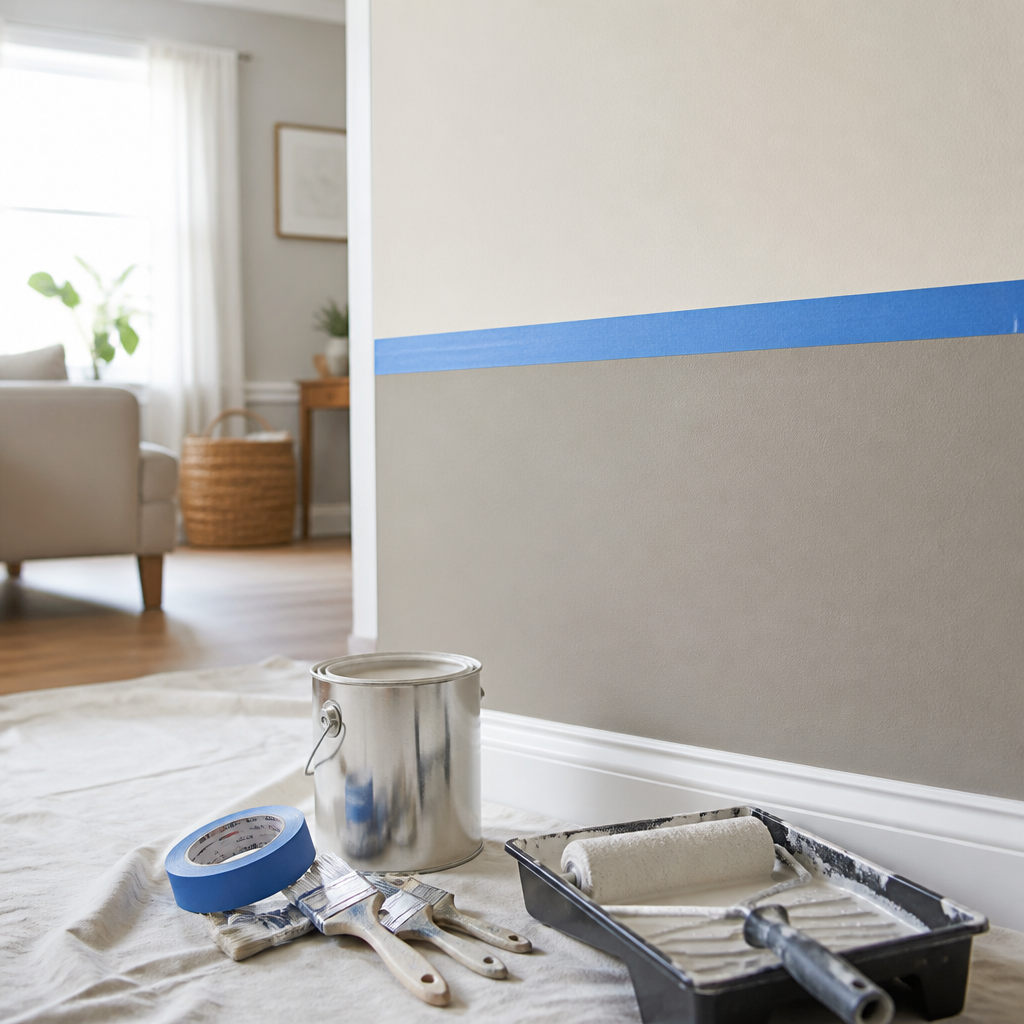
Most homeowners in Abbotsford, Langley, and Surrey approach a painting project the same way: they look at the labour quote, look at the cost of a few cans of paint at the hardware store, and decide they can handle it themselves. That math feels obvious until you are three hours into cutting in a ceiling line, your arm is shaking, and the colour looks nothing like the chip you picked. Hiring professional painters in the Fraser Valley is not just a convenience, it is a financial decision, and when you account for the true cost of DIY painting, the numbers consistently favour the professionals. This article breaks down exactly why.
Table of Contents
- Quick Takeaways
- The True Cost of DIY Painting
- What Professional Painters Actually Deliver
- Fraser Valley Climate and Your Paint Job
- DIY vs. Professional: Side-by-Side Comparison
- The Resale Value Argument
- When DIY Makes Sense, and When It Does Not
- Frequently Asked Questions
- References
Quick Takeaways
| Key Insight | Explanation |
|---|---|
| DIY costs more than it appears | Once you add tools, primers, extra paint for mistakes, and your own time, the upfront savings shrink fast, and often disappear entirely. |
| Professional prep is the real differentiator | Surface preparation can account for up to 60% of a professional job’s total time. Skipping or rushing it is the single biggest reason DIY paint fails early. |
| Durability gap is significant | DIY paint jobs typically need touch-ups or full repainting within 3 to 5 years. Professional jobs routinely last 7 to 10 years or more. |
| Resale ROI is real | Professional interior painting can deliver a return on investment of around 107%, meaningfully increasing a home’s market value at the point of sale. |
| Fraser Valley weather demands correct application | Wet winters, dry summers, and large temperature swings create conditions where improper application leads to early peeling, cracking, or moisture intrusion. |
| Mistakes have a compounding cost | Lap marks, flashing, drips, and poor cutting-in do not just look bad, they require sanding, priming, and re-coating, turning a weekend project into a multi-week ordeal. |
| No warranty on DIY work | Professional painting contractors typically back their work with a warranty. If a DIY job fails, every cost of fixing it falls entirely on you. |
The True Cost of DIY Painting
The appeal of DIY painting is simple: you skip the labour cost. But that framing ignores everything else that goes into a proper paint job, and those other things add up quickly.
To paint a room properly, you need rollers, brushes, extension poles, drop cloths, painter’s tape, a paint tray, sandpaper, spackling compound, primer, and the finish paint itself. If you do not already own these items in good condition, you are buying them. A reasonable set of quality painting supplies for a single room can easily run several hundred dollars, and that number climbs for larger projects. Professional painters bring all of this as part of their standard kit, without adding a line item to your invoice.
Then there is the time cost. A standard bedroom that a seasoned painter and their crew can complete in a single day might take a first-time DIY painter an entire weekend, sometimes longer once you factor in drying time, a second coat, and fixing the mistakes from the first pass. Your time has real value. If you earn a reasonable hourly rate at your job, spending 16 or 20 hours painting a room rather than working or resting is a genuine economic loss, not a savings.
Pro tip: Before committing to DIY, tally up every supply you need to purchase, estimate your realistic hours honestly, and assign a dollar value to that time. Compare that total against a professional quote. Most homeowners in Abbotsford and Langley are surprised to find the gap is much smaller than they expected, and the professional quote wins on quality every time.
Hidden costs compound the problem further. Uneven coverage requires extra coats and extra paint. Drips and lap marks require sanding and recoating. Surfaces that were not properly primed show stains or bleed-through within months. Each of these errors does not just cost money, it costs time and often means rooms remain out of service for extended periods while you troubleshoot.
What Professional Painters Actually Deliver
Hiring experienced painting contractors is not just about getting someone else to do the rolling. It is about accessing a level of skill, process, and product knowledge that takes years to develop.
Surface Preparation Done Right
Professional painters treat surface preparation as non-negotiable. Cleaning, sanding, patching, caulking, masking, and spot-priming are completed methodically before a brush ever touches the finish coat. Skipping or rushing these steps is the root cause of most DIY failures, including flashing (uneven sheen across a wall), visible patches, and peeling within a year or two of application. A trained crew does not cut corners on prep because they know the finish coat cannot hide what is underneath it.
The Right Products for the Right Surfaces
Professional painters work with premium-grade paints and know which products belong where. Using the wrong sheen on a surface with texture inconsistencies, or choosing an interior-grade product in a high-moisture area, are common DIY mistakes that lead to rapid deterioration. Experienced painters also have trade relationships that give them access to professional-grade materials that are not always available to the general public at retail stores.
Clean, Accurate Finish Lines
Clean lines at ceiling edges, trim, and window casings are where the quality gap between DIY and professional work is most visible. Common DIY problems include lap marks from uneven rolling, muddy or feathered cutting-in lines, and drips from overloaded brushes. Professional painters with steady hands and trained eyes eliminate these issues as a matter of course. The result is a finish that looks intentional and polished, not laboured over.
“Professional painters produce finishes that last longer and look better over time because they follow proven preparation and application standards. The quality difference is most visible at the edges and in the durability of the final coat.”
Warranty and Accountability
Reputable painting contractors stand behind their work. If something fails within the warranty period, they come back and fix it at no additional charge. DIY work carries no such protection. If the paint starts peeling six months after you finished, every cost of remediation is yours. That warranty is not a small thing when you consider the cost of repainting even a single room.
At Dreamscape Painting, our estimators inspect every surface before quoting, and our crews follow a preparation and application process built over more than 35 years of working in homes across the Lower Mainland and Fraser Valley. That consistency is what a warranty actually means in practice.
Pro tip: Ask any painting contractor you are considering whether their quote includes surface preparation, priming where needed, and a written warranty. If they cannot answer those three questions clearly, keep looking.
Fraser Valley Climate and Your Paint Job
The Fraser Valley’s climate is not uniform, and it is not forgiving of sloppy painting work. Wet winters, dry summers, and temperature swings that can exceed 25 degrees Celsius between seasons put real stress on both interior and exterior painted surfaces. Paint expands and contracts with temperature. Moisture infiltrates improperly sealed surfaces. UV exposure from strong summer sun fades and chalks exterior coatings ahead of schedule.
Professional painters working in Abbotsford, Langley, and Surrey understand these regional conditions. They know which products are rated for high-moisture environments, which primers are appropriate for weathered wood siding common in older Fraser Valley neighbourhoods, and what application windows are acceptable for exterior work given the local weather calendar. Exterior painting in BC is generally most reliable between July and September, when conditions are driest. A professional contractor plans around this. A weekend DIY project often does not.
For exterior projects specifically, poor execution does not just look bad. It allows moisture intrusion that can damage cladding, sheathing, and framing over time, turning a cosmetic problem into a structural one. The cost of that kind of failure dwarfs the original cost of a professional paint job.
DIY vs. Professional: Side-by-Side Comparison
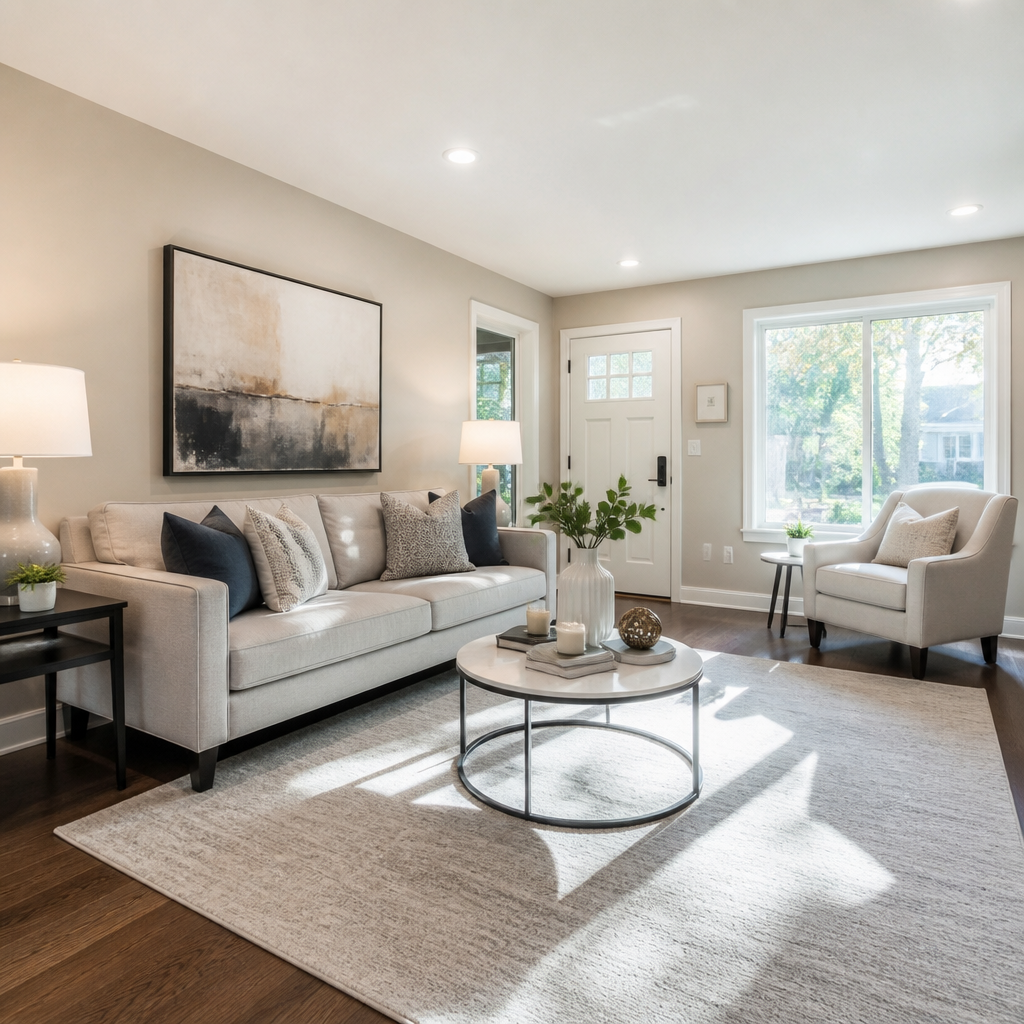
The comparison below covers the three approaches homeowners typically consider: a fully DIY approach, hiring a low-cost unlicensed painter, and hiring an established professional painting contractor like Dreamscape Painting.
| Factor | Full DIY | Low-Cost Unlicensed Painter | Professional Painting Contractor |
|---|---|---|---|
| Upfront cost | Lower (materials only) | Moderate | Higher upfront |
| True total cost (with time and mistakes) | Often comparable or higher | Moderate to high (rework likely) | Predictable, all-in quote |
| Surface preparation | Often rushed or skipped | Inconsistent | Systematic and thorough |
| Finish quality | Variable, usually visible flaws | Inconsistent | Clean, consistent, lasting |
| Durability | 3 to 5 years before repainting | Unpredictable | 7 to 10 years or more |
| Warranty | None | Rarely offered | Written warranty standard |
| Insurance and liability | Homeowner bears all risk | Often uninsured | Fully insured crew and work |
| Time investment (homeowner) | High, all borne by homeowner | Moderate supervision required | Minimal, hands-off for homeowner |
The low-cost unlicensed option deserves specific mention because it is a trap many homeowners fall into. The labour rate looks appealing, but uninsured workers create real liability if they are injured on your property. Without a warranty, any failure requires paying for the job twice. And without professional prep skills, the result is often indistinguishable from a DIY finish, with none of the satisfaction of having done it yourself.
The Resale Value Argument
If you are considering selling your home in the Fraser Valley at any point in the next several years, professional painting is one of the most straightforward investments you can make before listing.
Professional interior painting has been cited as delivering a return on investment of around 107%, adding meaningfully to a home’s resale value, with some estimates placing the added value between roughly $2,000 and $16,000 or more depending on home size and scope of work. Buyers notice paint quality immediately, and a poorly executed DIY job signals deferred maintenance and potential underlying problems, even when none exist. A clean, professionally finished interior says that the home has been cared for.
On the exterior, fresh professional paint boosts curb appeal and can contribute an ROI in the range of 55 to 60 percent on the cost of the project. In a market like the Fraser Valley, where detached homes represent a significant financial asset for families, that return is not trivial.
For homeowners in Abbotsford and Langley considering cabinet refinishing ahead of a sale, the value calculation is even stronger. A professionally refinished kitchen can dramatically update the look of a home without the cost of a full renovation, and the quality difference between a sprayed, factory-smooth cabinet finish and a brush-rolled DIY attempt is immediately obvious to any buyer walking through.
Learn more about cabinet refinishing services and how they can help refresh your space before a sale, or simply for your own enjoyment of your home.
When DIY Makes Sense, and When It Does Not
Taking a clear position on this: DIY painting is reasonable for small, low-stakes projects where quality expectations are modest and the surfaces are in good condition. Touching up a laundry room, repainting a garden shed, or applying a single accent wall in a room that is already in good shape are examples where a capable homeowner can do fine work without a professional.
DIY becomes a poor choice as soon as any of the following apply.
High-Visibility Spaces
Living rooms, dining rooms, primary bedrooms, and kitchens are the spaces people actually live in and notice constantly. These are the rooms that buyers look at first. Any imperfection in a high-visibility space is seen every day, and fixing a poor DIY result in these rooms requires stripping back and starting over.
Exterior Work
Exterior painting in the Fraser Valley involves working at height, managing unpredictable weather windows, selecting moisture-resistant products, and executing thorough surface preparation on wood, stucco, fibre cement, and other cladding types. The margin for error is much smaller than on interior work, and the cost of failure is much higher. Professional exterior painters in Abbotsford and the surrounding region understand these specific conditions in a way that a first-time DIY painter does not.
Surfaces Requiring Repair
Walls or ceilings with cracks, water stains, or texture inconsistencies need more than paint. They need proper repair and priming before any finish coat goes on. Painting over a water stain without sealing it first means that stain comes back through the new paint within weeks. Painting over an unrepaired crack means the crack reappears in the finish. Professional painters assess and address these issues as part of the job. DIY painters frequently skip them and pay for it later.
If you are weighing professional services for your next project, the team at Dreamscape Painting’s interior painting services page gives a clear overview of what a proper residential interior job includes from start to finish.
For exterior projects, the exterior painting services page covers the preparation and application process used on Fraser Valley homes across all common cladding types.
We also provide commercial painting services for property owners and business operators throughout the Lower Mainland who need professional-grade results on larger or more complex projects.
If you want a realistic sense of what your project will cost before committing to anything, request a free on-site estimate from our team. Phone or online estimates without a site visit cannot account for wall condition, ceiling height, trim complexity, or access challenges, and we never quote that way.
Frequently Asked Questions
How much does professional interior painting cost in Abbotsford or the Fraser Valley?
A standard bedroom in the Fraser Valley typically costs between $400 and $900 CAD for professional interior painting, covering walls, ceiling, trim, and one door. A full main floor can range from roughly $1,200 to $3,500 or more, depending on room size, ceiling height, wall condition, and trim complexity. These figures are approximate. An on-site estimate from a contractor who has actually seen the space is the only reliable way to get an accurate number.
Is DIY painting really worth it for a large home interior?
Rarely, once you account for the full cost. A large interior project requires significant tool investment, a substantial number of hours, and a steep learning curve if you have not done it before. The risk of mistakes that require rework, combined with a finish that will need repainting sooner than a professional job, means the economics rarely favour DIY on large projects. For most Fraser Valley homeowners, the professional route delivers better value when measured over the lifetime of the paint job.
How long does a professional paint job last compared to a DIY one?
Professional paint jobs generally last between 7 and 10 years before needing significant attention, when properly prepared and applied with quality products. DIY paint jobs typically require touch-ups or full repainting within 3 to 5 years. The difference comes down almost entirely to surface preparation and product selection, both of which professional painters execute more reliably than most homeowners working on their own.
Do professional painting contractors in the Fraser Valley offer warranties?
Reputable contractors do. A written warranty means that if the paint fails within the covered period due to application defects, the contractor returns and corrects it without additional charge. Always ask for the warranty terms in writing before work begins. Dreamscape Painting has been operating in the Lower Mainland and Fraser Valley for over 35 years and backs its work with a commitment to quality that reflects that track record.
What is the difference between hiring a professional painter and a low-cost unlicensed individual?
The differences are significant and not just about quality. An unlicensed and uninsured painter creates liability exposure for the homeowner if an injury occurs on the property. There is typically no warranty offered, and the preparation standards are inconsistent. The finish may look acceptable initially but fail early due to poor prep or wrong product selection. Professional contractors carry insurance, follow industry preparation standards, and stand behind the work they produce.
Does professional painting add value to a home before selling?
Yes, and the return is meaningful. Professional interior painting has been reported to deliver a return on investment of around 107%, adding thousands of dollars to a home’s resale value. On the exterior, fresh professional paint contributes directly to curb appeal and can recoup a substantial portion of its cost at sale. In the Fraser Valley’s competitive real estate market, presenting a home with clean, professional paint throughout is one of the highest-impact and lowest-cost things a seller can do before listing.
Can professional painters in the Fraser Valley handle both interior and exterior projects?
Yes. Full-service painting contractors like Dreamscape Painting handle interior painting, exterior painting, cabinet refinishing, and commercial painting across Abbotsford, Langley, Surrey, and the broader Lower Mainland. Having a single contractor with experience across all of these project types means consistent preparation standards and accountability across the full scope of your home’s painted surfaces.
If you have tackled a painting project yourself in the Fraser Valley, we would love to hear what you found most challenging, and whether you would do it differently next time.
We would love your feedback and any insights you would share with others. What perspective would you add?
References
- Cost analysis comparing DIY and professional painting over the long run, including durability timelines
- Detailed breakdown of common DIY painting mistakes and how professional painters address them
- Research on the resale value and return on investment of professional interior painting
- Fraser Valley exterior painting cost guide covering regional pricing factors and seasonal timing
- Side-by-side cost comparison of DIY versus professional house painting including hidden expenses

