

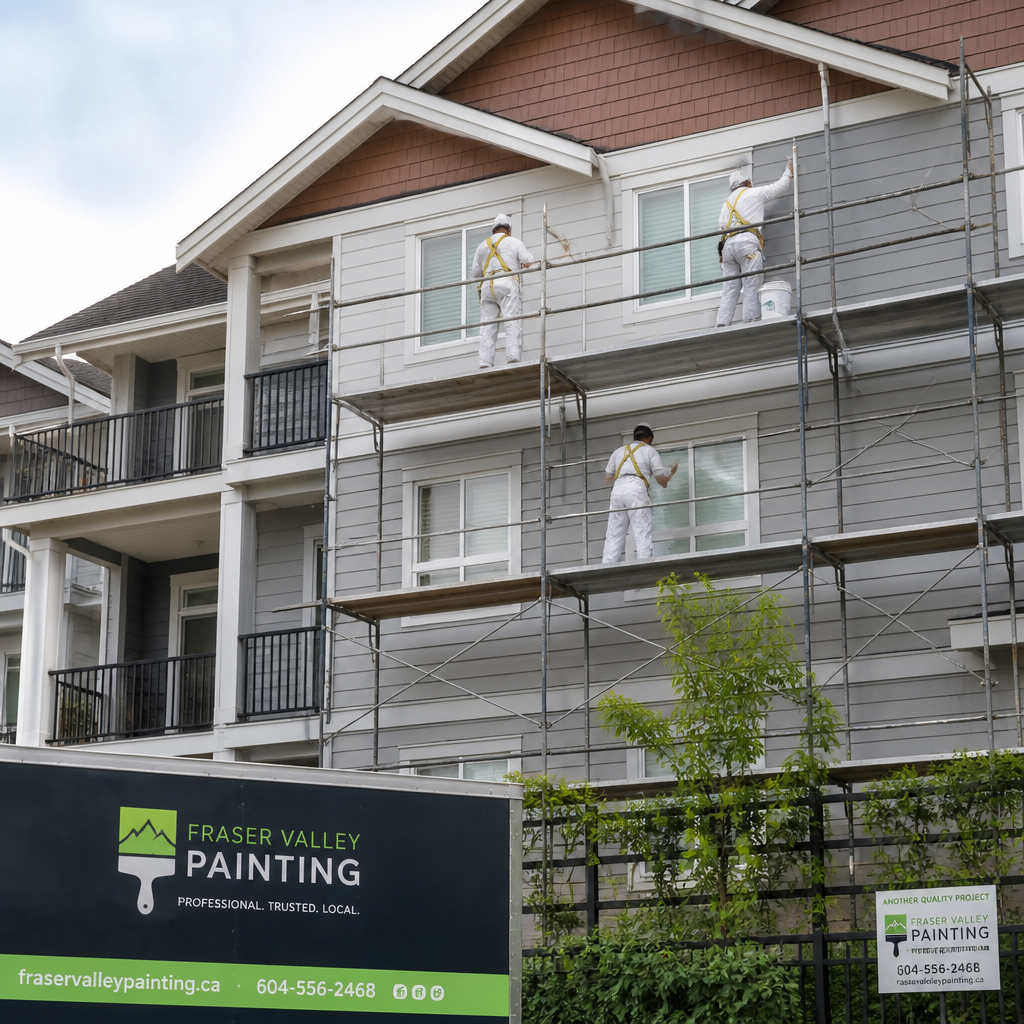
Managing a strata exterior repaint in the Fraser Valley is nothing like hiring a painter for a single-family home. You are coordinating among strata councils, bylaws, reserve fund schedules, multiple building surfaces, and dozens of residents who all have opinions and daily routines. Get the planning wrong and you end up with a tabled council vote, a frustrated contractor, and paint that goes on in November rain. Strata painting Fraser Valley projects succeed or fail based almost entirely on what happens before the first brush touches the wall. This guide is written for property managers who want a straight-line path from problem to finished building.
Table of Contents
- Quick Takeaways
- Why Strata Exterior Painting Is Different
- BC Strata Property Act: What Property Managers Need to Know
- Budgeting and Reserve Fund Alignment
- Choosing the Right Paint for Fraser Valley and Lower Mainland Conditions
- Scheduling and Minimizing Resident Disruption
- How to Evaluate and Compare Painting Contractors
- Frequently Asked Questions
- References
Quick Takeaways
| Key Insight | Explanation |
|---|---|
| Council approval thresholds vary by expenditure size | Routine touch-ups can be approved from the operating budget, but major exterior repaints funded by special levy typically require a three-quarters owner vote under BC strata rules. |
| Depreciation reports set your painting timeline | Most BC depreciation reports schedule exterior repaints every 8 to 12 years. Use the report to align your project with the anticipated reserve fund balance, not just visual deterioration. |
| Surface preparation is the most critical variable | On strata buildings with stucco, wood, or composite siding, poor prep work shortens paint life by years. A cheaper quote that skips power washing and caulking is almost always more expensive long-term. |
| Product specification matters more than brand loyalty | For the Lower Mainland’s wet climate, 100% acrylic latex with elevated mildewcide is the baseline. Products without this fail faster on north-facing or shaded elevations. |
| Scheduling drives resident satisfaction | Coordinating paint access to balconies, parking areas, and entries requires advance written notice to residents. Surprises create complaints; communication creates cooperation. |
| Colour changes need extra approval scrutiny | Changing the exterior colour of a strata building may require owner approval beyond a standard council vote, depending on the strata’s bylaws. Confirm before specifying colours. |
| Multi-phased projects are a legitimate option | If the reserve fund cannot absorb the full project cost at once, phased painting across two or three years is a reasonable approach that avoids special levies. |
Why Strata Exterior Painting Is Different
A strata repaint involves a layer of governance that a standard residential job does not. The property manager does not own the building, does not control the budget unilaterally, and answers to a council that answers to the owners. Every decision, from the colour palette to the contractor selection, can become a point of contention if it is not managed correctly from the start.
In the Fraser Valley and Lower Mainland, multi-unit painting Langley and surrounding municipalities adds another dimension: buildings here deal with heavy seasonal rainfall, mildew-prone conditions on shaded elevations, and a contractor market that books up quickly in spring and summer. The window for optimal exterior painting is narrower than in drier parts of the country, which means a delayed decision by council often means a full year’s delay on the project.
The good news is that strata exterior painting is, by its nature, predictable work. It belongs in your depreciation report. It has a funding mechanism. It has a documented approval process. Unlike emergency repairs, a repaint is something you can plan eighteen months out if you start the process properly.

BC Strata Property Act: What Property Managers Need to Know
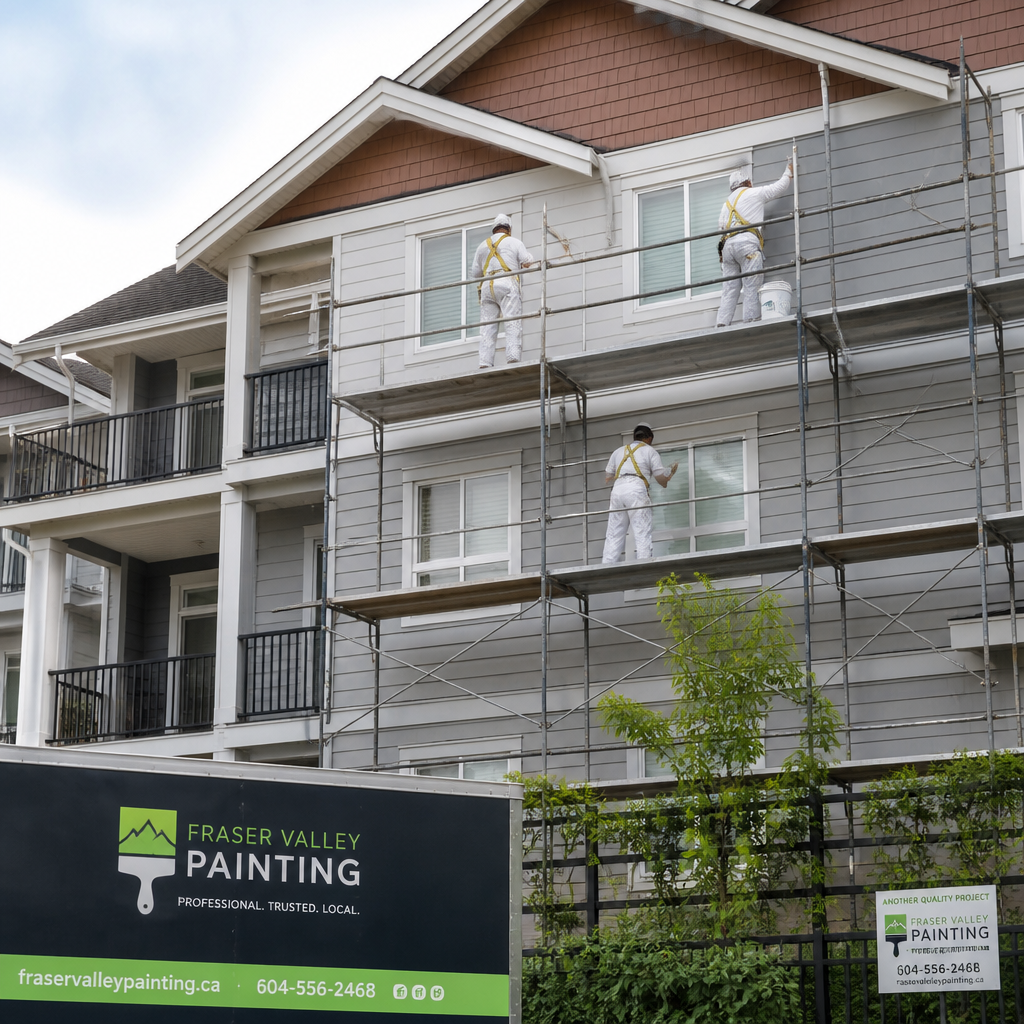
The BC Strata Property Act governs how strata corporations manage and maintain common property, which includes the building exterior. As property manager, you need to understand the approval thresholds before a painting project reaches the council table, not after.
What Counts as Common Property
The building exterior, including the siding, stucco, trim, balconies, railings, fences, and exterior doors that face common areas, is generally common property of the strata corporation. This means the strata corporation is responsible for its maintenance and repair, and any painting project on these surfaces must be approved through the strata’s governance process, not initiated unilaterally by individual owners or the property manager.
The Approval Process and Vote Thresholds
Routine maintenance work, such as touch-up painting in a single hallway or small-scale repair painting, can typically be approved by council directly from the operating budget without requiring an owner vote. Major projects, including a full exterior repaint of the building, require more scrutiny. If the project is funded from the contingency reserve fund within approved budget parameters, a council vote is generally sufficient. If it requires a special levy, a three-quarters vote at a general meeting is typically required under the Act.
Colour changes to the exterior are a separate issue. Depending on the strata’s bylaws, changing the building’s appearance may require owner approval beyond a standard council resolution. Always check the strata’s specific bylaws before including a colour change in the scope, and confirm the approval requirements with the strata’s legal advisor before proceeding to tender.
Pro tip: Before presenting any painting project to council, confirm the exact vote threshold in writing. Bring the relevant section of the strata’s bylaws to the council meeting alongside your contractor quotes. Council members who can see the legal basis for the approval process move faster and ask fewer tangential questions.
Deferred maintenance on strata common property is one of the most predictable sources of special levy disputes in BC. The cost of a proper painting maintenance cycle is a fraction of the cost of a full envelope remediation.
Budgeting and Reserve Fund Alignment
The BC Strata Property Act requires strata corporations to maintain a contingency reserve fund funded based on a depreciation report. Major exterior repaints are typically a line item in that report, which means the money for the project should already be earmarked, provided the council has been following the fund contribution schedule.
Using the Depreciation Report as Your Starting Point
Property managers should cross-reference the proposed painting scope against the depreciation report to confirm that the project is appropriately funded and that the timing aligns with the fund balance. If the report is more than two years old, do not rely on its cost figures for precise budgeting. Use those figures for rough planning only, then get fresh contractor quotes to establish what the project actually costs now. Construction and materials costs in the Lower Mainland have shifted significantly in recent years, and a stale depreciation report number will often leave the budget short.
Realistic Budget Components for Strata Exterior Painting
A realistic budget for commercial exterior painting BC strata work should break down into distinct line items: surface preparation including power washing, scraping, and caulking; primer where required by substrate condition; topcoat materials specified to the building’s surfaces; labour; staging or access equipment if the building is multi-story; and a contingency of at least ten percent for scope discoveries found during preparation.
Most depreciation reports recommend repainting building exteriors every 8 to 12 years. Common area interiors typically fall on a shorter cycle, often 7 to 10 years. If your building is approaching or past those intervals, do not wait for visible failure. Peeling or cracking paint on stucco or wood siding allows moisture intrusion that creates repair costs far beyond what a repaint would have cost.
Pro tip: Request a formal written quote that separates labour, materials, surface preparation, and contingency costs into distinct line items. Strata councils respond better to line-item transparency, and it protects you as property manager if scope questions arise at the next AGM.
Choosing the Right Paint for Fraser Valley and Lower Mainland Conditions
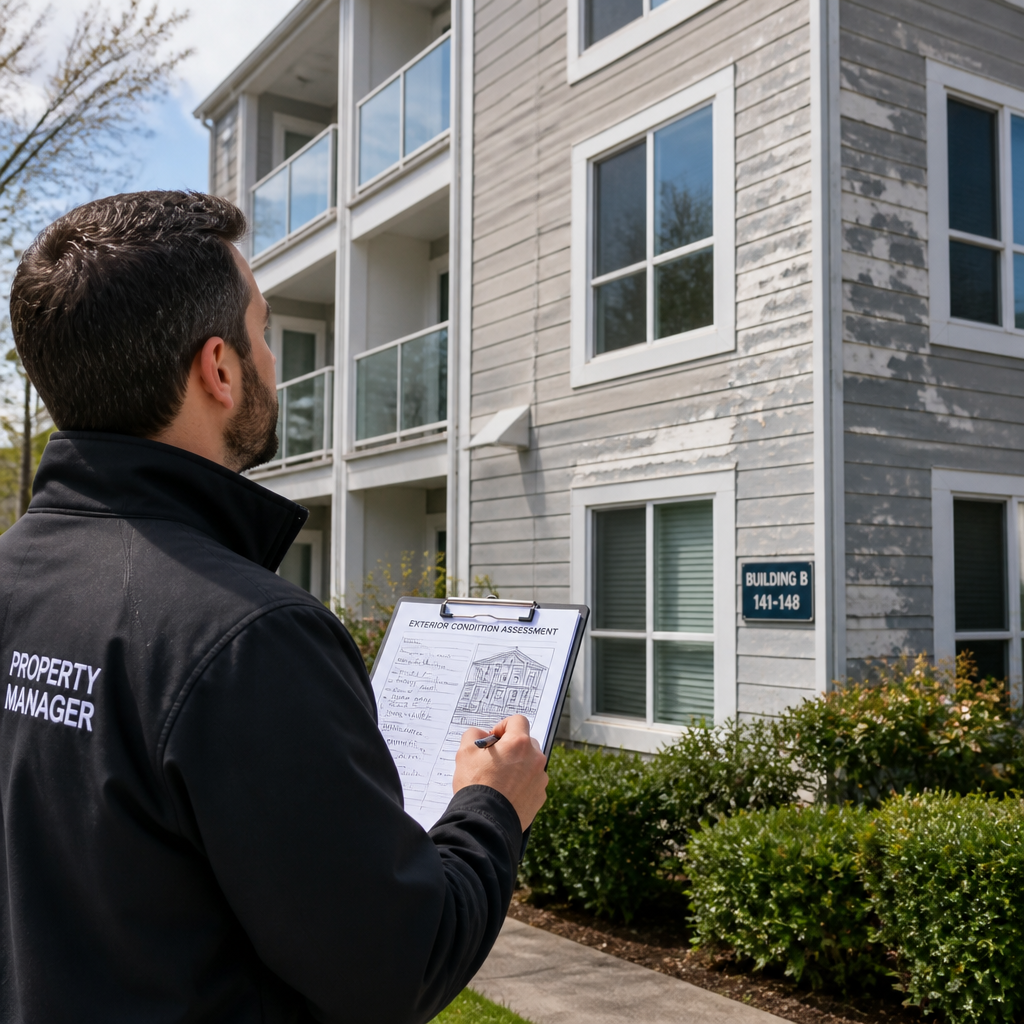
The Fraser Valley and Lower Mainland receive substantial annual rainfall, and humidity remains elevated for months at a time. Mildew grows aggressively on north-facing and shaded surfaces. Choosing the wrong product for this climate is one of the most common and most expensive mistakes made on strata exterior projects.
The Minimum Specification for BC Exterior Conditions
The baseline for any strata exterior in this region is a 100% acrylic latex formulation with elevated mildewcide. Products that do not meet this baseline will fail faster on exposed and shaded elevations. A satin sheen is generally preferred over flat finishes for exterior walls because it sheds water more effectively and is easier to clean without scuffing.
Primers are not optional on strata projects where the existing surface has bare wood, exposed stucco, or failing previous coats. A contractor who proposes skipping primer on a surface that requires it is giving you a lower quote at the cost of your paint system’s longevity.
Surface-Specific Considerations for Multi-Unit Buildings
Multi-unit strata buildings in the Fraser Valley typically present a mix of surfaces including stucco, wood siding, fiber cement, metal railings, and concrete. Each substrate has different preparation and product requirements. Stucco must be properly cleaned and any cracks filled before painting. Wood requires primer, and any areas with rot must be repaired before coating or the new paint will fail within a season. Metal railings need a rust-inhibiting primer if there is any existing corrosion.
The practical takeaway is that a single product specification across an entire multi-surface building is a red flag. A qualified contractor should be specifying different products for different substrates, not applying the same wall paint to railings and trim.
Scheduling and Minimizing Resident Disruption
The best time to paint the exterior of a strata building in the Fraser Valley is during the dry season, which typically runs from late spring through early fall. Exterior painting requires surface temperatures and ambient conditions that BC winters and wet springs cannot reliably provide. Booking your contractor in January or February for a May through August start date is the practical standard. If you wait until April to start looking, you will often find that experienced crews are already committed for the summer.
Communicating With Residents Before and During the Project
Written notice to residents is not a courtesy on a strata painting project, it is a requirement of good management. Residents need to know when scaffolding or staging will restrict access to entries and parking, when balconies will be inaccessible, and when they need to move patio furniture or items from exterior storage areas. A minimum of two weeks written notice before a phase begins is a reasonable baseline.
On larger strata complexes with multiple buildings or phases, a simple project schedule posted in common areas and distributed by email keeps everyone informed and reduces the number of individual complaints the property manager has to field during the project.
Working Around Building Operations
Coordinate parking and access restrictions directly with the painting crew before work begins. Crews that are chasing parked cars away from staging areas are losing productive time on your job. If the strata has underground parking or enclosed parkade areas that need painting, those jobs are typically scheduled separately from the exterior work and require their own ventilation and access planning.
How to Evaluate and Compare Painting Contractors
A strata painting project is a significant contract. The selection process should reflect that. Getting two or three detailed quotes is the minimum, but comparing quotes without a common scope document is almost useless. If each contractor quotes based on their own interpretation of what the building needs, you cannot compare them accurately.
| Evaluation Criteria | Strong Contractor | Weak Contractor |
|---|---|---|
| Quote Format | Line-itemized: prep, primer, materials, labour, access equipment, contingency separated clearly | Single lump sum with minimal detail or vague scope description |
| Surface Preparation Approach | Specifies power washing, caulking, spot priming, and substrate repairs as distinct steps | Mentions “prep included” without defining what prep means |
| Product Specification | Names specific products by brand and product line matched to each substrate | Says “quality paint” or “premium product” without naming anything |
| Strata Experience | Has completed comparable multi-unit projects, can provide references from strata councils or property managers | Primarily residential single-family experience with no documented strata work |
| Project Management | Provides a phased schedule with milestone dates, designated site contact, and communication plan | Vague on timeline, no structured communication process |
| Insurance and Licensing | Provides proof of WCB coverage and commercial general liability insurance before contract signing | Insurance mentioned verbally but not documented proactively |
A common mistake strata councils make is presenting a painting project to a vote before the groundwork has been done. Arriving at a council meeting with a single vague quote, no scope detail, and a rough number almost always results in the motion being tabled. Council members ask questions nobody can answer, the project loses weeks, and in the Lower Mainland’s tight summer booking window, weeks matter. Bring a defined scope, at least two detailed quotes, and a recommendation with a rationale.
Pro tip: When presenting a strata painting project to council, bring both the depreciation report section and the fresh contractor quotes side by side. It demonstrates due diligence, and it makes the motion easier to pass because council members can see the project was anticipated and the reserve fund was designed to cover it.
Dreamscape Painting has been serving strata corporations and property managers across the Fraser Valley and Lower Mainland for over 35 years. Our estimators understand the strata approval process, can prepare documentation in the format councils and property managers need, and have the crews to execute large-scale exterior projects efficiently. If you are starting the planning process for a strata repaint, contact Dreamscape Painting for a detailed quote that you can bring directly to your council.
Frequently Asked Questions
How often does a strata building exterior need to be repainted in the Fraser Valley?
Most depreciation reports in BC recommend exterior repaints on a cycle of roughly 8 to 12 years, but the actual interval depends on the original paint quality, the products used on the last repaint, and how much weather exposure the building receives. South-facing and exposed elevations often reach their threshold sooner. A site assessment from a qualified painting contractor is the most reliable way to determine what your specific building needs now, rather than relying solely on the depreciation report’s anticipated date.
Does a strata exterior repaint require a three-quarters vote of all owners?
Not always. If the project is funded from the contingency reserve fund within parameters the council is authorized to spend, a standard council vote is typically sufficient. A three-quarters vote of all owners at a general meeting is generally required when the project is funded by a special levy. The exact threshold depends on your strata’s bylaws and the size of the expenditure relative to the annual operating budget. Confirm the applicable threshold with the strata’s legal advisor before the project goes to council.
Can individual strata owners paint the exterior of their own unit or balcony?
Generally, no. The exterior of the building and shared surfaces like balcony railings are typically common property under BC strata rules. An owner who wants to paint any exterior surface must obtain written approval from the strata corporation before proceeding. Unapproved exterior alterations can create liability issues and may require reversal at the owner’s expense. Property managers should proactively communicate this to owners when a building-wide repaint is scheduled to prevent owners from painting ahead of or against the approved scope.
What is the best time of year to schedule a strata exterior repaint in the Lower Mainland?
The dry season from late spring through early September is the optimal window for exterior painting in the Fraser Valley and Lower Mainland. Wet conditions, low temperatures, and high humidity all affect paint adhesion and curing. Because experienced painting crews book up early for the summer season, the planning process should start in the fall or winter preceding the intended start date. Starting the contractor selection and council approval process in January or February for a May or June start is a practical and effective timeline.
What should a property manager check before signing a strata painting contract?
Before signing, confirm that the contractor carries current WCB (WorkSafeBC) coverage and commercial general liability insurance, and request documentation, not just verbal assurance. Review the scope of work for specific surface preparation steps, named product specifications matched to each substrate, a phased project schedule with milestone dates, and a designated site contact. Confirm the payment schedule is tied to project milestones rather than front-loaded. A contract that is vague on any of these points creates disputes at the worst possible time, which is mid-project with scaffolding up and residents frustrated.
How should property managers handle colour changes on a strata exterior?
Colour changes require careful handling because they alter the building’s appearance and may trigger a higher approval threshold under the strata’s bylaws than a like-for-like repaint. Before specifying any new colours, review the strata’s bylaws to determine whether owner approval is required. Prepare colour samples or renderings that council and owners can review before a vote. Trying to push a colour change through under the same approval process as routine maintenance is a common mistake that can invalidate the decision and require a second vote, delaying the project significantly.
If you have managed a strata exterior painting project in the Fraser Valley or Lower Mainland, share what made the process easier or harder for your council and residents. Your experience helps other property managers navigate the same challenges.
We would love your feedback and any insights you would share with others. What perspective would you add?
References
- BC strata painting rules, budgeting guidance, and approval process overview for strata councils and property managers
- BC Strata Property Act official legislation governing strata corporation responsibilities and alteration approvals
- Guide to selecting exterior paint products suited to Vancouver and Lower Mainland weather conditions

