

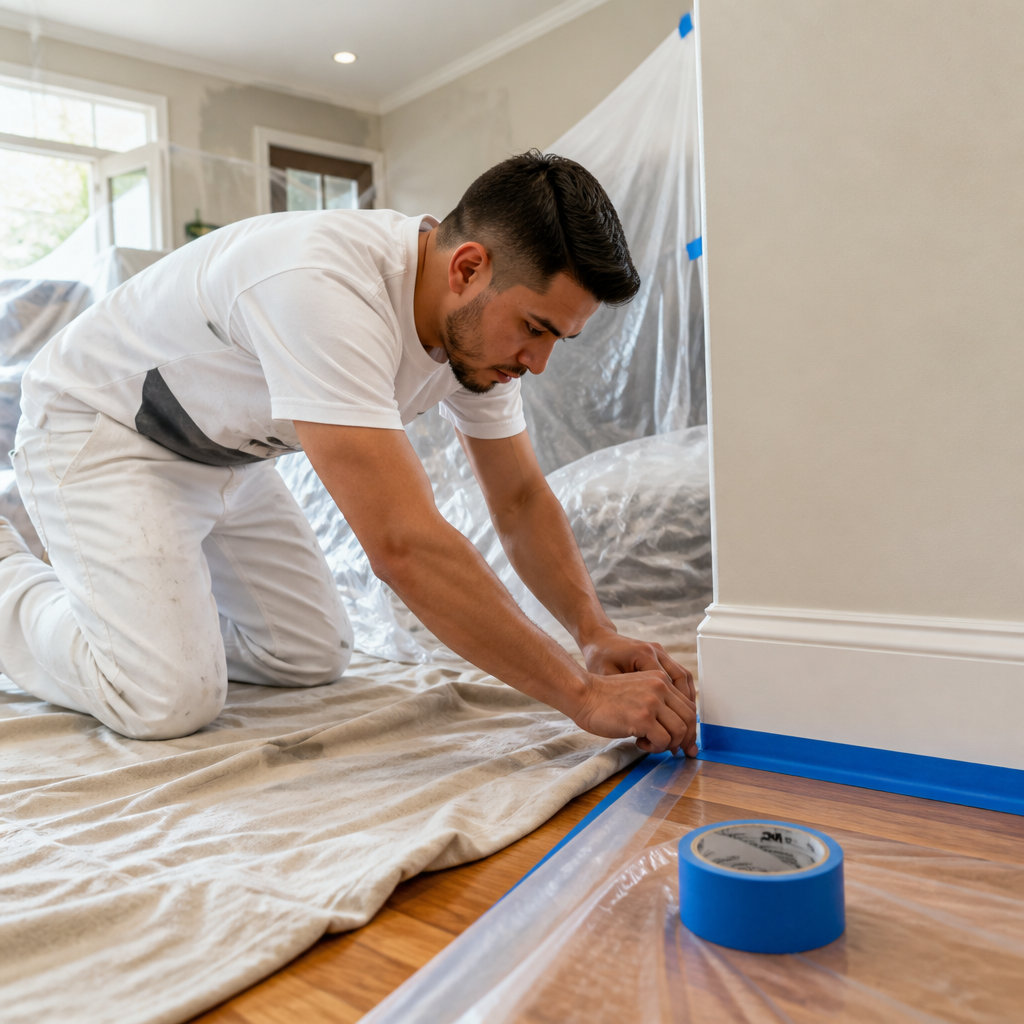
Most homeowners who are nervous about hiring a painting company are not worried about the colour choice or the finish quality. They are worried about the mess. Paint on hardwood floors. Dust tracked through hallways. Furniture left shoved into a corner for a week with no protection. These are the fears that make people put off a project they actually need done. At Dreamscape Painting, professional painting company cleanliness is not a sales point added to a brochure. It is a physical system, carried out the same way on every job, in every home, across Abbotsford, Langley, Surrey, and the rest of the Fraser Valley and Lower Mainland. This article explains exactly what that system looks like, step by step.
Table of Contents
- Quick Takeaways
- Before the First Brush Stroke: The Pre-Paint Walk-Through
- Floor and Surface Protection: What Gets Covered and How
- Masking and Hardware Removal Done Right
- Dust Containment During Sanding and Prep
- The End-of-Day Cleanup Routine
- Exterior Projects: Protecting Your Property Outside
- Approach Comparison: How Different Cleanliness Models Stack Up
- Final Walkthrough and Project Completion
- Frequently Asked Questions
- References
Quick Takeaways
| Key Insight | Explanation |
|---|---|
| Site protection starts before painting | Dreamscape crews assess the home, identify surfaces at risk, and protect floors and furniture before any material is opened or any brushwork begins. |
| Canvas drop cloths outperform plastic sheeting on floors | Canvas absorbs paint drips and stays slip-resistant underfoot. Plastic sheeting becomes dangerously slick when wet and allows drips to pool rather than absorb. |
| Daily end-of-shift cleanup is non-negotiable | Every Dreamscape crew seals paint cans, wraps or cleans tools, repositions drop cloths, and sweeps or vacuums the work area before leaving for the day. |
| Masking quality directly affects finish quality | Precise painter’s tape application on trim, hardware, and fixtures protects surfaces and eliminates the need for time-consuming touch-up work after painting. |
| Exterior projects require landscaping protection | Before any pressure washing or paint application, outdoor furniture, plants, and windows are covered or relocated. Canvas tarps are used over plants, not plastic, to prevent heat damage. |
| Small valuables should be removed by the homeowner first | Professional crews handle furniture and floors, but wall art, fragile ornaments, and personal items are best removed by the homeowner before the crew arrives to eliminate any risk. |
| Cleanliness is an indicator of overall craftsmanship | A crew that protects surfaces carefully and cleans up consistently is applying the same discipline to every other part of the job. Sloppiness in one area predicts sloppiness in all areas. |
Before the First Brush Stroke: The Pre-Paint Walk-Through
The work that happens before a single brush stroke is what separates a professional painting crew from a weekend handyman. Before Dreamscape’s crew unpacks a single drop cloth, a project lead walks the space with the homeowner to assess every surface that needs protection. This is not a formality. It is the moment where decisions get made about which furniture can be moved to another room entirely, which pieces need to stay and be wrapped in place, and where flooring requires the most careful layering of protection.
During this walk-through, the crew also identifies surfaces that are vulnerable to overspray. Crown moulding, light fixtures, built-in cabinetry, and stair railings all need different protective approaches. Getting this assessment right at the start avoids the scramble of trying to protect something mid-project when paint is already open and crews are already moving.
Pro tip: Before the Dreamscape crew arrives, remove small decorative items, wall art, and fragile objects from the rooms being painted. Professional painters will move furniture and protect floors, but small valuables are best handled by you to eliminate any risk of accidental damage during the setup process.
Floor and Surface Protection: What Gets Covered and How
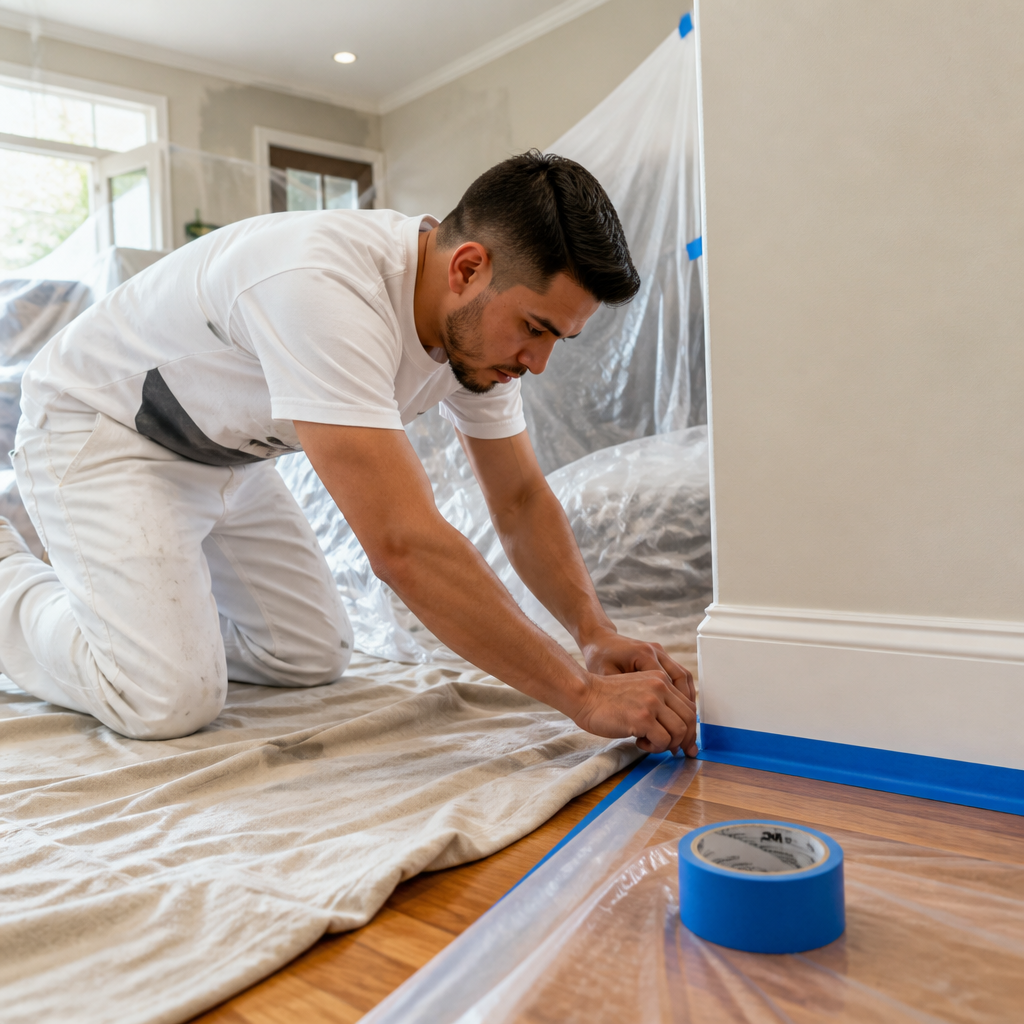
Floors are where most paint damage happens during a residential project, and they are also the surface homeowners are most anxious about. Hardwood floors, tile, and carpet all require protection, but they are not all protected the same way. Dreamscape’s crews use heavy canvas drop cloths as the primary floor protection on all interior jobs. Canvas is the correct choice because it absorbs paint drips rather than allowing them to pool and spread, and it stays slip-resistant underfoot when wet. Plastic sheeting alone on a floor is a serious hazard and should not be used as primary protection under any circumstances.
For broader floor coverage, protective floor paper is laid along walkways and high-traffic paths so that crew members moving between rooms do not track paint through the home. The edges of drop cloths are secured with painter’s tape around the room perimeter and at baseboards to prevent the covering from shifting and exposing the floor beneath. This layered system, canvas over the main floor area with secured edges, is the standard that every Dreamscape crew follows.
Furniture That Stays in the Room
When furniture is too heavy or too awkward to move to another room, it is repositioned to the centre of the space and fully wrapped. Large pieces receive multiple layers of plastic sheeting, with every seam sealed to prevent overspray from penetrating, particularly when spray application is being used for ceilings or large wall surfaces. Drop cloths are then draped over the plastic wrap to add a second layer of protection and keep the plastic in place.
Fixtures, Hardware, and Built-Ins
Light switch plates and outlet covers are removed entirely rather than masked, which produces a cleaner finish line and removes any risk of paint bleeding under tape. Chandeliers, ceiling fans, and built-in cabinetry that cannot be removed are wrapped with plastic and secured with painter’s tape. Door hardware and window locks are either removed or carefully masked, depending on the scope of the project. Removing hardware rather than painting around it is always the more professional choice and results in a cleaner finished edge every time. See how this works on our kitchen cabinet painting in Langley page.
Masking and Hardware Removal Done Right
Masking is one of the most time-consuming parts of a professional interior paint job, and it is also one of the most frequently skipped by less disciplined crews. The time invested in proper masking pays for itself in the quality of the finished edge and in the absence of touch-up work after the fact. Dreamscape painters use quality painter’s tape applied to trim, window frames, door casings, and baseboards before any paint is applied.
A common mistake in masking is applying tape directly to the floor surface itself at the base of baseboards, which can leave adhesive residue on hardwood or tile. The correct approach is to apply tape to the top of the baseboard to anchor the drop cloth, not to the floor. This keeps flooring surfaces clean and free of residue when the tape is removed.
Cleanliness during and after a painting project is not a courtesy. It is an indicator of the care applied to every other part of the work. A crew that protects surfaces carefully and cleans up consistently is applying the same discipline to their cutting-in, their rolling technique, and their primer application.
Pro tip: When taping around window glass, run the tape line against the glazing bar and remove it while the paint is still slightly tacky rather than waiting until it is fully cured. Removing tape from fully dried paint creates a higher risk of pulling the paint film with it, particularly on older trim.
Dust Containment During Sanding and Prep
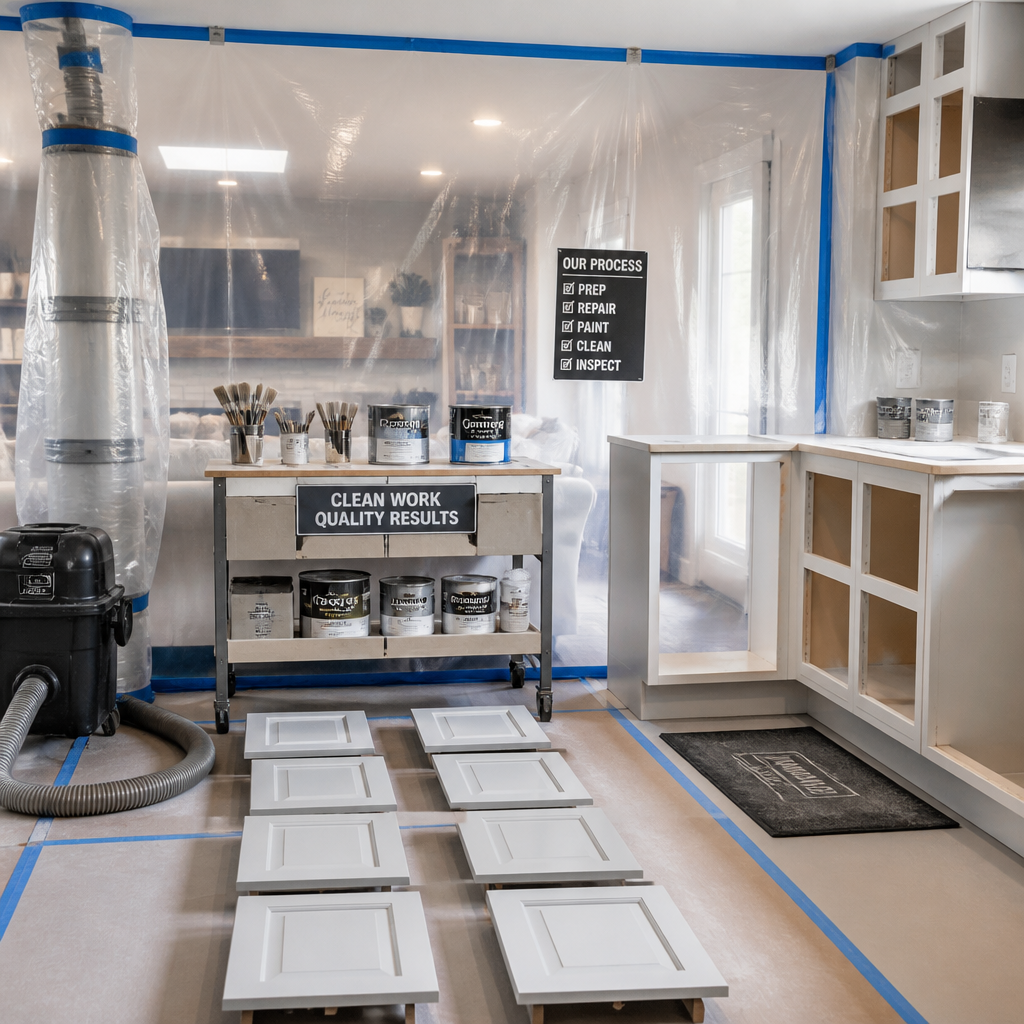
Surface preparation, which includes filling holes, cracks, and imperfections, sanding surfaces to a smooth finish, and cleaning walls of grease and dirt, generates fine dust that travels much farther than most homeowners expect. Sanding a single wall in a hallway can deposit dust on surfaces in adjacent rooms if the space is not managed correctly. For Dreamscape crews working in occupied homes across the Lower Mainland, dust containment is a specific concern that requires deliberate management.
On larger projects, plastic sheeting is used to create containment barriers across doorways, separating the active work area from the rest of the home. This is particularly important in homes with open-plan layouts, where dust has no natural barrier to stop it from migrating. Drop cloths on floors also serve a dust-capture function during sanding, trapping fine particulate before it can settle into carpet fibres or scratch hardwood surfaces underfoot.
After sanding is complete and before any primer or paint is applied, the entire work area is vacuumed or swept. Painting over a dusty surface is a quality problem as much as a cleanliness one. Dust trapped under paint film is one of the more common causes of a rough, uneven finish that shows up when light hits the wall at an angle.
The End-of-Day Cleanup Routine
What a painting crew does at the end of each workday tells you almost everything you need to know about how professional they are. Dreamscape has a defined end-of-shift routine that every crew follows on every job, whether it is a single-room refresh in Langley or a full exterior repaint in Abbotsford. Paint cans are sealed and stored. Brushes and rollers are either wrapped in plastic or cleaned, depending on the next day’s schedule. Drop cloths are repositioned to protect surfaces overnight.
Tools are packed away, debris is removed, and the work area is swept or vacuumed. The goal is a simple one: you should be able to use your home in the evening and overnight without feeling like you are living in a construction zone. For families with children and pets, or for homeowners who work from home, this matters every single day of a multi-day project.
The end-of-day routine also has a practical quality function. A clean, organized site means that the crew starts the next morning in a controlled environment. Paint cans are where they should be. Masking has not shifted overnight. Surfaces that were protected yesterday are still protected when work resumes.
Exterior Projects: Protecting Your Property Outside
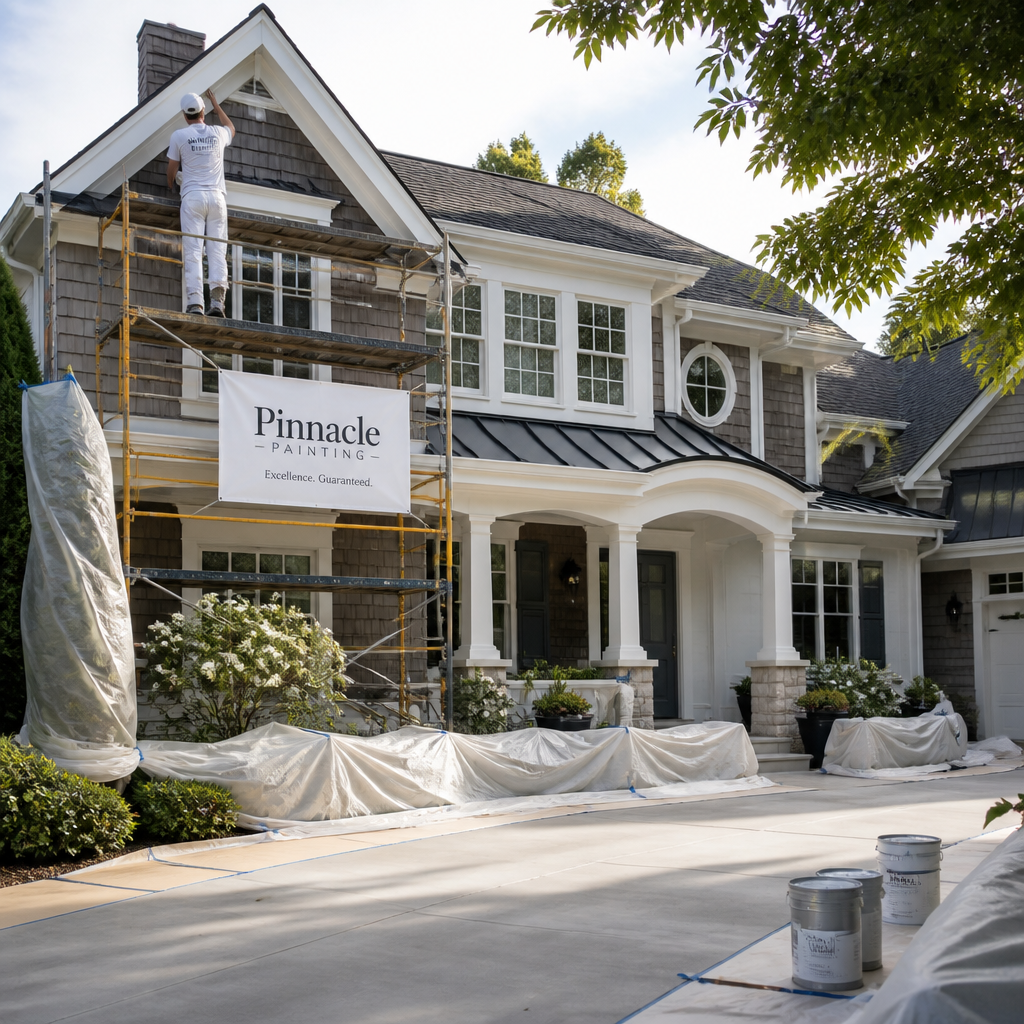
Exterior painting in the Fraser Valley, where homes in Abbotsford, Surrey, and Langley deal with established gardens, complex landscaping, and wood decking, requires a specific approach to property protection before any pressure washing or paint application begins. The risks are different from interior work but just as real. Overspray from an airless sprayer can coat shrubs and garden beds in seconds. Pressure washing runoff needs to be directed away from sensitive plants and drainage points.
Protecting Plants and Landscaping
Portable potted plants and outdoor furniture are relocated away from the work area before the job starts. For established shrubs, hedges, and garden beds that cannot be moved, canvas drop cloths or loosely draped fabric tarps are used rather than clear plastic sheeting. The reason is straightforward. On a sunny day in the Fraser Valley, clear plastic sheeting creates a greenhouse effect over plants, generating enough heat to scorch and damage foliage in a matter of hours. Canvas breathes. Plastic does not.
Tree trunks and shrub bases near the foundation are wrapped or protected at ground level to guard against paint splatter during application. All coverings are removed at the end of each working day so that plants are not deprived of sunlight and airflow overnight on multi-day exterior projects.
Protecting Windows, Doors, and Trim on Exterior Jobs
Windows are masked before any spray or roller work begins on adjacent siding. Glass is protected with paper and tape to prevent overspray, and window hardware, including locks and handles, is taped individually. Doors that are not being painted are protected along their full perimeter, and any decorative hardware on the exterior is removed or wrapped depending on what the project scope requires. Leaving a single window unmasked on an exterior spray job can mean an hour of extra glass cleaning work, and it is the kind of oversight that signals a crew cutting corners on the overall job.
Approach Comparison: How Different Cleanliness Models Stack Up
Not all painting companies approach site cleanliness the same way. The table below compares three different models homeowners in the Fraser Valley and Lower Mainland are likely to encounter when hiring for a residential painting project.
| Approach | What It Looks Like in Practice | Risk to Your Home |
|---|---|---|
| Systematic protection model (Dreamscape standard) | Full pre-job walk-through, layered floor and furniture protection, daily end-of-shift cleanup, end-of-project full sweep and touch-up review before the crew leaves. | Very low. Floor and surface protection is treated as essential, not optional. Every step is repeated the same way on every job. |
| Speed-first model (one-day turnaround approach) | Large crew deployed to complete the job in a single day. Setup and teardown are compressed. Masking is done quickly and may be less thorough on detailed trim work or custom cabinetry. | Moderate. Speed can compromise the precision of masking and the time spent on surface protection, particularly in homes with hardwood floors or detailed millwork. |
| Minimal-prep DIY or budget contractor approach | Single plastic drop cloth laid in the centre of the room, minimal taping, no pre-job furniture assessment. Tools left out overnight. Cleanup done only at project end. | High. Paint drips on floors, adhesive residue on trim, overspray on hardware, and dust migration throughout the home are all common outcomes. |
Final Walkthrough and Project Completion
The end of a Dreamscape project is not simply the moment when the last coat is applied. Before the crew packs up for the final time, a project lead conducts a thorough walkthrough of every surface that was worked on and every surface that was protected. Drop cloths and protective sheeting are removed carefully to avoid dragging debris across floors. Tape is pulled while conditions are correct to avoid damaging fresh paint or underlying surfaces. Any minor touch-ups identified during the walkthrough are addressed before the crew leaves.
The work area is swept or vacuumed, and all painting materials, empty cans, used tape, and waste are removed from the property. Leftover paint is labelled with the room, colour name, and product code, and left with the homeowner for future touch-ups. This last step is a practical one. A properly labelled paint can sitting in a utility room means that when a door frame gets scuffed two years from now, you have exactly the right product to fix it without guessing at a match.
For homeowners in Abbotsford, Langley, and Surrey considering an interior or exterior repaint, Dreamscape’s interior painting services page covers the full scope of what the team handles inside your home, including walls, ceilings, trim, and bathrooms. For complete project process information, the step-by-step interior painting process guide outlines every stage from estimate to final coat. If you are planning an exterior project, the exterior painting guide for the Fraser Valley climate explains the preparation standards required for BC’s wet conditions.
Pro tip: At the end of any painting project, do your own walkthrough in good lighting, ideally with a bright light held at a low angle to the wall surface. This reveals any roller stipple, missed spots, or tape lines that are hard to see in ambient light. A professional crew expects this and welcomes it, so raise anything you notice before signing off on the job.
Frequently Asked Questions
Will the Dreamscape crew move all the furniture, or do I need to do that before they arrive?
Dreamscape crews handle furniture moving as part of the project setup. Large pieces are moved to the centre of the room or relocated to another room where possible, and everything that stays in the space is protected with plastic sheeting and drop cloths. The one thing homeowners should handle themselves before the crew arrives is removing small decorative items, wall art, and fragile personal objects. These are best moved by you to avoid any risk of breakage during setup.
What type of floor protection does Dreamscape use on hardwood and tile floors?
Heavy canvas drop cloths are the primary floor protection on all interior jobs. Canvas is used rather than plastic because it absorbs paint drips, stays in position, and remains slip-resistant when wet. Protective floor paper is also used on walkways between rooms to prevent any tracking of paint through the home. Edges are secured at baseboards with painter’s tape to keep the covering from shifting during the workday.
How does Dreamscape handle dust from sanding during prep work?
On projects with significant sanding requirements, plastic sheeting is used to create containment barriers across doorways to limit dust migration to the active work area. Drop cloths on floors trap particulate during the sanding process. Once sanding is complete, the entire work area is vacuumed or swept before any primer or paint is applied. Painting over residual dust is both a cleanliness problem and a finish quality problem, and Dreamscape treats the pre-paint cleanup as a required step, not an optional one.
What happens at the end of each day on a multi-day painting project?
Every Dreamscape crew follows the same end-of-shift routine on every job. Paint cans are sealed and stored. Brushes and rollers are either wrapped in plastic to keep them fresh overnight or fully cleaned. Drop cloths are repositioned to protect surfaces until the next morning. Debris is removed and the work area is swept or vacuumed. The goal is that you can use your home normally in the evening and overnight without living around an active construction site.
How does Dreamscape protect gardens and landscaping during exterior painting?
Before any pressure washing or spray application begins, portable plants and outdoor furniture are relocated away from the work area. Established shrubs and garden beds are covered with canvas tarps or loosely draped fabric rather than clear plastic sheeting. Plastic creates a greenhouse effect on sunny days that can scorch plants, while canvas allows airflow. All plant coverings are removed at the end of each working day so that landscaping is not deprived of light and air overnight on multi-day exterior projects.
Does Dreamscape remove painter’s tape and clean up before they leave at the end of the project?
Yes. The final day of every Dreamscape project includes a full site cleanup that covers removing all drop cloths and protective sheeting, pulling all painter’s tape, removing waste materials from the property, and conducting a project lead walkthrough to identify and address any touch-ups before the crew leaves. Leftover paint is labelled with colour name, product code, and room, and left with the homeowner for future reference.
If you have had a painting project done in the Fraser Valley or Lower Mainland recently, we would like to hear which part of the cleanliness and protection process made the biggest difference to your experience.
We would love your feedback and any insights you would share with others. What perspective would you add?
References
- How professional painters use site protection materials and surface coverings during interior projects
- How skilled painting crews use masking, daily cleanup routines, and surface protection to keep homes clean
- Best practices for protecting landscaping and plants during exterior painting projects
- A professional guide to using drop cloths and protective materials correctly on painting job sites

