

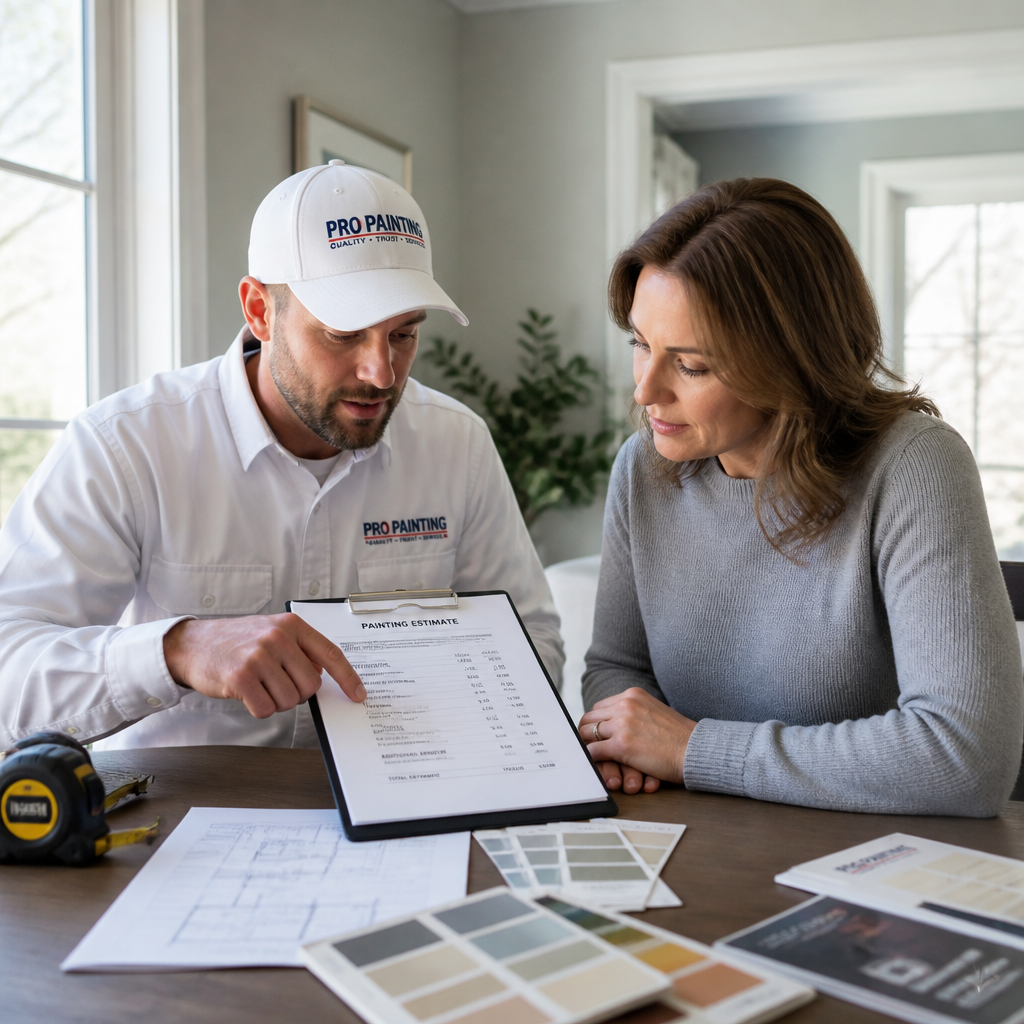
Getting a painting estimate in the Fraser Valley should feel like a professional consultation, not a guessing game. Too many homeowners in Abbotsford, Langley, and Surrey book a painter based on a ballpark number given over the phone, then watch the final invoice climb well past what they expected. The problem is almost never the painter who delivers the surprise – it is the estimate that was never specific enough to prevent it. This guide gives you the exact questions to ask before you book, the red flags to watch for, and a clear picture of what a legitimate written quote must contain to actually protect you.
Table of Contents
- Quick Takeaways
- Why the Estimate Process Matters More Than the Price
- Questions to Ask Before You Book a Painter
- What a Written Estimate Must Include
- How to Compare Painting Quotes Without Getting Fooled
- Red Flags in a Painting Estimate
- On-Site Estimates vs. Phone Quotes: Why It Matters in the Fraser Valley
- Frequently Asked Questions
- References
Quick Takeaways
| Key Insight | Explanation |
|---|---|
| Always request a written estimate | Verbal quotes offer no protection. A written estimate specifying scope, materials, and timeline is the minimum standard for any legitimate painting contractor. |
| Ask for paint brand and sheen level in writing | Without this detail, a contractor can switch to a cheaper product after signing. Make sure the estimate names the exact product being applied, not just the colour. |
| Confirm how many coats are included | One coat versus two coats is a significant difference in coverage, durability, and labour cost. The number of coats must appear explicitly in the quote. |
| Verify insurance before anything else | Any legitimate painting contractor in BC should carry liability insurance and Workers’ Compensation coverage. Ask for documentation, not just a verbal assurance. |
| A dramatically low bid is a warning, not a deal | If one quote is significantly below the others, it usually signals skipped prep work, inferior materials, or an unlicensed operator cutting corners. |
| Prep work must be itemized | Surface preparation – filling holes, sanding, priming, caulking – is where paint jobs succeed or fail. If the quote does not specify prep, assume it is not included. |
| Get a clear start date and realistic timeline | Reputable contractors in demand often have lead times. A contractor who cannot give any timeline at all is a concern. One who gives a firm schedule is a green flag. |
Why the Estimate Process Matters More Than the Price
Most homeowners approach a painting project by collecting prices and choosing the lowest one. That instinct is understandable but routinely produces bad outcomes. The estimate process is not just about a number – it is a preview of how a contractor runs their business. A company that is vague, rushed, or dismissive during the estimate phase will be the same way once the job starts.
In practice, a thorough estimate visit reveals far more than cost. It tells you whether the contractor actually looked at your surfaces, whether they understand what preparation your walls, trim, or exterior cladding requires, and whether they are willing to commit their answers to paper. A contractor who resists putting details in writing is not being informal – they are protecting themselves at your expense.
For homeowners across the Fraser Valley, where housing stock ranges from older Abbotsford ranchers to newer Langley townhouses and Surrey infill builds, the variables that affect a painting estimate are real and significant. Surface condition, ceiling height, the number of doors and windows, whether staining or priming is needed – none of these get captured in a phone quote. They only get captured by someone who has actually walked your property.
The estimate is where the project is either set up for success or quietly set up to fail. Vague quotes always benefit the contractor, never the homeowner.
Questions to Ask Before You Book a Painter
Before a contractor sets foot in your home or puts together a number, these are the questions that separate a professional operation from a risky one. Ask them directly, and pay close attention to whether the answers are confident and specific or vague and evasive.
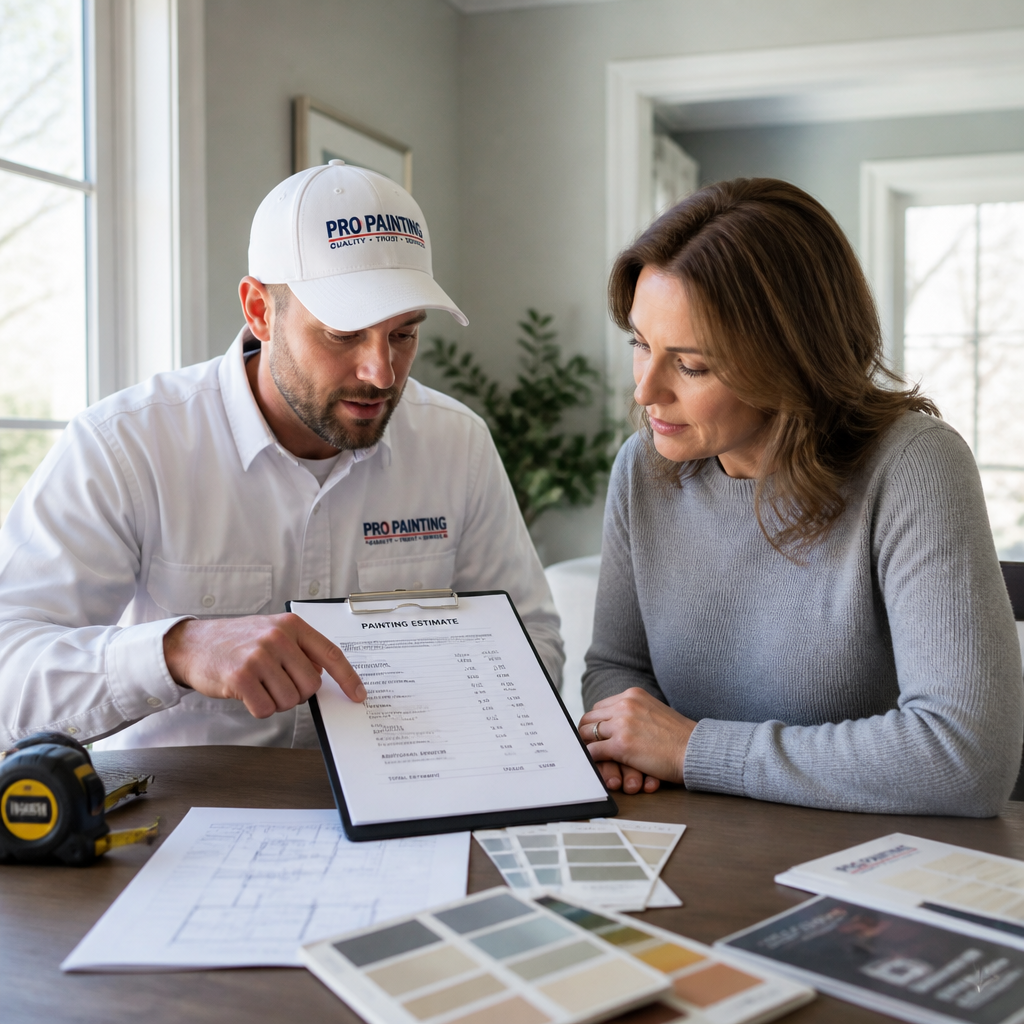

Are You Fully Insured and Do You Carry WorkSafeBC Coverage?
This is not optional information. Any legitimate painting company operating in British Columbia should carry general liability insurance and Workers’ Compensation Board (WCB) coverage. Ask for documentation. If a contractor hesitates, deflects, or claims it is unnecessary for a small job, stop the conversation there. If a painter is injured on your property and they are not covered, you can be held liable.
Pro tip: Ask to see the actual certificate of insurance, not just a verbal confirmation. A reputable contractor will produce it without hesitation.
Who Will Be Doing the Work?
Some contractors estimate the job and then subcontract it to crews they have never worked with before. Ask directly whether the team completing the job is employed by the company or hired out. This matters for quality control, accountability, and continuity. If problems arise mid-project, you want to be dealing with one company that owns the outcome from start to finish.
What Does the Prep Work Include?
Surface preparation is where most painting projects either hold up over time or begin to fail within a year. Ask specifically what the crew will do before the first coat goes on. Will they fill nail holes and cracks? Sand rough surfaces? Apply primer to bare wood or stained areas? Caulk around trim and windows? Each of these steps takes time, and if the quote is unusually low, it is usually because one or more of them have been quietly dropped.
What Paint Products Will You Use and How Many Coats?
The brand, product line, and sheen level of the paint being applied should appear in the written estimate. This is not a small detail. A quality paint product from a reputable manufacturer performs very differently from a builder-grade equivalent, and the difference shows within a few years of wear. Ask for the specific product name and confirm the number of coats included. Two coats over a properly primed surface is the professional standard for most interior and exterior work.
What Is the Realistic Timeline for This Project?
Ask for a start date and an estimated completion date. Contractors who are in demand often have lead times, and that is entirely normal for a quality operation. What is not normal is a contractor who cannot give you any timeline, or one who promises an implausibly fast turnaround on a large job. Fast promises often translate to crowded crews cutting corners to hit an arbitrary deadline.
What Warranty Do You Offer on Your Work?
A company that has been operating in the Lower Mainland for decades stands behind its work because its reputation depends on it. Ask what workmanship warranty is offered, what it covers, and how warranty claims are handled. Get the terms in writing. A contractor who cannot describe their warranty clearly likely does not have one worth mentioning.
What a Written Estimate Must Include
A written estimate is not a courtesy – it is a business document. A legitimate painting estimate should contain enough detail that a completely different contractor could read it and understand exactly what work is being priced. If the document you receive does not meet that standard, ask for a revised one before you sign anything.
Scope of Work
The scope identifies every area and surface being painted, every item being prepared, and every step included in the process. For interior projects, this means specifying whether ceilings, walls, trim, doors, and baseboards are included – and which rooms. For exterior work, it should cover which surfaces are being painted, what cladding type is involved, and whether decks, fences, or outbuildings are in or out of scope.
Materials Specification
The estimate must name the paint product being used, including brand, product line, and sheen level. It should also specify any primers, sealants, or specialty coatings involved. If the estimate just says “premium paint,” that means nothing – every contractor claims to use premium paint.
Number of Coats and Application Method
The number of primer coats and finish coats should be stated explicitly. The application method (brush, roller, or spray) can also affect the quality of the finish and the time required, particularly for cabinetry or fine finish work.
Timeline and Payment Terms
Payment terms matter. A request for more than 30 percent upfront before work begins is a warning sign. Reputable contractors typically require a modest deposit to hold the start date, with the balance due on completion. Any contractor who demands full payment in advance should be declined.
Pro tip: Before signing any painting estimate, ask the company to specify the exact paint product by brand and sheen level. If they cannot or will not, assume they are planning to use the cheapest available option regardless of what they said during the estimate visit.
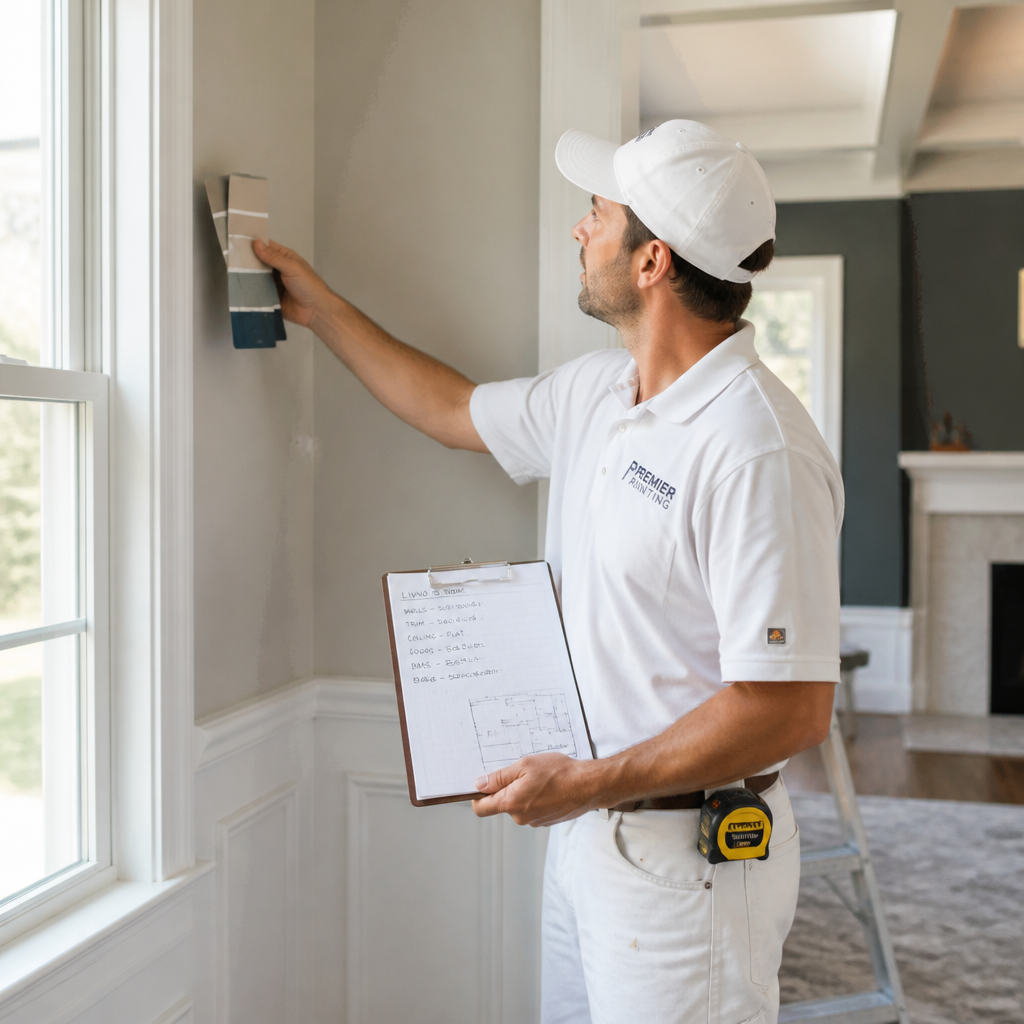
How to Compare Painting Quotes Without Getting Fooled
Comparing quotes side by side only works if the quotes are actually covering the same scope of work. This is the most common mistake Fraser Valley homeowners make. They collect two or three numbers and compare the totals, without checking whether each quote includes the same prep work, the same number of coats, and the same product quality. You could easily be comparing a full-service professional job against a price-only bid that skips three preparation steps.
To compare accurately, build a simple checklist and verify each item across every quote you receive. The table below outlines what to check.
| Estimate Element | Minimum Acceptable Standard | Red Flag Version |
|---|---|---|
| Scope of work | Every surface, room, and item listed in writing | General description only (“interior painting”) |
| Paint specification | Brand, product line, and sheen level named explicitly | “Premium paint” or “quality product” with no specifics |
| Number of coats | Primer and finish coats stated separately | No mention of coats, or “as needed” |
| Prep work detail | Patching, sanding, priming, caulking itemized | Prep not mentioned at all |
| Timeline | Start date and estimated completion date provided | No timeline, or “we’ll fit you in” |
| Insurance documentation | Certificate of insurance available on request | Verbal assurance only, or refusal to provide |
| Payment terms | Modest deposit, balance on completion | Full payment upfront or cash-only with no receipt |
Once you have verified these elements, price becomes a much more meaningful comparison. A quote that is 20 percent higher than another may actually represent 40 percent more work if the lower quote excludes prep steps and uses a cheaper product. The right question is never “which quote is cheapest?” – it is “which quote represents the best value for what is actually being delivered?”
Red Flags in a Painting Estimate
Certain patterns in a painting estimate signal problems before the job even starts. Recognizing them early saves you time, money, and the frustration of a project that does not meet expectations.
No In-Person Walkthrough
A contractor who quotes a project without visiting the property in person is not giving you an estimate – they are giving you a guess. Surface conditions, accessibility, the actual area to be painted, and the specific preparation required cannot be assessed from a description or photographs alone. Require an on-site visit before accepting any quote.
Pressure to Sign Immediately
Any contractor pushing for an on-the-spot signature or claiming that a price is only valid if you commit today is using a sales tactic, not offering a legitimate deal. A reputable company gives you time to review the written quote, compare it with others, and ask follow-up questions. A written quote that is typically delivered within 24 to 48 hours after the estimate visit, rather than presented at the door with pressure to sign immediately, is a positive sign.
Significantly Lower Bid Than All Others
If one estimate is substantially below every other quote you received, ask specifically why. The most common explanations are skipped prep work, inferior paint products, an unlicensed or uninsured operator, or a lowball entry price that grows through change orders once the job starts. A dramatically low bid is a warning, not a win.
No Written Contract
Verbal agreements offer no protection to either party. If a painter resists putting the scope, price, products, and timeline in writing, that resistance alone is reason enough to decline. Every legitimate painting contractor uses written contracts as standard practice.
Requests for Large Cash Deposits
A request for more than 30 percent upfront before any work begins is a warning sign. A cash-only payment requirement with no receipt process can also indicate an unregistered business. Protect yourself by paying by cheque or card where a paper trail exists.
On-Site Estimates vs. Phone Quotes: Why It Matters in the Fraser Valley
The Fraser Valley and Lower Mainland have a genuinely diverse housing stock. Older homes in Abbotsford and Mission often have surfaces that require significantly more preparation than a newer build in Willoughby or Clayton Heights. Stucco exteriors, wood siding, older plaster walls, and previously repainted cabinetry all behave differently under paint, and none of those variables are visible without an in-person assessment. Quotes from our cabinet painters in Abbotsford are always free.
Homeowners who receive in-person estimates consistently report higher satisfaction with final project costs compared to those who book based on phone or online quotes alone. This is not surprising. A phone quote protects the contractor by staying vague. An in-person estimate protects both parties by grounding the price in reality.
At Dreamscape Painting, on-site estimate visits typically take between 30 and 60 minutes. Larger homes, exterior projects, or properties where cabinet refinishing is also being considered may take slightly longer. The written quote follows within 24 to 48 hours – enough time to be thorough, fast enough to be respectful of your schedule.
Dreamscape’s estimators are experienced painting professionals, not generalist salespeople. The person who assesses your project understands the technical details well enough to explain them clearly, which reduces misunderstandings about scope, timing, and product selection before work begins. If you are ready to request a free painting quote in Abbotsford or anywhere else in the Fraser Valley, you can book your on-site estimate here.
For homeowners who want to understand more about what to expect between the estimate and the final coat, Dreamscape has also detailed the full painting process from estimate to completion – a useful read before your first estimate visit.
Frequently Asked Questions
How long does an on-site painting estimate take?
Most on-site estimate visits for residential projects take between 30 and 60 minutes. Larger or more complex projects – such as full exterior repaints, multi-room interiors, or homes where cabinet refinishing is also being considered – may take a bit longer. A thorough estimator will not rush this visit, because the accuracy of your quote depends on it.
How many painting quotes should I get before booking?
Getting two to three quotes is a reasonable approach for most projects. Fewer than two does not give you enough basis for comparison. More than four tends to create confusion rather than clarity, especially if the quotes are not covering the same scope of work. Focus on quality of information in each quote, not just the number of quotes collected.
What is a fair deposit to pay a painting contractor upfront?
A deposit in the range of 10 to 25 percent is reasonable for most residential painting projects and is typically used to hold a start date on the contractor’s schedule. A request for 50 percent or more before any work begins is a warning sign. Full payment demanded upfront is a reason to walk away. Always ensure your deposit and payment terms are documented in the written contract.
Is a free painting quote in Abbotsford or the Fraser Valley something reputable companies offer?
Yes. Reputable painting companies throughout Abbotsford, Langley, Surrey, and the broader Fraser Valley provide on-site estimates at no charge. The estimate visit is a standard part of the professional process, not an upsell. Be cautious of any company that charges for an estimate before delivering any service.
What is the difference between an estimate and a quote?
In practice, these terms are often used interchangeably in the painting industry, but they carry slightly different implications. An estimate is a professional approximation of the likely cost, which may be subject to adjustment if the scope changes. A quote is typically a firm price for a clearly defined scope of work. Always ask whether the figure you receive is fixed or subject to change, and make sure the answer is in writing. For typical room-by-room numbers, see our interior painting cost guide for Vancouver.
Should the paint brand really matter to me as a homeowner?
Absolutely. Paint quality directly affects how the finish looks, how it holds up over time, and how easy it is to clean. A professional-grade product applied over properly prepared surfaces will outlast a budget product by several years. Asking for the specific brand and product line in your written estimate is not being difficult – it is protecting your investment in your home.
What questions about prep work should I specifically ask?
Ask whether the crew will fill and sand holes and cracks, whether bare wood or stained surfaces will receive primer, whether caulking around trim and windows is included, and whether any sanding between coats is part of the process for fine finish work. Each of these steps adds time and cost, and each of them contributes directly to how long the paint job lasts. If the estimate does not mention prep, it almost certainly does not include it.
Have you recently gotten painting estimates in Abbotsford, Langley, Surrey, or elsewhere in the Fraser Valley? Share what questions made the biggest difference in your process, or what you wish you had asked before the job started.
References
- What to ask when hiring an interior painting contractor, including red flags and insurance requirements
- A homeowner’s checklist for hiring a painting contractor, covering scope, prep, and contract details
- What should be included in a professional painting estimate, from scope of work to payment terms
- How to evaluate and compare painting quotes, including deposit norms and warning signs
- Ten essential questions to ask before hiring a painting contractor

