

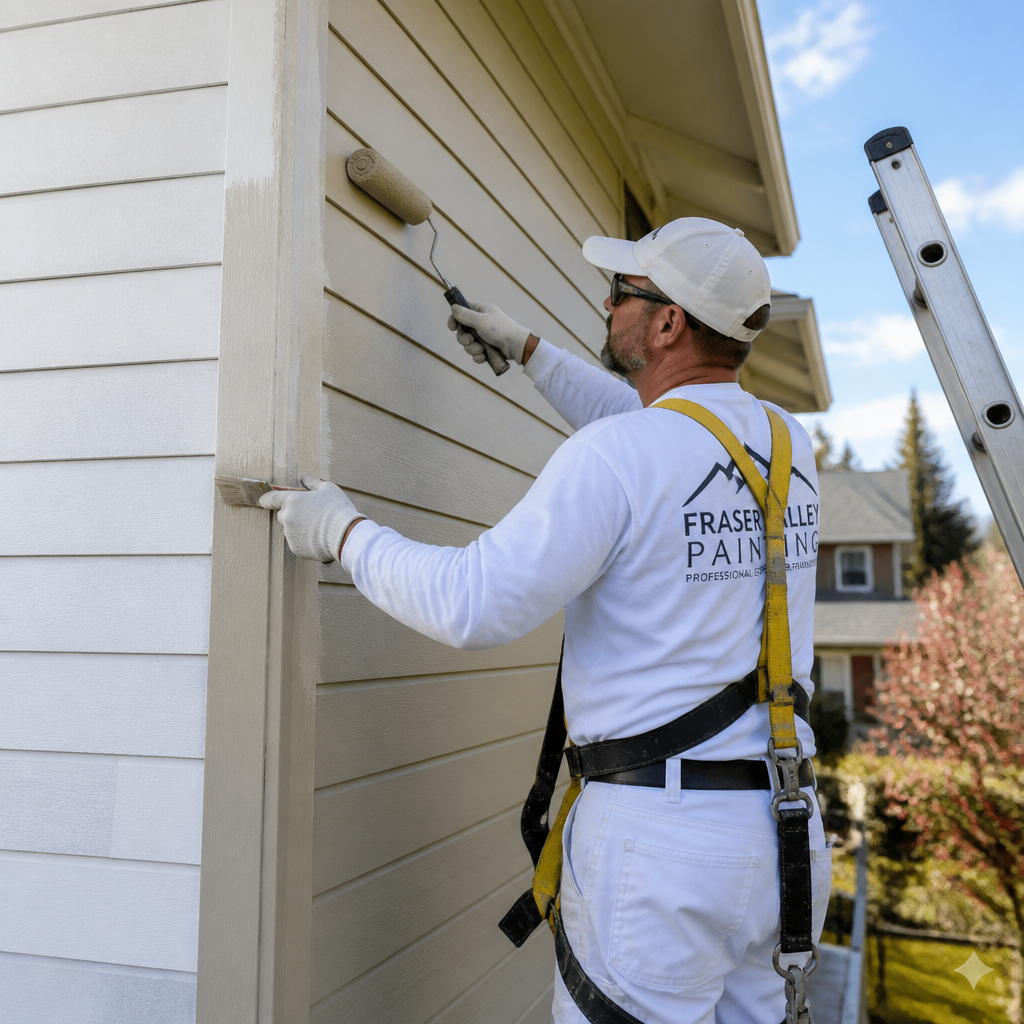
Most exterior paint failures in the Fraser Valley have nothing to do with paint quality. They happen because a homeowner or contractor painted at the wrong time of year, skipped proper surface preparation, or chose a product that could not handle the region’s specific climate. If you are planning exterior painting in Abbotsford, Langley, or Surrey, this guide covers everything that actually matters: timing, preparation, product selection, colour choice, and what to expect from a professional quote. Dreamscape Painting Ltd. has been doing this work across the Lower Mainland for over 35 years. This is what we have learned.
Table of Contents
- Quick Takeaways
- Why Fraser Valley Exterior Painting Is Different
- Best Time of Year to Paint Your Exterior
- Surface Preparation: The Step That Determines Everything
- Choosing the Right Paint for Abbotsford, Langley, and Surrey Homes
- Exterior Painting by Surface Type
- Colour Selection for Lower Mainland Homes
- What to Expect from a Professional Exterior Painting Quote
- Season Comparison: When to Paint and When to Wait
- Frequently Asked Questions
- References
Quick Takeaways
| Key Insight | Explanation |
|---|---|
| The painting window in the Fraser Valley is shorter than most homeowners expect | Mid-May through mid-September is the reliable window. July and August carry the lowest risk of rain interruption and offer the most consistent daytime temperatures above 15°C. |
| Temperature rules are non-negotiable | Surface temperature must be at least 10°C and rising at application time, and must remain above 5°C for a minimum of 24 hours after the final coat. Cold nights during curing, not just during application, compromise film formation. |
| Preparation accounts for the majority of labour cost | Power washing, scraping failing paint, treating mildew, caulking, and priming often make up 50 to 60 percent of total labour. A quote that skips these steps will cost more in the long run. |
| 100% acrylic latex is the correct product for most Fraser Valley exteriors | It adheres well to wood and stucco, allows moisture vapour to pass through rather than getting trapped, and retains flexibility through freeze-thaw cycles. |
| Abbotsford and Langley have a shorter effective painting window than coastal Metro Vancouver | The Sumas Mountain shadow effect and higher inland precipitation averages mean the effective exterior painting window can be two to three weeks shorter than in coastal areas. |
| South and west-facing walls wear first | These walls receive the most UV exposure and rain. A properly prepared and professionally applied exterior paint job should last between eight and twelve years, but south and west faces will show wear earlier. |
| Book early for summer slots | July and August book up quickly with professional painting companies. Homeowners who contact estimators in late winter for a May through August start get the best scheduling options and avoid the rush. |
Why Fraser Valley Exterior Painting Is Different
The Fraser Valley is not a forgiving climate for exterior coatings. Abbotsford, Langley, and Surrey receive substantial annual rainfall, and the region’s combination of high humidity, freeze-thaw cycles throughout the colder months, and extended wet seasons places real stress on exterior paint films. A product or process that performs acceptably in a drier interior climate will not last here.
Abbotsford sits in a geographic position that funnels moisture-laden Pacific air toward the coastal mountains, creating conditions that are different even from other parts of Metro Vancouver. The Sumas Mountain shadow effect and higher inland precipitation averages mean that available painting days are genuinely fewer than homeowners often assume. Understanding these local conditions is not background information. It directly changes which products you select, when you schedule work, and how thoroughly you prepare the surface.
Surrey and Langley, though closer to the coast, face their own challenges. North-facing aspects, large mature trees, and the region’s spring fog patterns all affect how quickly surfaces dry after rain and how much mildew accumulates on siding between paint cycles. Any professional painter working in this region needs to account for these conditions on every project.
Best Time of Year to Paint Your Exterior
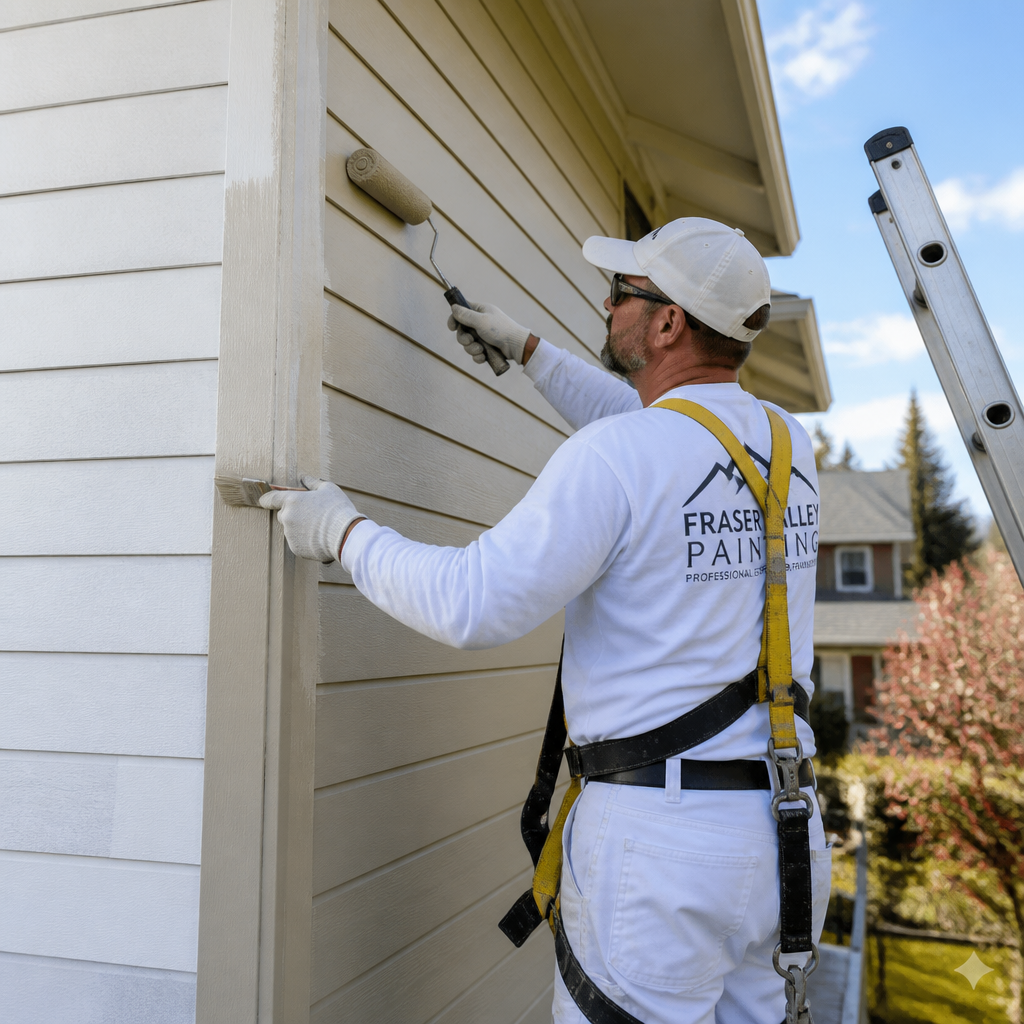
The reliable exterior painting window in the Fraser Valley runs from mid-May through mid-September. Within that window, July and August carry the lowest risk of rain interruption and the most consistent daytime temperatures above 15°C. If you are scheduling a project for your home in Surrey, Langley, or Abbotsford, those two months book up quickly with professional painting companies for this exact reason.
Why Spring and Fall Fool Homeowners
A common mistake is assuming that a week of dry, sunny April weather is a safe painting window. April in the Fraser Valley averages 15 to 18 rain days per month. Even if the paint goes on dry, overnight temperatures regularly drop below the minimum application threshold of 10°C for most latex products. Cold nights during the curing period, not just during application, compromise film formation.
October has the same problem in reverse. It often feels dry after a wet September, but nighttime temperatures become unreliable quickly. Painting a home’s exterior in October in Langley or Abbotsford is a gamble most experienced professional painters will advise against, and for good reason.
The Exact Conditions Required
The rule used by experienced exterior painters is practical and specific: no rain forecast within 24 hours of application, no rain forecast for 24 hours after application, overnight lows above 10°C, and relative humidity below 85 percent. Check these conditions at the specific location, not just the nearest city forecast. Fraser Valley microclimates vary significantly across the region, and what is true for one neighbourhood on a given morning may not be true for another a few kilometres away.
Pro tip: Schedule your exterior painting project to start on a Monday in mid-July. This gives your painting crew a full five-day working window with the best statistical chance of uninterrupted dry weather across the Lower Mainland.
Surface Preparation: The Step That Determines Everything
Surface preparation is the part of an exterior paint job that homeowners most often underestimate, and the part that professional contractors most often distinguish themselves by doing correctly. The best paint available will fail within two seasons if it is applied to a surface that has not been properly cleaned, repaired, and primed. In BC’s wet climate, scraping failing paint, replacing rotted wood, and treating mildew often account for 50 to 60 percent of total labour cost on an exterior project.
Power Washing
Every exterior project should begin with a thorough power wash. This removes mould, mildew, chalking from the previous paint film, dirt, and any contaminants that would prevent adhesion. The pressure and technique need to be adjusted for the surface type. Stucco and wood require different settings. Washing is not optional and is not cosmetic. Paint applied to a contaminated surface will not bond correctly, regardless of product quality.
Scraping, Sanding, and Caulking
Any paint that has lost adhesion must be removed before the new coating goes on. Leaving failing paint in place and painting over it transfers the adhesion failure to the new coat. Feather-sanding the edges of sound paint creates a smooth transition that prevents the new film from telegraphing old edges. All gaps at windows, door frames, trim joints, and siding seams must be caulked with a quality paintable caulk. These joints are where water enters and causes the rot and mildew problems that make future repaints more expensive.
Priming
A common mistake is applying two coats of topcoat directly to bare or weathered wood without a dedicated primer. Bare wood is absorbent and uneven. The topcoat soaks into the grain unevenly, creating thin spots that fail first. A stain-blocking oil-based primer or a high-build acrylic primer creates the uniform substrate that topcoats need to adhere correctly. On stucco that has been patched, a bonding primer is essential over the patched areas.
Pro tip: When getting quotes for exterior painting in Surrey, Langley, or Abbotsford, ask each contractor specifically what their preparation process includes. A quote that does not mention power washing, scraping, caulking, and priming as separate items is a quote that is almost certainly skipping some of those steps.
Choosing the Right Paint for Abbotsford, Langley, and Surrey Homes
For wood siding, which remains the dominant substrate in Fraser Valley residential construction, 100% acrylic latex is the correct product choice. It adheres well to wood, allows moisture vapour to pass through the film rather than getting trapped underneath, and retains flexibility through freeze-thaw cycles. These properties are directly relevant to the Lower Mainland’s climate. An oil-based paint traps moisture behind the film, which leads to blistering and peeling on homes in high-humidity regions.
For stucco, the same 100% acrylic latex performs well, but product selection needs to account for the texture and porosity of the stucco surface. Elastomeric coatings, which have greater flexibility and fill capacity, are appropriate for stucco that has hairline cracking across the surface. They bridge small cracks and prevent water infiltration without requiring complete crack repair on every hairline.
“The phrase ‘weather resistant exterior paint’ is used loosely in marketing materials, but specific product characteristics separate genuinely durable coatings from average ones. Knowing what to look for prevents expensive decisions based on labelling alone.”
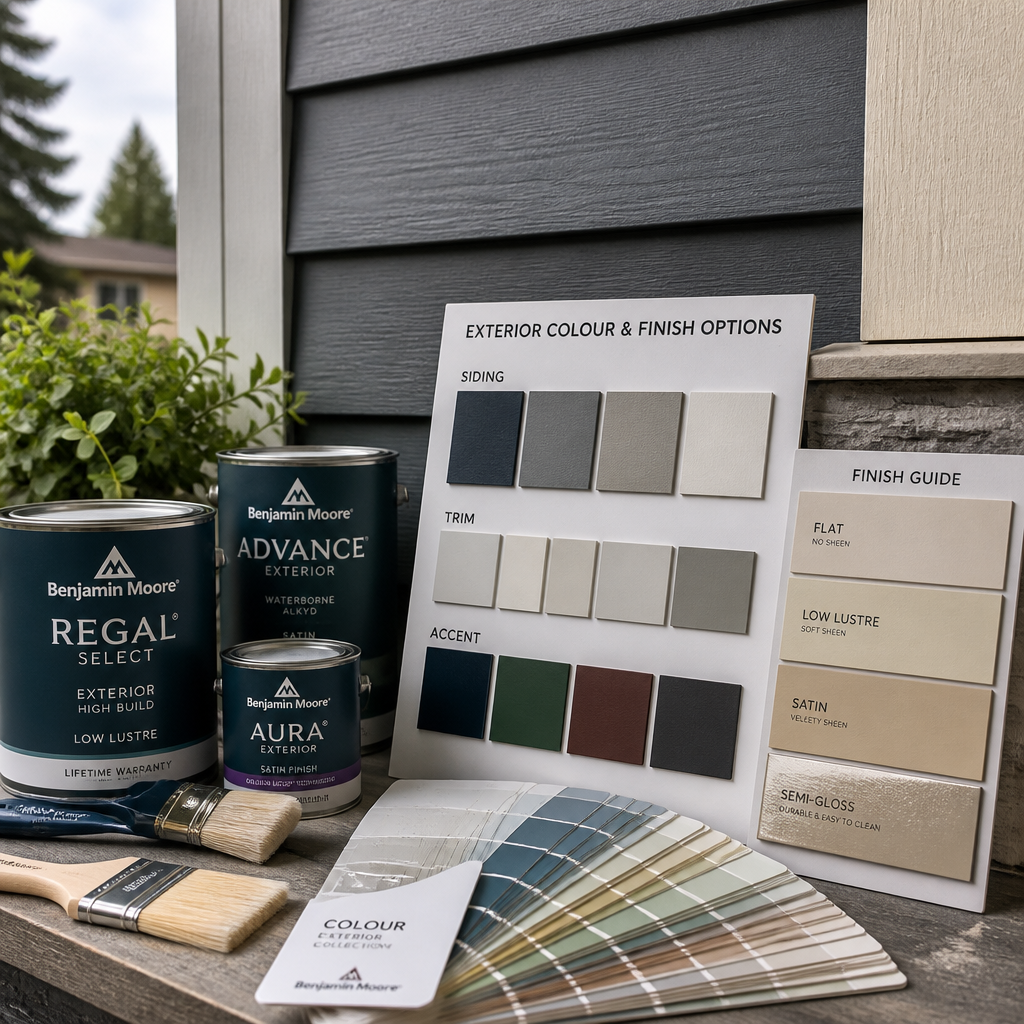
Sheen level matters more on exteriors than most homeowners realise. A flat or matte finish hides surface imperfections well but is harder to clean and less resistant to mildew in wet climates. A satin or low-sheen finish is the practical choice for most exterior siding in the Fraser Valley. Trim is typically done in a semi-gloss or gloss, which holds up to more direct weather exposure and provides the contrast that makes architectural detail visible.
Exterior Painting by Surface Type
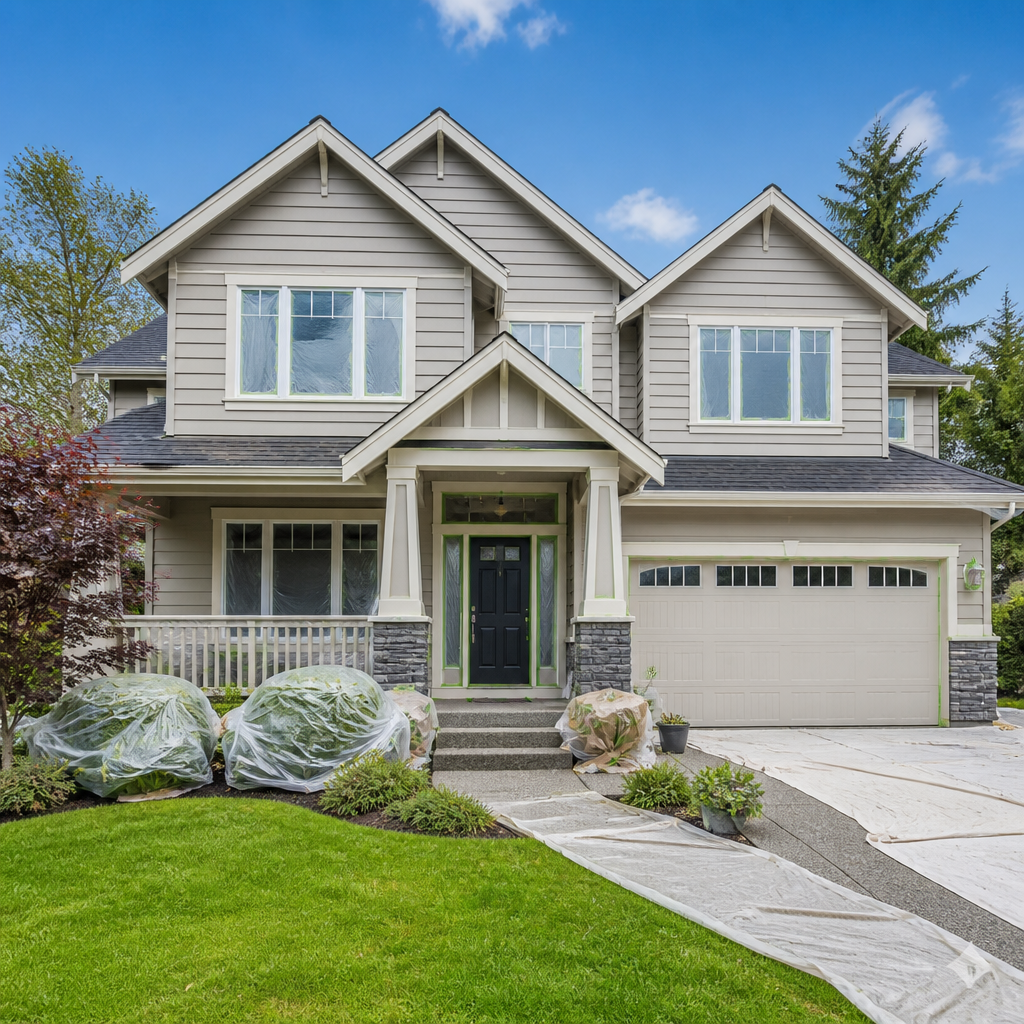
Different substrates on Lower Mainland homes require genuinely different approaches. Treating a cedar-sided home the same way you would treat a fibre cement-sided home is a preparation and product error that shortens the life of the coating.
Cedar and Wood Siding
New cedar bleeds tannins, which can bleed through standard primers and cause staining in the topcoat. A stain-blocking alkyd primer applied before any water-based topcoat prevents this. Older cedar that has been previously painted needs thorough scraping and sanding to remove chalking and any delaminated material before repriming. Cedar that has been left unpainted and weathered for several seasons may need a dedicated wood conditioner before primer to reopen the grain and improve adhesion.
Stucco
Stucco is common on Lower Mainland homes built between 1970 and 2000. It is a porous substrate that holds moisture, so thorough drying time after washing is critical before any coating is applied. Cracks in stucco need to be assessed for depth. Hairline cracks can be addressed with an elastomeric topcoat. Structural cracks need to be filled and repaired before painting. A masonry primer appropriate for the alkalinity of the stucco surface is required before topcoat.
Fibre Cement (Hardie Board)
Fibre cement siding, which appears widely in newer Surrey and Langley subdivisions, is factory-primed at the time of installation. On a repaint, the condition of the factory or previously applied primer determines the preparation required. Fibre cement does not rot or hold moisture like wood, which simplifies some aspects of the work, but it still requires proper cleaning and adhesion priming where the previous coating has failed or chalked.
Colour Selection for Lower Mainland Homes
Colour selection for exterior painting in Abbotsford, Langley, and Surrey involves more than personal preference. The neighbourhood context, the home’s architectural style, and the effect of the region’s overcast light on colour perception all play a role in making a choice that works in practice, not just on a paint chip.
In heritage neighbourhoods of Abbotsford and Langley, earth tones and muted palettes tend to complement the surrounding streetscape and the area’s residential character. In newer Surrey and Langley developments, bolder contrasts between body colour and trim are increasingly common and work well with the cleaner architectural lines of newer construction.
The Fraser Valley’s overcast sky for much of the year changes how colours appear on a wall compared to how they look in full sun. Colours that read as neutral and sophisticated indoors can read as flat or grey outside under overcast conditions. Testing a large paint-out directly on the exterior wall in the actual light conditions of the home’s orientation is worth the extra step before committing to a full repaint.
South and west-facing walls receive the most UV exposure. Lighter colours on these faces reflect more UV energy and tend to hold their appearance longer than dark saturated colours, which can fade significantly within a few seasons on high-exposure walls.
What to Expect from a Professional Exterior Painting Quote
A professional exterior painting quote in the Lower Mainland should be detailed enough that you can compare it line by line against other quotes. The variables that drive cost are clear: the size of the home, the number of storeys, the substrate type, the condition of the existing coating, and the scope of preparation required. A two-storey home with significant stucco cracking or widespread peeling paint will cost substantially more to repaint than a well-maintained single-storey home on the same street.
For context, exterior painting on a standard two-storey home in the Lower Mainland typically involves several days of preparation work before a single coat of paint is applied. Access requirements on two-storey homes, particularly on steeply graded lots or homes with tight side yards, add labour that is not visible in a simple per-square-foot price.
A properly prepared and professionally applied exterior paint job on a Lower Mainland home should last between eight and twelve years, depending on the surface type, paint quality, and the amount of weather exposure the home receives. South and west-facing walls will typically show wear first. Protecting those faces with a quality product and thorough preparation is where the investment in a professional paint job pays for itself.
Dreamscape Painting provides detailed written estimates for exterior projects across Abbotsford, Langley, Surrey, and the broader Fraser Valley. You can learn more about the full range of services, including interior painting, cabinet refinishing, and commercial painting, or contact the team directly to schedule an estimate.
Season Comparison: When to Paint and When to Wait
Not all seasons in the Fraser Valley are equal for exterior painting. The table below summarises how each season performs against the conditions that actually determine whether a paint job succeeds or fails in Abbotsford, Langley, and Surrey.
| Season | Conditions in the Fraser Valley | Recommendation |
|---|---|---|
| Spring (March to mid-May) | High rainfall (15 to 18 rain days per month in April), unpredictable overnight lows, surface moisture from ground-level humidity. Surfaces dry slowly after rain. | Generally not recommended. Late May can work if temperatures are confirmed stable and a dry window of at least 5 days is forecast. |
| Summer (mid-May to mid-September) | Most reliable window. Afternoon relative humidity drops to 40 to 65 percent. Daytime temperatures consistently above 15°C. July and August are the peak window with lowest rain interruption risk. | Strongly recommended. Book early. July and August fill up quickly with professional contractors across the region. |
| Fall (mid-September to November) | Rainfall increases rapidly. Nighttime temperatures drop below 10°C by October. Surfaces hold morning dew longer as days shorten. Curing conditions become unreliable. | Not recommended after mid-September. October and November exterior painting in the Fraser Valley carries a high risk of adhesion failure during curing. |
| Winter (December to February) | Temperatures regularly below 5°C overnight. High rainfall and sustained humidity. Freeze-thaw conditions damage newly applied coatings. | Do not paint. Use this period to schedule estimates and book a summer slot with your preferred contractor. |
Frequently Asked Questions
How long does exterior paint last on a Lower Mainland home?
A properly prepared and professionally applied exterior paint job on a home in Abbotsford, Langley, or Surrey should last between eight and twelve years. The actual lifespan depends on the surface type, the quality of the paint used, the thoroughness of preparation, and the amount of weather exposure the home receives. South and west-facing walls, which take the most UV and rain, typically show wear before north and east-facing walls on the same home. See how our exterior painting services handle it.
What is the best time of year for exterior painting in Abbotsford?
The best time is mid-May through mid-September, with July and August being the most reliable months. The Fraser Valley’s wet season runs from October through April, and spring months carry too many rain days and cold overnight temperatures for reliable film formation. For homes in Abbotsford specifically, the inland position of the city means the painting window can be two to three weeks shorter than in coastal Metro Vancouver, so booking early matters.
Do I need to prime before repainting my home’s exterior?
In most cases, yes. If any areas show bare wood, bare stucco, or failing paint that has been scraped back to the substrate, those areas need primer before topcoat. Applying two topcoats over bare or weathered wood without primer causes uneven absorption and creates thin spots in the film that fail first. On previously painted surfaces in good condition, a well-formulated self-priming topcoat may suffice, but a professional estimator should assess the actual condition before making that call.
What type of paint is best for stucco homes in Surrey and Langley?
100% acrylic latex is the standard product for stucco on Lower Mainland homes. For stucco that has developed hairline cracking across the surface, an elastomeric coating provides greater flexibility and can bridge small cracks without requiring individual crack repair. Any stucco project should include a masonry primer appropriate for the alkalinity of the surface, and patched areas require a bonding primer before topcoat.
How do I know if my home needs a full repaint or just a touch-up?
If the paint is chalking (leaves powder on your hand when you rub it), peeling in multiple areas, or has lost adhesion in more than small isolated spots, a full repaint is the correct approach. Spot-painting over widespread chalking or adhesion failure will not bond correctly to the surrounding surface and will look uneven within a season. A professional estimator can assess the actual condition and give you an honest recommendation on scope.
Why do quotes for exterior painting vary so much between contractors?
The biggest source of variation is preparation scope. A quote that does not include power washing, scraping, caulking, and priming as explicit line items is a quote that is almost certainly skipping some of those steps. Access complexity, the number of storeys, substrate condition, and paint product grade also drive variation. Comparing quotes that specify the same scope is the only way to make a fair price comparison. The cheapest quote that skips preparation will cost more over the life of the paint job than a higher quote that does the work correctly.
Does Dreamscape Painting serve all of the Fraser Valley and Lower Mainland?
Yes. Dreamscape Painting Ltd. has served the entire Lower Mainland and Fraser Valley for over 35 years, including Abbotsford, Langley, Surrey, and surrounding communities. Their estimators and painters are familiar with the specific substrate conditions, weather patterns, and neighbourhood-level variations across the region, which is relevant for scheduling and product selection on every exterior project.
Have you had an exterior paint project go wrong due to preparation shortcuts or poor timing? Share what happened in the comments below. Your experience helps other homeowners in Abbotsford, Langley, and Surrey ask the right questions before they hire.
References
- Dreamscape Painting guide to exterior painting timing and climate conditions in Abbotsford
- Homeowner’s guide to exterior paint product selection for BC’s rainy climate
- Fraser Valley exterior painting guide covering timing, preparation, and product selection
- Lower Mainland exterior painting timing and preparation guide
- Exterior painting schedule and seasonal timing guide for Abbotsford homeowners

