

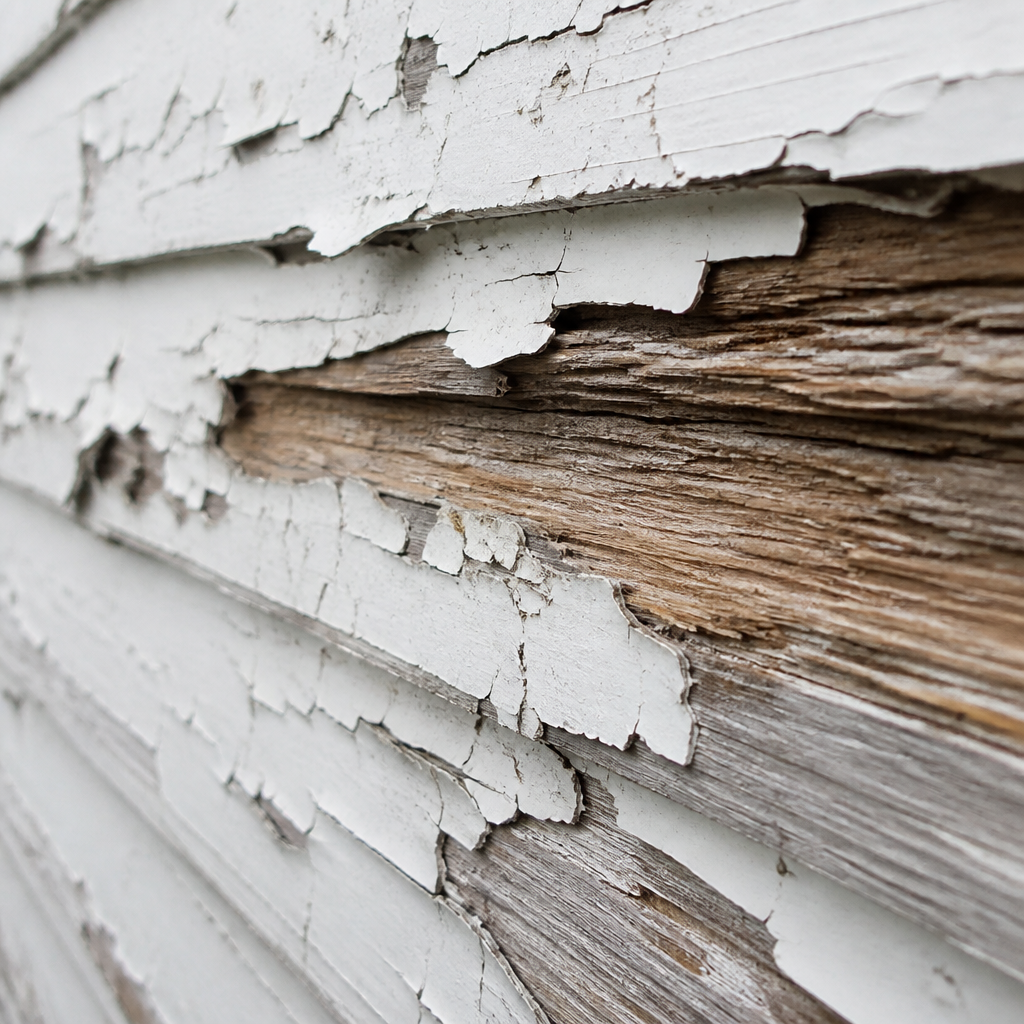
Most Surrey homeowners notice the paint is failing well before they do anything about it. A little peeling here, some fading there, and suddenly another wet season rolls in and the wood beneath has been cycling through moisture without any real protection. Exterior painting in Surrey is not optional maintenance. It is the primary barrier between your home’s structure and one of the wettest climates in Canada. British Columbia’s combination of mild, wet winters and UV-intense summers accelerates every form of paint failure faster than most manufacturers predict. This article gives you five concrete, visual signs that your exterior paint has crossed the line from cosmetic wear into functional failure, and what each sign means for your home.
Table of Contents
- Quick Takeaways
- Sign 1: Peeling and Flaking Paint
- Sign 2: Chalking on the Surface
- Sign 3: Severe or Uneven Fading
- Sign 4: Mildew, Algae, and Dark Staining
- Sign 5: Failed Caulking and Bubbling Paint
- Comparing Paint Failure Stages: When to Act
- Frequently Asked Questions
- References
Quick Takeaways
| Key Insight | Explanation |
|---|---|
| Peeling exposes bare wood fast | In BC’s wet climate, bare wood exposed through a failing paint film can absorb moisture within a single rainfall cycle, leading to wood rot if left unaddressed. |
| Chalking means the binder has failed | A chalky, powdery residue when you run your hand across a wall signals the paint binder has broken down and the coating can no longer shed water effectively. |
| Uneven fading is not cosmetic | When south-facing walls fade dramatically faster than north-facing walls, UV damage has outpaced the coating’s protective capacity and repainting is overdue. |
| Mildew means the mildewcide is exhausted | Dark streaks or patches of biological growth are not a cleaning problem. They signal the existing coating’s mildewcide is depleted and the surface needs treatment and repainting. |
| Failed caulk creates active water entry points | Cracked or separated caulk around windows and doors is often the first failure, and fresh caulk alone will not bond to heavily weathered paint. |
| Quality exterior paint lasts 7 to 10 years in the Lower Mainland | High-moisture and north-facing exposures shorten that window. Waiting beyond it means paying more for substrate repairs, not just paint. |
| Painting over problems accelerates damage | Applying new paint over peeling, chalked, or wet surfaces bonds the new coat to a compromised layer and fails faster than if the surface had been properly prepared. |
Sign 1: Peeling and Flaking Paint
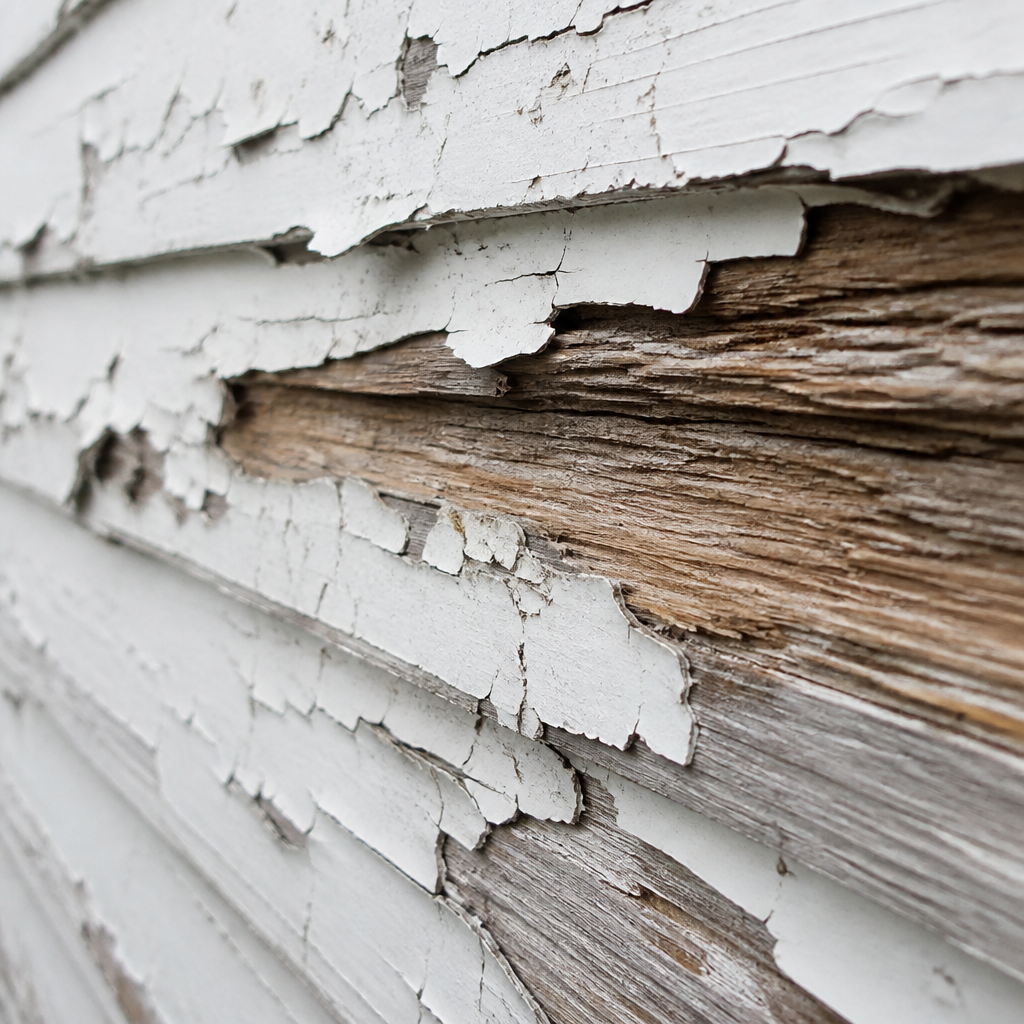
Peeling paint is the most visible and most urgent warning sign a home can show. It is not a cosmetic issue you can defer to next year. When you see paint pulling away from the surface, the substrate beneath it is already being exposed to the elements every time it rains.
In BC’s wet climate, bare wood exposed through a failing paint film can absorb moisture within a single rainfall cycle. That moisture causes wood fibers to expand and contract repeatedly, which opens the grain further and allows progressively deeper water penetration. Left through a Lower Mainland winter without intervention, this process leads directly to rot. What starts as a $1,500 repaint can become a $5,000 to $8,000 repair project involving substrate replacement before the painting even begins.
Where Peeling Starts First in Surrey and Langley
North-facing walls and shaded areas under eaves are consistently the first places peeling appears. These surfaces stay damp the longest after rain, and prolonged surface moisture is the primary driver of adhesion failure. Check these areas first when doing a seasonal walkthrough.
On stucco surfaces, which are common across Surrey and Abbotsford, cracking carries additional risk. Stucco cracks allow water to reach the lath and sheathing underneath, and water damage to stucco systems is significantly more expensive to repair than equivalent damage to wood siding. If your stucco shows cracking beyond hairline spider cracks, get it assessed before the next rainy season. Quotes for our exterior house painting are always free.
Pro tip: Run your hand firmly across cracked painted surfaces after they have dried in the sun. If paint powder comes off on your hand or the crack edges crumble, the paint film has failed throughout, not just at the surface. That home needs a full repaint, not a touch-up.
A common mistake is painting over peeling areas without removing all loose material and addressing the underlying moisture source. Applying new paint over compromised adhesion bonds the new coat to a failing layer, and the failure repeats, often faster than the first time.
Sign 2: Chalking on the Surface
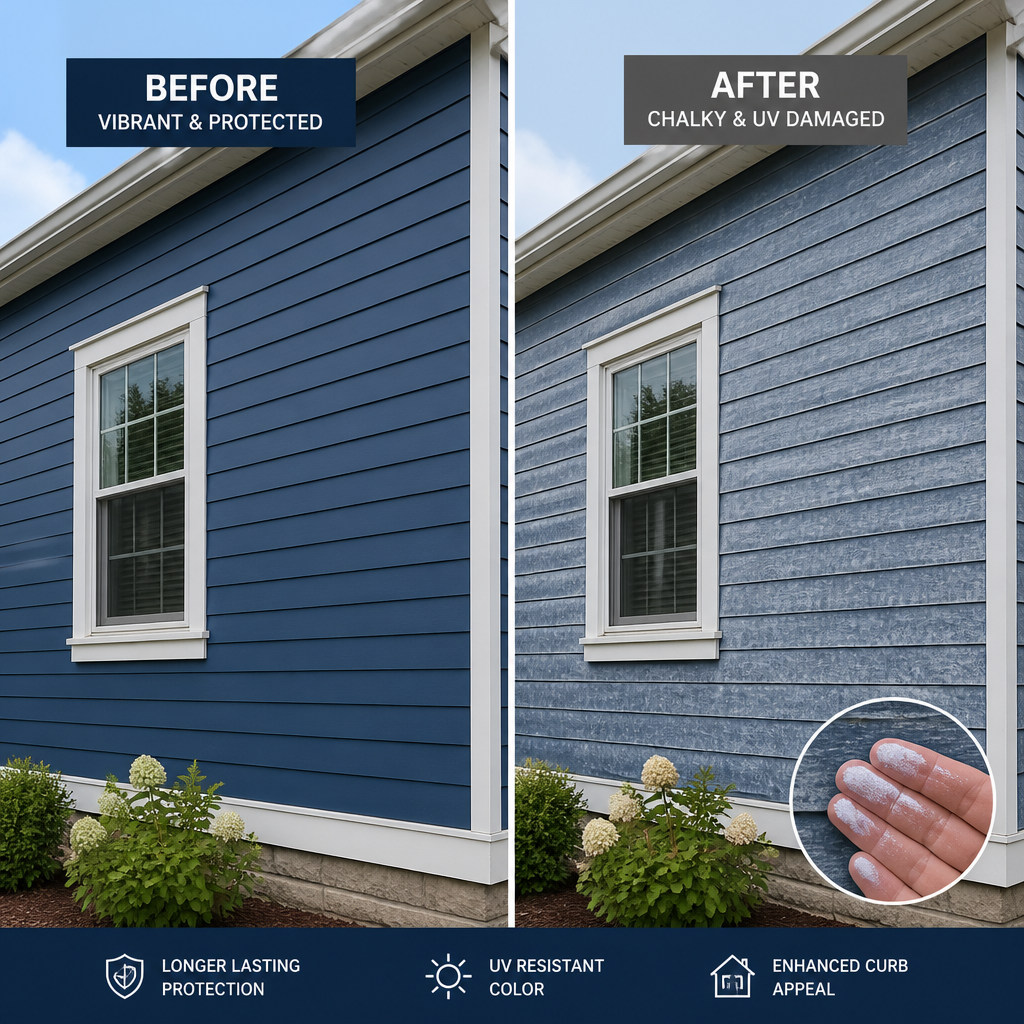
Chalking is quieter than peeling, which is why it catches more homeowners off guard. The test takes thirty seconds: press your palm firmly against the painted exterior and rub in a circular motion. Minimal white residue is normal weathering. A heavy coating of white powder on your hand means the paint binder has broken down and the coating has lost its ability to shed water effectively.
Why Chalking Is an Urgent Early Warning
Because chalking typically occurs before peeling and cracking, it is one of the best early indicators that a repaint is needed within the next twelve months. At the chalking stage, you still have time to repaint before substrate damage occurs. At the peeling stage, substrate assessment is often required before painting can begin.
In the Lower Mainland, south and west-facing walls show chalking first because they receive the most UV exposure. UV radiation breaks down the paint’s organic binders, causing them to release as fine powder at the surface. The pigment and film that remain can no longer form a coherent protective barrier, meaning moisture that would previously bead off the surface now penetrates.
Quality 100% acrylic latex exterior paints resist chalking better than older alkyd-based formulations because acrylic binders remain flexible through temperature cycling and resist UV degradation more effectively. But no exterior paint lasts indefinitely. In Lower Mainland and Fraser Valley conditions, expect 7 to 10 years from a properly applied quality product, with trim and high-exposure areas reaching their limit at 6 to 8 years.
Pro tip: Check south and west-facing walls for chalking first during any inspection. Those walls take the hardest UV hit and reach binder failure before shaded elevations. If chalking is already heavy on these faces, north-facing walls are likely not far behind.
Sign 3: Severe or Uneven Fading
Some degree of color fading over time is expected and normal. Severe, uneven fading is not. When different elevations of the same house show dramatically different color intensity, the paint has reached the point where UV damage is outpacing the coating’s protective capabilities.
Look for differential fading across wall sections. If south-facing walls show significantly more fading than north-facing walls, this typically occurs between years seven and nine on quality paint jobs using premium products. At that point, the pigment degradation is visible evidence that the binder is also failing, even if chalking is not yet obvious to the touch.
Fading and Moisture Resistance Go Together
Fading paint is not just an eyesore. As the paint fades, its ability to repel moisture also diminishes. The same UV exposure that bleaches pigment also degrades the film-forming compounds that make the coating water-resistant. Addressing exterior fading before it becomes severe can prevent more significant and costly damage, particularly on homes with wood siding in Fraser Valley climates where wet seasons are long.
A repaint timed at the fading stage, before peeling begins, is always the most cost-effective intervention. Surface preparation is simpler, substrate damage is minimal, and the new coating bonds to a surface that still has structural integrity.
Sign 4: Mildew, Algae, and Dark Staining
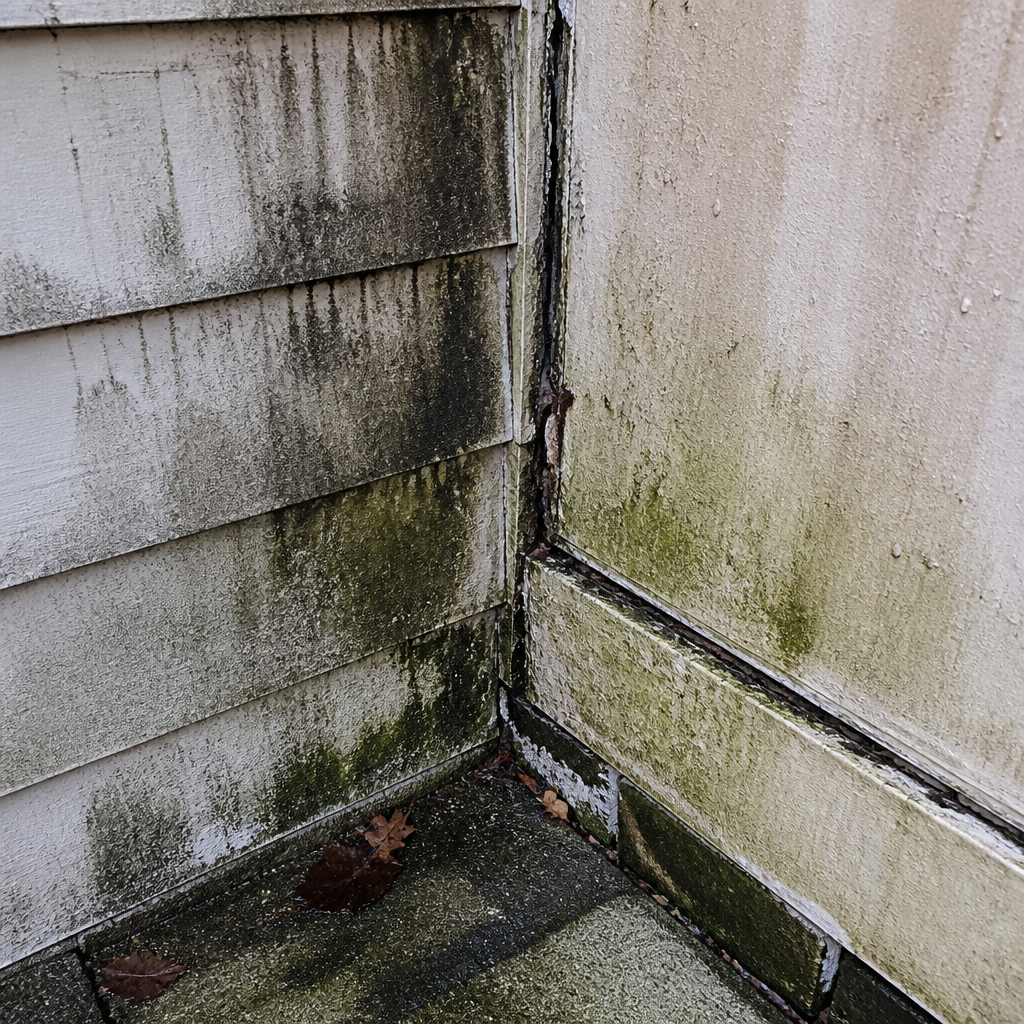
Dark streaks running from roof lines, black or green patches growing on wall surfaces, and discoloration that returns after pressure washing are all signs of biological growth. Mildew and algae on an exterior paint surface are not primarily a cleaning problem. They are a sign that the coating’s mildewcide has been exhausted and the surface is no longer chemically resistant to biological colonization.
Why Mildew Is a Structural Warning, Not Just an Aesthetic One
The biological growth that appears as dark streaking is feeding on the paint’s organic binders, the compounds that hold the pigment together and bond the film to the surface. Once those binders degrade through biological activity, no amount of cleaning restores the coating’s protective integrity. The surface needs to be stripped, treated, and repainted, not simply washed.
In Surrey and the broader Lower Mainland, north and east-facing walls stay damp the longest through fall and winter months. These are the elevations where mildew establishes first, typically within six to eight years on a home that was painted without a mildewcide-containing product. If your home has significant north-facing exposure, dense tree coverage nearby, or poor drainage at the foundation, the paint’s effective life is shorter than the average regional estimate.
Homes in low-lying areas or near waterways in the Fraser Valley region face accelerated biological growth risk. Inspect these elevations annually and do not wait for visible streaking to become extensive before acting.
Pro tip: If mildew returns within one season of pressure washing, the existing paint film is no longer the right barrier for your home’s exposure conditions. Cleaning it again is money spent on a temporary cosmetic fix. A repaint using a premium acrylic product with an integrated mildewcide is the right solution.
Sign 5: Failed Caulking and Bubbling Paint
Caulking failures often appear before paint failures, and they are among the most overlooked warning signs homeowners encounter. Walk around your home and inspect every joint where dissimilar materials meet: around windows and doors, at corner boards, where siding meets trim, and along deck ledger boards. Caulk that has cracked, pulled away from one surface, or turned rigid is an active water entry point.
Why Fresh Caulk Alone Is Not the Fix
A common mistake is recaulking without repainting. Fresh caulk will not bond properly to old, heavily weathered paint and will fail again within a season. Proper exterior painting work includes removing old caulk, preparing surfaces, applying primer where needed, and then using high-quality paintable caulk as part of the finish process. Caulk applied over a compromised paint surface simply replicates the same failure on a shorter timeline.
Bubbling or blistering paint is closely related. Bubbles form when water vapor trapped in the wood pushes through the paint film, usually at joints and around windows and doors where caulk has already failed. If you press a blister and find it contains water or that the wood beneath is soft, you have active moisture infiltration that needs to be addressed before any new coating is applied. In practice, window trim is the most common location for expensive hidden damage in the Lower Mainland. Horizontal sills collect water, failed caulk lets it penetrate, and within two to three years you are replacing trim boards instead of just painting them.
Failed caulking at window frames, door frames, trim transitions, and corner joints is a leading water entry point in BC’s wet climate. Inspect caulk joints as part of any annual exterior check, and treat caulk failure as the early-stage version of the peeling and rot problem it will become if ignored.
Comparing Paint Failure Stages: When to Act
Not all exterior paint problems carry the same urgency or cost. Understanding which stage your home is in helps you plan the right response and avoid both premature spending and costly delay. The table below compares the three typical stages of exterior paint failure and what each means for your home in the Surrey and Lower Mainland context.
| Failure Stage | Visible Signs | Recommended Action and Urgency |
|---|---|---|
| Early Stage (Years 6 to 8 on most Lower Mainland homes) | Chalking on sun-exposed faces, minor color fading, caulk beginning to crack at joints | Schedule a professional inspection and plan a repaint within 12 months. Surface prep is straightforward and substrate damage is minimal. This is the most cost-effective point to act. |
| Mid Stage (Active paint failure beginning) | Visible peeling on north-facing or shaded walls, heavy chalking, mildew patches, bubbling near windows | Repaint should happen this season. Some substrate assessment required. Delaying past this stage risks rot development and substrate replacement costs that exceed the cost of the repaint itself. |
| Late Stage (Structural risk) | Bare wood visible through peeling, extensive rot, stucco cracking beyond hairline, widespread mildew and biological growth | Immediate professional assessment required. Substrate repairs precede any painting. Costs are significantly higher than early or mid-stage intervention. This stage is preventable with timely action. |
Frequently Asked Questions
How often should I repaint the exterior of my Surrey home?
In Lower Mainland and Fraser Valley conditions, a properly prepared and painted exterior using quality 100% acrylic latex should last 7 to 10 years on wood siding. Trim and high-exposure areas may need attention at 6 to 8 years. Homes with significant north-facing exposure, dense tree coverage, or poor drainage near the foundation often reach the shorter end of that range. Annual inspections help you catch early failure signs and avoid the more expensive late-stage repairs.
Can I paint over peeling exterior paint myself to save money?
Painting over peeling paint without removing all loose material and addressing the moisture source is the most common and most costly mistake in exterior painting. The new coat bonds to a compromised layer and fails faster than the original job. In BC’s climate, the gap between professional and amateur results is larger than in more forgiving environments because moisture exploits every preparation shortcut. A proper repaint requires scraping, sanding, priming bare areas, and correcting any substrate damage before a finish coat is applied.
What does chalking paint mean and is it serious?
Chalking occurs when the paint binder breaks down under UV exposure and releases as a fine powder at the surface. It means the coating has lost its ability to shed water effectively and is thinning in protective capacity. Because chalking typically appears before peeling and cracking, it is one of the best early warning signs you have. Acting on chalking early, before peeling begins, means simpler surface preparation, no substrate repairs, and a new coat that bonds to a surface with intact structural integrity.
Why does mildew keep coming back on the north side of my house?
Mildew returns because the existing paint film’s mildewcide has been exhausted and the surface is no longer chemically resistant to biological growth. Pressure washing removes the visible growth but does not restore the coating’s protective properties. Once a coating reaches this stage, repainting with a premium 100% acrylic exterior paint that includes an integrated mildewcide is the correct solution. Look for formulations specifically recommended for north and east-facing walls in high-moisture climates, which is exactly the exposure profile most of the Lower Mainland presents.
Is failed caulking around windows something I can fix without a full repaint?
Fresh caulk applied over old, heavily weathered paint will not bond correctly and will fail again within a season or two. Caulking is most effective when it is part of a full repainting process that includes surface preparation, priming, and finish coats. If your caulk is failing and the paint is also showing chalking or fading, the right move is a coordinated repaint, not a caulk-only patch. In our experience serving homes across Surrey, Langley, and Abbotsford, window trim treated with caulk alone without a repaint typically requires full trim board replacement within two to three years.
Does the direction a wall faces really affect how quickly paint fails?
Yes, significantly. South and west-facing walls receive the most UV exposure and are typically where chalking and color fading appear first. North and east-facing walls stay damp longer after rain and are where mildew, algae, and peeling begin earliest. A thorough exterior inspection accounts for all elevations, not just the front of the house, because different faces of the same home can be at different stages of paint failure at the same time. A professional estimator will assess all four elevations and identify where intervention is most urgent.
Have you spotted any of these warning signs on your home? Share what you noticed and when, we would like to hear how other homeowners in Surrey and the Fraser Valley are managing their exterior maintenance.
References
- Exterior paint lifespan guide for BC and Lower Mainland homeowners, including failure signs and inspection advice
- Homeowner guide to exterior paint performance in BC’s rainy climate, covering product selection and surface preparation
- Signs it is time to repaint your home exterior, including peeling, fading, and moisture damage indicators
- Overview of five signs your home exterior needs repainting, covering chalking, cracking, and moisture issues
- Exterior painting guidance for BC’s wet climate, including mildew, algae growth, and high-moisture exposure zones

